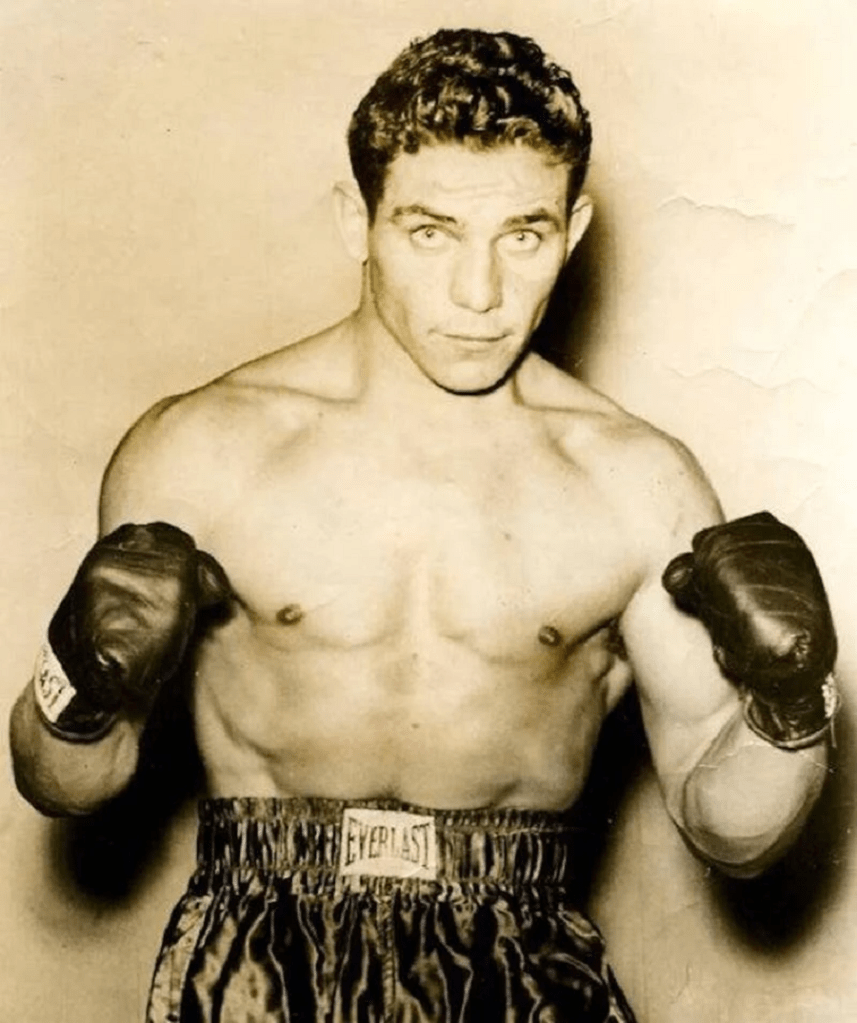
During the Holocaust, many people imprisoned in Nazi concentration camps across Europe had to fight tooth and nail to stay alive. And for Harry Haft, the fight was literal.
Harry Haft, a Polish Jew whose harrowing experiences during World War II reflect both the cruelty of the Holocaust and the indomitable human spirit. Haft’s survival was a testament to his physical endurance, quick thinking, and unwavering will to live.
Early Life and the Outbreak of War
Born as Hertzka Haft on July 28, 1925, in Belchatow, Poland, Haft grew up in a working-class Jewish family. There, antisemitism pervaded his young life. Haft faced discrimination at school and was expelled for throwing a rock at an anti-Semitic teacher at a young age.
His life, like that of many other Polish Jews, was upended by the Nazi invasion of Poland in 1939. The Germans imposed severe restrictions on Jewish communities, and Haft’s family, along with millions of others, was soon subjected to unimaginable suffering.
In 1941, Haft’s family was forcibly taken to labor and concentration camps. He was separated from his loved ones, including his mother, who was likely murdered in the early stages of the Holocaust.
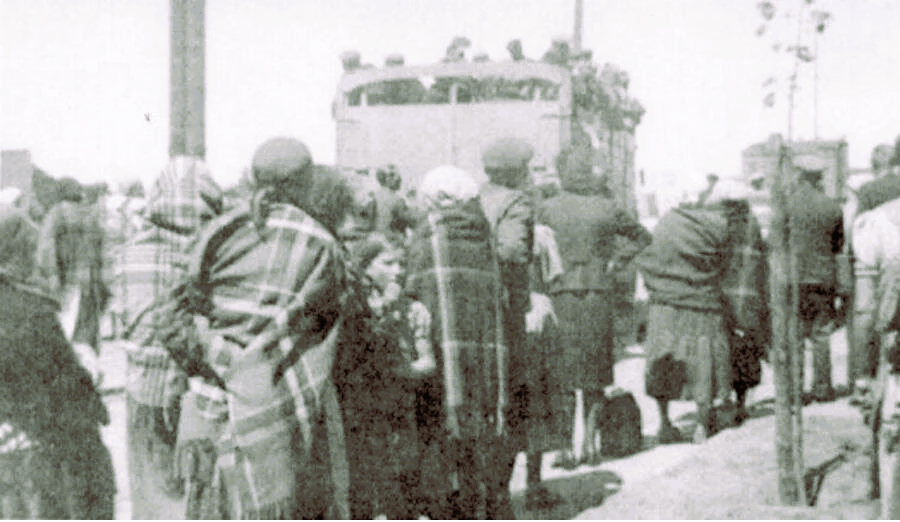
Alone and faced with unimaginable adversity, Haft had to rely on his resilience and resourcefulness to navigate the horrific circumstances that awaited him.
Endurance in the Concentration Camps
Haft’s journey through the concentration camps was a grueling ordeal that tested every facet of his being. He was imprisoned at multiple camps, including the notorious Auschwitz. Haft’s survival required not only immense physical strength but also the ability to adapt to the ever-changing dynamics of camp life.
One of the most harrowing chapters of Haft’s imprisonment involved his forced participation in boxing matches. The Nazis exploited him and other prisoners by organizing brutal boxing matches for their entertainment. Haft, a strong and athletic young man, was selected to fight other prisoners in these life-or-death contests. Defeat in the ring often meant execution, while victory prolonged the nightmare by granting the “privilege” of living another day.
These fights were brutal and devoid of any sense of fairness or sportsmanship. Haft fought not only for his life but also under the constant watch of Nazi guards who took perverse pleasure in the suffering of their victims. His skills as a boxer, combined with his survival instinct, allowed him to endure this nightmarish existence.
Liberation and Post-War Life
In the chaos of the war’s final days, Haft managed to escape during a death march, an event where prisoners were forcibly moved from one camp to another to prevent their liberation by advancing Allied forces. Despite being malnourished and weakened, Haft summoned the strength to flee and evade capture, ultimately finding refuge with U.S. troops in April 1945.
After the war, Haft faced the daunting task of rebuilding his life. He immigrated to the United States in 1948, where he sought to forge a new identity and future. Using the boxing skills he had honed under duress, Haft pursued a career as a professional boxer, fighting notable opponents, including the legendary Rocky Marciano.
Legacy and Reflection
Harry Haft’s life is a poignant reminder of the human capacity for survival and resilience. Despite the horrors he endured, Haft refused to be defined solely by his victimhood. His post-war career and eventual willingness to share his story, documented in the biography Harry Haft: Survivor of Auschwitz, Challenger of Rocky Marciano by his son Alan Scott Haft, ensure that his experiences will not be forgotten.
Haft’s story resonates deeply in the broader context of Holocaust remembrance. It underscores the importance of bearing witness to atrocities and honoring the memories of those who perished. By sharing his narrative, Haft contributed to the collective understanding of the Holocaust and the profound impact it had on individuals and families.
In 2018, a film about Haft was announced. The biographical film, titled The Survivor, is directed by Barry Levinson and stars Ben Foster as Haft. The film premiered at the Toronto International Film Festival in 2021 and was released on HBO on April 27, 2022.
Harry Haft’s survival during the Holocaust exemplifies the extraordinary strength of the human spirit in the face of unfathomable adversity. His life is a testament to the power of endurance, the drive to overcome, and the importance of remembering history’s darkest moments to prevent their recurrence. Haft’s journey from the horrors of concentration camps to the boxing rings of America is not just a tale of survival but also a story of triumph and the enduring quest for dignity and justice.
Sources
https://allthatsinteresting.com/harry-haft
https://sfi.usc.edu/the-survivor
https://en.wikipedia.org/wiki/Harry_Haft
Donation
Your readership is what makes my site a success, and I am truly passionate about providing you with valuable content. I have been doing this at no cost and will continue to do so. Your voluntary donation of $2 or more, if you are able, would be a significant contribution to the continuation of my work. However, I fully understand if you’re not in a position to do so. Your support, in any form, is greatly appreciated. Thank you. To donate, click on the credit/debit card icon of the card you will use. If you want to donate more than $2, just add a higher number in the box left from the PayPal link. Your generosity is greatly appreciated. Many thanks.
$2.00
 History of Sorts
Leave a comment