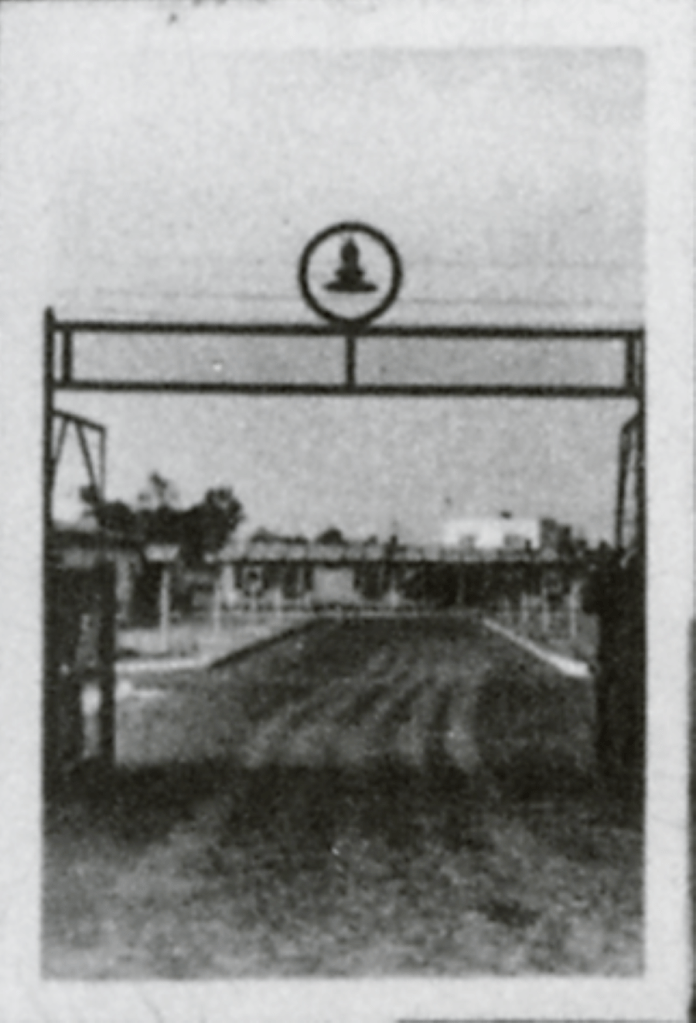
Jawischowitz was a sub-camp located in the village of Jawiszowice (German: Jawischowitz). Prisoners held there were forced to work in two shafts of the Brzeszcze coal mine, situated in Jawiszowice and Brzeszcze. The camp began operating in mid-August 1942, when 150 French Jews arrived under an agreement between the SS Main Economic and Administrative Office (WVHA) and Reichswerke Hermann Göring, the owner of the mine. This marked the first instance in the history of the German concentration camp system in which prisoners were employed in underground mining.
In terms of prisoner population, Jawischowitz was among the largest Auschwitz sub-camps. By June 1944, it held approximately 2,500 prisoners, the majority of whom were Jews from Poland, France, Germany, the Netherlands, Italy, and Hungary. The camp population also included Poles, Russians, and Germans.
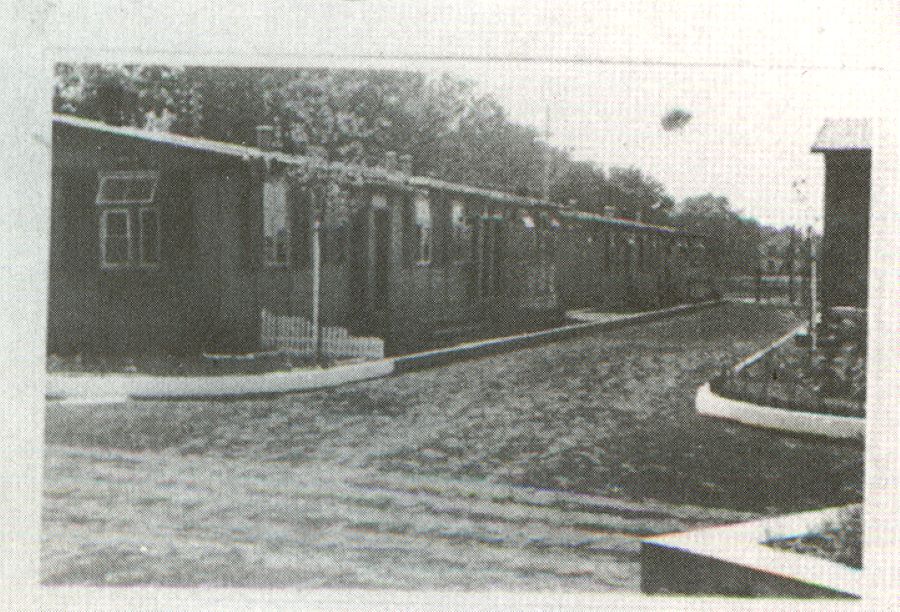
At the turn of 1943–1944, the SS garrison numbered at least 70 men. The first camp commandant was SS-Unterscharführer Wilhelm Kowol, who was later replaced by SS-Hauptscharführer Josef Remmele. The sub-camp was enclosed by electrified barbed-wire fencing and comprised more than ten barracks, most of them wooden. Seven barracks were used as prisoner quarters, while the others housed the kitchen, infirmary, storage facilities, workshops, washrooms, and latrines. Despite ongoing expansion, severe overcrowding persisted in 1944, with more than 200 prisoners confined to rooms originally designed for 54.
Prisoners were issued two sets of clothing: work garments worn in the mine and camp clothing worn within the sub-camp. Because mining work required daily showers and clothing changes, prisoners at Jawischowitz were largely spared the lice infestations that plagued other parts of the Auschwitz complex. Nevertheless, the labor itself was extremely exhausting. Prisoners loaded and transported coal carts, carried out repairs, and performed construction work in a three-shift system. Production quotas were often unattainable due to hunger, physical exhaustion, or lack of training. When quotas were not met, shifts were extended until the required output was achieved. In addition, some prisoners were assigned to above-ground construction tasks. In the second half of 1944, several dozen underage Jewish prisoners were forced to sort coal.
SS doctors conducted selections every few weeks. Prisoners deemed unfit for labor were transported to Auschwitz, where most were murdered in the gas chambers. Surviving records from October 1942 to December 1944 indicate that at least 1,800 sick prisoners were removed from Jawischowitz.
In January 1945, approximately 1,900 prisoners were evacuated on foot to Wodzisław Śląski. Several dozen sick and severely exhausted prisoners were left behind; most of them were liberated by Soviet forces on January 29, 1945. Following liberation, the survivors were placed under the care of the local branch of the Polish Red Cross.
The Brzeszcze coal mine was founded in 1903. In 1918, construction began on a third mineshaft, Andrzej III, in the Jawiszowice area, approximately 1.6 kilometers from Brzeszcze. All mine shafts, along with their surface and underground auxiliary facilities, formed a single economic unit. Following the First World War, Brzeszcze became part of the newly reconstituted Polish state.
A period of intensive expansion of the Andrzej III shaft began in 1927. In 1931, a permanent steel hoisting tower measuring 39.5 meters in height was erected. One year later, the pithead building, coal-sorting plant, bridges connecting the sorting plant to the mineshaft, and the machine hall were completed. With the full completion of shaft construction in 1934, the mine’s production capacity increased significantly.
Further development followed in the mid-1930s. In 1936, the administration building was completed, and in 1937 the boiler house, an expanded network of railway tracks and sidings, and signaling systems for the shaft were installed, along with central heating for the pithead facilities. By the late 1930s, the Brzeszcze mine had become one of the most highly mechanized mining operations in pre-war Poland. Architecturally, structurally, and technologically, the Andrzej III complex was regarded as the most modern mining facility in the country.
Following the Nazi invasion of Poland, the Brzeszcze–Jawiszowice coal mine (formerly Andrzej III) was taken over by Reichswerke Hermann Göring.
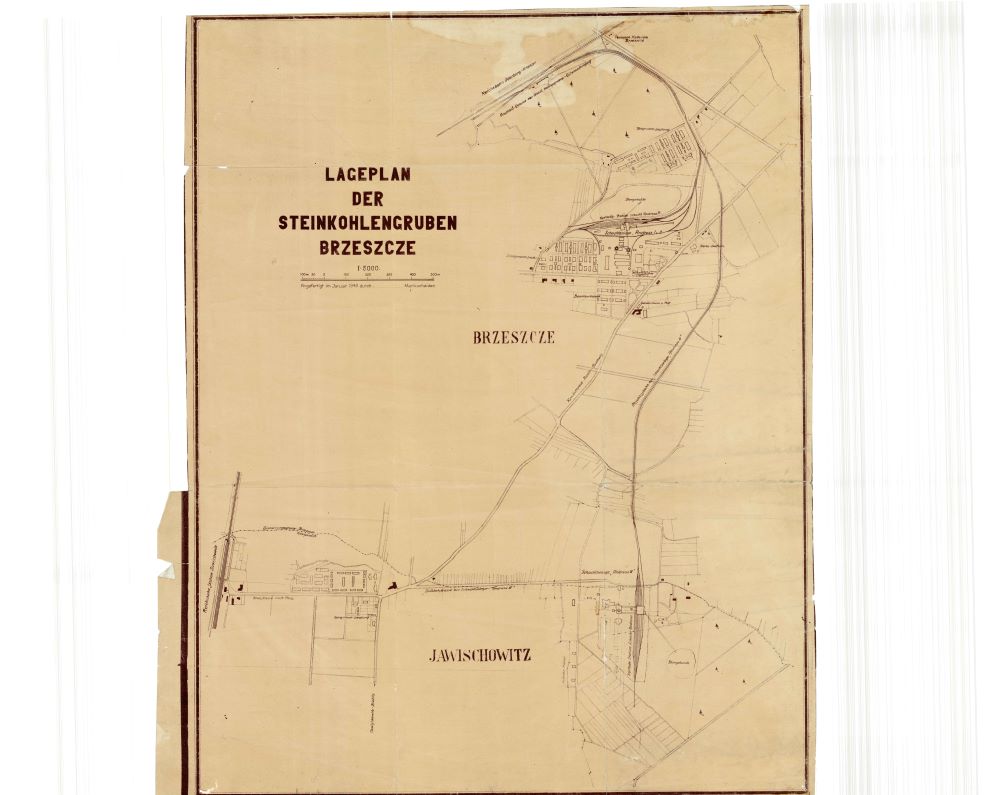
After the Brzeszcze–Jawiszowice coal mine was taken over by Reichswerke Hermann Göring, the company requested 6,000 prisoners from the Auschwitz concentration camp, located approximately eight kilometers away, to serve as forced laborers in the mine. The first transport of 150 Jewish prisoners arrived in Jawiszowice on 15 August 1942. Jawischowitz thus became the first Auschwitz sub-camp in which prisoners were employed in underground mining.
Prisoner accommodation in Jawischowitz was regarded as slightly better than that in the Auschwitz main camp. As former prisoner Andrija Kolin recalled: “We lived in wooden barracks in the cold, but the hygienic conditions were not that bad, as the Germans themselves were careful to preserve the workforce.”[5] The prisoner population of the sub-camp consisted predominantly of Jews from Poland, Hungary, France, the Netherlands, and Italy. In addition, there were non-Jewish prisoners from Poland, the Soviet Union, and Germany. Andrija Kolin, a Jewish prisoner from Croatia, testified after the war: “I was incarcerated in the camp in Jawiszowice near Kraków, some five to six kilometres from Auschwitz, from 22 May 1944 to 1 February 1945. At the time there were 3,500 people in that camp, but I was the only prisoner from Međimurje. All the rest were Hungarians.”(Testimony of Auschwitz prisoner Andrija Kolin)
Despite severe overcrowding in the barracks, the risk of epidemic disease was reduced. Mandatory bathing after work and the use of separate work clothing meant that lice infestations—common elsewhere in the Auschwitz complex—were largely absent, thereby lowering the incidence of typhus.
Within the camp, prisoners wore the standard striped concentration camp uniform. Supplies were delivered by truck from the Auschwitz main camp. Given the extreme physical demands of mining labor, food rations were grossly inadequate and led to the rapid deterioration of prisoners’ health. Kolin described the diet and its consequences as follows: “We didn’t receive any cooked meals, but only two decilitres of black coffee and six decagrams of bread in the morning, and three-quarters of a litre of turnip soup (or similar) with six decagrams of bread in the evening. As a result of this, the prisoners grew so thin that they would lose several dozen kilograms in weight, and due to exhaustion and insufficient food, people were dying by the hundreds.”(Testimony of Auschwitz prisoner Andrija Kolin)
The majority of prisoners were employed in the Brzeszcze–Jawiszowice coal mine, primarily in underground work. Labor was organized in three shifts: from 06:00 to 14:00, from 14:00 to 22:00, and a night shift from 22:00 to 06:00. Prisoners performed all tasks associated with mining operations. Some were also assigned to construction work, including the building of a new power plant in Brzeszcze.
The combination of forced labor, chronic hunger, and exhaustion resulted in a high mortality rate. The bodies of prisoners who died or were murdered, as well as those deemed too sick or unfit for work, were transported by truck to the crematoria and gas chambers at Auschwitz I and Auschwitz II–Birkenau.
Prisoners were subjected to systematic brutality by the guards. As one survivor testified: “Moreover, the guards who escorted us to work and oversaw us beat us every day—with their hands, rifle butts, and rubber batons—and kicked and beat us in every way imaginable. As a result, as far as I know, about 25 people died.”(Testimony of Auschwitz prisoner Andrija Kolin)
In the final months of 1944, the SS transferred almost all Polish prisoners, along with some Russians and Germans, from Jawischowitz to the concentration camps at Mauthausen and Buchenwald. The sub-camp’s final evacuation took place in January 1945, when 1,948 prisoners were forced to join the evacuation columns from Birkenau. Prisoners who could not maintain the pace of the march were shot by the SS. Many of the Jawischowitz prisoners were subsequently sent to Mauthausen, while others were transferred to Buchenwald and its sub-camps.
Following the war, Josef Remmele was tried by an Allied court in West Germany and executed for his crimes. There is no record of Wilhelm Kowol ever having faced trial.
sources
https://subcamps-auschwitz.org/auschwitz-subcamps/arbeitslager-jawischowitz/
https://www.auschwitz.org/en/history/auschwitz-sub-camps/jawischowitz/
https://nl.wikipedia.org/wiki/Jawischowitz
Donation
Your readership is what makes my site a success, and I am truly passionate about providing you with valuable content. I have been doing this at no cost and will continue to do so. Your voluntary donation of $2 or more, if you are able, would be a significant contribution to the continuation of my work. However, I fully understand if you’re not in a position to do so. Your support, in any form, is greatly appreciated. Thank you. To donate, click on the credit/debit card icon of the card you will use. If you want to donate more than $2, just add a higher number in the box left from the PayPal link. Your generosity is greatly appreciated. Many thanks.
$2.00
 History of Sorts
Leave a comment