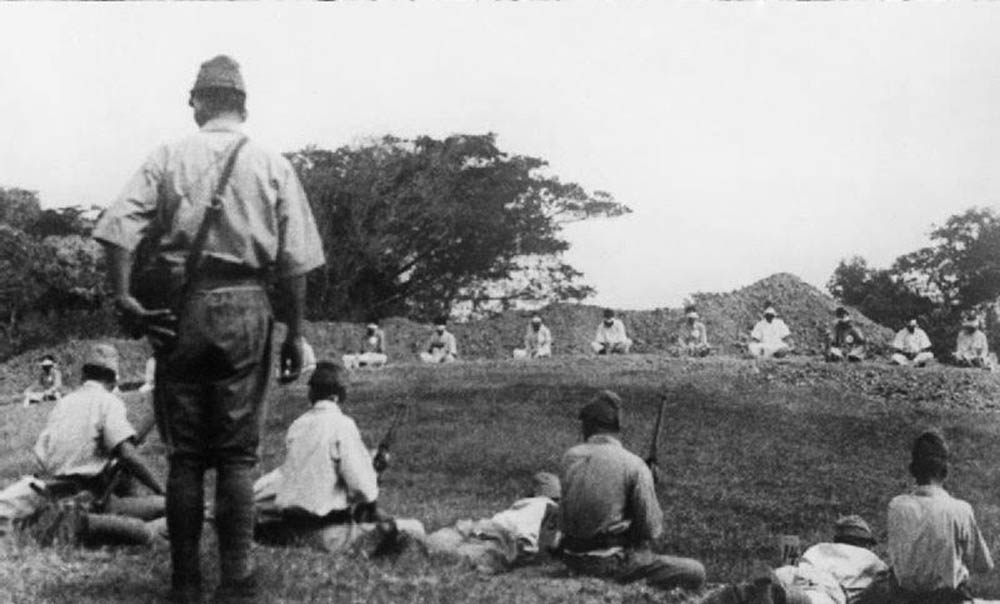
The Japanese treatment of prisoners of war during World War II was brutally inhumane. The men shown in the above photograph belong to the Sikh Regiment of the British Indian Army. They are seated in the traditional cross-legged prayer position, likely reciting their final prayers at the moment this photo was taken—a chilling and morbid scene. The majority of Indian soldiers captured when Singapore fell were from the Sikh community. These photographs were discovered among Japanese records when British forces retook Singapore.
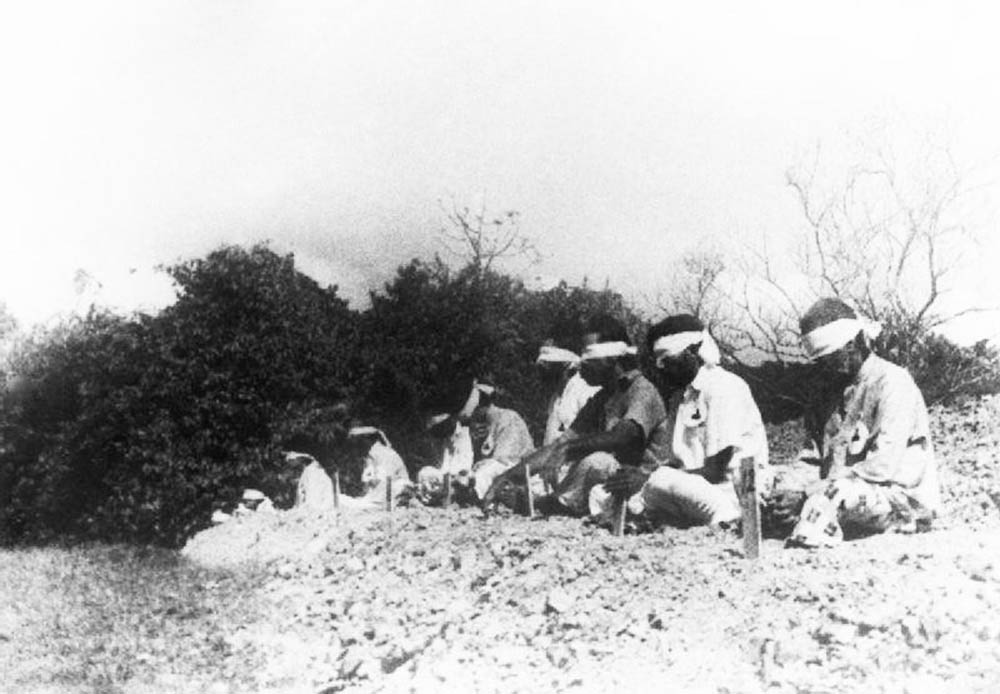
A careful examination of the second photograph reveals markers hanging over each prisoner’s heart, with stakes in front of them bearing rifles. Each target position is numbered, indicating that the soldier assigned to position one will shoot the prisoner at position one, and so on.
The designated positions for this type of shooting practice were generally referred to as “the butts.” This was target practice, not a conventional military execution. In a standard firing squad, multiple shooters—usually half a dozen or more—fire simultaneously to ensure a quick death. Here, however, each shooter was assigned a single victim, and unlike formal military executions, survivors were not given a coup de grâce by an officer; some prisoners were left to die slowly, often subjected to bayoneting or other brutal methods.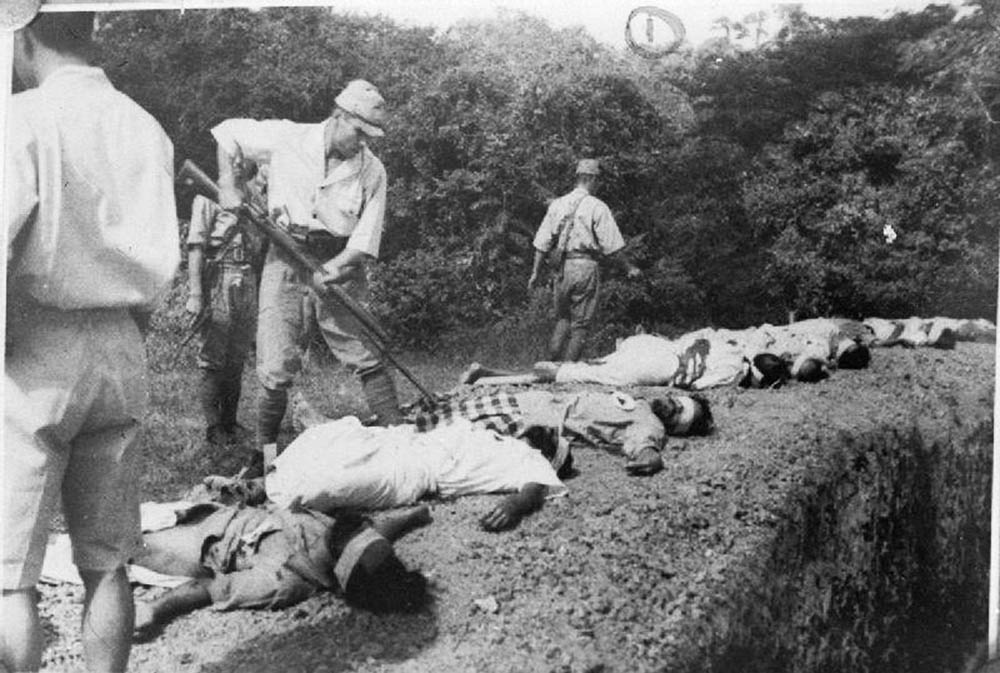
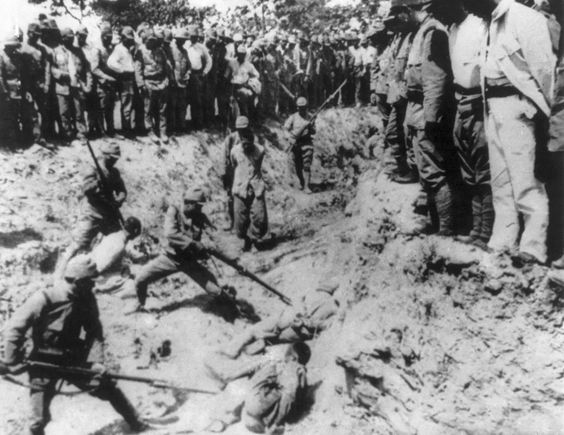
The harshest treatment, however, was directed at Chinese prisoners, who were killed in large numbers through exceptionally brutal methods, including shooting, bayoneting, beheading, burial alive, medical experimentation, and other forms of violence.
sourrces
https://www.jstor.org/stable/27067639
Donation
Your readership is what makes my site a success, and I am truly passionate about providing you with valuable content. I have been doing this at no cost and will continue to do so. Your voluntary donation of $2 or more, if you are able, would be a significant contribution to the continuation of my work. However, I fully understand if you’re not in a position to do so. Your support, in any form, is greatly appreciated. Thank you. To donate, click on the credit/debit card icon of the card you will use. If you want to donate more than $2, just add a higher number in the box left from the PayPal link. Your generosity is greatly appreciated. Many thanks.
$2.00
 History of Sorts
Leave a comment