The story of Harrie and Trien Semler-Hendriks
“Not a single day was without danger.”
The most striking action of the underground resistance movement “De Vrijbuiters” in Maarheeze was the raid on the ration-distribution office in Valkenswaard in April 1944. The group also helped dozens of people in hiding. Yet here, in the border region with Belgium, its most important resistance activity was smuggling downed Allied pilots and escaped prisoners of war across the border.
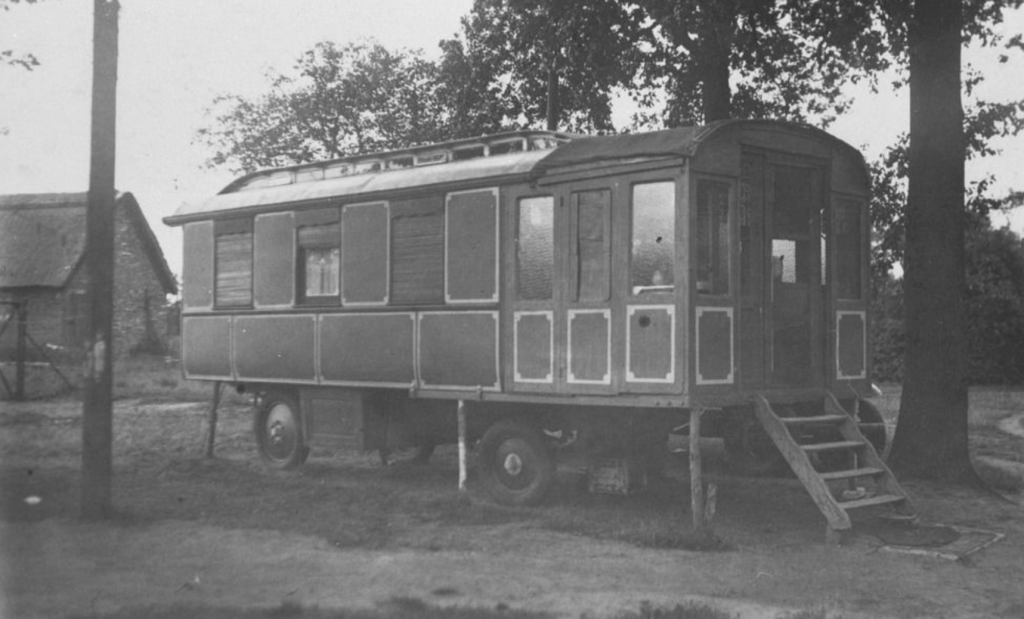
This account highlights the people who can be regarded as the leaders of the resistance group: Harrie Semler and his wife Trien Semler-Hendriks. From their caravan they coordinated resistance work and continually recruited new members, drawn from their successive places of residence, their family networks, and contacts in Belgium.
Travelling families
Harrie Semler was born Hendrikus Leonardus Semler on 16 February 1906 in Nijmegen. His father, Antonius Cornelis Semler (1878–1952), born in ’s-Hertogenbosch, appears in records as a trader. Harrie’s mother was Dieuwke Bartmann (1879–1963), originally from Rotterdam. They married in Dordrecht on 28 August 1902, shortly after acknowledging their first child, born that May.
Harrie was the fifth of probably eighteen children, many of whom died young. Ultimately seven brothers and one sister reached adulthood. According to Jeanny (“Sjan”) Semler (born 1944), daughter of Harrie and Trien, her grandparents met at a fair. Her grandmother came from a respectable background but was no longer welcome at home after becoming pregnant. Her grandfather drank heavily, and, as Jeanny recalled, “the children probably received more beatings than food.” During the early twentieth century the expanding Semler-Bartmann family alternated between Dordrecht and Nijmegen.
Trien Semler-Hendriks’ parents also lived a travelling life. She was born Catharina Hendrika Hendriks on 24 December 1900 in Kessel on the River Maas in Limburg, the second of roughly five children. Her parents were listed as merchant and merchant’s wife, but in practice they were boatmen, which explains why their children were born successively in Echt, Kessel, Helmond, Utrecht, and ’s-Hertogenbosch.
Harrie Semler and Trien Hendriks—both children of travelling traders—likely met in the early 1930s. Earlier, in 1922, Trien had married Gerardus Stolzenbach from ’s-Hertogenbosch, who died ten years later, reportedly of heart failure. According to family tradition, she had lost several children in that marriage. Doctors believed she could not bear children, yet in the final dramatic year of the war, 1944, her only child Johanna (“Jeanny”) was born healthy, probably with the help of resistance-connected doctor Jan Raeven and district nurse Eugène Knippenberg.
Before Jeanny’s birth, the couple had already taken in a foster child, Johanna van Oers (“Truike”), after whom Jeanny was named.
Before and during the war
Harrie attended primary school and completed military service in Nijmegen. By 1933 he and Trien were living in a caravan in ’s-Hertogenbosch named Dordrecht, probably after a previous residence. Harrie worked as a fairground operator with the popular skill game “American Hoopla,” touring especially in Belgium.
After the General Mobilisation of August 1939 he had to return from Hechtel in Belgium for military duty. He served as head cook with the 11th Infantry Regiment, which later fought at the Grebbeberg during the German invasion of May 1940, where about four hundred Dutch soldiers were killed. Harrie and Trien married legally in December 1939 and religiously in July 1940.
While Harrie was in service, Trien followed him with the caravan to Megen, where she experienced the outbreak of the Second World War. Shortly after the Dutch capitulation she set out by bicycle searching for her husband near the Grebbeberg battlefield. Witnessing the devastation and heavy casualties filled her with hatred toward the German occupiers and convinced her she had to act.
First resistance activities
Trien began modestly by delivering letters from soldiers to reassure families. In Nijmegen she helped distribute food to Belgian and French prisoners of war. Soon the couple started withholding supplies from German requisitioning and redistributing them.
When travelling fairs were banned, Harrie briefly traded horses. Meanwhile Trien encountered an escaped French prisoner of war and personally guided him by bicycle into Belgium. Many others followed, including Allied airmen. The danger became clear when she was arrested, interrogated, and mistreated by the Germans, but released after 21 days without betraying anyone.
Gradually an informal network formed, including contacts in Eindhoven and Valkenswaard. By 1942 the couple moved closer to the Belgian border, settling their caravan behind a farm at Vogelsberg in Maarheeze.
Building an organisation
In Maarheeze Harrie aimed to create a structured resistance organisation. Cooperation with the Belgian resistance movement—the Secret Army or “White Brigade”—allowed the network to expand. Harrie became brigade commander for the area, officially registered as a liaison agent.
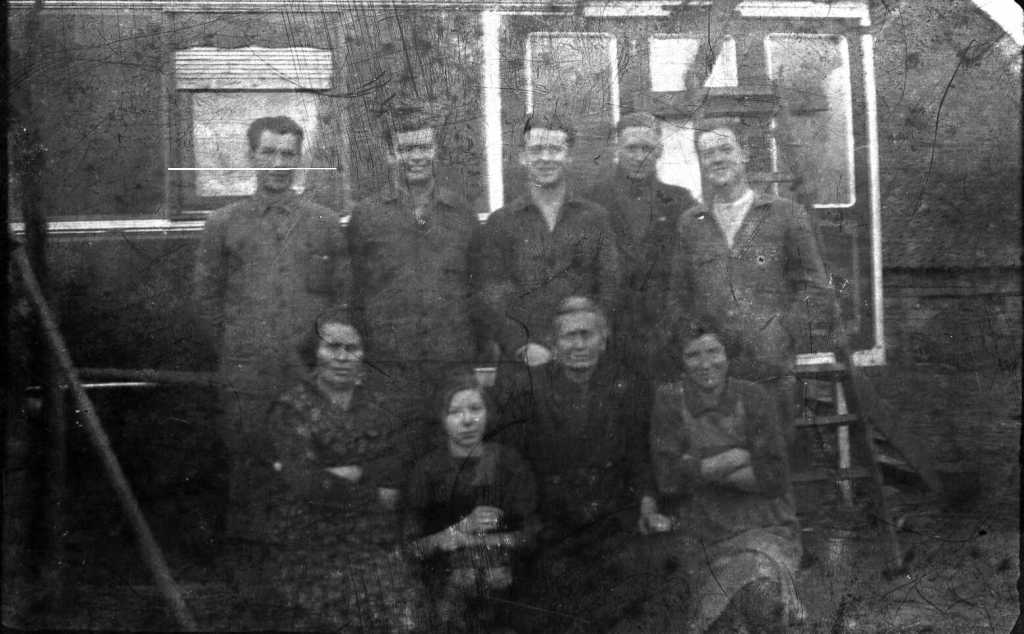
The group grew through family ties, trusted acquaintances, local police officers, doctors, civil servants, and helpers connected to the national organisation assisting people in hiding. The composition remained informal, based largely on trust and circumstance rather than strict membership procedures.
The group adopted the name “Vrijbuiters” (“Freebooters”), inspired by a satirical BBC radio commentator who used that pseudonym.
Activities
Their work included:
sheltering people in hiding, including Jews,
smuggling Allied pilots and escaped prisoners across the Belgian border,
intelligence gathering,
sabotage, especially railway disruptions,
and armed raids, most famously the Valkenswaard distribution-office raid.
The caravan, meant for three people, sometimes housed ten or twelve. A concealed underground passage and camouflage system provided hiding space. Many villagers cooperated, hiding fugitives on farms and using signals from the local windmill to warn of danger.
According to Trien:
“Not a single day was without danger.”
Despite constant fear, shortages of ration cards, and illness during pregnancy, the work continued. On 9 June 1944, three days after D-Day, daughter Jeanny was born safely.
Intelligence work
In 1943–1944 the group supplied intelligence to Allied services via Belgium, including shipping cargo information and measurements of bridges at Maastricht and Venlo. After Operation Market Garden began, they provided data on German anti-tank positions, enabling Allied forces to attack them successfully from the rear.
Aftermath: arrest and acquittal
Although they survived the war, the aftermath proved difficult. During post-liberation tensions Harrie was arrested in November 1944 on accusations of political unreliability and alleged membership in the Dutch Nazi party (NSB). He admitted having joined as a sympathiser solely to gather intelligence and warn resistance members of danger.
After extensive investigation and testimony, authorities concluded the accusations were unproven, and in October 1946 he was fully cleared.
Because there still had to be food on the table, Harrie Semler enlisted in the Regiment Stoottroepen after his release in November 1944, where he served as head cook with the staff until 14 September 1945. Afterwards he worked as a guard in internment and holding camps in Weert and Heerlen, from which he was discharged in March 1946 for health reasons. This may have been connected to the traumatic events of the autumn of 1944.
Because there still had to be food on the table, Harrie Semler enlisted in the Regiment Stoottroepen after his release in November 1944, where he served as head cook with the staff until 14 September 1945. Afterwards he worked as a guard in internment and holding camps in Weert and Heerlen, from which he was discharged in March 1946 for health reasons. This may have been connected to the traumatic events of the autumn of 1944.
Recognition and later life
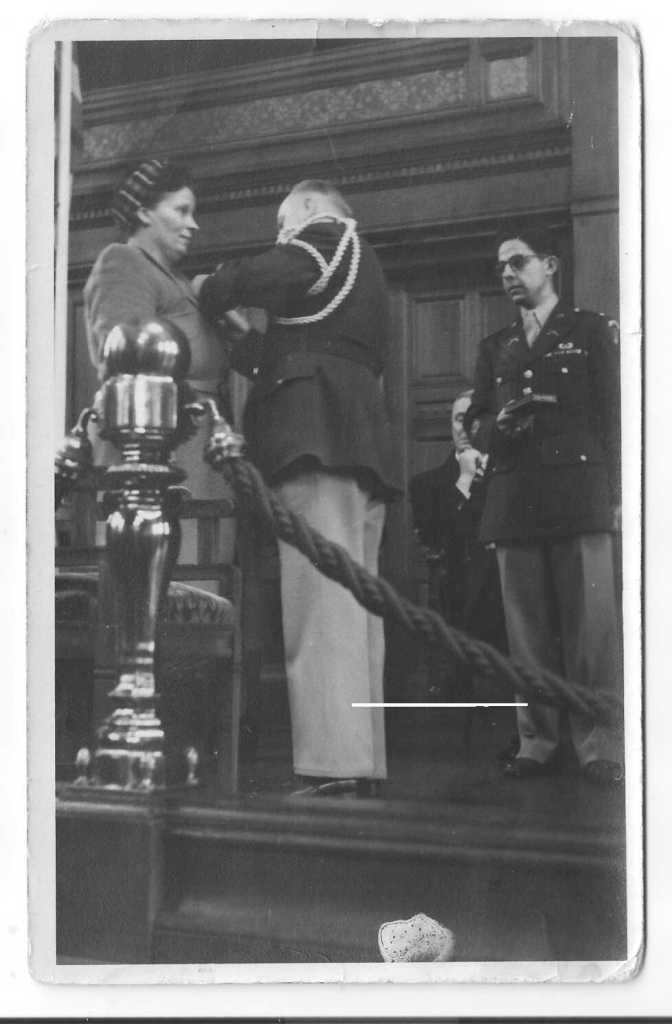
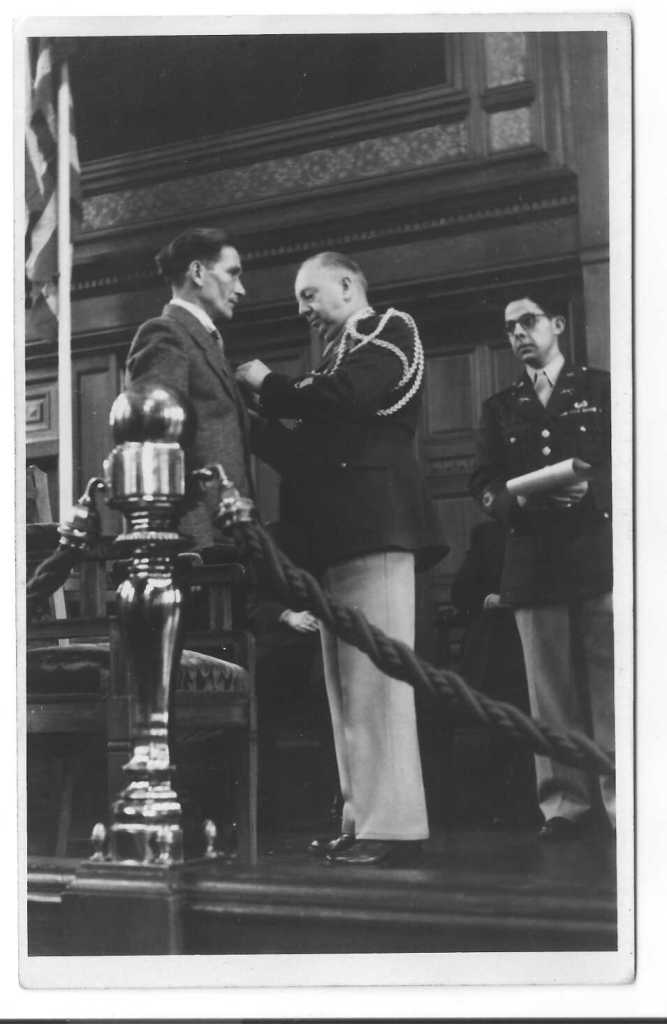
On 21 November 1946 Harrie and Trien received the American Medal of Freedom with Bronze Palm for their wartime service. Trien published her memoirs and later recounted their story on Dutch radio.
In 1946, bronchitis made it impossible for Harrie Semler to continue working in the internment camps and once again deprived him of his source of income. The couple sought support from the Foundation ’40–’45. By then they had moved their caravan to a site at the Vogelsberg in Maarheeze. In June 1948 they decided to return to Hechtel, where they ran the café “België-Holland” for several years. However, the café proved not to be a good environment for Harrie, and in 1955 the couple moved into a house in Sittard. Harrie then worked at the Nitrogen Fixation Plant of the State Mines. Four years later they built a house in Geleen, where, together with their daughter Jeanny, they lived for the rest of their lives.
Harrie Semler died on 3 August 1973 at the Hornerheide sanatorium in Horn; Trien died on 6 October 1979 in Geleen. Thus ended the lives of two restless individuals who left a significant mark on the active and armed resistance in Maarheeze and its surroundings. Representing them both, their daughter Jeanny and her husband attended the unveiling of the war memorial in Maarheeze in 1985, near the place where their caravan had once stood — a special gesture by those involved in the resistance and a sign of reconciliation between people once divided.
In 1989 a second posthumous tribute was paid to the Semler couple. A street in Leiden was named Trien Semlerstraat. She might not have felt such an honour was necessary, yet Trien would have loved that it was a street with caravans. After all, in 1946 she had written:
“I desire neither honour nor fame; my only wish is that our Queen Wilhelmina and His Royal Highness Prince Bernhard, with his family, might one day learn that a Dutch heart also beats in a caravan.”
sources
https://www.brabantserfgoed.nl/page/16285/verzet-vanuit-de-woonwagen
https://www.oorlogsbronnen.nl/tijdlijn/2020511f-b1fe-49f7-881c-fe377e78feca
 History of Sorts
Leave a comment