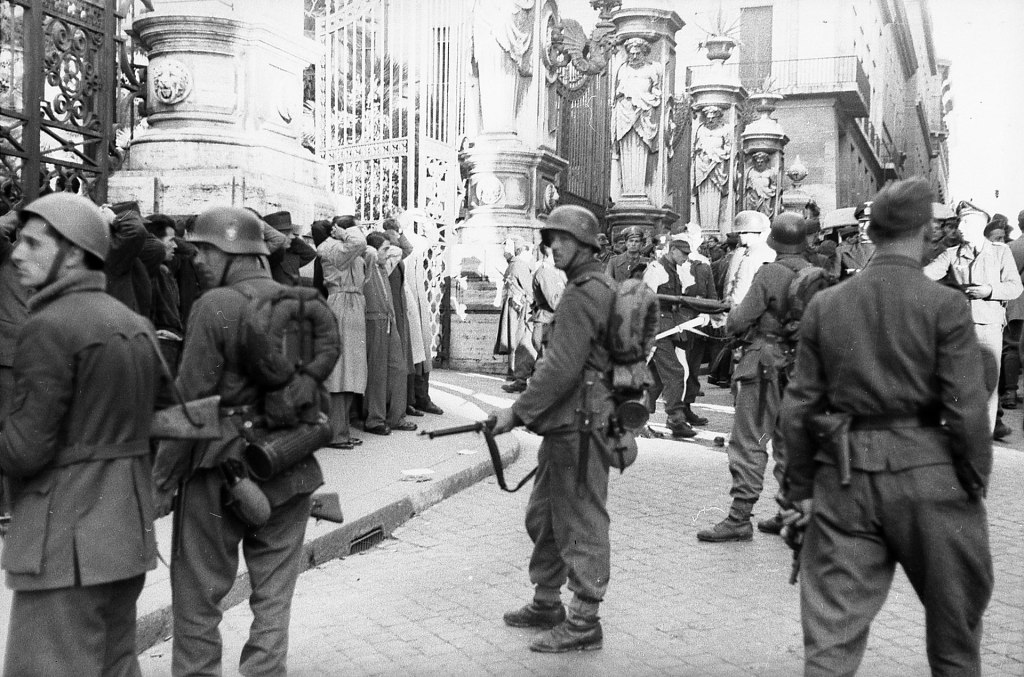
The Ardeatine Massacre stands as one of the most brutal reprisals carried out by Nazi forces in occupied Europe during the Second World War. It was not merely an act of wartime violence, but a calculated demonstration of terror intended to suppress resistance and assert absolute control over a subjugated population. Understanding the massacre requires situating it within the broader context of German occupation in Italy, the rise of partisan resistance, and the ideological brutality of the Nazi regime.
Historical Context: Occupied Rome
Following the armistice between Italy and the Allies in September 1943, German forces swiftly occupied much of the country, including Rome. The occupation was marked by repression, deportations, and increasing hostility toward civilians. Rome, though declared an “open city,” was anything but safe. Resistance movements—composed of communists, monarchists, and other anti-fascists—began to carry out guerrilla attacks against German forces.
One such act of resistance triggered the massacre. On March 23, 1944, members of the Italian resistance group known as the Gruppi di Azione Patriottica detonated a bomb on Via Rasella, killing 33 German policemen from the SS Police Regiment Bozen. The attack was a legitimate act of resistance under the laws of war, but the German response would be disproportionate and indiscriminate.
The Decision for Reprisal
The Nazi leadership in Rome, under the authority of Herbert Kappler, quickly decided on a retaliatory execution. The order, endorsed by higher command including Albert Kesselring, called for the execution of ten Italians for every German killed. This meant 330 victims; ultimately, 335 men were murdered due to a counting error—one that chillingly illustrates the bureaucratic indifference to human life.
The victims were not selected based on guilt. They included political prisoners, Jews, random civilians, and individuals already in custody for minor or fabricated charges. Among them were members of the Jewish community of Rome, linking the massacre directly to the broader genocidal policies of the Holocaust.
The Massacre at the Ardeatine Caves
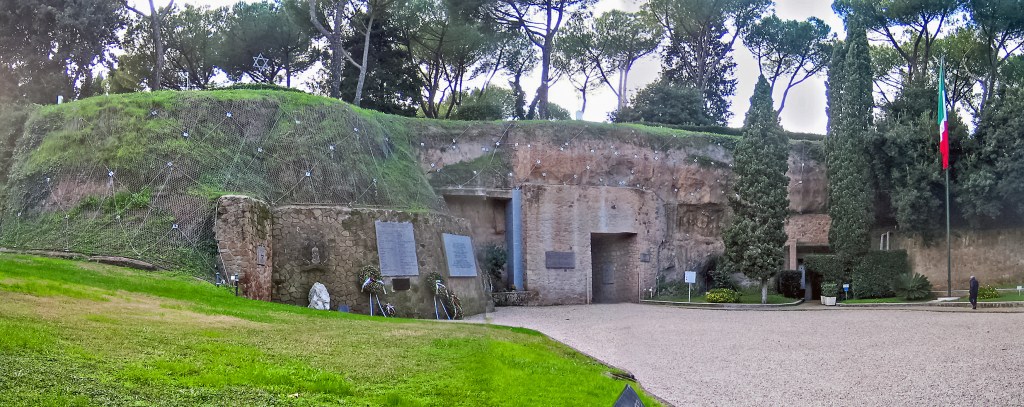
On March 24, 1944, the victims were transported to a network of caves along the Via Ardeatina, just outside Rome. These caves, known as the Fosse Ardeatine, became the site of systematic execution. The prisoners were led into the caves in small groups, forced to kneel, and shot in the back of the head. The method was designed for efficiency and secrecy.
After the killings, German forces used explosives to seal the caves, burying the bodies in an attempt to conceal the crime. However, the scale and brutality of the massacre could not be hidden for long. When the site was eventually uncovered, it revealed a grim tableau of layered corpses, many still bound or positioned as they had fallen.
Moral and Legal Implications
The Ardeatine Massacre is widely regarded as a war crime and a crime against humanity. Even under the harsh norms of wartime reprisals, the execution of civilians without trial—especially at such a scale—violated established principles of proportionality and distinction.
After the war, Herbert Kappler was tried by an Italian military tribunal and sentenced to life imprisonment. His trial became a landmark case in the prosecution of Nazi war crimes in Italy. However, broader accountability remained uneven, as many perpetrators evaded justice or were reintegrated into postwar society.
Memory and Commemoration
Today, the site of the massacre is preserved as the Fosse Ardeatine Memorial, a solemn national monument in Italy. Each of the 335 victims is commemorated with an individual tomb, emphasizing both the collective tragedy and the personal loss.
The massacre has become a symbol of both Nazi brutality and Italian resistance. It is commemorated annually, and it continues to occupy a central place in Italy’s historical memory of the Second World War. The event also raises enduring ethical questions about resistance, retaliation, and the responsibilities of occupying powers.
The Ardeatine Massacre was not an isolated atrocity but part of a broader pattern of Nazi repression across Europe. Yet its stark arithmetic—ten lives for one, inflated to 335 by error—makes it particularly emblematic of the cold, mechanistic violence of the regime. It illustrates how ideology, bureaucracy, and fear can converge to produce acts of extraordinary cruelty.
In studying the massacre, one confronts not only the horrors of the past but also the importance of remembrance and accountability. The legacy of the Ardeatine caves endures as a warning: when power is exercised without moral constraint, even the most basic principles of humanity can be extinguished.
sources
https://encyclopedia.ushmm.org/content/en/article/ardeatine-caves-massacre
https://www.nationalww2museum.org/war/articles/italian-resistance-and-ardeatine-caves-massacre
https://en.wikipedia.org/wiki/Ardeatine_massacre
https://www.hughoflaherty.com/index.cfm/page/ardeatinecaves
https://www.europeremembers.com/en/pois/10/the-ardeatine-caves-massacre
Donation
Your readership is what makes my site a success, and I am truly passionate about providing you with valuable content. I have been doing this at no cost and will continue to do so. Your voluntary donation of $2 or more, if you are able, would be a significant contribution to the continuation of my work. However, I fully understand if you’re not in a position to do so. Your support, in any form, is greatly appreciated. Thank you. To donate, click on the credit/debit card icon of the card you will use. If you want to donate more than $2, just add a higher number in the box left from the PayPal link. Your generosity is greatly appreciated. Many thanks.
$2.00
 History of Sorts
Leave a comment