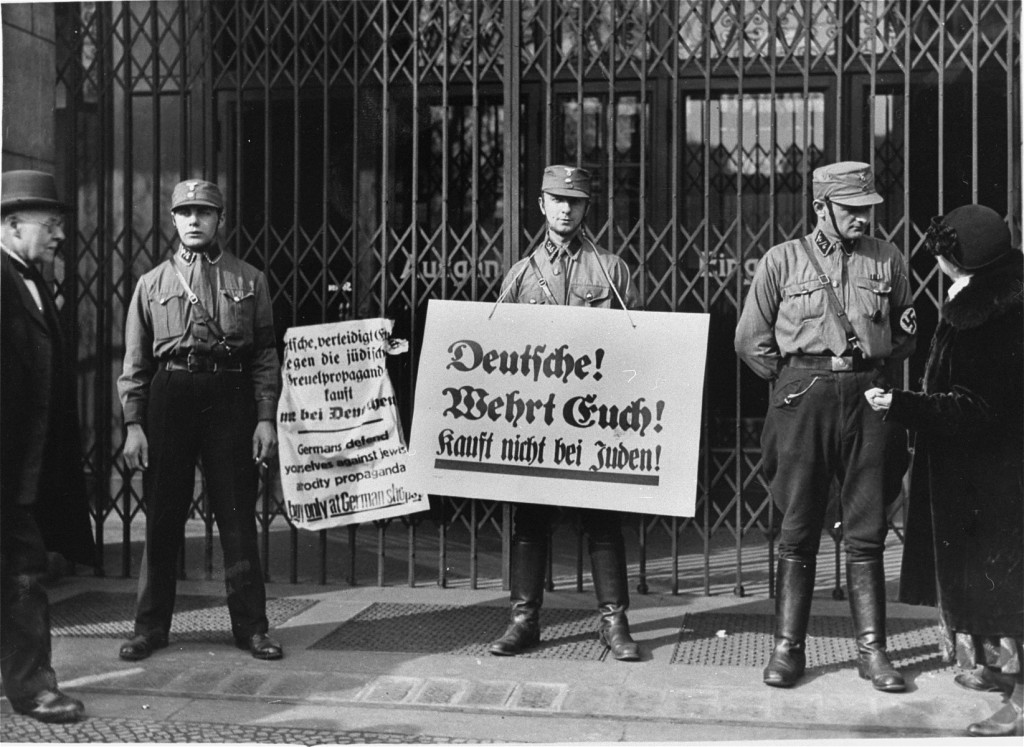
On April 1, 1933, Nazi Germany carried out a nationwide economic boycott targeting Jewish businesses, professionals, and institutions. This event was one of the first major public steps in Adolf Hitler’s campaign of anti-Semitic persecution and laid the groundwork for subsequent discriminatory legislation and, ultimately, the Holocaust.
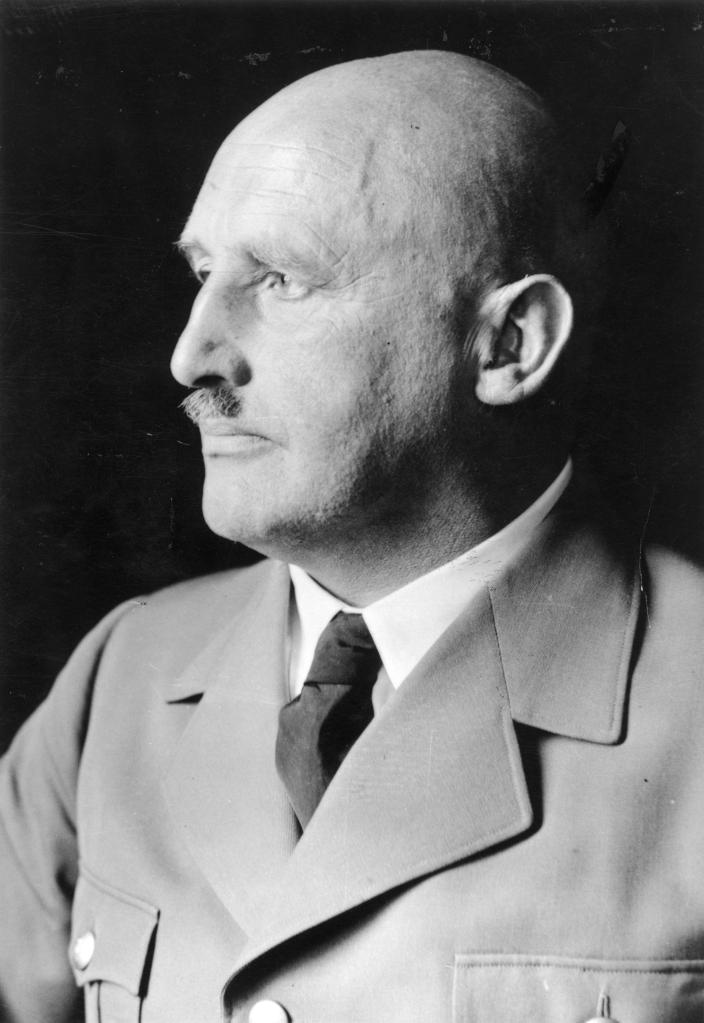
The boycott emerged in the immediate aftermath of Hitler’s rise to power on January 30, 1933. The Nazi regime quickly sought to consolidate authority and promote its racial ideology, portraying Jews as scapegoats for Germany’s economic difficulties and the perceived humiliations of the Treaty of Versailles. Propaganda played a central role in shaping public opinion, and one of its most virulent architects was Julius Streicher, the publisher of the anti-Semitic newspaper Der Stürmer. Streicher used his newspaper and public campaigns to incite hatred against Jews, depicting them as corrupt, dangerous, and un-German, and he was instrumental in promoting the idea of an organized boycott of Jewish businesses.
The methods of the boycott were overt and intimidating. Members of the SA and SS stationed themselves outside Jewish-owned shops, offices, and institutions, displaying signs warning the public not to patronize Jewish businesses. Propaganda, much of it inspired and fueled by Streicher, urged Germans to “Buy German, not Jewish,” reinforcing the boycott as a patriotic duty. Although officially lasting only one day, the boycott served as a symbolic demonstration of the state’s willingness to sanction and organize anti-Jewish action.
Reactions within Germany were mixed. Some citizens complied out of fear of harassment, while others continued to support Jewish businesses discreetly. The temporary economic impact varied, with some shops experiencing reduced customers, but the main effect was social: Jews were publicly marked as outsiders, and fear spread throughout their communities. For many, the boycott was a harbinger of the increasing marginalization that would intensify over the following years.
The international reaction was notable but limited. Newspapers in the United States, Britain, and elsewhere reported on the boycott, highlighting incidents of intimidation. Jewish organizations condemned the actions, and some governments voiced concern. However, there was no coordinated international pressure or economic sanction, and the boycott had little effect on Nazi policy. Within Germany, the regime also quickly realized that an overly aggressive economic assault could harm the broader economy, so the boycott remained largely symbolic.
Politically, the April 1 boycott was significant as a “testing ground” for the Nazis. It allowed the regime to gauge public compliance, intimidate the Jewish population, and demonstrate the power of coordinated propaganda and paramilitary enforcement. Julius Streicher’s role in inciting hatred through Der Stürmer exemplified the use of media to mobilize public sentiment for discriminatory policies.
The boycott set the stage for increasingly severe measures, including the Nuremberg Laws of 1935, which institutionalized racial discrimination, restricted civil rights, and formalized the segregation of Jews from German society.
In conclusion, the nationwide economic boycott of April 1, 1933, was a pivotal early act of Nazi anti-Semitic policy. While it caused only temporary economic disruption, its social and political effects were profound. It publicly marked Jews as targets of state-sanctioned discrimination, instilled fear within their communities, and signaled to both Germany and the world that the Nazi regime would escalate its campaign of persecution. The involvement of Julius Streicher highlights the central role of propaganda in facilitating such actions, showing how media and political power combined to marginalize an entire population, setting the stage for far more destructive policies in the years to come.
sources
https://encyclopedia.ushmm.org/content/en/photo/boycott-of-jewish-owned-businesses
https://en.wikipedia.org/wiki/Julius_Streicher
 History of Sorts
Leave a comment