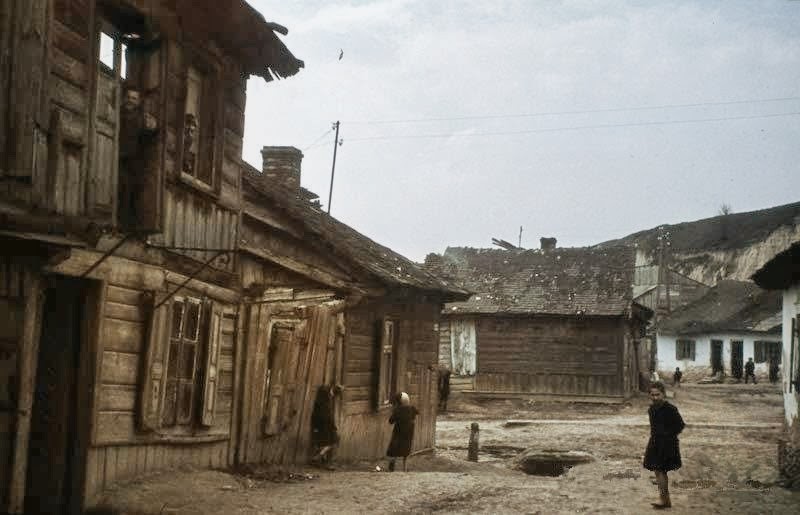
The Izbica ghetto was a Jewish ghetto established by Nazi Germany in the town of Izbica, in Poland, during the Second World War. It functioned primarily as a transit ghetto, serving as a transfer point for the deportation of Jews from Poland, Germany, Austria, and Czechoslovakia to the extermination camps at Bełżec and Sobibór. Although the ghetto was formally established in 1941, transports of Jews from the German Reich had already begun arriving in 1940. Izbica became the largest transit ghetto within the Lublin Reservation system, and its mortality rate was comparable to that of the Warsaw Ghetto. The ghetto’s sole commandant was SS-Hauptsturmführer Kurt Engels, who became notorious for his extreme brutality.
Izbica is located in the Lublin region, approximately 22 kilometers from Zamość. The town was founded in the eighteenth century by Jewish settlers who had been expelled from the nearby village of Tarnogóra by Christian residents who viewed them as commercial competitors. By 1921, Jews constituted 93 percent of Izbica’s population of 3,085 inhabitants. As a town inhabited almost entirely by Jews from its inception, Izbica represented a unique phenomenon within the Second Polish Republic. By 1939, the population had grown to over 5,000, with a similarly high proportion of Jewish residents. Most of the Jewish population consisted of poor craftsmen and small traders.
Following the outbreak of war in 1939, Izbica was initially occupied by German forces, briefly transferred to Soviet control, and then reoccupied by Germany after the revision of occupation boundaries. The town’s geography made it particularly suitable for use as a transit ghetto: it was surrounded by hills on three sides, bordered by a river on the fourth, and located near important railway lines. Combined with its overwhelmingly Jewish population, these factors led the German occupiers to designate Izbica as a central deportation hub.
Jews from Germany, Austria, the Protectorate of Bohemia and Moravia, and Slovakia were deported to Izbica before being sent onward to the extermination camps at Bełżec, which began operating in March 1942, and Sobibór, which began operating in May 1942. The first transport from the Theresienstadt ghetto arrived in Izbica on either March 11 or March 13, 1942; historical sources differ on the exact date. Theresienstadt (Terezín), established in an old Austrian fortress in occupied Czechoslovakia, was used by the Germans to confine selected groups of Jews, including many intellectuals and professionals. In the autumn of 1942, Polish Jews from the areas around Krasnystaw and Zamość were also deported to Izbica.
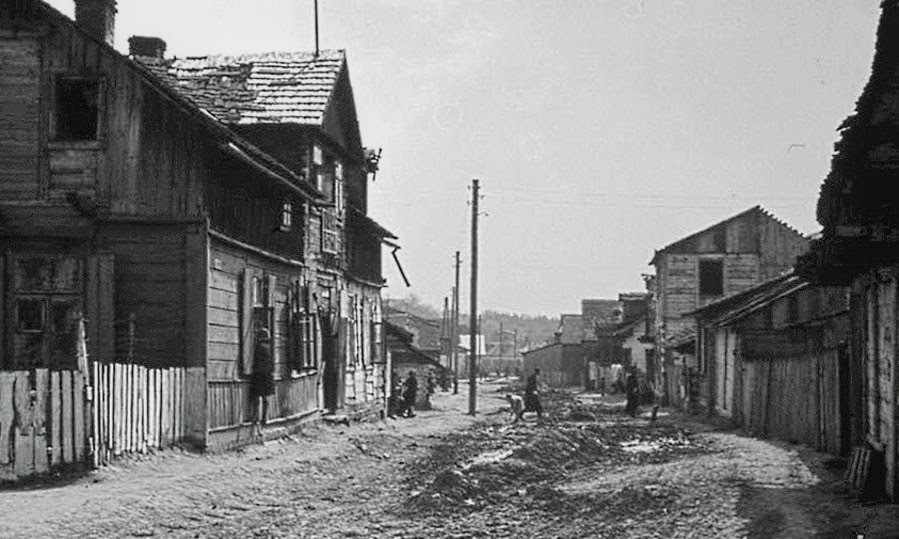
During the early period of the ghetto’s existence, the Nazis destroyed the local Jewish cemetery. Tombstones were desecrated and repurposed as building material for the walls of a new prison. The liquidation of the Izbica ghetto began on November 2, 1942. Over the course of approximately one week, several thousand Jews—estimated at around 4,500 people—were murdered at the cemetery site. The killings were carried out in an assembly-line manner by the Sonderdienst battalion composed of Ukrainian Trawniki auxiliaries, and the victims were buried in hastily dug mass graves. Contemporary accounts indicate that both the perpetrators and members of German Reserve Police Battalion 101, who participated in roundups and deportations, consumed large amounts of alcohol during the massacres, particularly at night.
After the liquidation, a smaller secondary ghetto was established for approximately 1,000 remaining local Jews. This ghetto was dismantled on April 28, 1943, and its remaining inhabitants were deported to the Sobibór extermination camp. Of Izbica’s prewar Jewish population, which had constituted more than 90 percent of the town’s residents, only fourteen people are known to have survived the Holocaust.
In a postwar testimony, Gershon Sheratski (born 1923) recalled that at the beginning of June 1941, after hearing rumors that Jews would be deported to labor camps, many families packed their best clothes into rucksacks in preparation.
On the day of the deportation, Fritz Neumann, head of the civil engineering office in Poznań (Leiter des Tiefbauamtes), arrived in town accompanied by members of the Schutzpolizei (Schupo), the uniformed German police force, and possibly also members of the SA. Neumann was responsible for several forced labor camps in the Poznań region and played a central role in the deportation of Jews from the Warthegau to these camps.
According to survivors Jehuda Czarnoczapka and David Zimmermann, the local chief of the Gendarmerie and the head of the Labor Office (Arbeitsamt) initially objected to the deportation of healthy Jewish men. Neumann, however, overruled their objections and ordered the Schutzpolizei to arrest and deport all able-bodied men.
Survivors also testified that Neumann ordered the shooting of relatives who approached the deportees to say goodbye or to bring them food and clothing. Sarah Menche, née Erdberg (born 1917), whose father was among those deported, later recounted that when she attempted to deliver his rucksacks, she was struck with the butt of a weapon by an ethnic German (Volksdeutscher) named Schmalz. She also identified two other ethnic Germans who participated in the deportations: Wiesenthal and Otto Fritzke.
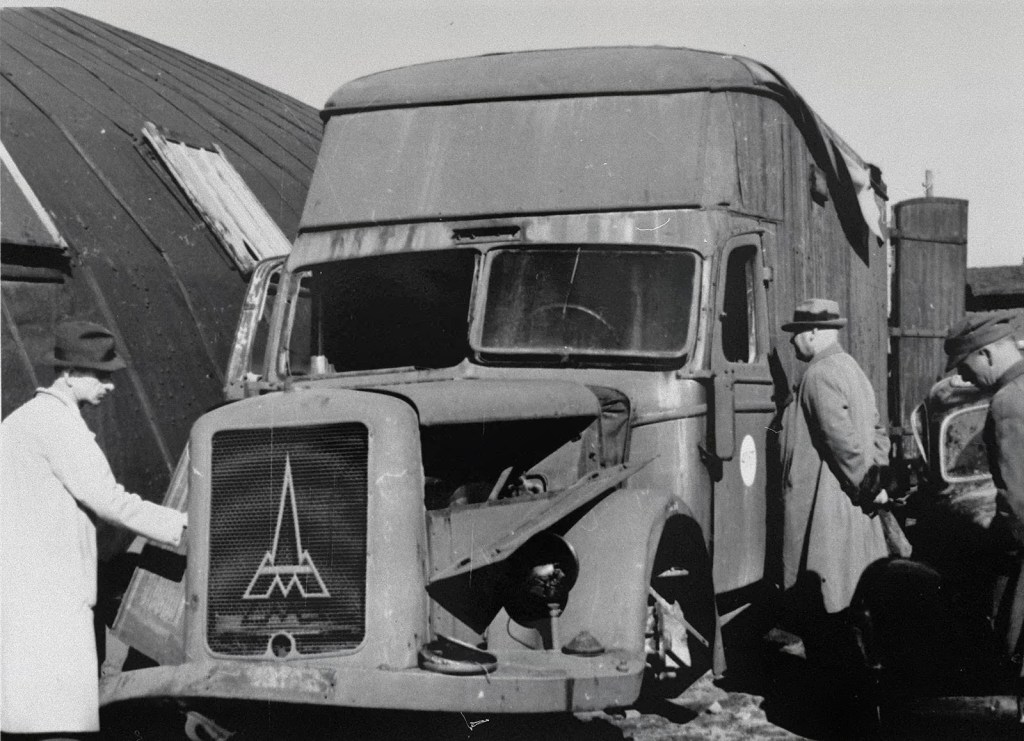
The deportees were most likely transported to the forced labor camp near Poznań by bus or truck. During the journey, three people died and their bodies were thrown from the vehicles. Gershon Sheratski, whose brother was among the dead, recalled that two trucks collided during the transport, injuring an additional six to eight people. The death certificate of Melech Lewi records that he was shot by police on June 25 after allegedly attempting to escape during the transport from Izbica Kujawska to Poznań.
The detainees arrived at the camp during the night and slept on straw inside a building that had previously housed British prisoners of war. Approximately 500 Jews from the nearby towns of Turek and Koło were already imprisoned there.
The forced labor camps around Poznań primarily supplied labor for the construction of a highway linking Frankfurt an der Oder and Poznań. Jewish prisoners were subjected to exhausting physical labor while receiving starvation-level food rations. As a result, many died in the camps, while others were later sent on so-called “return transports” (“Rücktransporte”), a euphemism for deportations that in practice meant certain death. Within the first month alone, approximately one hundred men died in the labor camp.
After December 1941, some prisoners from these transports were deported to the extermination camp at Chełmno (Kulmhof), where they were murdered.
During the first weeks of imprisonment, some Jews were still able to correspond with relatives remaining in Izbica Kujawska. However, the Jewish community of the town was liquidated by February 1942, and its members became among the earliest victims murdered at the Chełmno death camp.
Postcard from Izbica
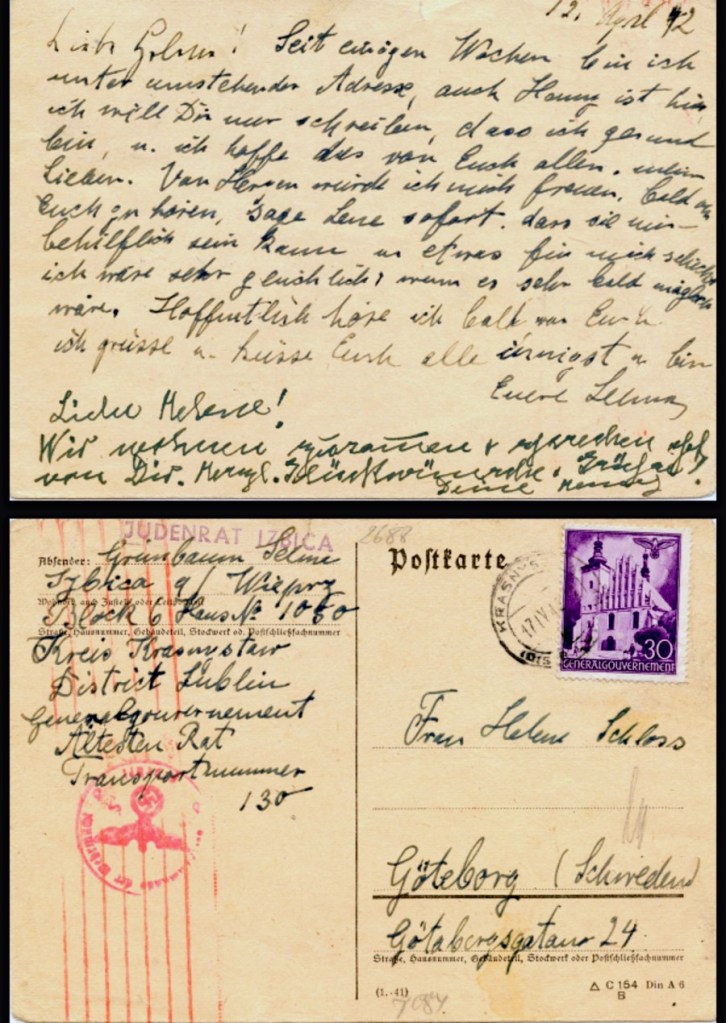
Information Provided by Michael D. Bulmash:
This postcard was sent by Selme Greenbaum from Izbica to Helene Schloss in Göteborg, Sweden. It bears the violet “JUDENRAT IZBICA” cachet, a message written in German, and red Nazi censorship markings.
Izbica, located in the Lublin district of occupied Poland, had one of the largest Jewish populations in the region. Jewish settlement in the town began in the late eighteenth century, and by the early twentieth century Jews constituted more than 90 percent of its inhabitants. The town was also an important center of Hasidic Judaism.
Following the German occupation of Poland in 1939, Izbica was transformed into a transit ghetto and deportation hub for Jews from western Poland, as well as from Germany, Austria, and Czechoslovakia. In December 1939 alone, approximately 3,000 Jews were deported there, and a Judenrat (Jewish Council) was established in early 1940 under German orders.
The area fell under the authority of SS-Hauptscharführer Kurt Engels, whose extreme brutality became notorious among the prisoners and local population. Survivors later recalled that Engels routinely terrorized the ghetto and personally participated in shootings and executions.
Most of Izbica’s approximately 6,500 Jewish residents were eventually deported to and murdered at the extermination camps of Bełżec and Sobibór as part of Operation Reinhard. Among the town’s former residents was Thomas Toivi Blatt, who later escaped from the Sobibór death camp and became one of its best-known survivors and chroniclers.
Today, the Jewish cemetery in Izbica is being reconstructed by the Foundation for the Preservation of Jewish Heritage in Poland.
sources
https://sztetl.org.pl/en/towns/i/668-izbica/116-sites-of-martyrdom/46320-transit-ghetto-izbica
https://digital.kenyon.edu/bulmash/233
https://en.wikipedia.org/wiki/Izbica_Ghetto
https://www.jhi.pl/en/articles/izbica-ghetto-jan-karski-story,2805
https://collections.yadvashem.org/en/deportations/13216684
Donation
Your readership is what makes my site a success, and I am truly passionate about providing you with valuable content. I have been doing this at no cost and will continue to do so. Your voluntary donation of $2 or more, if you are able, would be a significant contribution to the continuation of my work. However, I fully understand if you’re not in a position to do so. Your support, in any form, is greatly appreciated. Thank you. To donate, click on the credit/debit card icon of the card you will use. If you want to donate more than $2, just add a higher number in the box left from the PayPal link. Your generosity is greatly appreciated. Many thanks.
$2.00


Leave a Reply