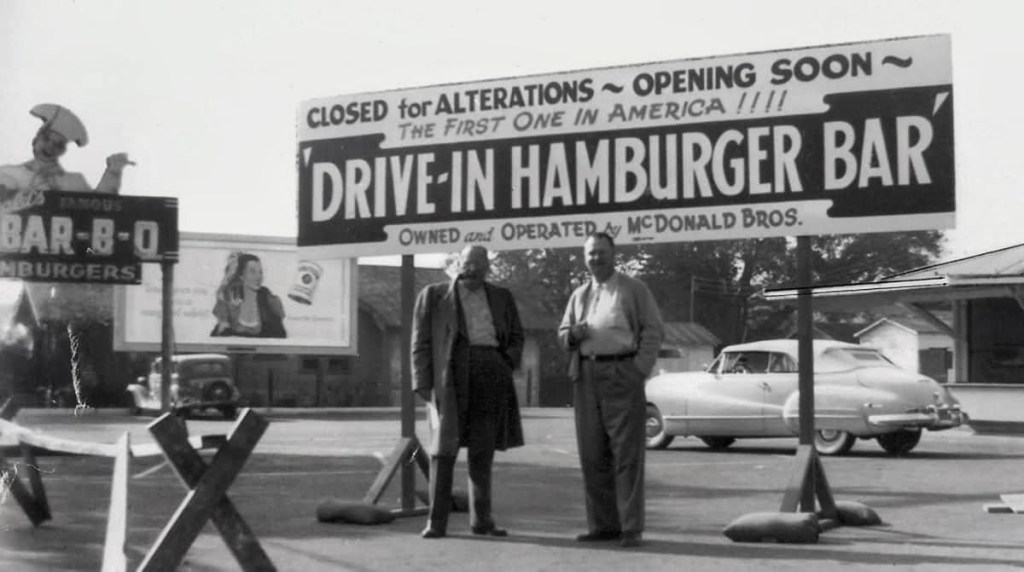
The story of the first McDonald’s restaurant is more than a tale about hamburgers and milkshakes. It is a story about innovation, efficiency, postwar American culture, and the transformation of eating habits across the world. What began as a modest roadside hamburger stand in Southern California eventually became one of the most recognizable business enterprises in modern history. The first McDonald’s restaurant established principles that revolutionized the food industry and created the blueprint for what is now known as fast food.
The origins of McDonald’s can be traced to two brothers, Richard McDonald and Maurice McDonald, commonly known as Dick and Mac McDonald. On May 15 1940, the brothers opened a restaurant in San Bernardino after relocating from New England to California in search of opportunity. Southern California during this period was rapidly expanding due to automobile culture, suburban growth, and the increasing popularity of roadside dining establishments. Restaurants designed for motorists, known as drive-ins, were flourishing along American highways. The McDonald brothers initially operated within this trend, offering barbecue and a broad menu served by carhops to customers seated in their vehicles.
However, the brothers soon recognized inefficiencies in the traditional drive-in model. Carhop service was slow, labor-intensive, and expensive. Menus with dozens of items increased preparation complexity and waste. By carefully studying sales patterns, they discovered that hamburgers accounted for the majority of their profits. In 1948, they closed the restaurant temporarily and radically redesigned the business from the ground up.
When the restaurant reopened, it featured what the brothers called the “Speedee Service System.” This system applied principles similar to industrial assembly-line production to food preparation. Instead of cooks preparing entire meals individually, workers performed specialized tasks in a carefully organized kitchen layout. One employee grilled patties, another added condiments, while another wrapped and served the food. The process emphasized speed, consistency, and low cost.
The redesigned restaurant also dramatically simplified its menu. Most items were eliminated in favor of a small selection centered on hamburgers, cheeseburgers, french fries, milkshakes, soft drinks, and pie. By narrowing the menu, the brothers could streamline operations and maintain uniform quality. Prices became remarkably low for the time: a hamburger cost only fifteen cents, making the restaurant affordable to ordinary families and young people.
Architecturally, the first McDonald’s restaurant was also distinctive. The building featured a clean, modern appearance intended to attract motorists from a distance. Bright colors, stainless steel surfaces, and later the famous golden arches helped create a memorable visual identity. The kitchen was intentionally visible to customers, reinforcing the impression of cleanliness and efficiency. In an era when many roadside eateries were viewed as unsanitary, this transparency became a major selling point.
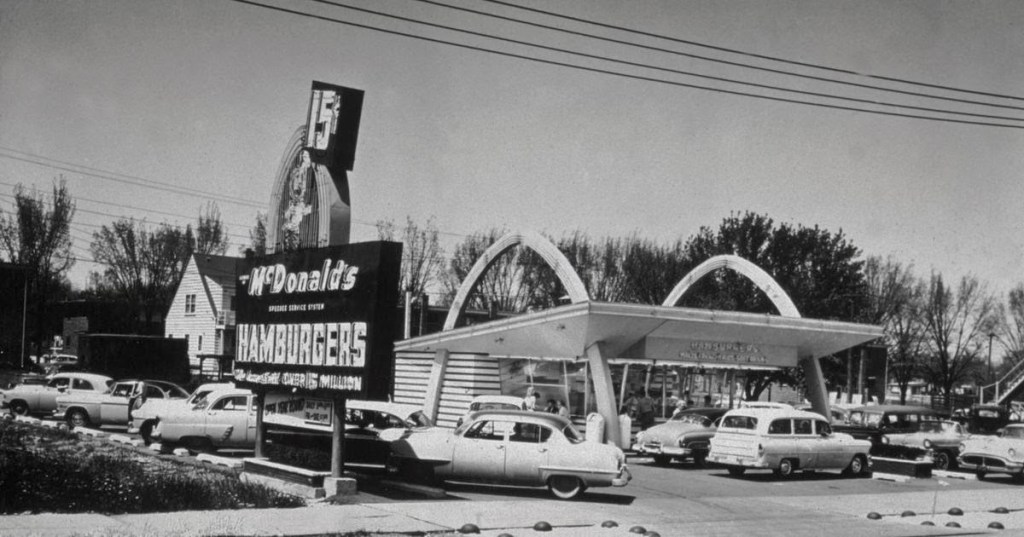
The success of the San Bernardino restaurant reflected broader changes in American society after World War II. The postwar economic boom increased automobile ownership and suburban living. Families increasingly sought inexpensive, quick meals during travel and leisure activities. McDonald’s fit perfectly into this emerging lifestyle. It catered to speed, convenience, and standardized expectations, values that became central to modern consumer culture.
Although the first restaurant was successful, the McDonald brothers themselves did not initially envision the global empire that would follow. Their focus remained on operating a profitable local business rather than aggressively expanding nationwide. This changed when a milkshake machine salesman named Ray Kroc visited the restaurant in 1954. Kroc was intrigued by the unusually large number of milkshake mixers the brothers had ordered and traveled to San Bernardino to see the operation personally.
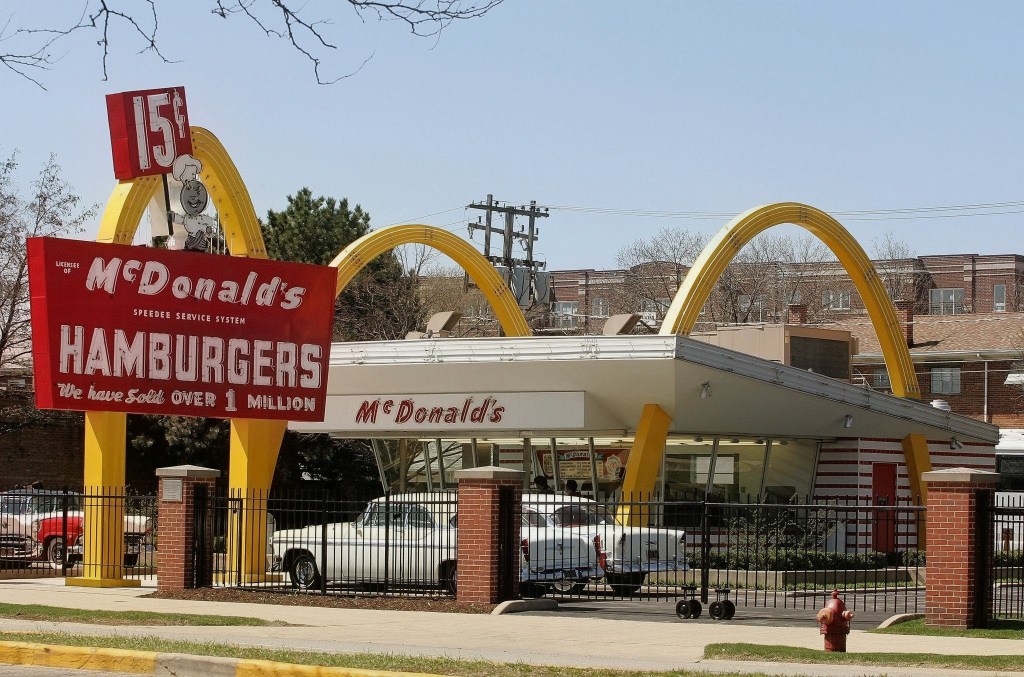
Kroc immediately recognized the broader potential of the system. He believed the McDonald brothers had created not merely a successful restaurant but an entirely new model for food service. Kroc became the company’s franchise agent and soon opened a new McDonald’s location in Des Plaines in 1955. Unlike the brothers, Kroc aggressively pursued national expansion through franchising. He insisted on strict uniformity across locations so that customers would receive the same food and experience regardless of location.
The original San Bernardino restaurant therefore occupies a unique place in business history. It was not the largest restaurant, nor the first hamburger stand in America, but it introduced organizational methods that permanently altered the restaurant industry. The Speedee Service System anticipated many aspects of modern fast-food operations, including standardized procedures, limited menus, rapid turnaround times, and mass franchising.
The influence of the first McDonald’s extended beyond food. It helped shape labor practices, advertising strategies, architecture, and global consumer behavior. The company became a symbol of American capitalism and cultural influence abroad. By the late twentieth century, McDonald’s restaurants existed in countries across Europe, Asia, Latin America, Africa, and the Middle East. The golden arches became one of the most recognized symbols in the world.
At the same time, McDonald’s expansion generated criticism and debate. Some critics argued that fast food contributed to unhealthy diets, environmental waste, and the decline of local dining traditions. Others viewed the spread of McDonald’s as a form of cultural globalization that promoted uniformity at the expense of regional diversity. Nevertheless, even critics acknowledged the extraordinary efficiency and business innovation pioneered by the original restaurant.
Today, the site of the first McDonald’s restaurant in San Bernardino is remembered as a landmark in commercial history. Although the original building no longer operates as a functioning McDonald’s franchise, the location became associated with a museum dedicated to preserving the company’s early history. Visitors can examine memorabilia, photographs, and artifacts from the formative years of the business.
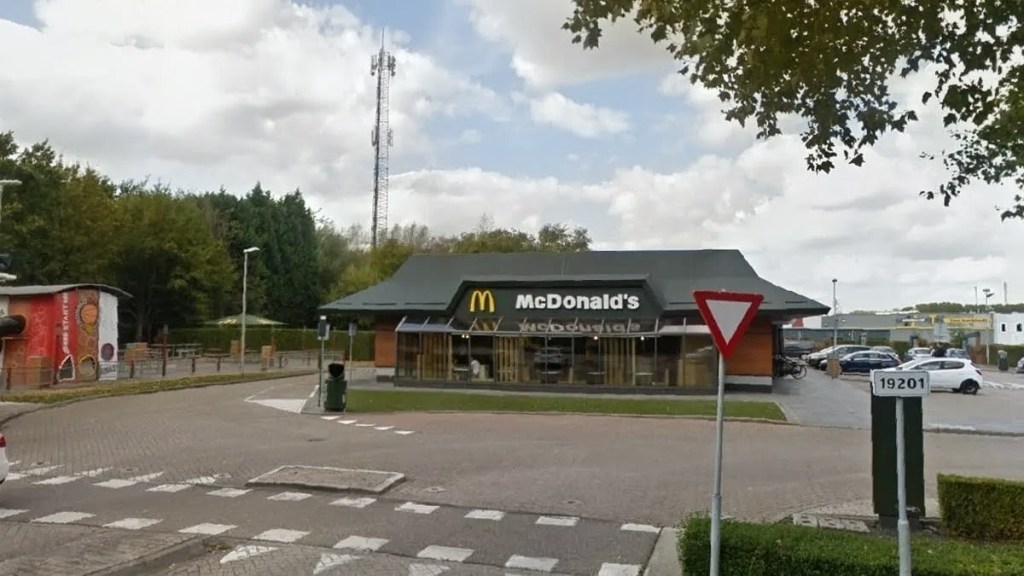
Many moons ago, I got engaged to my lovely wife in the McDonald’s in Geleen, and they say romance is dead.
sources
https://en.wikipedia.org/wiki/Richard_and_Maurice_McDonald
https://en.wikipedia.org/wiki/McDonald%27s
https://corporate.mcdonalds.com/corpmcd/our-company/who-we-are/our-history.html
https://www.ebsco.com/research-starters/history/mcdonalds-corporation


Leave a Reply