No, it’s not those Esptein Files
Here is a refined version with improved flow, tighter structure, stronger transitions, and more polished prose while preserving the substance and historical nuance of the original.
The story of the Beatles is often told as an almost mythic convergence of talent—a once-in-a-generation collision of musical genius in which John Lennon, Paul McCartney, George Harrison, and Ringo Starr transformed the cultural landscape forever. Yet their ascent was far from inevitable. In late 1961, the Beatles were still a rough, leather-clad rock-and-roll group performing chaotic sets in the clubs of Liverpool and Hamburg. They lacked polish, industry connections, a recording contract, and any clear path toward broader success.
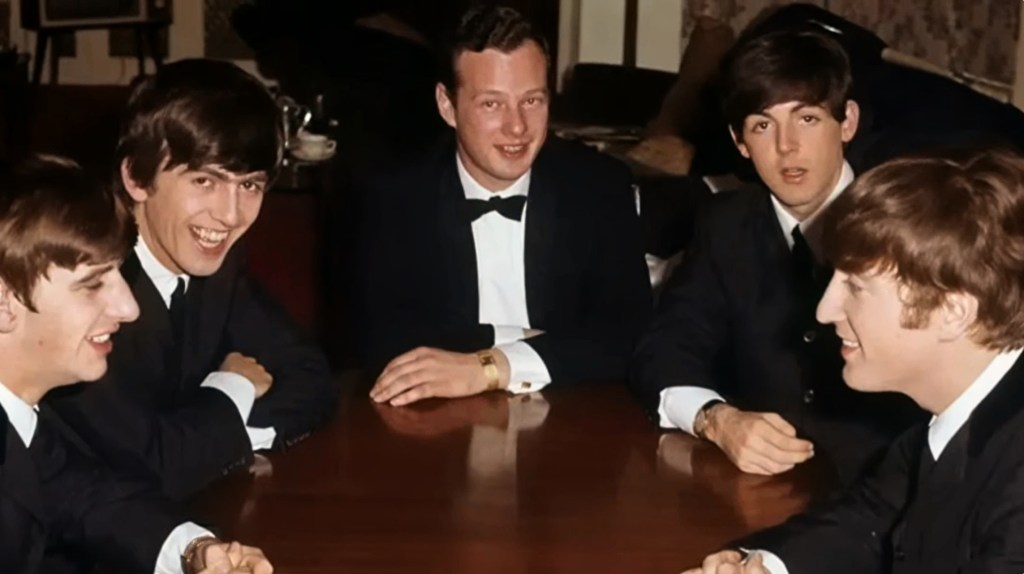
The figure who changed their trajectory was Brian Epstein, an elegant, perceptive record store manager with extraordinary instinct and ambition. Frequently referred to as the “Fifth Beatle,” Epstein did far more than manage the band. He recognized their untapped charisma, refined their public image, and championed them with unwavering conviction, ultimately helping reshape the history of popular music.
Discovery at the Cavern Club
Born in 1934 into a prosperous Jewish family in Liverpool, Brian Epstein was artistic, intelligent, and deeply sensitive—qualities that often left him feeling out of place in conventional society. He briefly attended the Royal Academy of Dramatic Art (RADA) and later served in the military before finding his professional footing managing the record department of his family’s business, NEMS (North End Music Stores). There, Epstein developed a reputation for exceptional customer service and a keen awareness of emerging musical trends.
Legend holds that Epstein first became aware of the Beatles when a customer requested a copy of “My Bonnie,” a single the band had recorded in Germany while backing singer Tony Sheridan. Curious, Epstein visited the Cavern Club on November 9, 1961.
The setting could not have contrasted more sharply with Epstein’s refined demeanor. The Cavern was cramped, smoky, and loud; the Beatles themselves appeared unruly and irreverent, joking with the audience, smoking onstage, and projecting a rough-edged energy cultivated during their Hamburg residencies. Yet beneath the chaos, Epstein immediately recognized something extraordinary. He saw charisma, originality, and musical chemistry that transcended their unpolished presentation. Almost instantly, he resolved to manage them.
Refinement Without Dilution
By January 1962, Epstein had officially become the Beatles’ manager. One of his first priorities was transforming their image—a decision that initially met resistance, particularly from John Lennon.
At the time, the Beatles favored black leather jackets, greased hair, and an aggressive stage persona suited to the rough club circuit. Epstein understood that while this aesthetic thrived in Hamburg’s nightlife scene, it would limit the group’s ability to appeal to major record labels and mainstream audiences.
He introduced a disciplined new presentation:
- The Look: Leather jackets were replaced with tailored, matching collarless grey suits designed by Dougie Millings.
- Stage Conduct: The band was instructed to stop eating, drinking, smoking, and swearing during performances.
- Professionalism: Epstein introduced the now-famous synchronized bow at the end of each set, adding polish and charm without diminishing the group’s youthful vitality.
Importantly, Epstein never attempted to suppress the Beatles’ personalities, humor, or musical instincts. He did not change who they were; he simply framed them in a way the wider world could embrace.
Securing a Recording Contract
Armed with renewed confidence and a more sophisticated presentation, Epstein began pursuing a recording deal. The process was marked by repeated rejection, most famously from Decca Records on New Year’s Day 1962, when executives dismissed the group with the now-infamous claim that “guitar groups are on the way out.”
Epstein remained undeterred. Leveraging both his persistence and his influence as a major music retailer, he secured a meeting with George Martin, head of EMI’s Parlophone label. Martin was impressed not only by the Beatles’ wit and personality but also by Epstein’s complete faith in them.
That meeting proved transformative. The partnership between George Martin and the Beatles would become one of the most influential creative collaborations in recording history.
As the group’s popularity surged in Britain, Epstein orchestrated their expansion into the American market with remarkable precision. His efforts culminated in the Beatles’ appearance on The Ed Sullivan Show in February 1964. Watched by approximately 73 million viewers, the broadcast ignited Beatlemania in the United States and cemented the band’s global dominance.
Epstein’s belief in the Beatles had been fully vindicated.
The Burden of Success
Despite his extraordinary strengths as a promoter and publicist, Epstein was less effective in navigating the financial complexities of the rapidly expanding entertainment industry. Inexperience with global merchandising led him to sign away substantial rights to Beatles-branded products through the company Seltaeb in exchange for only a modest royalty percentage—a decision that ultimately cost the group millions.
At the same time, the Beatles themselves were evolving. By 1966, exhausted by relentless touring, deafening crowds, security threats, and increasingly inadequate live sound systems, the band retired permanently from concert performances. This transition profoundly unsettled Epstein.
For years, his role had centered on coordinating tours, appearances, logistics, and public relations. As the Beatles shifted toward becoming studio-focused artists, Epstein feared he was becoming less essential to their future. He reportedly worried that the band might not renew his management contract when it expired in 1967.
Privately, Epstein carried immense emotional strain. As a gay man living in Britain before homosexuality was decriminalized in 1967, he lived under constant social pressure and concealment. Combined with the demands of managing the world’s most famous band, this isolation contributed to increasing dependence on sleeping pills and stimulants.
A Sudden Death and Lasting Consequences
On August 27, 1967, while the Beatles were attending a transcendental meditation seminar in Wales led by Maharishi Mahesh Yogi, Brian Epstein was found dead in his London home from an accidental overdose of sleeping pills. He was only 32 years old.
The loss devastated the band.
Without Epstein’s steady leadership and emotional mediation, the Beatles gradually began to fracture. Financial confusion plagued their newly formed company, Apple Corps, while personal and artistic tensions intensified. Disputes over management—particularly the divide between Paul McCartney’s support for Lee Eastman and the other Beatles’ preference for Allen Klein—deepened internal divisions that would eventually contribute to the band’s dissolution in 1970.
John Lennon later reflected on the moment with stark clarity: “I knew that we were in trouble then… I thought, ‘We’ve fuckin’ had it now.’”
Legacy of the “Fifth Beatle”
Brian Epstein’s relationship with the Beatles transcended conventional management. He was not merely a businessman guiding a successful act; he served as protector, advocate, strategist, and stabilizing force. His faith in the group was absolute long before the rest of the world recognized their potential.
Without Epstein’s vision, discipline, sophistication, and relentless belief, the Beatles might have remained a talented regional phenomenon within the Merseybeat scene. Instead, he helped transform four young musicians from Liverpool into the defining cultural force of the twentieth century.
In many respects, Brian Epstein did not simply manage the Beatles—he helped create the conditions that allowed the Beatles to become the Beatles.
sources
https://www.britannica.com/biography/Brian-Epstein
https://legacyprojectchicago.org/person/brian-epstein
https://www.bbc.com/culture/article/20250820-the-man-behind-the-beatles-brian-epstein


Leave a Reply