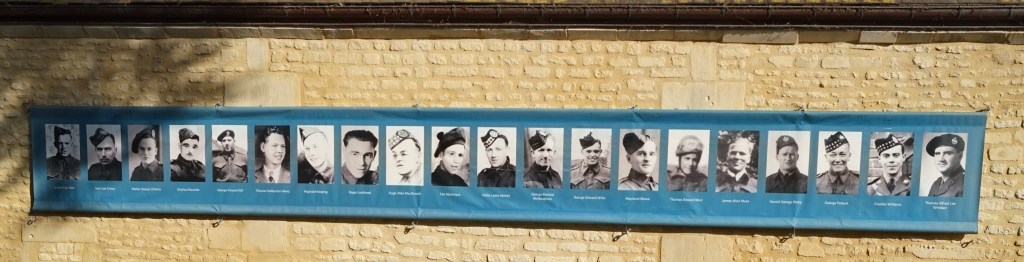
The Ardenne Abbey massacre took place during the Battle of Normandy at Ardenne Abbey, a Premonstratensian monastery in Saint-Germain-la-Blanche-Herbe near Caen, France. In June 1944, members of the 12th SS Panzer Division Hitlerjugend executed 20 Canadian soldiers in the abbey gardens over a period of days and weeks.
The killings formed part of the wider Normandy massacres, a series of atrocities in which up to 156 Canadian prisoners of war were murdered by soldiers of the 12th SS Panzer Division during the Normandy campaign. The division’s members were notorious for their fanaticism, as many had been recruited from the Hitler Youth (Hitlerjugend) organization.
The early days of June 1944 are historically etched as a period of profound triumph—the beginning of the end of Nazi tyranny in Europe. Across the beaches of Normandy, Allied soldiers fought their way through a wall of fire to establish a crucial foothold on the continent. Yet, just miles inland from the chaotic triumph of Juno Beach, a dark, chilling chapter of Canadian military history was unfolding.
The Ardenne Abbey (Abbaye d’Ardenne)—a breathtaking, ancient stone monastery built in the 12th century near Caen, France—swapped its centuries of quiet religious devotion for deep, industrial-grade horror. Over the course of several days following D-Day, 20 Canadian prisoners of war were systematically executed within its walled gardens by their German captors. It was an act that stripped away any illusion of wartime chivalry, standing today as one of the most egregious war crimes ever committed against Canadian service members.
The Clash of Ideologies
To understand how a peaceful monastery transformed into an execution ground, one must look at the combatants who collided in the grain fields of Normandy on June 7, 1944.
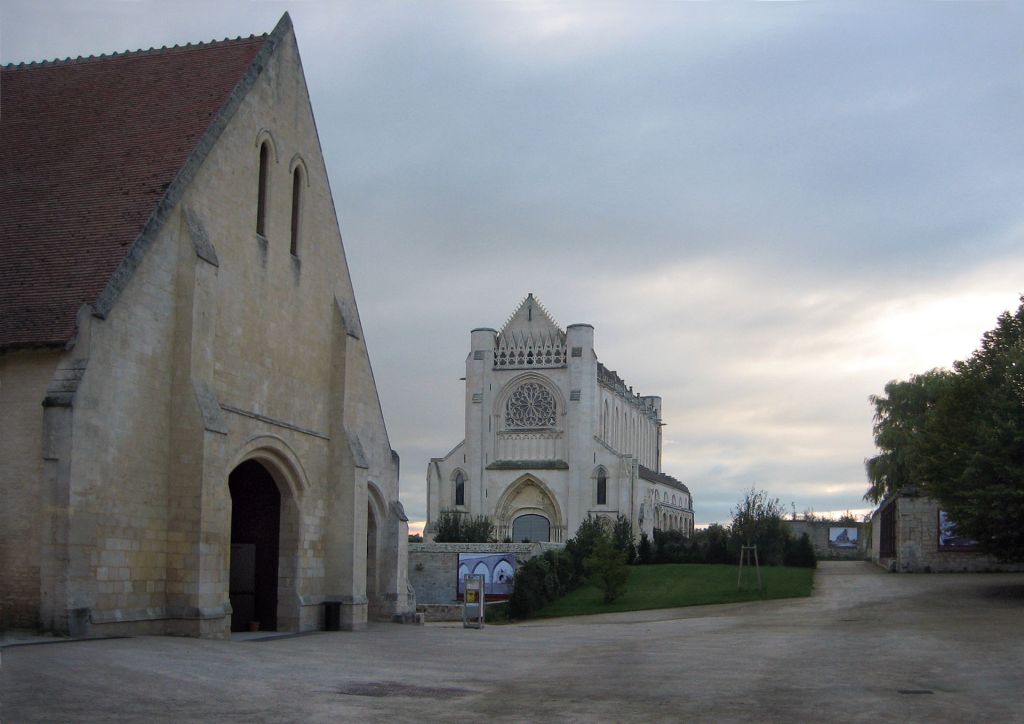
The advancing Allied forces, specifically the North Nova Scotia Highlanders and the 27th Canadian Armoured Regiment (The Sherbrooke Fusiliers), were moving aggressively toward the strategic Carpiquet airfield. Confronting them was the 12th SS Panzer Division Hitlerjugend (Hitler Youth).
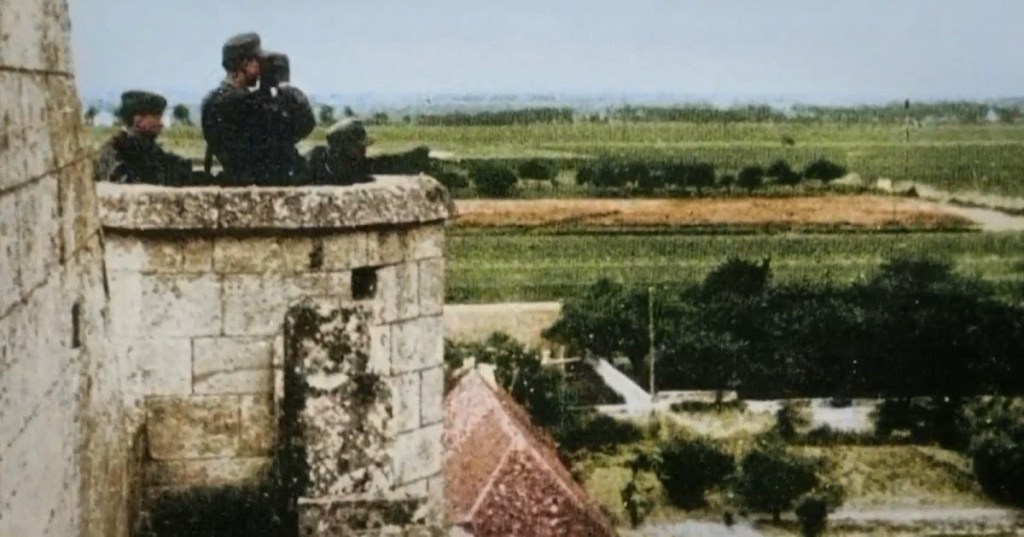
The composition of this German division was volatile. The bulk of its ranks consisted of fanatical, highly brainwashed 17- and 18-year-old teenagers raised entirely under the radical apparatus of the Third Reich. However, their officers and non-commissioned officers were battle-hardened veterans fresh from the Eastern Front, where they had grown utterly desensitized to the brutal, lawless realities of total war. They had been subtly instructed by their commander, Standartenführer Kurt Meyer, to show no mercy and take no prisoners, framing the coming invasion as a vengeful retaliation for the Allied bombing of German cities.
When the Canadians pushed through the nearby villages of Authie and Buron, they hit a ferocious German counterattack. Outnumbered and cut off, many Canadians fought until they ran out of ammunition, ultimately surrendering under the assumption that they would be protected by international law and the Geneva Convention. They were marched to the rear, right into Kurt Meyer’s newly established headquarters inside the Ardenne Abbey.
Horror in the Garden
What followed over the next 48 hours was not the chaos of the battlefield, but the cold, deliberate execution of defenseless men.
On the evening of June 7, eleven Canadian prisoners were isolated at the abbey. Denied their basic rights as POWs, they were violently interrogated. When they offered nothing more than their names, ranks, and serial numbers, the SS guards struck them across the face. As night fell, these eleven men—members of the North Nova Scotia Highlanders and the Sherbrooke Fusiliers—were marched one by one into the abbey’s cloisters and garden. They were executed, some beaten with rifle butts and others shot directly in the back of the head.
The nightmare resumed the following day, June 8. Seven more North Nova Scotia Highlanders were brought to the abbey. A young Polish soldier pressed into German service, Jan Jesionek, later testified to the clinical brutality of that afternoon. The men were kept in the courtyard and called into the garden one by one through a narrow stone passageway. As each man turned the corner, an SS officer executed him with a machine pistol.
By the time the third or fourth name was called, the remaining Canadians realized exactly what was happening. In an incredibly heartbreaking display of quiet dignity and defiance, the remaining men shook hands with one another, saying their final goodbyes before walking calmly to their deaths.
On June 17, two more Canadian soldiers, patrolling for disabled tanks, were captured, brought to the abbey’s medical post, and subsequently executed, bringing the abbey’s death toll to twenty.
Discovery and Post-War Justice
The bodies of the murdered Canadians were not left where they fell. In a desperate attempt to conceal evidence of their war crimes, the SS soldiers buried the men in shallow, well-concealed graves throughout the abbey garden.
When the Regina Rifles finally liberated the heavily damaged abbey on July 8, the physical scale of the crime remained hidden. It wasn’t until the winter and spring of 1945, as local French residents—including the Vico family, who lived on the premises—returned to clear the debris, that the graves were uncovered. In a haunting twist of fate, Mrs. Vico noticed that snowdrop bulbs she had planted before the war were growing in an erratic, disrupted pattern. Digging into the earth, she discovered the bodies of the missing soldiers.
+————————————————————–+
| THE RECOVERY AT ARDENNE ABBEY (1944) |
+————————————————————–+
| June 7: 11 Canadians executed by nightfall. |
| June 8: 7 Canadians executed one-by-one at noon. |
| June 17: 2 Canadian patrollers executed. |
| Early 1945: Hidden graves discovered by local residents. |
+————————————————————–+
In December 1945, Kurt Meyer was put on trial by a Canadian military court in Germany. He denied personal knowledge of the executions, but the evidence of his toxic commands and the systemic behavior of his troops was overwhelming. Convicted of inciting his men to deny quarter and being responsible for the murders at the abbey, Meyer was initially sentenced to death.
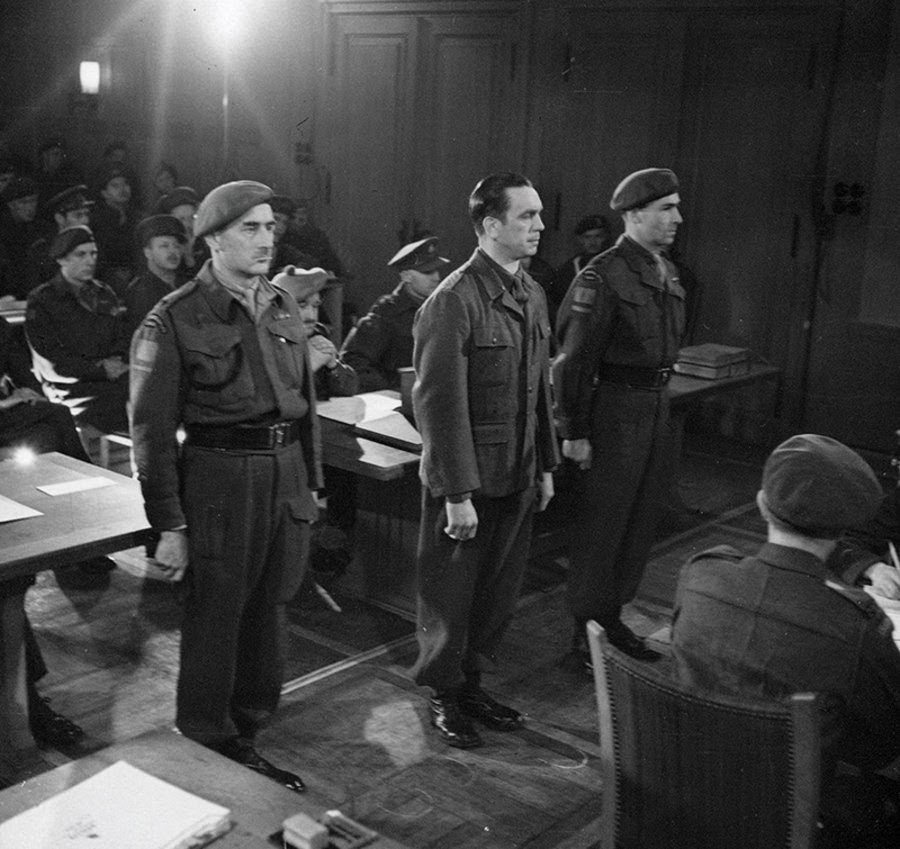
However, in a move that still stirs deep resentment among Canadian veterans, his sentence was commuted to life imprisonment. He served only eight years in a New Brunswick penitentiary before being transferred to a prison in Germany and completely released in 1954. He died a free man seven years later.
A Legacy of Remembrance
The Ardenne Abbey Massacre was not an isolated incident; it was part of a larger pattern known as the Normandy Massacres, during which the 12th SS executed up to 156 Canadian POWs across the French countryside. Yet, the abbey holds a unique, somber place in the collective memory of the war. It represents a spot where the absolute worst of human fanaticism briefly snuffed out the lives of young men who crossed an ocean to fight for a free Europe.
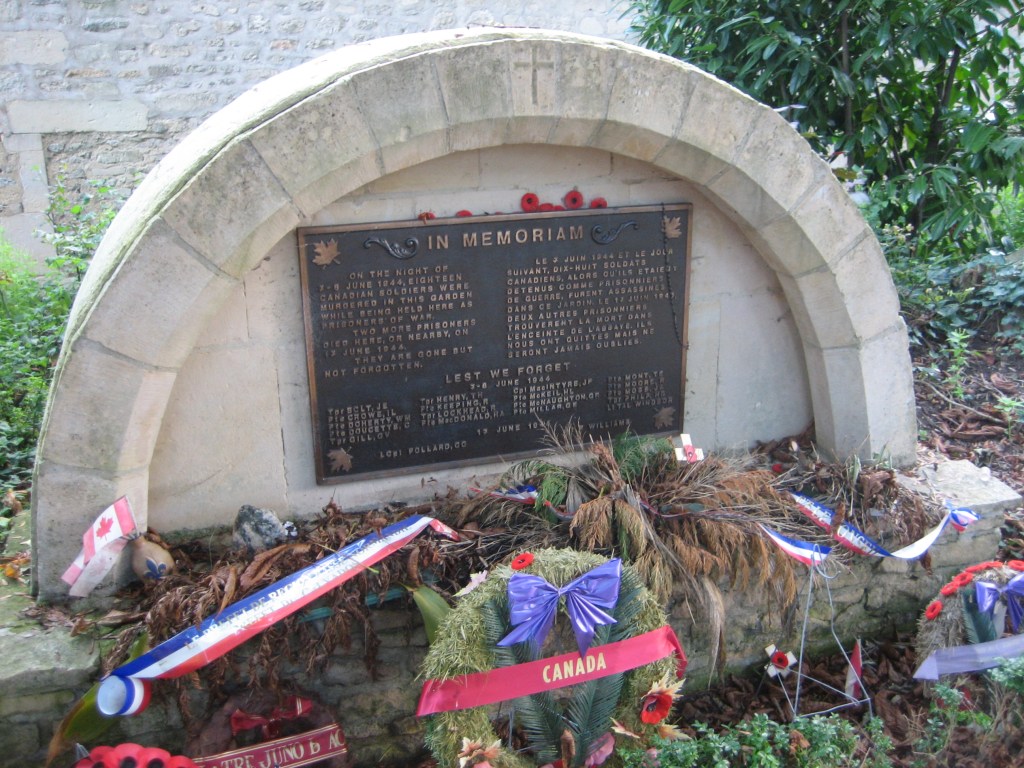
Today, visitors to the Abbaye d’Ardenne will find a beautifully restored historic site, but its heart remains the small garden near the southwest wall. A bronze memorial plaque, surrounded by small Canadian maple leaf flags left by travelers and pilgrims, stands among the flowers. The inscription reads:
“On the night of June 7/8, 1944, 18 Canadian soldiers were murdered in this garden while being held here as prisoners of war. Two more prisoners died here or nearby on June 17. They are gone but not forgotten.”
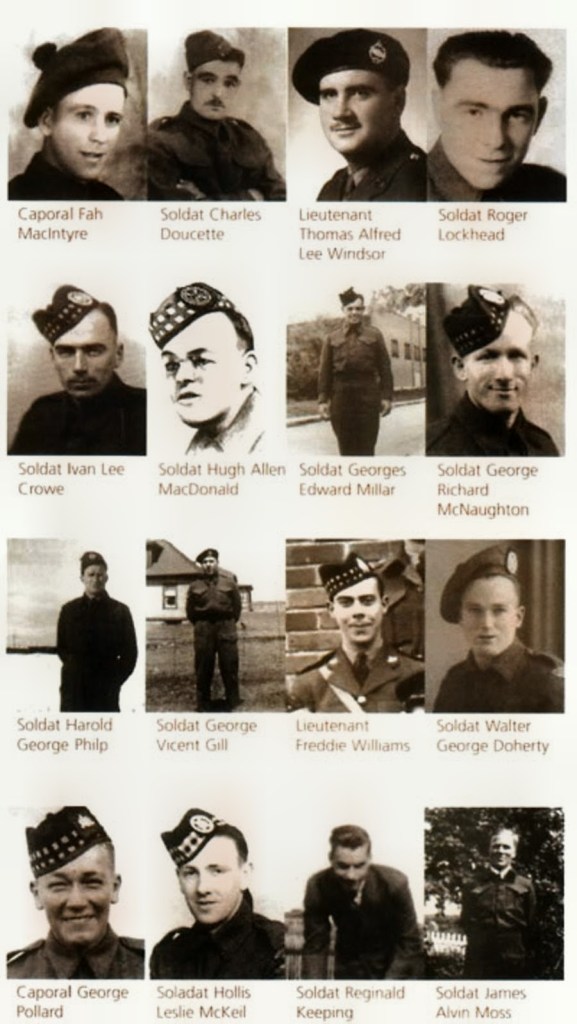
The snowdrops still bloom in the garden, serving as a permanent, living monument to twenty brave men who met an unjust end in the shadow of the stone walls.
sources
https://www.europeremembers.com/en/pois/1781/the-massacre-of-abbaye-dardennes-ardennes-abbey
https://www.veterans.gc.ca/en/remembrance/memorials/overseas/abbaye-dardenne
https://en.wikipedia.org/wiki/Ardenne_Abbey_massacre
Donation
Your readership is what makes my site a success, and I am truly passionate about providing you with valuable content. I have been doing this at no cost and will continue to do so. Your voluntary donation of $2 or more, if you are able, would be a significant contribution to the continuation of my work. However, I fully understand if you’re not in a position to do so. Your support, in any form, is greatly appreciated. Thank you. To donate, click on the credit/debit card icon of the card you will use. If you want to donate more than $2, just add a higher number in the box left from the PayPal link. Your generosity is greatly appreciated. Many thanks.
$2.00


Leave a comment