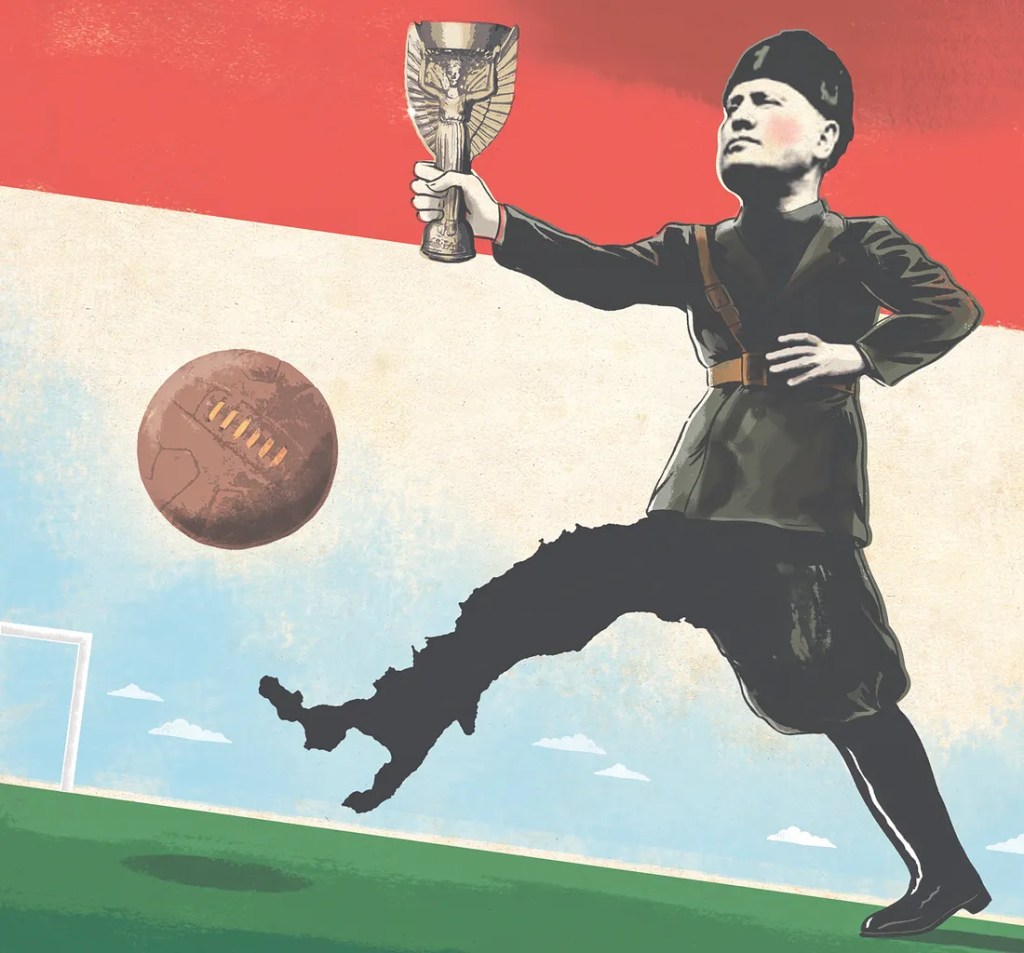
We all know how Hitler used the 1936 Summer Olympics as a massive propaganda tool, and even in 2026 the second-largest sporting event in the world, the FIFA World Cup, remains deeply politicised. But this is nothing new. So, with the World Cup just a week away, let’s take a look back at the 1934 World Cup.
The 1934 FIFA World Cup was the second edition of the FIFA World Cup, the quadrennial international football championship for senior men’s national teams. The tournament took place in Italy from 27 May to 10 June 1934.
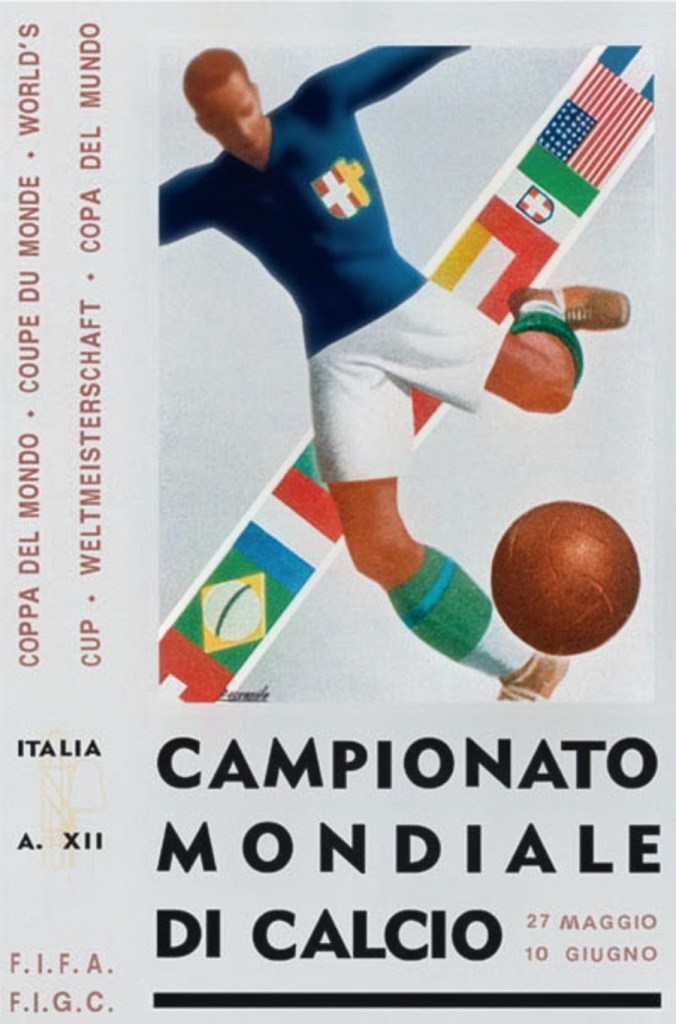
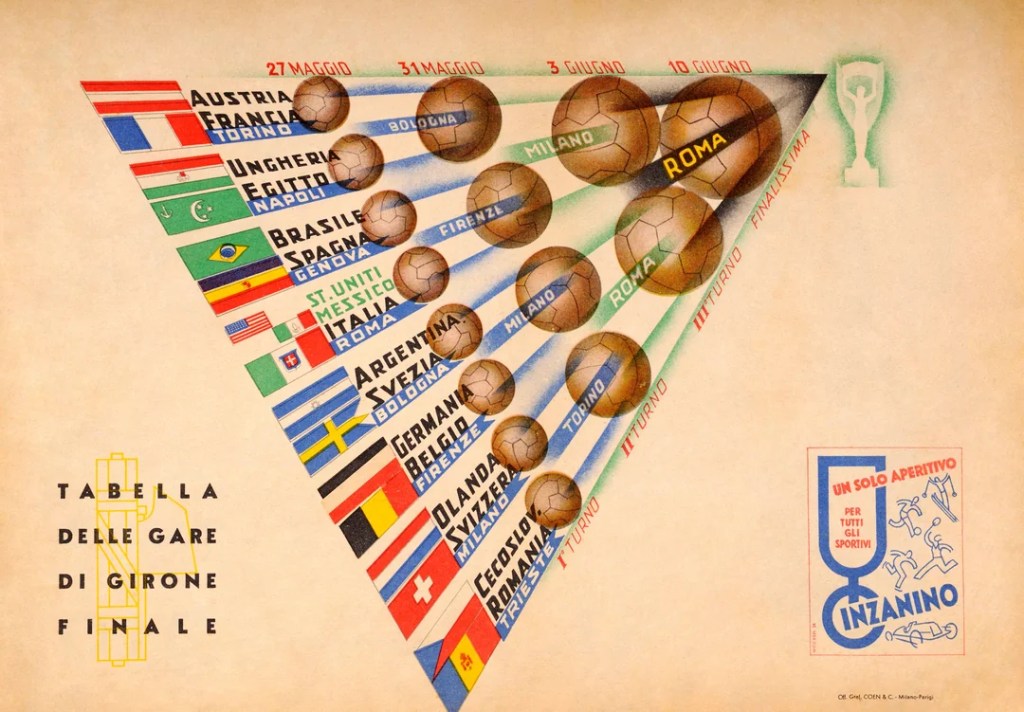
It was also the first World Cup in which teams had to qualify for the tournament. Thirty-two nations entered the qualification process, with 16 teams advancing to the finals in Italy. Defending champions Uruguay chose to boycott the competition in response to the low European participation at the inaugural 1930 World Cup, when only four European teams travelled to South America.
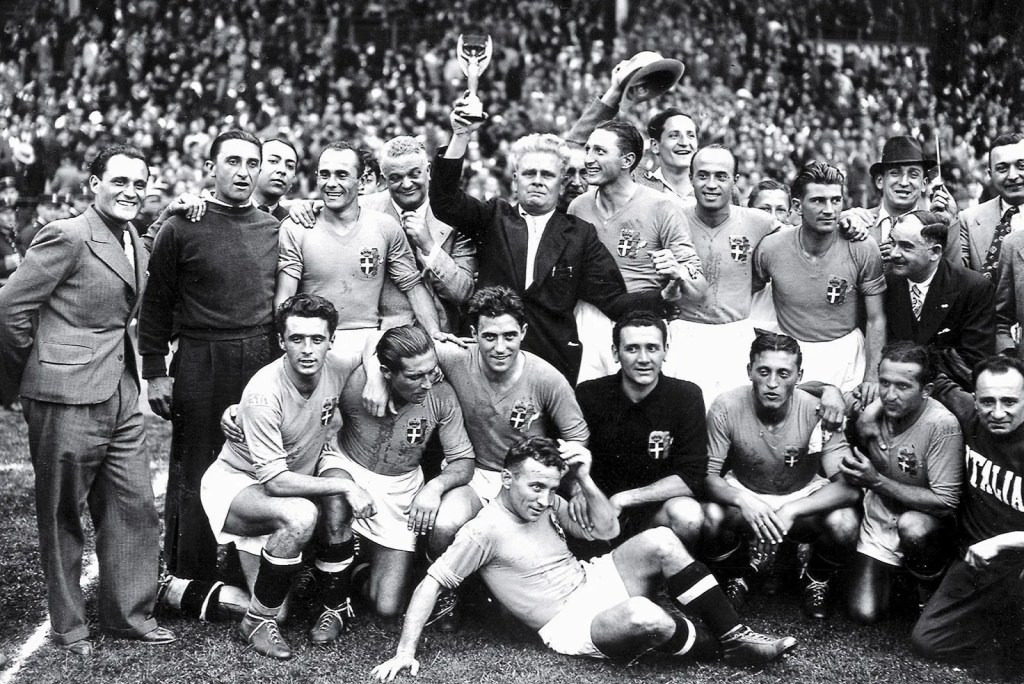
The tournament ultimately ended with Italy defeating Czechoslovakia 2–1 after extra time in the final, making Italy the second World Cup champions and the first European nation to win the competition.
Setting the Stage for Fascism
By 1934, Mussolini had been in power for over a decade. His regime was obsessed with the concept of romanità—rekindling the strength, discipline, and imperial dominance of the ancient Roman Empire. Fascism demanded a fiercely loyal, physically dominant populace, and Mussolini realized that nothing captured the collective imagination of the Italian public quite like calcio (football).
When Italy was awarded the right to host the second-ever World Cup, Mussolini personally took the reins of the organizing committee. The tournament was meticulously designed to project an image of a hyper-efficient, modern, and powerful fascist state to the rest of the world.
The Infrastructure: Massive, imposing stadiums were built or heavily renovated in eight host cities, featuring clean lines and stark, fascist architecture. The stadium in Turin was even named the Stadio Benito Mussolini.
The Atmosphere: Match days were less about simple sporting celebration and more about structured political rallies. Blackshirts filled the stands, giant posters of Il Duce loomed over the pitches, and fans were greeted with synchronized fascist salutes.
“Win or Die”: The Pressure on the Azzurri
For the Italian national team (the Azzurri), the tournament wasn’t a game; it was a military assignment. The legendary coach Vittorio Pozzo was tasked with turning his players into soldiers of the state.
To bolster the squad, the regime utilized a bit of tactical bureaucracy. They exploited citizenship laws to recruit oriundi—South American players of Italian descent. Stars like Luis Monti, who had played for Argentina in the 1930 World Cup final, were suddenly drafted into the Italian military and fast-tracked to wear the Italian jersey.
The stakes were made terrifyingly clear. Before the tournament kicked off, Mussolini reportedly issued a blunt, infamous directive to the team: “Vincere o morire”—Win or die. While it was likely meant as a heavy-handed fascist metaphor for giving maximum effort, the psychological weight on the players was immense.
The Dark Cloud of Controversy
Italy did win, lifting the trophy after defeating Czechoslovakia 2-1 in extra time during the final in Rome. But the victory remains one of the most controversial in sporting history, heavily marred by accusations of intimidation and match-fixing.
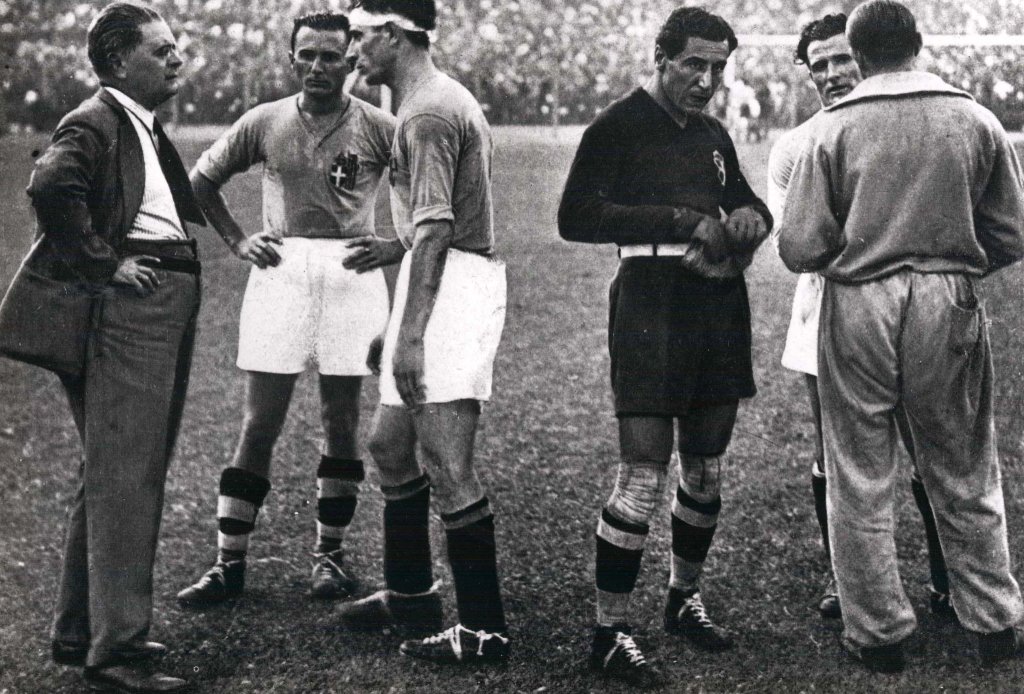
Mussolini didn’t leave the outcomes entirely to chance. He routinely dined with referees and officials the night before crucial matches. The results on the pitch raised eyebrows across Europe:
The Quarterfinal vs. Spain: A notoriously brutal, physical match that ended in a 1-1 draw. Several Spanish players were injured due to unpunished, violent tackles by the Italians. In the replay the next day, the Swiss referee made several highly questionable calls, disallowing two Spanish goals, allowing Italy to escape with a 1-0 win.
The Semifinal vs. Austria: Facing the famous Austrian Wunderteam, Italy won 1-0. The match referee, Ivan Eklind of Sweden, was personally invited to Mussolini’s private box before the game. During the match, Eklind actively intercepted an Austrian pass with his head, effectively playing defense for the Italian side. Eklind was subsequently chosen to referee the final.
The Ultimate Propaganda Coup
When the final whistle blew on June 10, 1934, Mussolini had exactly what he wanted.
The Azzurri did not just receive the standard Jules Rimet trophy; Mussolini presented them with a massive, custom-built trophy of his own creation—the Coppa del Duce—which was physically much larger than the official FIFA prize. The Italian players stood on the podium, forced to give the fascist salute while the stadium erupted.
The state-controlled press went into overdrive, framing the sporting victory as undeniable proof of fascist superiority and national rebirth. Mussolini successfully used the beautiful game to unite a fractured country under his banner, if only temporarily, and showed the world’s dictators just how powerful a weapon the sports stadium could be.
sources
https://www.espn.co.uk/football/story/_/id/37363912/1934
https://www.history.co.uk/articles/1934-world-cup-mussolini-fascist-propaganda
Click to access 4_Studies_2012_3_117.pdf
https://en.wikipedia.org/wiki/1934_FIFA_World_Cup
Donation
Your readership is what makes my site a success, and I am truly passionate about providing you with valuable content. I have been doing this at no cost and will continue to do so. Your voluntary donation of $2 or more, if you are able, would be a significant contribution to the continuation of my work. However, I fully understand if you’re not in a position to do so. Your support, in any form, is greatly appreciated. Thank you. To donate, click on the credit/debit card icon of the card you will use. If you want to donate more than $2, just add a higher number in the box left from the PayPal link. Your generosity is greatly appreciated. Many thanks.
$2.00


Leave a Reply