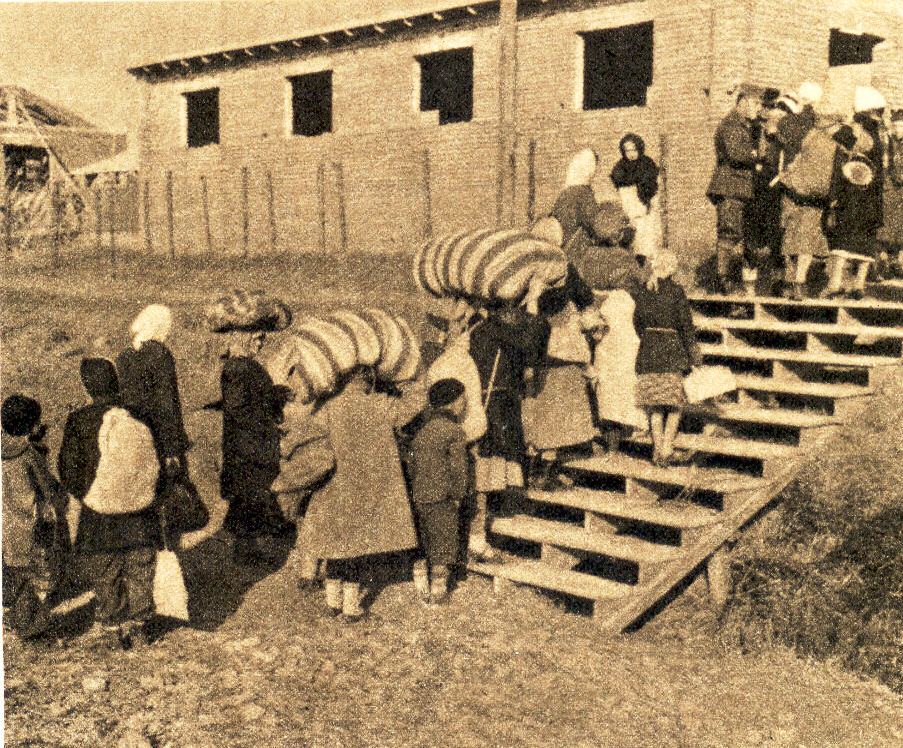
Contrary to popular belief, concentration camps were not a Nazi invention; the British military had already established them in South Africa during the Second Boer War.

It could be argued that Native American reservations in the United States shared certain characteristics with concentration camps, although the comparison remains the subject of historical debate.
That said, the camps established immediately before and during the Second World War were on an entirely different scale in terms of their purpose, brutality, and systematic nature than either the South African concentration camps or Native American reservations.
History also seems to have largely overlooked the concentration camps established by Fascist Italy. Although Benito Mussolini is often remembered as a somewhat farcical figure, he was nevertheless a ruthless dictator who embraced and implemented a deeply destructive fascist ideology.
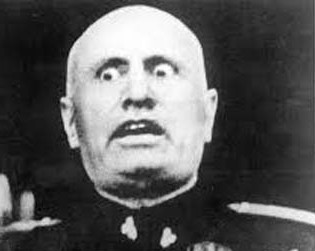
Italy is often portrayed as having been a comparatively benign fascist power during the Second World War—a reluctant partner of Nazi Germany. The Italian Army is frequently remembered as poorly equipped, inefficient, and ineffective, especially when contrasted with the ruthlessly efficient brutality of the German war machine.
This perception, however, can obscure the reality of the crimes committed by the Fascist regime. Among the camps established by Italy was the Rab concentration camp.
Rab concentration camp was one of several concentration camps established by Fascist Italy. It was created in July 1942 on the Italian-occupied island of Rab, now part of Croatia. Historians James Walston and Carlo Spartaco Capogreco have argued that the camp’s annual mortality rate, at approximately 18%, exceeded the average mortality rate recorded at the Nazi concentration camp Buchenwald (around 15%).
In a report dated 5 August 1943 to Pope Pius XII, Monsignor Jože Srebrnič, Bishop of Krk (Veglia), described conditions in the camp:
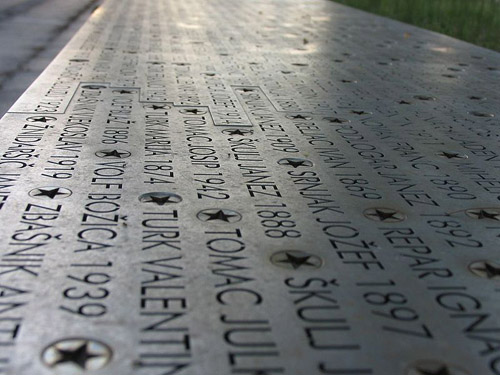
“Witnesses, who took part in the burials, state unequivocally that the number of the dead totals at least 3500”.
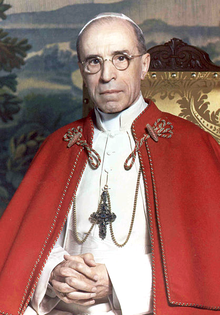
Following Italy’s armistice with the Allies in September 1943, the Rab concentration camp was closed. Many of the surviving prisoners were freed, but some of the remaining Jewish internees were captured by German forces and deported to the Auschwitz extermination camp.
In the aftermath of the war, the governments of Yugoslavia, Greece, and Ethiopia requested the extradition of approximately 1,200 Italians accused of war crimes. However, few, if any, were brought before an international tribunal. As the Cold War began, the British government viewed Marshal Pietro Badoglio as an important guarantor of a stable, anti-communist post-war Italy, and support for pursuing Italian war crimes prosecutions diminished..
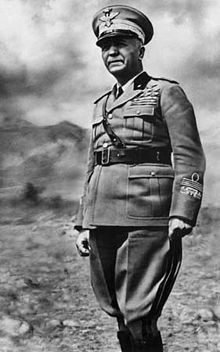
Under the command of General Mario Roatta, the Italian Army carried out a campaign of repression against the Slovene civilian population that many historians have described as amounting to ethnic cleansing. The violence often rivalled that of the German occupation forces, involving summary executions, hostage-taking and reprisals, the internment of civilians in the Rab and Gonars concentration camps, and the burning of homes and entire villages.
Roatta reinforced these policies with additional directives, instructing that his orders were to be “carried out most energetically and without any false compassion”—a phrase that has become emblematic of the brutality of the Italian occupation.
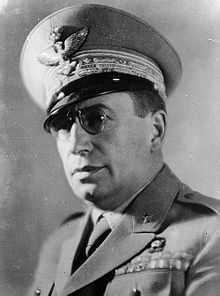
- “if necessary don’t shy away from using cruelty. It must be a complete cleansing. We need to intern all the inhabitants and put Italian families in their place.”
- Mario Roatta in his Circolare No.3 “issued orders to kill hostages, demolish houses and whole villages: his idea was to deport all inhabitants of Slovenia and replace them with Italian settlers” in Province of Ljubljana, in response to Slovene partisans resistance in the province.
Following Roatta’s orders, one of his soldiers in his July 1, 1942 letter wrote home:
- “We have destroyed everything from top to bottom without sparing the innocent. We kill entire families every night, beating them to death or shooting them.”
Roessmann Uroš, one of the Rab internees, a student at the time, remembers:
- “There were frequent razzias when the train taking us to school in Ljubljana from our village of Polje pulled in to the main station. Italian soldiers picked us all up. Some were released, and others were sent to (Italian) concentration camps. Nobody knew who decided, or on what grounds.“
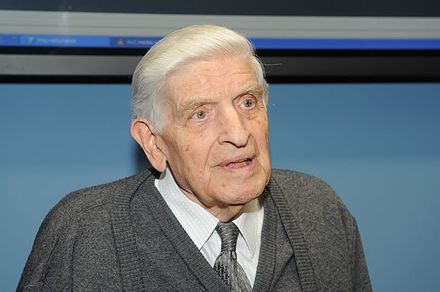
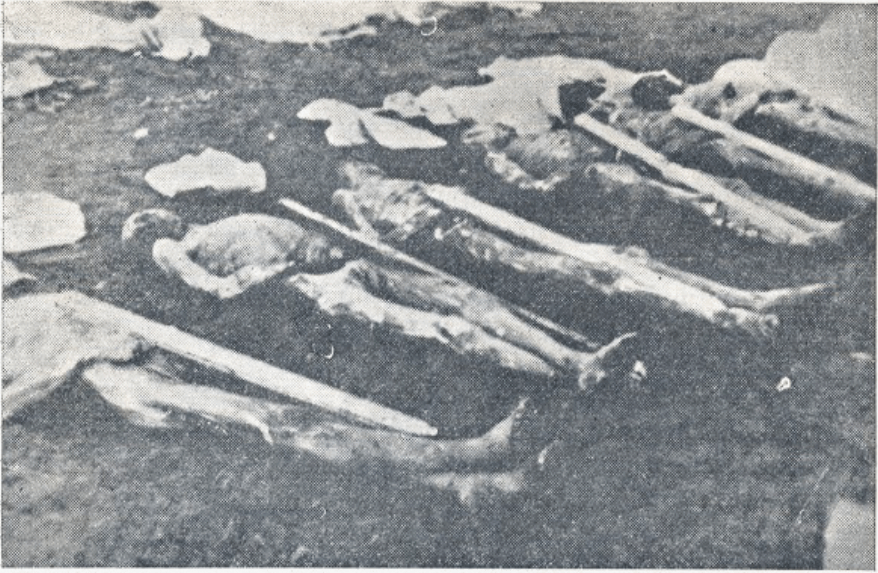
Anton Vratuša, a former prisoner at Rab who later served as Yugoslavia’s ambassador to the United Nations, recalled that the complex consisted of four separate camps. Prisoners also spoke grimly of a “fifth camp”—the cemetery where the hundreds who succumbed to cold, starvation, and disease were buried.
Located near the village of Kampor on the island of Rab, the camp was one of several concentration and internment camps established by Fascist Italy along the Adriatic coast to detain Slovenian and Croatian civilians. Opened in July 1942, it was officially designated the “Camp for the Concentration and Internment of War Civilians – Rab.”

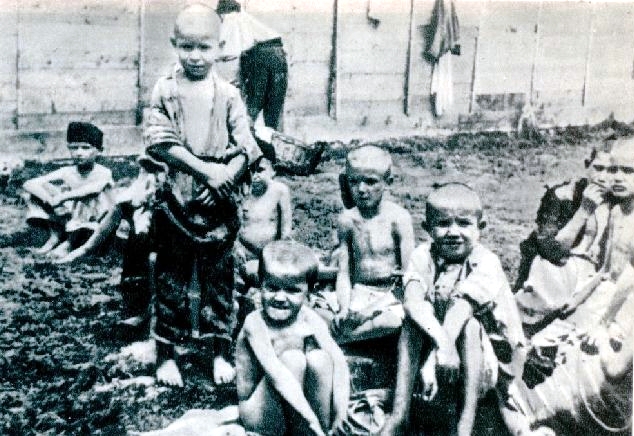
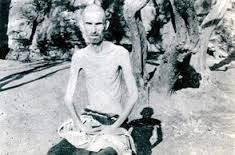
The camp’s inmates—predominantly Slovenes and Croatians, many of them women and children, including pregnant women and newborns—endured severe cold and chronic hunger while living in open-air tents enclosed by barbed wire and guarded by watchtowers. At its peak, the camp held as many as 15,000 internees.
Conditions were widely described as appalling: filthy, muddy, overcrowded, and infested with insects. The Slovene writer Metod Milač, who was imprisoned at Rab, recalled in his memoirs that six people were typically assigned to each tent and survived on a daily ration consisting of thin soup, a few grains of rice, and small pieces of bread. Hunger was so severe that prisoners competed for access to the camp’s meagre water supply—a single barrel—while many became infested with lice and suffered from dysentery as a result of the unsanitary conditions. Flash floods also washed away parts of the encampment, further worsening the inmates’ suffering.
Even some Italian officials acknowledged that the treatment of the prisoners was both inhumane and counterproductive. In January 1943, the commanding officer of the 14th Battalion of the Carabinieri reported:
“In the last few days some internees have returned from the concentration camp in such a state of physical emaciation, a few in an absolutely pitiful condition, that a terrible impression has been created in the general population. Treating the Slovene population like this palpably undermines our dignity and is contrary to the principles of justice and humanity to which we make constant reference in our propaganda.”
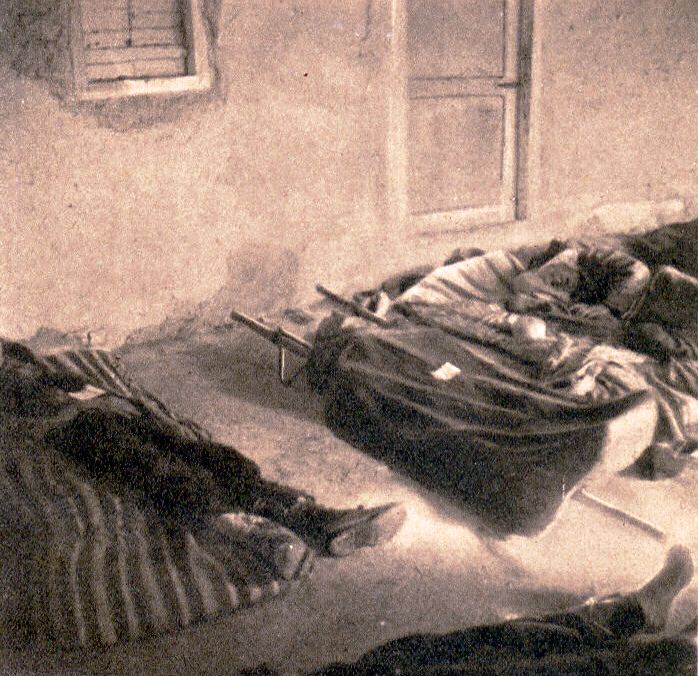
By 1 July 1943, the Italian Army had interned 2,118 Yugoslav Jews at Rab. Beginning in June 1943, they were transferred to a newly constructed section of the camp separate from the Slovene and Croatian compounds. Unlike the Slovene and Croatian prisoners, the Jewish internees were provided with substantially better accommodation, sanitation, and other facilities. They were housed in wooden and brick barracks and small houses rather than the overcrowded tents in which most Slovene and Croatian civilians were confined.
The historian Franc Potočnik, himself an inmate in the Slavic section of the camp, later described the striking contrast:
“The [Slavic] internees in Camp I could watch through the double barriers of barbed wire what took place in the Jewish camp. The Jewish internees were living under conditions of true internment for their ‘protection’, whereas the Slovenes and Croatians were in a regime of ‘repression’… They brought a lot of baggage with them. Italian soldiers carried their luggage into little houses of brick destined for them. Almost every family had its own little house… They were reasonably well dressed; in comparison, of course, to other internees.”
The disparity in treatment reflected a deliberate policy of the Italian military authorities. In July 1943, the Civil Affairs Office at the headquarters of the Italian Second Army issued a memorandum entitled The Treatment of Jews in the Rab Camp, which was approved by both the head of the office and the army’s chief of staff.
The memorandum’s author, Major Prolo, argued that the camp’s infrastructure should be:
“…comfortable for all internees without risk to the maintenance of order and discipline. Inactivity and boredom are terrible evils which work silently on the individual and collectivity. It is prudent that in the great camp of Rab those concessions made to the Jews of Porto Re to make their lives comfortable should not be neglected.”
He concluded with an explicit acknowledgement of the exceptional policy adopted by Italy toward Jewish internees:
“The Jews have the duties of all civilians interned for protective reasons, and a right to equivalent treatment, but for particular, exceptional political and contingent reasons, it seems opportune to concede, while maintaining discipline unimpaired, a treatment consciously felt to be ‘Italian’ which they are used to from our military authorities, and with a courtesy which is complete and never half-hearted.”
Some historians have argued that sections of the Italian military regarded the relatively humane treatment of Jewish internees as a means of preserving Italy’s military and political honour while resisting German demands to surrender Jews under Italian control. Historian Jonathan Steinberg described this as “a kind of national conspiracy” within elements of the Italian military to frustrate the far more systematic brutality of Nazi anti-Jewish policy. As the Slovenian survivor Anton Vratuša later recalled: “We were prisoners; they were protected people. We used their assistance.”
By mid-1943, Rab held approximately 7,400 internees, of whom around 2,700 were Jews. Mussolini’s fall in July 1943 heightened fears that the Jewish internees would eventually be handed over to Germany. The Italian Foreign Ministry repeatedly instructed the General Staff that they should not be released unless they requested it themselves, while simultaneously preparing plans to transfer them to the Italian mainland. Nevertheless, on 16 August 1943, the military authorities ordered that the Jewish internees be released, although those who wished could remain in the camp.
Italy retained control of Rab until after the Armistice of 8 September 1943, when German forces occupied the island. Around 245 former Jewish internees joined the Rab Brigade of the 24th Division of the People’s Liberation Army and Partisan Detachments of Yugoslavia, forming what became known as the Rab Battalion before its members were later dispersed among other Partisan units.
Most of the Jewish internees successfully reached Partisan-held territory. However, approximately 204—around 7.5 per cent of the Jewish population of the camp—were too elderly or ill to escape. They were captured by the Germans and deported to Auschwitz, where they were murdered. For his role in rescuing many of the Jews evacuated from Rab in September 1943, Ivan Vranetić was later recognised as one of the Righteous Among the Nations.ian Righteous among the Nations for saving the Jews evacuated from Rab in September 1943.

Sources
https://en.wikipedia.org/wiki/Rab_concentration_camp
https://www.tracesofwar.com/sights/1247/Concentration-Camp-Rab.htm


Leave a Reply