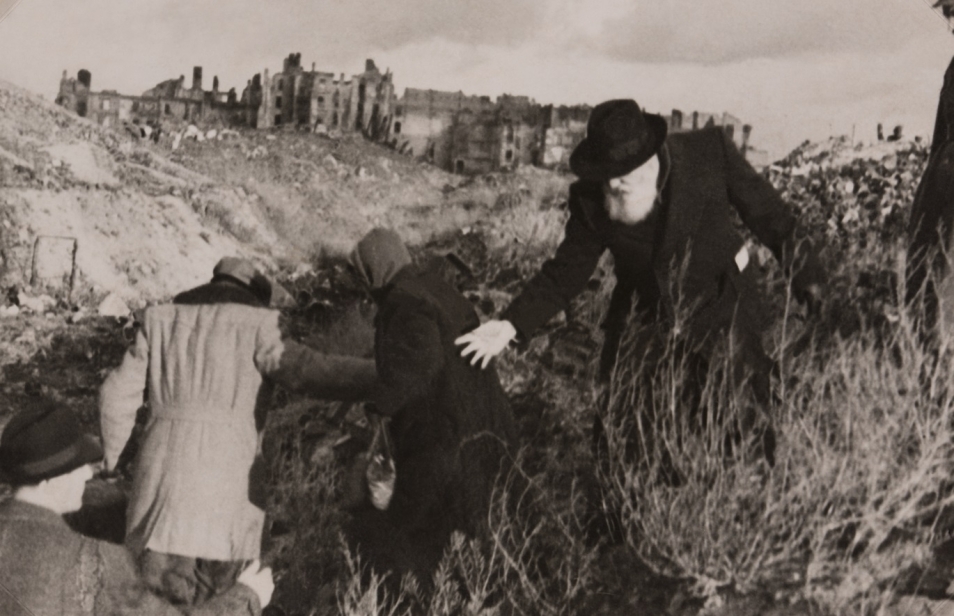
The immediate aftermath of the Second World War in Europe is frequently conceptualized as a period of liberation and profound relief. However, for the small minority of Jewish survivors who attempted to rebuild their lives in Poland, the cessation of hostilities did not guarantee safety. On August 11, 1945, the city of Kraków became the site of the first major postwar anti-Jewish riot in the country.
Fueled by centuries-old prejudices and intensified by the chaotic political landscape of a transitioning state, the Kraków pogrom shattered the fragile security of Holocaust survivors and highlighted the deep-seated antisemitic currents that persisted long after the fall of the Nazi regime.The violence was ignited by a modern resurgence of the medieval “blood libel”—a baseless myth claiming that Jewish people abducted and murdered Christian children for ritualistic purposes.
In the weeks preceding the riot, malicious rumors circulated throughout Kraków alleging that dozens of Christian children had vanished. The flashpoint occurred on a Saturday morning during a traditional Sabbath service at the Kupa Synagogue, located in Kraków’s historic Kazimierz district. Local youth began targeting the building with stones. The situation rapidly deteriorated when a thirteen-year-old Polish boy ran from the synagogue falsely screaming that Jews were attempting to murder him. His fabricated claim that he had discovered the corpses of Christian children inside provided the immediate pretext for a massive collective assault.An angry mob consisting of several thousand individuals quickly assembled and stormed the Kupa Synagogue.
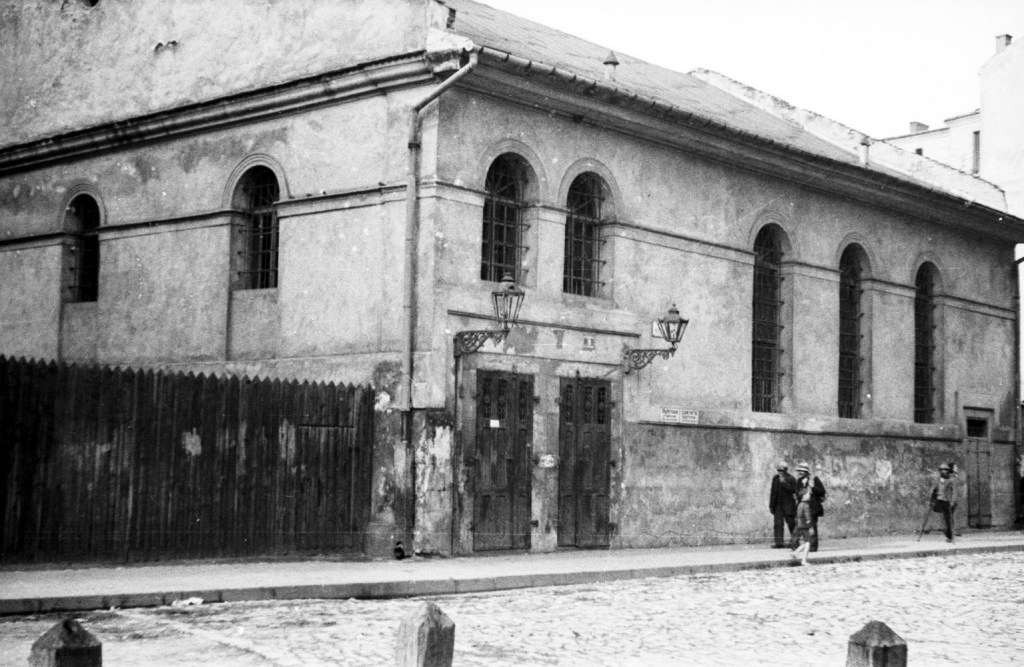
Worshippers were brutally beaten, the sanctuary was looted, sacred Torah scrolls were torn, and the historic structure was set ablaze. The riot quickly rippled outward from the synagogue into the surrounding neighborhood. Mobs combed nearby streets and marketplaces, targeted Jewish residents, and ransacked over a dozen apartments. Strikingly, the violence was not limited to civilian rioters; members of the communist Civil Militia (Milicja Obywatelska) and elements of the Polish Army actively joined the perpetrators instead of maintaining order. This official complicity legitimized the mob’s actions, conveying a dangerous message that the violence was state-sanctioned.The violence followed the victims even as they sought medical refuge.
Contemporary survivor accounts preserved by Yad Vashem reveal that injured Jewish men and women faced verbal abuse from ambulance staff and were physically assaulted by soldiers and other patients inside local hospitals. While dozens suffered severe injuries, historical records conclusively verify at least one fatality: Róża Berger, a fifty-six-year-old Holocaust survivor. Having survived the horrors of the Auschwitz-Birkenau concentration camp, Berger returned to Kraków only to be shot and killed through the door of her own apartment during the chaos.
Although archival evidence definitively identifies Berger, existing funeral photographs depicting five coffins suggest that the true death toll may have been higher.
Order was eventually restored late that evening by the Internal Security Corps, resulting in the arrest of more than one hundred individuals. Subsequent military trials sentenced a small group of perpetrators to prison terms, but the proceedings were kept quiet by authorities who feared exposing the systemic complicity of state law enforcement. This lack of transparency allowed conspiracy theories to emerge, but the immediate psychological impact on the Jewish community was undeniable. The Kraków pogrom, followed less than a year later by the even deadlier Kielce pogrom, delivered a definitive psychological blow to Holocaust survivors trying to remain in Poland. Realizing that their homeland remained deeply hostile, tens of thousands of Polish Jews chose mass emigration, a flight that ultimately caused Kraków’s centuries-old Jewish community to dwindle to a mere fraction of its historic size.
sources
https://en.wikipedia.org/wiki/Krak%C3%B3w_pogrom
https://www.yadvashem.org/articles/general/anti-jewish-violence-in-poland-after-liberation.html
https://przystanekhistoria.pl/pa2/tematy/zydzi/75062,Wokol-pogromu-krakowskiego.html
https://polin.pl/en/krakow-pogrom
Please support us so we can continue our important work.
Donation
Your readership is what makes my site a success, and I am truly passionate about providing you with valuable content. I have been doing this at no cost and will continue to do so. Your voluntary donation of $2 or more, if you are able, would be a significant contribution to the continuation of my work. However, I fully understand if you’re not in a position to do so. Your support, in any form, is greatly appreciated. Thank you. To donate, click on the credit/debit card icon of the card you will use. If you want to donate more than $2, just add a higher number in the box left from the PayPal link. Your generosity is greatly appreciated. Many thanks.
$2.00


Leave a Reply