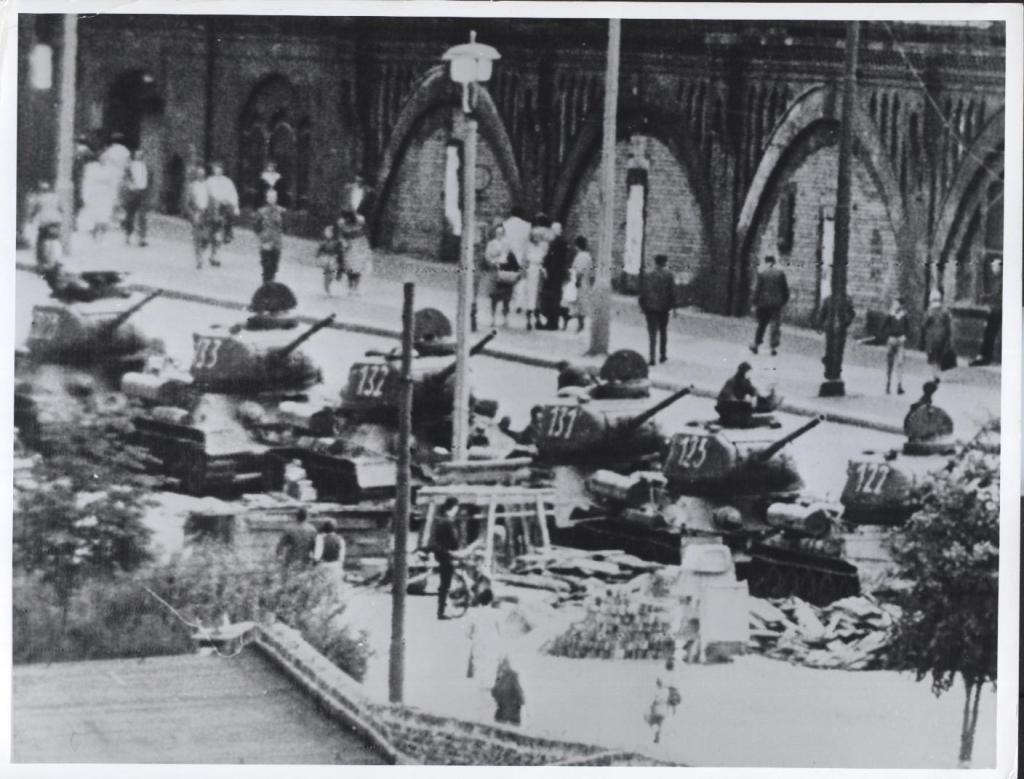
Barbed Wire Sunday (Stacheldrahtsonntag) refers to 13 August 1961, the day the East German government sealed the border between East and West Berlin, marking the beginning of what would become the Berlin Wall. Overnight, the German Democratic Republic (GDR) deployed thousands of soldiers, police officers, and construction workers to tear up streets, erect barricades, and string approximately 155 kilometres (97 miles) of barbed wire around West Berlin. In a matter of hours, Berlin changed from a city where movement between sectors was still possible into one physically divided by an increasingly fortified frontier. The operation trapped millions of East Germans behind a political and ideological barrier that would become one of the defining symbols of the Cold War.
The Geopolitical and Economic Catalyst
The decision to close the border was driven by a combination of political, economic, and demographic pressures. After the Second World War, Germany was divided into Western occupation zones and a Soviet-controlled eastern zone, while Berlin itself—despite lying deep within East Germany—was similarly partitioned among the four Allied powers.
During the 1950s, West Germany experienced rapid economic growth under a democratic, market-based system, while East Germany struggled with lower living standards, labour shortages, and the constraints of a centrally planned economy. Because the border within Berlin remained comparatively accessible, it became the principal escape route for East Germans seeking greater political freedom and economic opportunity.
Between 1949 and August 1961, an estimated 3.5 million people—nearly 20 percent of the GDR’s population—left East Germany, many of them young, highly educated, or professionally skilled. This “brain drain” threatened the country’s economic viability and undermined the legitimacy of the socialist state. With the approval of Soviet Premier Nikita Khrushchev, East German leader Walter Ulbricht authorised a secret operation to close the border permanently.
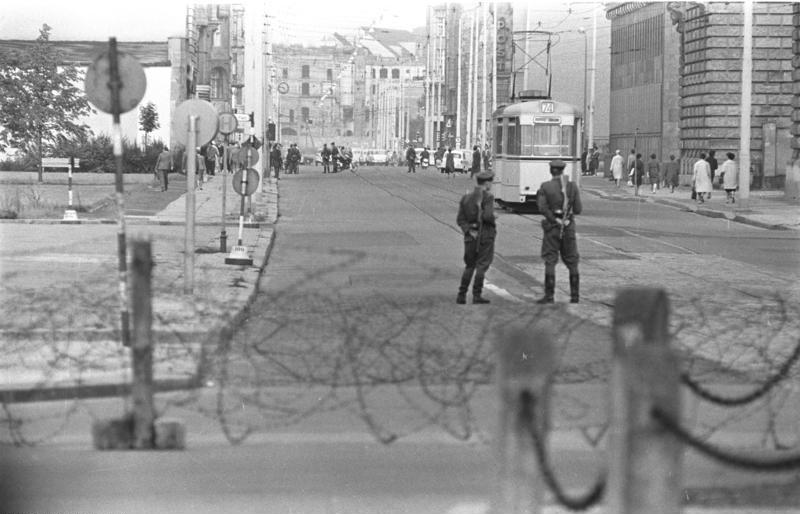
The Subversion of a Sunday Morning
The operation was deliberately scheduled for Sunday, 13 August 1961, when officials expected fewer commuters and a reduced likelihood of organised resistance. Shortly after midnight, units of the National People’s Army (NVA), the People’s Police (Volkspolizei), and the Combat Groups of the Working Class moved into position across the city.
By dawn, they had blocked dozens of roads, severed transport links, and erected extensive barbed-wire barriers along the sector boundary. Railway and underground services crossing the border were disrupted, while border guards prevented civilians from crossing. Berliners awoke to find familiar streets closed, public transport interrupted, and neighbourhoods abruptly divided by rolls of barbed wire guarded by armed personnel.
Although the barrier initially consisted only of wire and temporary obstacles, it immediately transformed everyday life. What had long been a permeable frontier became a heavily controlled international border almost overnight.

The Human Cost and Immediate Shock
The sudden closure of the border had devastating human consequences. Families were separated, friendships were severed, and thousands of East Berliners found themselves unable to reach their workplaces, schools, or relatives in the western sectors. Many people gathered on either side of the new barriers in disbelief, attempting to communicate with loved ones they could no longer reach.
During the first days, while the frontier remained relatively rudimentary, some East Berliners managed dramatic escapes by climbing over the wire, swimming canals, or jumping from buildings bordering West Berlin. One of the best-known images from this period is that of residents leaping from apartment windows before East German authorities sealed the buildings. In response, the government quickly evacuated border properties, bricked up windows facing West Berlin, and strengthened security along the frontier.
Evolution into the “Wall of Shame”
The barbed-wire barrier was intended as an immediate security measure rather than a permanent structure. Within days, East German authorities began replacing the temporary obstacles with concrete blocks, brick walls, and more substantial fortifications. Over the following decades, these defences evolved into a sophisticated border system consisting of multiple walls, anti-vehicle barriers, watchtowers, floodlights, patrol roads, and the heavily guarded “Death Strip.”
The barrier became known in the West as the “Wall of Shame”, while East German authorities officially described it as the “Anti-Fascist Protection Rampart” (Antifaschistischer Schutzwall). Its construction marked one of the defining moments of the Cold War, turning Berlin into the focal point of ideological confrontation between East and West. Although Western governments strongly condemned the closure of the border, they ultimately chose not to intervene militarily, recognising the risk of a wider conflict between the superpowers.
Conclusion
Barbed Wire Sunday remains one of the most significant dates in modern German history. What began in the early hours of 13 August 1961 as the rapid deployment of barbed wire and security forces evolved into the Berlin Wall, which divided the city for more than 28 years. The events of that Sunday symbolised the human cost of the Cold War, separating families and restricting the freedom of millions. When the Wall finally fell on 9 November 1989, it marked not only the reunification of Berlin and Germany but also the symbolic end of one of the Cold War’s most enduring divisions.
Sources
https://www.theatlantic.com/photo/2014/11/the-berlin-wall-25-years-after-the-fall/100845
https://en.wikipedia.org/wiki/Barbed_Wire_Sunday


Leave a Reply