On the eve of the 1939 invasion of Poland, Adolf Hitler justified his brutal plans by exploiting historical amnesia. Rhetorically asking his generals, “Who, after all, speaks today of the annihilation of the Armenians?”, Hitler signaled that the international community would ultimately ignore the mass slaughter of his own targeted victims.
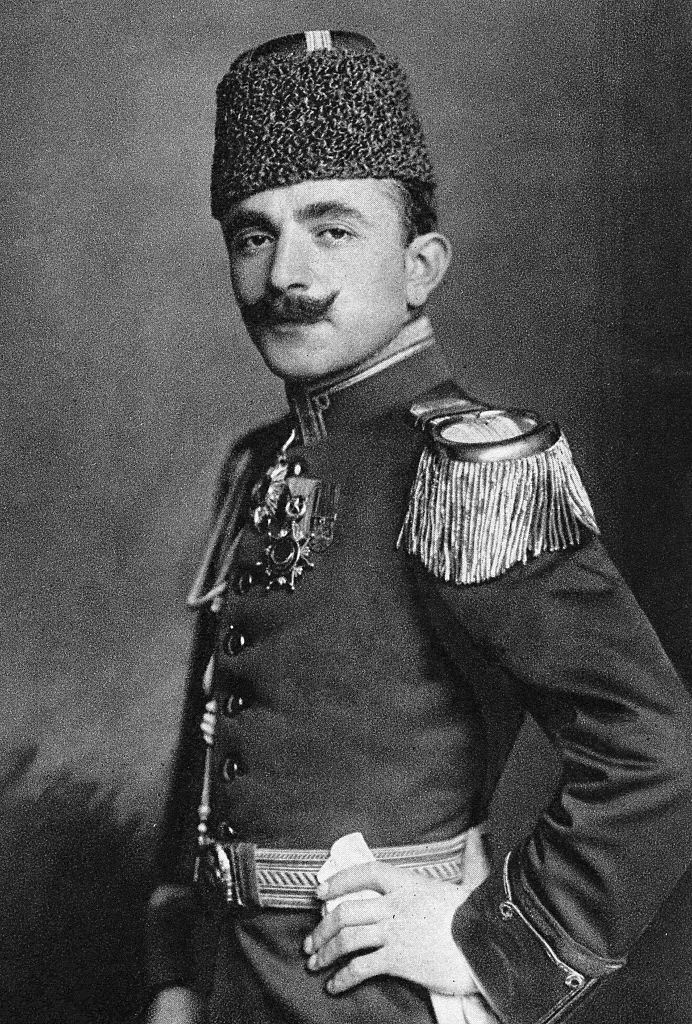
Enver Pasha was one of the most powerful and controversial figures of the late Ottoman Empire. A soldier, revolutionary, and leading member of the Committee of Union and Progress (CUP), he rose to become Minister of War during the First World War and was one of the principal architects of Ottoman military policy. His career was driven by an intense Turkish nationalism, a belief in military modernisation, and an increasingly ambitious vision of the Ottoman state. Yet his historical legacy is inseparable from one of the darkest episodes of the twentieth century: the Armenian genocide of 1915–1916.
The genocide resulted in the systematic destruction of the Armenian population of the Ottoman Empire. Hundreds of thousands of Armenians were murdered, while many more were forcibly deported from their homes, subjected to starvation, disease, sexual violence, robbery, and death marches into the Syrian desert. Although responsibility extended across the Ottoman political, military, and administrative apparatus, Enver Pasha was one of the senior leaders whose decisions, policies, and ideology helped create the conditions in which the destruction of the Armenians took place.
The Rise of Enver Pasha
Enver was born Ismail Enver in Constantinople in 1881. He entered the Ottoman military and became involved in the Young Turk movement, which opposed the authoritarian rule of Sultan Abdulhamid II. The Young Turk Revolution of 1908 restored the Ottoman constitution and transformed the political landscape of the empire.
Enver quickly emerged as one of the movement’s most prominent military figures. He became a hero to many Ottoman Turks after the Young Turk Revolution and later played a leading role in the political and military establishment of the CUP. Following the Ottoman defeat in the First Balkan War, Enver participated in the 1913 coup that brought the CUP to effective control of the government. He subsequently became Minister of War.
Together with Talaat Pasha and Djemal Pasha, Enver became part of the informal triumvirate that dominated the Ottoman Empire during the First World War. The three men exercised enormous political power, although their responsibilities differed. Talaat was particularly influential over the civilian administration and deportation system; Djemal dominated the empire’s Syrian territories and military affairs there; while Enver, as Minister of War, was primarily responsible for the armed forces and strategic military policy.
Enver and the First World War
The Ottoman Empire entered the First World War in late 1914 on the side of Germany and the Central Powers. Enver was convinced that the empire could recover territories lost to Russia and perhaps establish a powerful Turkish state extending deep into Central Asia.
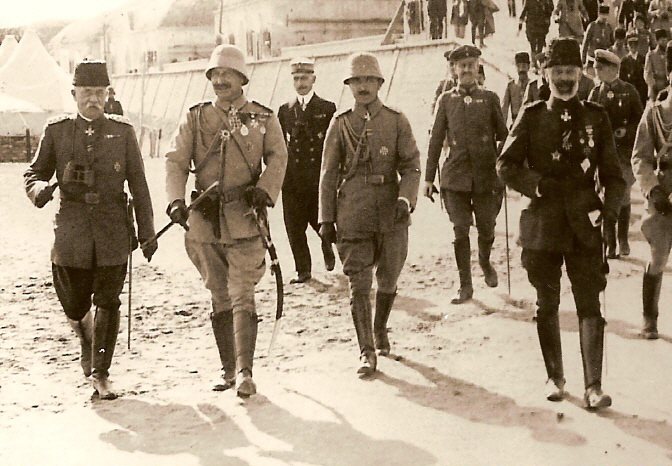
His most disastrous military undertaking was the Ottoman offensive against Russia in the Caucasus during the winter of 1914–1915. Enver personally commanded the operation, which culminated in the catastrophic Battle of Sarikamish. Ottoman troops were inadequately supplied and exposed to extreme winter conditions. Tens of thousands died from combat, exposure, hunger, and disease.
The defeat had profound consequences for the Armenians of the Ottoman Empire. Ottoman leaders increasingly suspected Armenian communities of supporting Russia or harbouring separatist ambitions. These suspicions were magnified by wartime propaganda and longstanding political and ethnic tensions.
Enver himself subsequently portrayed the disaster partly in terms of Armenian betrayal, despite the overwhelming evidence that military incompetence, inadequate preparation, and the terrible winter conditions were central causes of the catastrophe. This helped contribute to an atmosphere in which Armenians were increasingly portrayed within sections of the Ottoman leadership as an internal enemy.
The Armenians Become a Target
The Armenian population of the Ottoman Empire had lived under Muslim Ottoman rule for centuries while maintaining its own religious, cultural, and communal institutions. By the nineteenth century, however, Armenians increasingly demanded greater security, political rights, and protection from discrimination and violence.
The Ottoman government had already witnessed serious massacres of Armenians in the 1890s and again during the upheavals surrounding the Young Turk period. The First World War created an opportunity for radical elements within the CUP to pursue a much more extreme policy.
The Armenian genocide did not consist of a single event. It developed through a series of measures: the removal of Armenian soldiers from combat units, mass arrests of Armenian political and community leaders, deportations, confiscation of property, massacres, and the forced removal of entire communities toward the Syrian desert.
On 24 April 1915, Ottoman authorities arrested hundreds of Armenian intellectuals, political activists, clergy, and community leaders in Constantinople. Many were subsequently murdered. The date has become the principal commemorative date of the Armenian genocide.
Although Enver was not the sole architect of these policies, his position at the centre of the Ottoman wartime government placed him among those ultimately responsible for the policies of the regime.
The Disarming and Destruction of Armenian Soldiers
One of the most important aspects of Enver’s involvement concerned Armenian soldiers serving in the Ottoman army.
During the early stages of the war, Armenian men were mobilised into the Ottoman military. Increasingly, however, Armenian soldiers were removed from combat roles and transferred into labour battalions. These units were subsequently subjected to horrific conditions, and many Armenian soldiers were murdered by Ottoman forces or auxiliary personnel.
The significance of this policy was enormous. By removing Armenian men of military age from their communities and disarming them, the authorities reduced their ability to resist subsequent deportations and massacres.
Enver’s position as Minister of War made him directly relevant to the treatment of Armenian soldiers. There is evidence that he was aware of the mass killing of Armenians and that military authorities participated in the process. At the same time, historians distinguish between Enver’s responsibility and that of Talaat, whose Interior Ministry played the central role in organising and administering the deportation system.
This distinction is important. The genocide was not the work of one individual acting alone. It was a state-sponsored process involving political leaders, government ministries, military officers, provincial officials, the Special Organization, and irregular forces.
The Special Organization
A particularly important instrument of CUP policy was the Special Organization (Teşkilât-ı Mahsusa), a clandestine paramilitary organisation associated with the CUP leadership.
The organisation had originally been established for military and intelligence purposes, but elements of it became involved in the persecution and destruction of Armenians. Special Organization units, alongside local officials, gendarmes, tribal forces, and other irregulars, participated in massacres and deportations.
Enver was closely connected to the military and political structures from which the Special Organization operated. His influence over military affairs therefore formed an important part of the broader machinery through which the Armenian population was destroyed.
However, it would be historically misleading to portray every killing as the result of a direct personal order from Enver. The genocide was carried out through a complex chain of command and local implementation. Responsibility must therefore be understood both politically and institutionally.
Enver’s Attitude Toward Armenians
Enver’s wartime outlook increasingly reflected the nationalist transformation taking place within the CUP. The Ottoman Empire had lost vast territories in Europe, and its leaders faced the perceived threat of Russian expansion, nationalist movements, and the fragmentation of the empire.
For some CUP leaders, the answer was an increasingly homogeneous Muslim and Turkish political order. Armenians, who were a large Christian population concentrated particularly in eastern Anatolia, could consequently be portrayed as an obstacle to this vision.
This ideological environment was crucial. The genocide cannot be explained simply as an emotional reaction to wartime Armenian resistance or alleged collaboration with Russia. Armenian resistance occurred in some places, and some Armenians did serve with Russian forces, but these facts cannot explain the systematic deportation and destruction of an entire population, including women, children, the elderly, and people living far from the battlefield.
The scale and organisation of the deportations demonstrated that the policy went far beyond legitimate military measures.
Enver’s Personal Responsibility
Assessing Enver’s precise personal responsibility remains an important historical question.
Enver was unquestionably one of the senior leaders of the Ottoman wartime regime. He was Minister of War, a leading CUP figure, and a member of the ruling triumvirate. He therefore bore substantial political responsibility for the actions of the government he helped lead.
There is also evidence that Enver personally issued or supported measures affecting Armenians. In February 1915, for example, he ordered Armenian soldiers serving in the Ottoman army to be removed from their weapons and placed in labour units. He subsequently wrote to the Armenian Patriarch in Constantinople in 1915 claiming that the government was protecting Armenians from mistreatment and that abuses were being investigated. Such statements demonstrate that he was aware of the situation surrounding the Armenian population.
Nevertheless, historians generally place Talaat Pasha at the centre of the deportation policy itself. Talaat’s Interior Ministry issued the crucial orders governing deportation and settlement, while local officials implemented them across the empire.
Thus, Enver should neither be portrayed as an uninvolved military officer nor as the sole mastermind of the genocide. He was a senior member of the regime that carried it out, and his military authority and political influence contributed significantly to the machinery of persecution.
The Human Cost
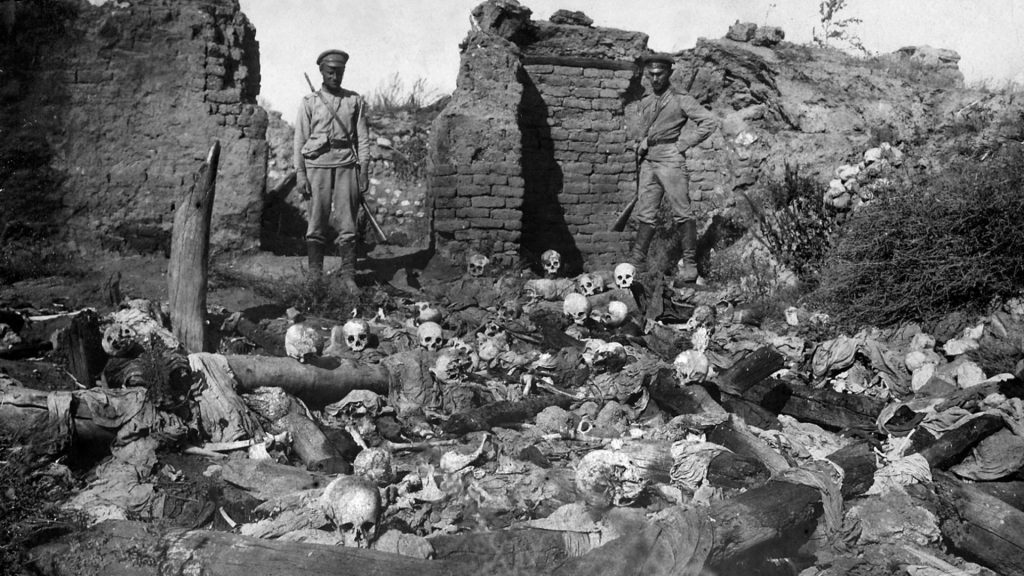
The human consequences were catastrophic.
Armenian communities that had existed for generations were uprooted. Families were separated. Men were frequently murdered before or during deportation, leaving women, children, and elderly people particularly vulnerable. Deportation columns were attacked by armed groups, while many deportees died from hunger, dehydration, disease, exposure, and exhaustion.
The ultimate destination for many deportees was the desert region of Syria, particularly the area around Deir ez-Zor. Concentration and killing sites developed there, while survivors were placed in camps under appalling conditions.
The exact number of Armenian victims remains debated because of incomplete Ottoman records, demographic uncertainty, and the destruction or loss of documentation. Nevertheless, historians generally conclude that at least hundreds of thousands of Armenians were killed, with many estimates placing the total death toll at approximately one million or more.
The destruction was not limited to the physical killing of individuals. Armenian homes, businesses, churches, schools, monasteries, and cultural institutions were confiscated or destroyed. An ancient Armenian presence in large parts of Anatolia was effectively eradicated.
The End of the Ottoman Empire and Enver’s Escape
As the First World War turned against the Ottoman Empire, the CUP leadership collapsed. The Ottoman government eventually investigated some of the crimes committed during the wartime period, and several CUP leaders were condemned in absentia.
Enver fled the Ottoman Empire in 1918. He eventually travelled through Central Asia and became involved in revolutionary and anti-Bolshevik struggles. Ironically, the man who had once sought to build an expansive Turkish-led empire ultimately died far from Anatolia.
On 4 August 1922, Enver was killed in battle near Baldzhuan, in present-day Tajikistan, while fighting Soviet forces. He was approximately forty years old.
He therefore never faced a full international trial for his role in the Ottoman wartime government or the Armenian genocide.
A Complicated Historical Legacy
Enver Pasha’s legacy has remained deeply controversial. In Turkey, he has at various times been remembered by some nationalists as a patriotic soldier who attempted to preserve and expand a collapsing empire. His military failures, particularly at Sarikamish, have also made him a controversial figure even within Turkish historical memory.
For Armenians and many genocide scholars, however, Enver is remembered as one of the leading figures of the government responsible for the destruction of the Ottoman Armenian population.
The distinction between individual and collective responsibility is essential when examining his legacy. Enver did not personally command every deportation column or massacre, and the genocide cannot accurately be reduced to the decisions of a single man. Talaat Pasha, Djemal Pasha, provincial officials, military commanders, Special Organization members, and numerous local perpetrators all played roles.
Yet Enver occupied one of the highest positions in the Ottoman state during the genocide. He was a principal CUP leader, Minister of War, and one of the three men who effectively dominated the empire during the First World War. His military policies contributed to the vulnerability of Armenian communities, while the armed forces under his authority participated in the wider machinery of persecution.
Conclusion
Enver Pasha’s involvement in the Armenian genocide must therefore be understood within the broader history of the Ottoman Empire’s collapse, wartime radicalisation, and the transformation of the CUP from a constitutional reform movement into an increasingly authoritarian nationalist regime.
The genocide was not an accidental by-product of war, nor can it be explained solely by Armenian political activity or alleged collaboration with Russia. It involved the systematic deportation and destruction of a civilian population and was implemented through state institutions, military forces, police, paramilitary organisations, and local authorities.
Enver was one of the men at the summit of that state.
His responsibility was therefore not simply that of a distant observer. As Minister of War and a leading member of the CUP leadership, he belonged to the political and military establishment that enabled the destruction of Ottoman Armenians. While Talaat Pasha played the most prominent role in organising the deportations, Enver’s position and policies made him an important participant in the regime responsible for the genocide.
His story is consequently a stark example of how military ambition, extreme nationalism, fear of internal enemies, and the collapse of an empire could combine to produce catastrophe. Enver Pasha sought to save and transform the Ottoman Empire through war. Instead, his leadership became inseparably associated with military disaster and with one of the great crimes against humanity of the twentieth century.
Sources:
https://www.jstor.org/stable/4282792
https://en.wikipedia.org/wiki/Enver_Pasha
https://www.armenian-genocide.org/enver.html
https://www.ebsco.com/research-starters/history/enver-pasa
https://encyclopedia.1914-1918-online.net/article/enver-pasha-ismail
https://www.discoverwalks.com/blog/istanbul/10-facts-about-enver-pasha
https://encyclopedia.ushmm.org/content/en/article/the-armenian-genocide-1915-16-overview
https://archive.nytimes.com/www.nytimes.com/ref/timestopics/topics_armeniangenocide.html?simple=True
https://www.armenian-genocide.org/genocidefaq.html
https://sfi.usc.edu/collections/armenian
Donation
Your readership is what makes my site a success, and I am truly passionate about providing you with valuable content. I have been doing this at no cost and will continue to do so. Your voluntary donation of $2 or more, if you are able, would be a significant contribution to the continuation of my work. However, I fully understand if you’re not in a position to do so. Your support, in any form, is greatly appreciated. Thank you. To donate, click on the credit/debit card icon of the card you will use. If you want to donate more than $2, just add a higher number in the box left from the PayPal link. Your generosity is greatly appreciated. Many thanks.
$2.00


 History of Sorts
Leave a comment