There is, quite rightly, considerable criticism of how Dutch society and institutions dealt with the persecution of Jews during the Second World War. More could undoubtedly have been done, and there is no question that too many people cooperated, remained passive, or simply looked the other way.
But it is easy to make such judgments with the benefit of hindsight. We must also remember the reality facing those who considered resisting the German occupation. Acts that might seem small to us could carry the ultimate punishment: imprisonment, torture, deportation, or death—not only for the person who resisted, but sometimes for their family or others who helped them.
When the choice is between an act of defiance and the very real possibility of being killed for it, the decision is far less straightforward than it appears from the safety of the present. That does not excuse collaboration or indifference, but it does help us understand the extraordinary courage required of those who chose to resist.
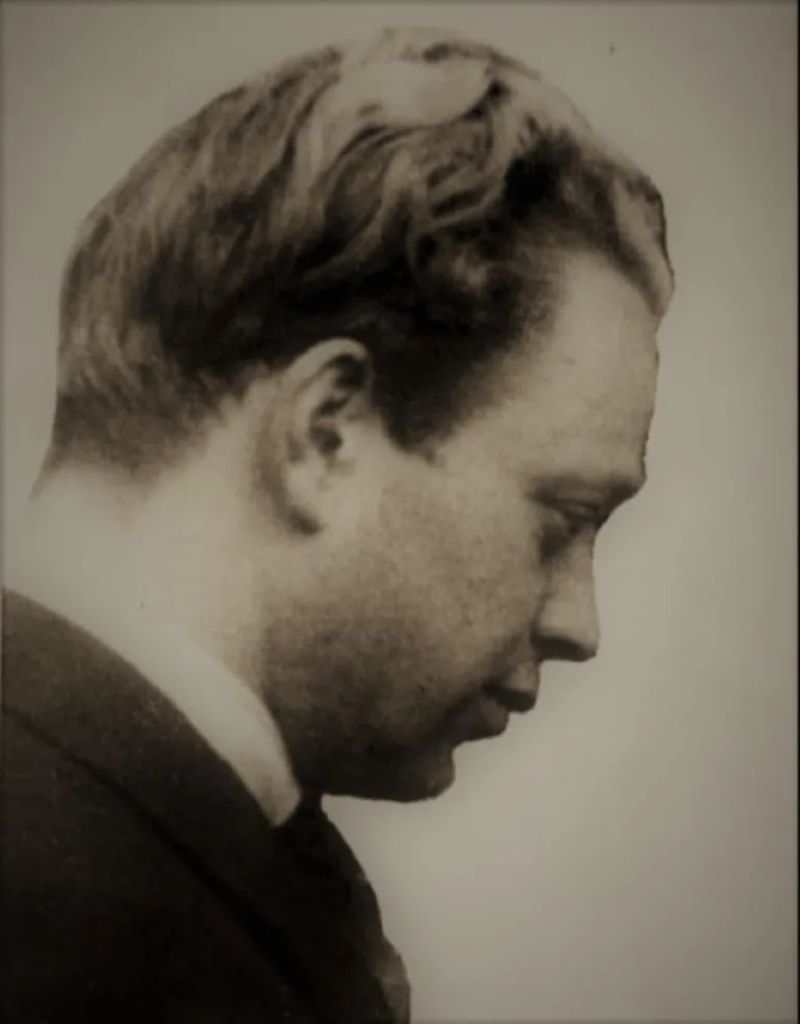
On 7 September 1944, Jacob Philip “Jaap” Musch was executed by the Germans after enduring prolonged torture. His ‘crime’ was not simply resistance. He had helped save Jewish children from deportation and had refused, even under torture, to reveal the names of those who had helped him. At least 231 children were saved through the underground organisation of which he was a leading member.
During the Holocaust, resistance did not always involve weapons, sabotage or attacks against German soldiers. Sometimes resistance meant something much more dangerous: hiding a child.
In the occupied Netherlands, Jewish children were among the most vulnerable victims of Nazi persecution. Families were torn apart, parents were separated from their children, and thousands of Jewish children were eventually deported to Westerbork and from there to the Nazi concentration and extermination camps.
Among those who tried to prevent this was a relatively unknown Amsterdam resistance fighter named Jacob Philip Musch, usually known as Jaap Musch.
His story is one of courage, organisation and sacrifice. It is also a story of an underground network that operated across the Netherlands, moving children away from Amsterdam and into hiding with families who were willing to risk their own lives.
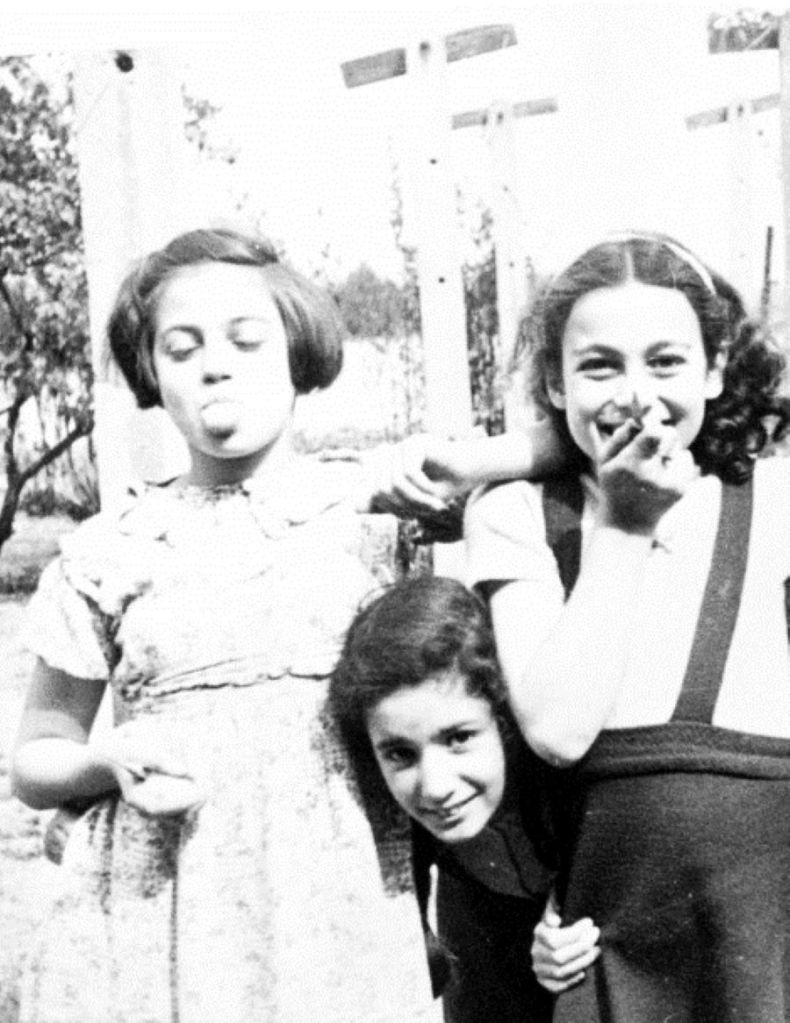
In a small wooden cabin on the edge of the Sallandse Heuvelrug near Nijverdal, five Jewish girls found a fragile refuge from Nazi persecution in 1944. Their protector was Jaap Musch, one of the founders of the Dutch resistance organization NV. Musch understood that hiding children was not simply a matter of finding them a roof and a bed. They were still children, and wherever possible, they needed to be allowed to live as children.
Four Jewish girls—Lea, Henny, Greetje, and Ronny—were initially hidden in a wooden hut near a sand pit in Nijverdal. A fifth girl, Ellie, joined them temporarily. Another Jewish girl, Rosie, was hiding elsewhere in Nijverdal but regularly came to the cabin to visit the others.
The cabin was deliberately kept out of sight, providing the girls with something that was becoming almost impossible for Jewish children in the occupied Netherlands: a measure of freedom. Under the protection of Musch and other NV resistance workers, they could play, sing and dance. The nearby sand pit became their playground. For brief moments, the war seemed distant.
But the danger was never far away.
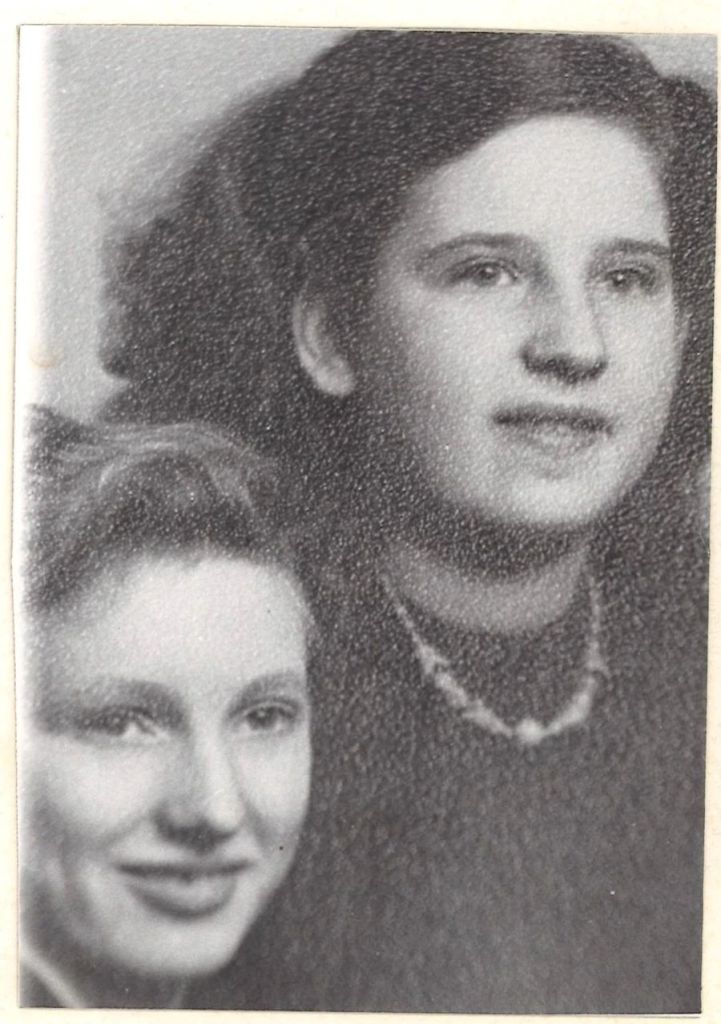
Jaap Musch had prepared the girls for the possibility that their hiding place might be discovered. He taught them a simple but potentially life-saving lesson: if anything went wrong, they were to run into the woods as quickly as they could and hide. It was a grim lesson for children, but one that would ultimately save their lives.
Musch’s thoughts extended beyond the immediate task of keeping the children alive. He was already making plans for the future. He envisioned a communal home where Jewish children who had been orphaned during the war could live together after liberation. His work was therefore not only about survival; it was also an expression of his belief that these children deserved a future.
That future was placed in grave danger in September 1944, when the hiding place was discovered.
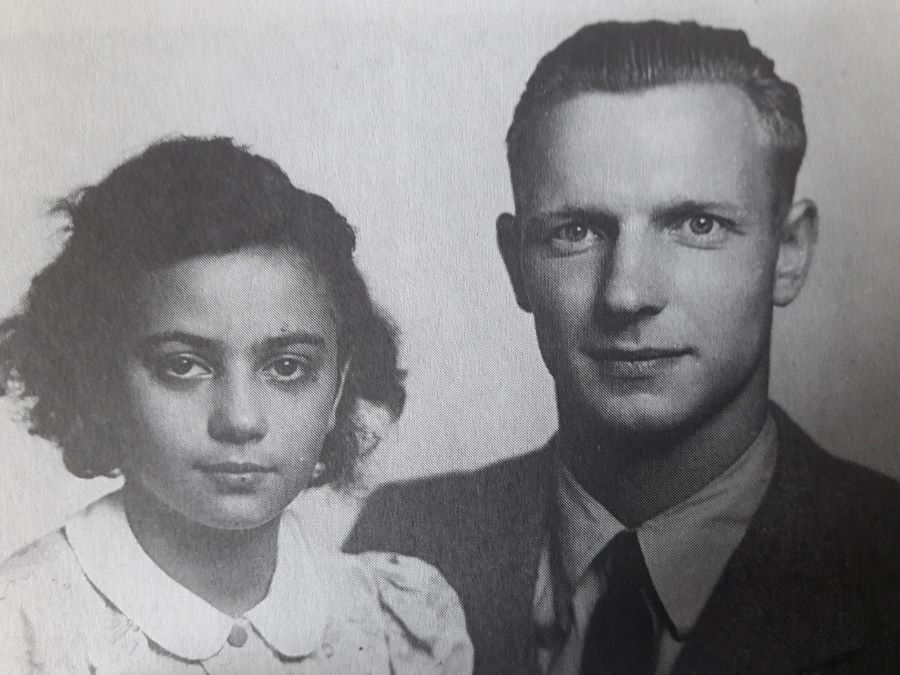
The girls remembered Musch’s instructions. When danger came, they fled into the surrounding woods. Musch himself remained behind at the cabin, deliberately sacrificing his opportunity to escape in order to give the children precious time to get away. He was arrested.
For Musch, there would be no liberation.
He was taken into captivity, brutally tortured and eventually shot. Despite the suffering inflicted upon him, he did not betray the children in his care or disclose information about the resistance network. He took their secrets with him to his death.
The girls, meanwhile, remained hidden. The escape from the cabin had not ended their ordeal; it had merely begun another chapter of it. Other members of the NV resistance, including Nijverdal-born resistance worker Herman Flim, helped move the children between hiding places. They were concealed first elsewhere in the region and later again in Nijverdal, where they remained under the protection of people willing to risk their own lives for theirs.
Among those who helped was a young boy from Nijverdal, Henny Rijks, whose actions played an important role in bringing the children to safety after their escape from the cabin.
For the girls, the liberation of the Netherlands eventually became a reality. On Monday, 9 April 1945, Canadian forces liberated Nijverdal.
Lea, Henny, Greetje, Ronny, Ellie and Rosie survived to see that day.
Their survival was not the result of luck alone. It was made possible by a network of ordinary Dutch people who chose to resist extraordinary evil—and by individuals such as Jaap Musch, who understood that saving a child meant saving an entire future.
The wooden cabin near the sand pit was only a small place, almost insignificant when measured against the enormous machinery of Nazi persecution. Yet for these children, it became a sanctuary. Its story is a reminder that behind the vast numbers associated with the Holocaust were individual children with names, friendships, fears and dreams.
Six children who might otherwise have disappeared into those numbers lived to see liberation.
Jaap Musch did not.
The Legacy
Jaap Musch understood that rescuing Jewish children from Amsterdam was only the beginning. They also needed somewhere safe to hide.
In the summer of 1942, Musch moved to Heerlen in South Limburg, where he worked as a chemical analyst at the State Mines while building a network of hiding places. Through the Reformed minister Gerardus Pontier, he met Harmen Bockma, a miner and farmer whose family lived near Heerlen. The Bockma family became an important link in Musch’s network, hiding Jewish children and helping find them further safe addresses.
Transporting children from Amsterdam to Limburg was perilous. Travelling under assumed identities and accompanied by resistance couriers, they followed routes through Nijmegen, Venlo, Roermond, Sittard and Heerlen. Couriers sometimes accompanied more than ten children at a time. Discovery could mean execution.
The precise number of children rescued varies between sources. Historical accounts of Musch’s activities record about 160 children from the Crèche, with others bringing the total to at least 231. Yad Vashem’s documentation credits the N.V. resistance group with approximately 250 Jewish children. Whatever the precise figure, the scale of the operation is clear: hundreds of children escaped deportation and survived the Holocaust.
Rescue involved far more than finding a hiding place. Children needed food, clothing, ration cards and false identities, while their protectors had to maintain convincing disguises. Many were integrated into ordinary family life, attending school and living as members of their hiding families.
By 1944, arrests were increasing. Musch went into hiding but continued helping Jewish girls concealed in the forests near Ommen. He instructed them to run into the woods if Germans approached.
In September 1944, German personnel discovered their hiding place. The girls escaped, but Musch was arrested after his identity aroused suspicion. He was taken to Camp Erika near Ommen, where members of the Sicherheitsdienst (SD) interrogated and tortured him. They wanted names, addresses and information about the resistance network and the children in hiding.
For approximately a day and a half, Musch endured severe torture.
He revealed nothing.
The information he protected could have endangered the entire network and the children themselves. Unable to break him, his interrogators ordered his execution.
On 7 September 1944, Jaap Musch was taken to the execution site near Camp Erika and shot. He was only about 31 years old.
The girls survived. They were moved to new hiding places in Lemelerveld, and all survived the war. Musch never learned that the children he had tried to protect had escaped.
After liberation, Musch was reburied at the cemetery in Ommen on 29 June 1945 with military honours. The former Camp Erika execution site is now commemorated with a memorial to Musch and fellow resistance fighters Jan van Putten and Derk Webbink, who were also murdered there in 1944.
The Holocaust is often remembered in numbers: six million Jews murdered, hundreds of thousands deported, and countless individual lives reduced to statistics.
Musch’s story restores the human scale.
A child being carried under a false identity. A mother forced to say goodbye. A courier risking his life on a train journey. A family opening its home to someone marked for death. And finally, a young man facing torture rather than betray them.
Musch could not stop the Holocaust. He could not save everyone. But he helped save children—one after another—until the resistance network with which he worked had helped hundreds escape deportation.
He had no guarantee of success. Every journey risked arrest. Every hiding place depended on trust. Every child carried the danger of discovery.
And when Musch himself was captured, he knew exactly what was at stake.
He remained silent.
The N.V. was later recognised by Yad Vashem, which honoured sixteen of its members as Righteous Among the Nations. Musch himself did not live to see liberation or the consequences of the rescue operation for which he had risked everything.
His legacy is not measured by fame, but by lives.
At least 231 children, according to the historical account of his activities, were saved through the organisation with which he worked; Yad Vashem credits the N.V. with approximately 250.
Those children grew up. Many married, had children and built lives of their own.
Musch never saw any of it.
But on 7 September 1944, when his torturers demanded the information that could have condemned them, he had one final opportunity to protect the people he had spent years trying to save.
He chose silence.
Jaap Musch died at Camp Erika on 7 September 1944.
The children he helped save lived.
That is his legacy.
sources
https://www.tracesofwar.com/sights/137100/Memorial-Stone-Execution-Resistance-Fighters-Ommen.htm
https://wwv.yadvashem.org/odot_pdf/Microsoft%20Word%20-%205938.pdf
https://www.verzetsmuseum.org/en/kennisbank/more-stories
https://www.liberationroute.com/en/pois/2624/children-of-the-hollow


Leave a Reply