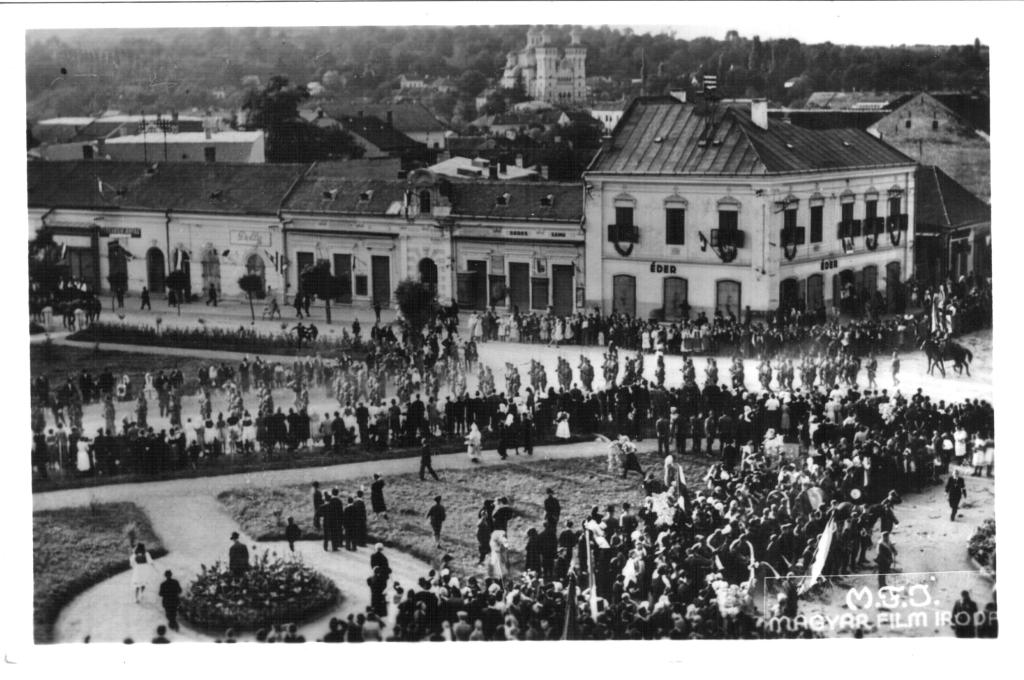
Nazi Germany was not the only member of the Axis to commit atrocities during the Second World War. Its partners Italy and Japan were also responsible for some of the most horrific crimes of the conflict. But the Axis was not limited to these three powers. Following the signing of the Tripartite Pact in Berlin on 27 September 1940, several other countries joined the German-led alliance.
Hungary was the first to seek membership. Initially, it offered what was described as “spiritual adherence”, but after Germany strengthened its position in the Balkans, Hungary formally joined the pact on 20 November 1940.
Romania followed three days later. Its decision was largely driven by the territorial losses it had suffered in 1940.
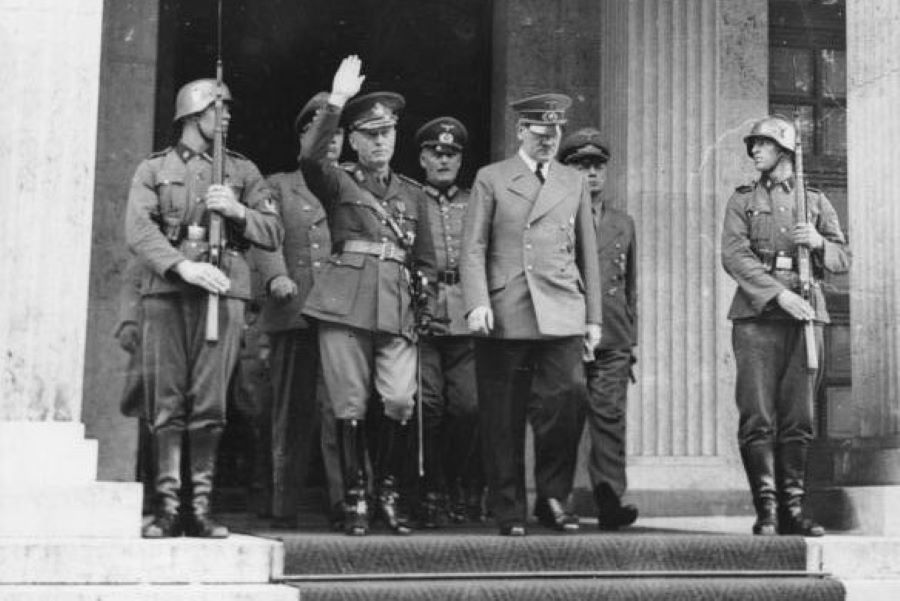
The Soviet Union had seized Bessarabia and northern Bukovina, Hungary had received Northern Transylvania, and Bulgaria had gained Southern Dobruja. Fear of further Soviet expansion pushed Romania towards Germany. Under Marshal Ion Antonescu, Romania joined the Tripartite Pact. Its oil fields around Ploiești were of enormous strategic importance to Germany.
On 24 November, Slovakia became the third new member. The Slovak state had been created following the destruction of Czechoslovakia in 1939 and was already closely aligned with Nazi Germany. Prime Minister Vojtech Tuka travelled to Berlin and formally signed the pact.
The expansion of the Tripartite Pact was more than a diplomatic exercise. Germany was building a political and military bloc across Europe, drawing countries into its sphere of influence through a mixture of ideology, territorial ambitions, economic interests, fear of the Soviet Union and political pressure.
The Ip massacre
On the night of 13–14 September 1940, the small village of Ip (Ipp) in northern Transylvania became the scene of one of the most notorious massacres committed during the territorial upheavals of the Second World War. In a matter of hours, Romanian civilians were killed by Hungarian soldiers, amid the violence and ethnic tensions that followed the transfer of Northern Transylvania from Romania to Hungary.
Geopolitical Antecedents
The roots of the violence lie in the geopolitical unraveling of East-Central Europe leading up to World War II. Under the Second Vienna Award of August 30, 1940, arbitrated by Nazi Germany and Fascist Italy, the Kingdom of Romania was forced to cede Northern Transylvania—an area of roughly 43,000 square kilometers—to the Kingdom of Hungary.
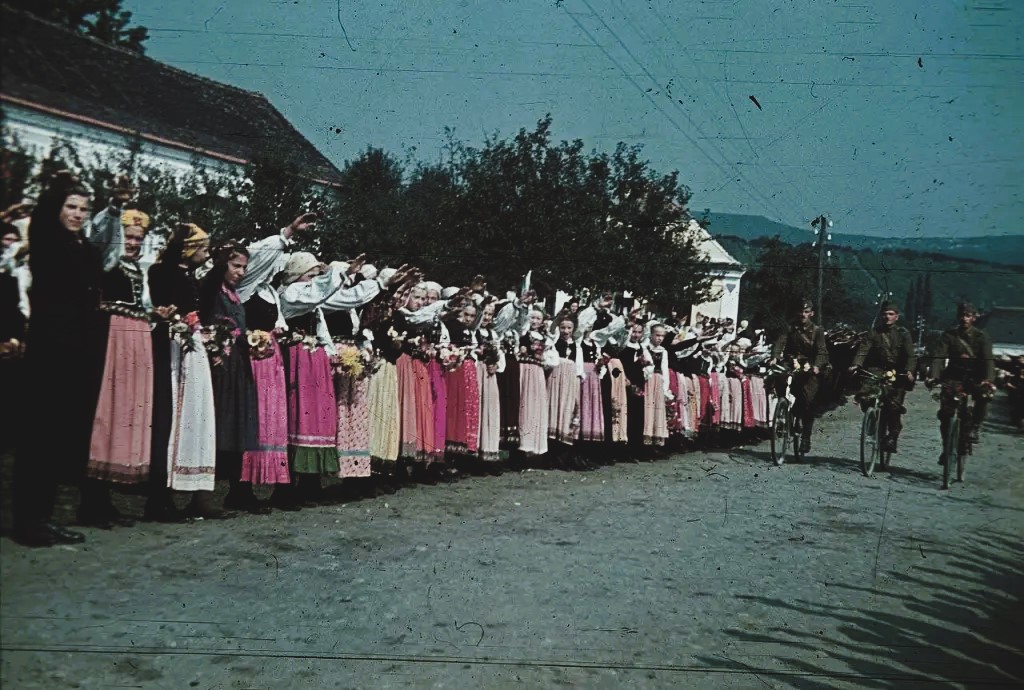
This diplomatic partition split Transylvania along ethnically diverse lines, reintroducing Hungarian administration into areas populated by significant Romanian majorities and substantial minority populations. As the Royal Hungarian Army moved in during early September 1940 to secure the newly acquired territories, ethnic tensions were acute. The rapid shift in political control triggered widespread fear, lawlessness, and retributive violence, particularly in mixed-ethnicity rural communes.
The Inciting Incident and Mass Atrocities
The events in Ip were sparked by an explosion on September 7, 1940, in which two Hungarian soldiers were killed by a hand grenade while stationed at the local schoolhouse. Although the explosion was caused by careless handling of munitions by the soldiers themselves, rumors quickly spread among the troops and local sympathizers that ethnic Romanian insurgents or “snipers” had launched a partisan attack against the occupying forces.
On the night of September 13, 1940, elements of the 12th Hungarian Frontier Guard Battalion, commanded by Lieutenant Zoltán Faragó, entered Ip accompanied by local Hungarian paramilitary volunteers (Nemzetőrség). Over several hours:
Systematic Killings: Armed detachments went house to house, systematically targeting ethnic Romanian families. Victims—including women, elderly residents, and infant children—were shot in their beds or dragged into their yards and executed.
Mass Burials: The bodies of the 157 victims were collected the following morning by order of the military authorities and thrown into a collective grave dug at the local cemetery without religious rites.
Widespread Looting: Homes belonging to the victims were ransacked and looted before military order was re-established.
The violence at Ip was not an isolated incident; it occurred alongside a series of contemporaneous massacres across Sălaj and Cluj counties, most notably at Treznea (September 9, 1940), where 93 civilians were killed.
Post-War Accountability and Historical Legacy
Following the defeat of the Axis powers and the return of Northern Transylvania to Romanian sovereignty under the 1947 Paris Peace Treaties, the Cluj People’s Tribunal was established to prosecute war crimes committed during the occupation period.
In 1946, the tribunal tried those responsible for the atrocities at Ip and Treznea.
A total of 481 individuals were indicted, including military commanders, local officials, and civilian participants.
Lieutenant Zoltán Faragó and several key perpetrators were convicted in absentia or received long prison sentences, though many high-ranking commanders avoided execution or died before facing justice.
In modern Romanian collective memory, the Ip massacre stands alongside Treznea as a defining symbol of the human cost of territorial revisionism and wartime ethnic violence in Eastern Europe. A permanent memorial and monument stand in Ip today to commemorate the 157 victims buried in the communal grave.
The Trial of the Ip and Treznea Massacres
The trial of those accused of responsibility for the Ip and Treznea massacres was one of the more complex war-crimes proceedings to take place in post-war Romania. Held before the Northern Transylvania People’s Tribunal in Cluj in 1946, it sought to bring to justice those responsible for atrocities committed in September 1940, following the Second Vienna Award, which transferred Northern Transylvania from Romania to Hungary.
On September 9, 1940, Romanian civilians were massacred at Treznea, while several days later, on September 13–14, killings took place at Ip. More than 150 people were killed in the two villages, including Romanian civilians and, in the wider violence, members of the local Jewish population. The victims included women, children and elderly people.
A New Legal Framework
The People’s Tribunal operated under Law No. 312 of April 12, 1945, which provided the legal basis for prosecuting those responsible for war crimes and other acts committed against the Romanian state and its population during the war.
Like other post-war proceedings in Europe, the law raised difficult questions concerning retroactivity. Some of the offences prosecuted had not existed in precisely the same legal form in Romanian criminal law before the war. Nevertheless, the Romanian authorities regarded the legislation as part of the broader post-war movement towards holding perpetrators of atrocities accountable.
The Cluj tribunal was also unlike an ordinary criminal court. It combined professional judges with people’s judges, reflecting the political and social transformation taking place in Romania after the war. Its proceedings therefore existed at the intersection of criminal justice, political change and the demands of post-war retribution.
What Were the Accused Charged With?
The prosecution sought to establish responsibility for the killing of civilians and for acts of violence committed by Hungarian military personnel and local collaborators.
The charges included war crimes, murder, persecution and aiding or facilitating the perpetrators. Particular attention was given to allegations that local civilians had identified Romanian families, guided soldiers to their homes or otherwise assisted in the violence.
One of the central issues was whether the killings could be justified as legitimate military action against alleged Romanian francs-tireurs—irregular fighters or civilians accused of attacking Hungarian troops.
The prosecution rejected this explanation. Even where armed resistance had occurred, it could not provide a legal justification for the indiscriminate killing of civilians who were not taking part in hostilities.
Orders, Responsibility and Obedience
The proceedings also touched upon an issue that would become increasingly important in international criminal law: the responsibility of commanders and subordinates for unlawful acts committed during military operations.
Defendants and their lawyers could invoke military orders or claim that soldiers had acted in response to alleged attacks. But the tribunal had to determine whether such explanations were credible and whether individual defendants had ordered, encouraged, assisted or knowingly permitted criminal acts.
This was particularly important because the massacres were not simply the actions of individual soldiers acting entirely on their own initiative. The court examined the relationship between military units, their commanders and local civilians who allegedly assisted them.
Verdicts
The tribunal imposed severe sentences on a number of those it found responsible. Some defendants received lengthy prison sentences or hard labour, while others were sentenced to death.
A major difficulty, however, was that many of the principal suspects were no longer in Romania. Some had fled with the retreating Hungarian forces in 1944 and were subsequently tried in absentia. As a result, a number of death sentences could never be carried out.
This illustrates one of the fundamental limitations of post-war justice in Eastern Europe. A court could establish guilt and pronounce a sentence, but it could not necessarily bring the accused before it.
Justice and Politics
The proceedings must also be viewed within the political circumstances of post-war Romania.
The People’s Tribunals operated during a period of profound political upheaval, when Romania was moving rapidly towards communist rule. The Allied Control Commission, dominated by the Soviet Union, exercised considerable influence, while the Romanian Communist Party was expanding its power.
Consequently, the tribunals were not entirely detached from politics. They served a genuine purpose in prosecuting wartime atrocities, but they also became instruments within the broader political transformation of post-war Romania. This inevitably raises questions about the fairness and independence of some proceedings.
Evidence presented decades after the events also had its limitations. Witnesses were recalling events from 1940, investigations had often been conducted under difficult circumstances, and some defendants were absent and therefore unable to confront the evidence against them.
None of this necessarily means that the atrocities themselves did not occur. Rather, it demonstrates the importance of distinguishing between the historical reality of a massacre and the procedural quality of the later legal proceedings.
A Lasting Record
Despite their shortcomings, the Cluj proceedings created an important documentary record of the violence that accompanied the transfer of Northern Transylvania in 1940.
The massacres at Treznea and Ip were not simply forgotten episodes of wartime chaos. They became part of the official record of a period in which territorial changes, ethnic tensions, military occupation and local collaboration created an environment in which civilians could become targets of violence.
The People’s Tribunal was therefore both a court of justice and a product of its time. Its proceedings reflected the genuine desire to punish those responsible for wartime atrocities, while also revealing the political pressures and legal difficulties inherent in post-war transitional justice.
For the victims, however, the central fact remains much simpler than the legal arguments surrounding the trials: they were civilians who were killed because of the circumstances into which they had been born and the political and ethnic conflict that engulfed their communities.
The courtroom could pass sentences years later. It could not restore the lives that had been taken.
Sources
https://en.wikipedia.org/wiki/Ip_massacre
Donation
Your readership is what makes my site a success, and I am truly passionate about providing you with valuable content. I have been doing this at no cost and will continue to do so. Your voluntary donation of $2 or more, if you are able, would be a significant contribution to the continuation of my work. However, I fully understand if you’re not in a position to do so. Your support, in any form, is greatly appreciated. Thank you. To donate, click on the credit/debit card icon of the card you will use. If you want to donate more than $2, just add a higher number in the box left from the PayPal link. Your generosity is greatly appreciated. Many thanks.
$2.00


Leave a comment