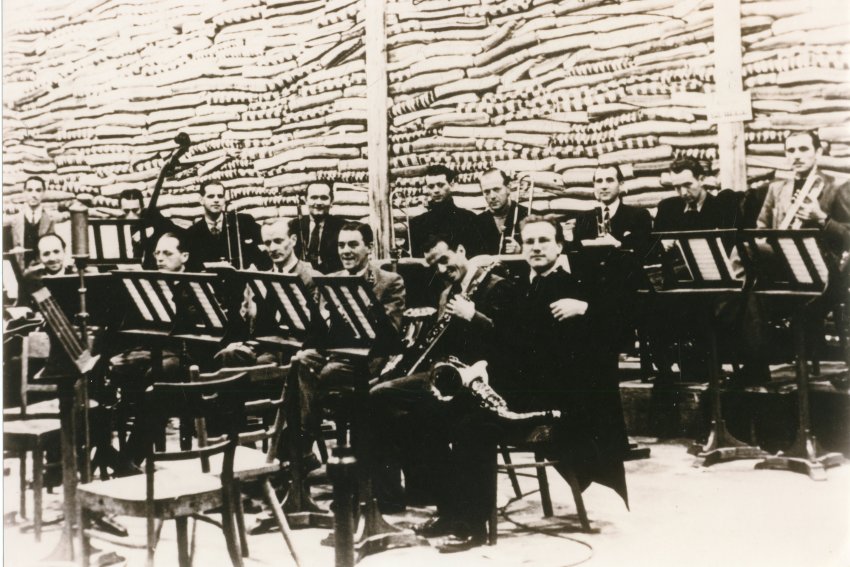
Germany Calling was an English-language propaganda radio programme broadcast by Nazi Germany during the Second World War. It was aimed primarily at audiences in the British Isles and North America, using news, political commentary and entertainment to promote the German regime’s version of the war.
Each broadcast opened with the distinctive announcement:
“Germany calling! Here are the Reichssender Hamburg, station Bremen.”
The programme became particularly associated with a number of English-speaking broadcasters collectively known as Lord Haw-Haw. The most famous of these was William Joyce, was American-born and raised in Ireland fascist , who became Nazi Germany’s most prominent English-language broadcaster. Although several men were associated with the name, it gradually became identified almost exclusively with Joyce.
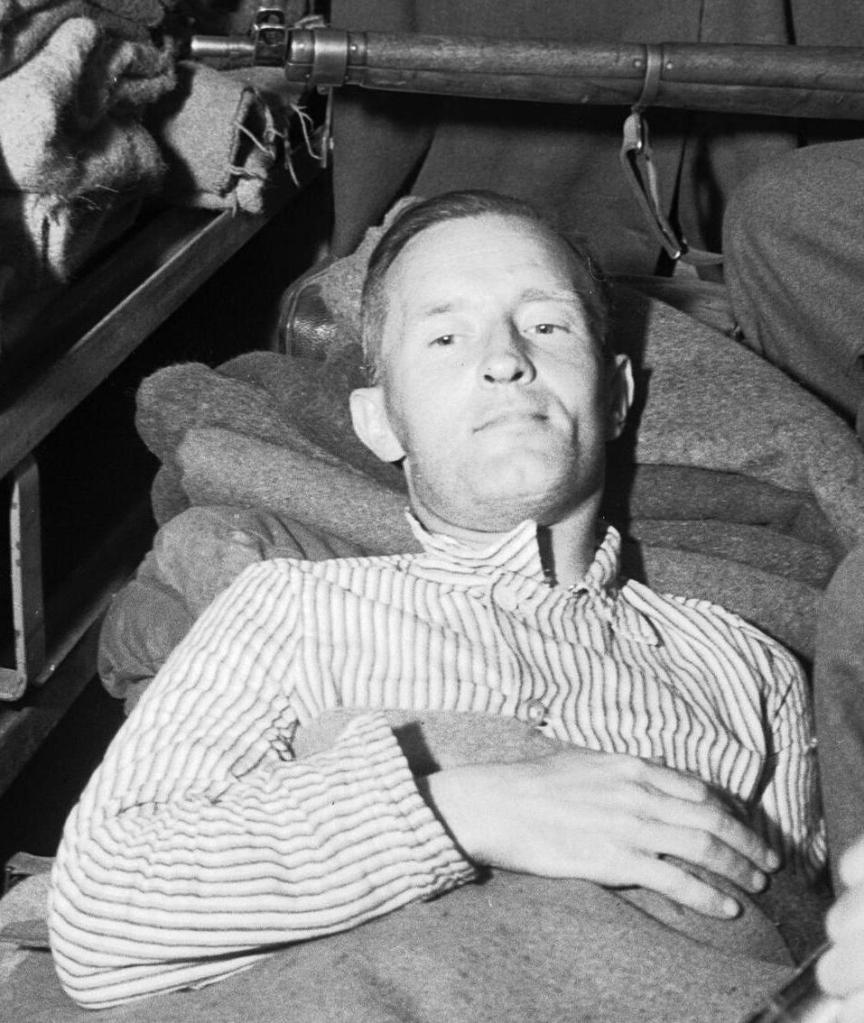
Germany Calling was not simply a stream of political propaganda. Its broadcasts also included news, music and other features intended to attract and retain listeners. This combination of entertainment and propaganda was an important part of its appeal.
One particularly striking element was its use of jazz music. Jazz was officially condemned by the Nazi regime and was largely excluded from German domestic broadcasting because of its associations with Black culture, Jewish musicians and what the Nazis disparagingly called Negermusik. Yet German international broadcasts could use such music strategically, particularly when attempting to attract foreign listeners.
Throughout Nazi rule, Alfred Rosenberg and Joseph Goebbels repeatedly clashed over the place of jazz in German society. Rosenberg regarded jazz as fundamentally incompatible with Nazi racial and cultural ideology and favoured its complete suppression. He pressed local leaders, or Gauleiter, to prohibit jazz, resulting in a number of regional bans.
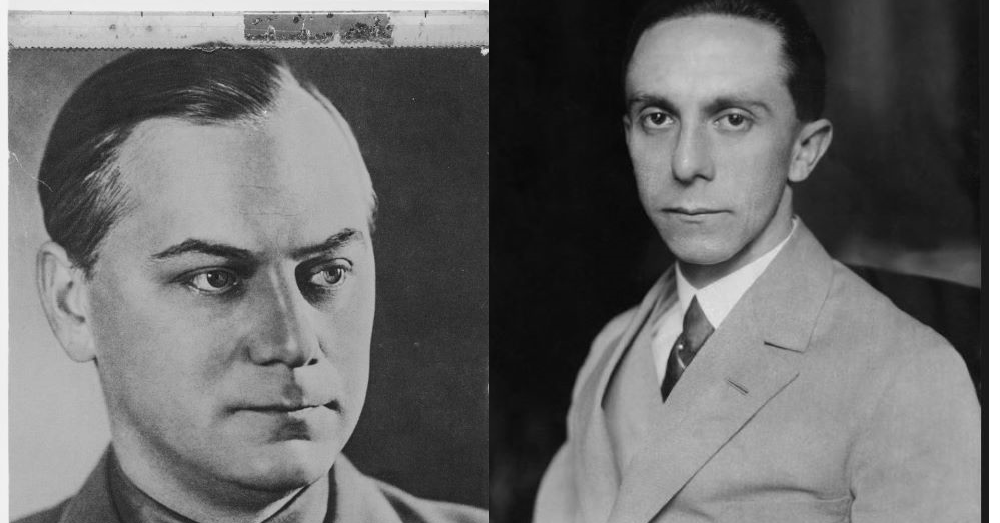
Goebbels, however, took a more pragmatic approach. Although jazz was associated in Nazi propaganda with Black culture, American influence and what the regime called “degenerate” music, Goebbels recognised its potential as a powerful propaganda tool. His diary repeatedly drew criticism from Rosenberg, who complained that the Propaganda Minister tolerated jazz. In 1943, Rosenberg noted bitterly that Goebbels was allowing “Negro music” to be played more than ever.
Goebbels’ intention was not to embrace jazz but to appropriate and manipulate it.
At the beginning of the Second World War, the Propaganda Ministry developed a counter-propaganda radio campaign aimed primarily at English-speaking audiences. One of its best-known programmes was Germany Calling, a roughly 20-minute broadcast presented by William Joyce, who became notorious as Lord Haw-Haw. The programme combined news, political commentary, music and sketches and was broadcast at various times of the day.
The musical interludes were provided by Charlie and His Orchestra, an ensemble created by the Propaganda Ministry in April 1940. Led by bandleader Lutz Templin, the orchestra consisted of between 16 and 30 musicians and included performers such as Fritz Brocksieper and Primo Angeli.
Rather than abandoning jazz altogether, the Nazis sought to turn its popularity against their enemies.
Charlie and His Orchestra generally performed well-known jazz and popular standards familiar to British and American listeners, but with their lyrics rewritten. The melodies remained recognisable, making the propaganda more accessible to the intended audience. The rewritten lyrics mocked Allied leaders, attacked Jews and Bolshevism, and attempted to portray Britain and the United States as corrupt, war-mongering or doomed to defeat.
The technique followed a familiar pattern. The musicians would begin with the original melody, sometimes using the original lyrics, before Karl Schwedler—the singer known as “Charlie”—would interrupt with an announcement such as, “Here is Mr Churchill’s new song.” The familiar tune would then continue with newly written words.
The Strategy Behind the Swing
Nazism publicly condemned jazz and swing as racially “impure” and culturally subversive, banning it from domestic German airwaves. However, Goebbels recognized that American jazz enjoyed immense popularity across Western Europe and the United States. To capture the attention of Allied military personnel and civilians tuning into foreign shortwave signals, the Reich Radio Ministry recruited top-tier European jazz musicians, including lead saxophonist Lutz Templin and vocalist Karl Schwedler, whose stage name was “Charlie.”
The propaganda strategy operated through a deceptive “hook and swap” method:
The Hook: The orchestra would open a song playing a popular American or British hit—such as “You’re the Top,” “FDR Jones,” or “Three Little Fishes”—with flawless, high-energy musical arrangement.
The Swap: After a verse or two of the legitimate lyrics, Schwedler would step to the microphone to deliver altered, propaganda-laden lyrics targeting Allied leaders, military strategies, and home-front morale.
The changes were often deliberately subtle. Because the melodies were already familiar, the propaganda could be delivered almost unnoticed beneath the surface of popular entertainment. Winston Churchill was a frequent target, portrayed as cowardly, warmongering and fond of alcohol. After the United States entered the war, Franklin D. Roosevelt was increasingly associated in the rewritten lyrics with antisemitic Nazi conspiracy theories and Bolshevism.
One example was the transformation of the popular standard “St. Louis Blues.” The original song, associated with W.C. Handy, dealt with lost love and departure. Charlie and His Orchestra retained the melody but replaced the lyrics with a propaganda version entitled “Blackout Blues,” turning the song into an attack on Churchill and British wartime policies.
Another example was “Bei Mir Bistu Shein,” written by Jewish-American songwriters Jacob Jacobs and Sholom Secunda and popularised internationally by the Andrews Sisters in 1937. For Nazi propaganda purposes, Schwedler introduced it as the “Anthem of the International Brotherhood of Bolsheviks,” deliberately exploiting the song’s Jewish origins and its popularity in the United States to promote antisemitic and anti-Bolshevik stereotypes.
Charlie and His Orchestra ultimately recorded nearly 300 titles. Their broadcasts were transmitted from Germany and rebroadcast through German-controlled transmitters in occupied Europe. The intention was clear: the Nazis could condemn jazz as supposedly racially and culturally corrupt while simultaneously exploiting its popularity as a vehicle for propaganda.
This contradiction says much about Nazi cultural policy. Jazz was unacceptable when it represented the culture of others, but useful when it could be turned into a weapon against them.
After the war, William Joyce was captured, tried for treason in Britain and sentenced to death. The musicians of Charlie and His Orchestra, however, largely returned to their professional careers, illustrating another, very different aspect of the aftermath of Nazi Germany: while the regime and its propaganda machinery disappeared, many of the people who had participated in its cultural apparatus were able to continue their lives and careers.
Sources
https://holocaustmusic.ort.org/politics-and-propaganda/third-reich/charlie-and-his-orchestra
https://en.wikipedia.org/wiki/Lord_Haw-Haw
https://encyclopedia.ushmm.org/content/en/article/alfred-rosenberg-biography
https://alchetron.com/Charlie-and-his-Orchestra
https://en.wikipedia.org/wiki/Charlie_and_his_Orchestra
Donation
Your readership is what makes my site a success, and I am truly passionate about providing you with valuable content. I have been doing this at no cost and will continue to do so. Your voluntary donation of $2 or more, if you are able, would be a significant contribution to the continuation of my work. However, I fully understand if you’re not in a position to do so. Your support, in any form, is greatly appreciated. Thank you. To donate, click on the credit/debit card icon of the card you will use. If you want to donate more than $2, just add a higher number in the box left from the PayPal link. Your generosity is greatly appreciated. Many thanks.
$2.00


Leave a comment