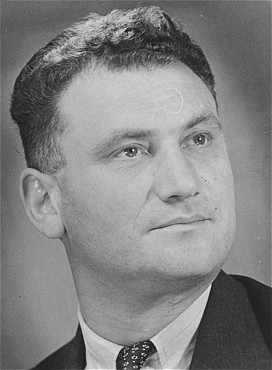
Tuvia Bielski was born in 1906 in Stankiewicze, western Belorussia. When Germany invaded the Soviet Union in June 1941, Tuvia and his younger brother, Zus, vowed never to be captured. With a German arrest warrant out for him, Tuvia relied on his intimate knowledge of the local terrain to stay constantly on the move and evade capture.
In early 1942, rumors of partisan fighters reached Tuvia. Convinced that survival depended on acquiring weapons and forming an all-Jewish resistance, he joined forces with his brothers Zus and Asael to organize local Jews.
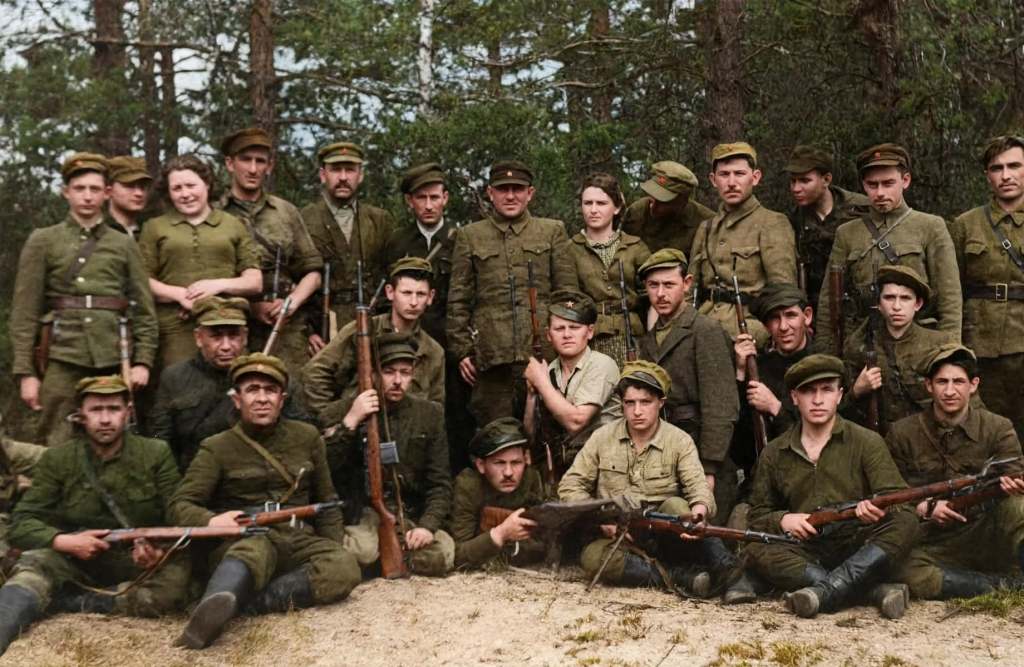
By May 1942, Tuvia commanded a small detachment—known as the Bielski otriad (the Russian term for a partisan unit)—that would grow to 1,200 people by the war’s end. Unlike many resistance leaders who only recruited able-bodied fighters, Tuvia prioritized saving lives above all else, welcoming every Jew who sought refuge. Many arrived through Konstantin Kozlovski, a non-Jewish local who sheltered escapees from the Novogrudok ghetto and worked alongside the partisans to rescue hundreds more.
Operating out of the dense woods, the Bielski otriad carried out raids for food, executed German collaborators, and occasionally joined Soviet partisan units on anti-Nazi missions, such as burning ripe wheat crops to starve occupying German troops of supplies. At the same time, they actively dispatched guides into the ghettos to lead out anyone willing to risk the escape.
By the summer of 1943, the group numbered 700. Deep within the Naliboki Forest, Tuvia established a thriving, self-sustaining community where everyone contributed. The camp featured a hospital, classrooms for children, a soap factory, a Turkish bath, tailors, butchers, and even a troupe of musicians who performed at camp festivals. Beyond supporting its own members, the otriad traded specialized services and repairs with other partisan groups in exchange for food and weapons.
By the summer of 1944, the detachment had swelled to 1,200 people—composed predominantly of women, children, and the elderly—making it the largest Jewish partisan rescue operation of World War II. Thanks to Tuvia’s steady leadership and uncompromising commitment to saving lives, an extraordinarily high percentage of the group survived the Holocaust.
Following the war, Tuvia immigrated first to Israel and later to the United States, where he lived until his death at age 81. His remarkable story of survival and resistance was later adapted into the 2008 film Defiance. (Note: The film had a limited release in late 2008 and a wide theatrical release in January 2009.)
Sources:
https://www.yadvashem.org/articles/general/solidarity-bielski-brothers.html


Leave a Reply