-
The 2nd SS Panzer Division Das Reich was a division of the Nazi Waffen-SS during World War II. It was one of the thirty-eight divisions fielded by the Waffen-SS. Das Reich served during the invasion of France and took part in several major battles on the Eastern Front, including in the Battle of Prokhorovka against…
-
Nazi Germany used the 1936 Olympic Games for propaganda purposes. The Nazis promoted an image of a new, strong, and united Germany. Their athletes were to be displayed as the perfect version of the Aryan race. The joke at the time was Aryan- Blond,Blue Eyed and tall like Hitler,thin and athletic like Goering and the…
-
In 1923, Hugo Boss founded his own clothing company in Metzingen, a small town south of Stuttgart, where it is still based. In 1924 he started a factory along with two partners. The company produced shirts, jackets, work clothing, sportswear and raincoats. Due to the economic climate of Germany at the time, Boss was…
-
July 22nd, 1937, was Esther Steinberg’s big day. Her wedding to Vogtseck Gluck, a goldsmith from Antwerp, was a smart affair at the Greenville Synagogue just a short walk from her home on the South Circular Road in Dublin. The men, pillars of Dublin’s Jewish community, wore top hats, while the ladies were decked in…
-
The Medway raid of 9-14/19-24 June 1667 saw a Dutch fleet sail into the Thames and attack the British fleet in its anchorage in the Medway, causing a panic in London and winning a victory that helped bring the Second Anglo-Dutch War to an end. At the end of the summer of 1666 the British…
-
Survivor guilt is a particular type of guilt that may develop in people who have survived a life-threatening situation. Individuals who believe it is unfair that they survived when others died and/or believe they did not do enough to save the lives of others may come to experience survivor guilt after trauma or a catastrophic event. Waylon Jennings was…
-
For many the joy of being freed from the brutal Nazi regime was short lived. After the concentration camps were liberated the deaths didn’t stop straight away. British forces liberated concentration camps in northern Germany, including Neuengamme and Bergen-Belsen. They entered the Bergen-Belsen concentration camp, near Celle, in mid-April 1945. Some 60,000 prisoners, most in…
-
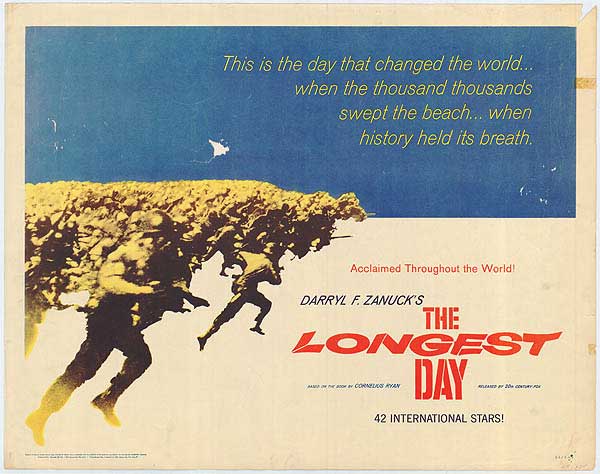
Originally posted on Remnants of Wit: As you may know, today, June 5, is Barricade Day. I’m sure that many of us will watch Les Miserables and cry accordingly. Source If you’re still in the mood for commemorating a historical event with a long, epic movie featuring amazing characters… why not watch The Longest Day tomorrow? Made in…
-
Checkpoint Charlie was the name given by the Western Allies to the best-known Berlin Wall crossing point between East Berlin and West Berlin during the Cold War (1947–1991). East German leader Walter Ulbricht agitated and maneuvered to get the Soviet Union’s permission to construct the Berlin Wall in 1961 to stop Eastern Bloc emigration and…
-
The “P” badge was introduced on 8 March 1940 by the Nazi German government with relation to the requirement that Polish workers (Zivilarbeiter) used during World War II as forced laborers in Germany (following the German invasion and occupation of Poland) display a visible symbol marking their ethnic origin. The symbol was introduced with the intent…
-
Subscribe
Subscribed
Already have a WordPress.com account? Log in now.
 History of Sorts
You must be logged in to post a comment.