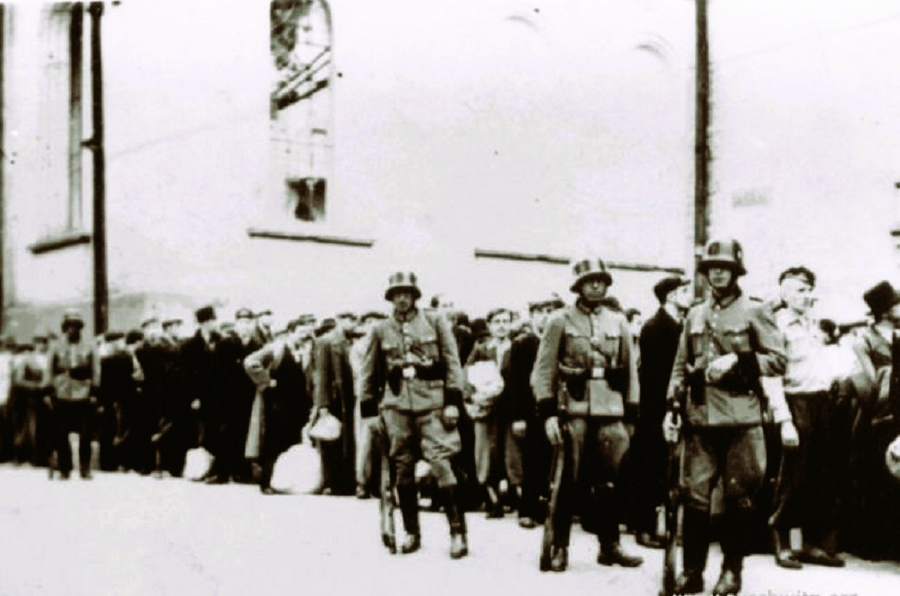
From January 1945, in the final months of the Third Reich, approximately 250,000 concentration camp inmates perished during death marches and in numerous acts of mass slaughter. These prisoners were murdered mercilessly by SS guards, army and police units, and, in many cases, by civilian mobs as they passed through towns and villages in Germany, Austria, and occupied territories.
This final wave of killings, marked by unparalleled brutality and destruction, stands out as a grim chapter in the already horrific history of the Nazi regime. Even among the countless atrocities committed, this last murderous rampage was exceptional in both its character and its scale.
This passage represents an early effort to comprehensively answer the profound questions raised by this unprecedented wave of violence.
Between January 17 and 21, 1945, the Germans forcibly marched approximately 56,000 prisoners out of Auschwitz and its sub-camps in evacuation columns, primarily heading west through Upper and Lower Silesia. Two days later, the Germans evacuated an additional 2,000 prisoners ]by train from the sub-camps in Świętochłowice and Siemianowice.
The primary evacuation routes led to Wodzisław Śląski and Gliwice, where the various evacuation columns were consolidated into rail transports for further deportation. Among these evacuations, prisoners from the sub-camp in Jaworzno endured one of the longest marches—covering a staggering 250 kilometers to Gross-Rosen Concentration Camp in Lower Silesia. While some residents of Upper Silesia risked their lives to help the prisoners, and a few prisoners managed to escape to freedom, countless others perished from exhaustion, exposure, or execution along the way.
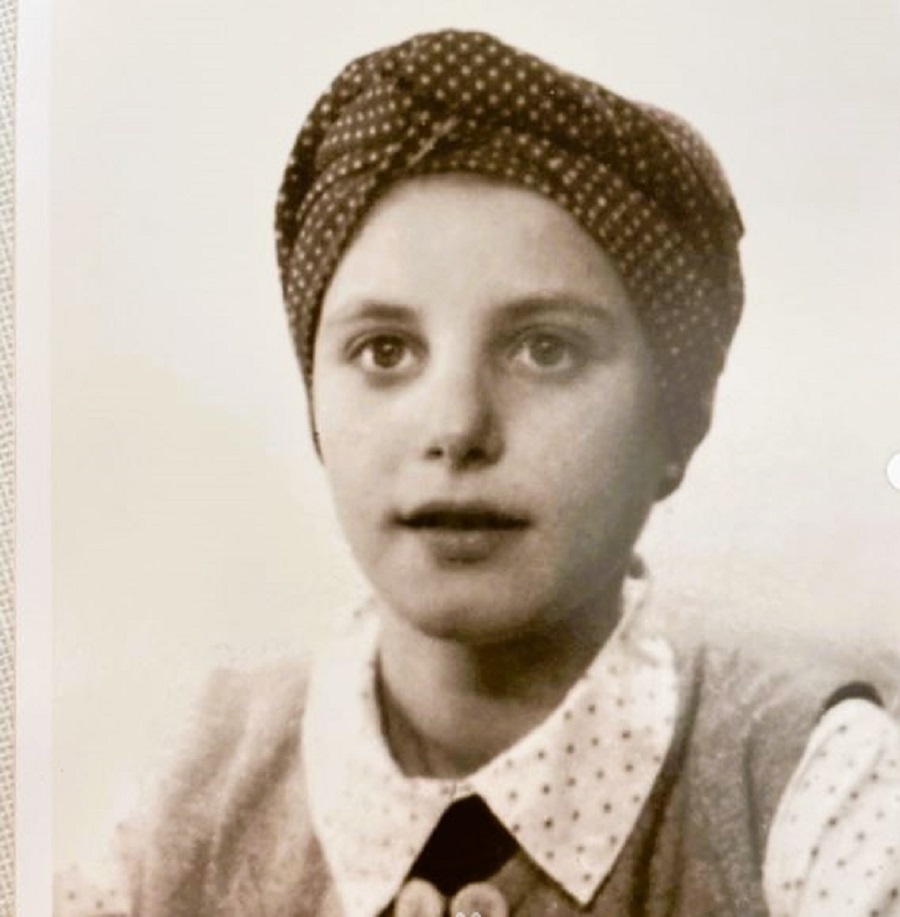
The Story of Lilly Appelbaum Malnik
Lilly Appelbaum Malnik was among the survivors of these harrowing events.
In 1940, the Nazis invaded Belgium, where Lilly lived. Two years later, while Lilly was in the hospital recovering from tonsillitis, tragedy struck her family. Her sister was arrested and sent to a Nazi concentration camp. Soon after, the Nazis discovered and deported her mother and brother. All three were murdered during the Holocaust in Belgium. Upon her release from the hospital, Lilly went into hiding with the assistance of non-Jewish neighbors. To support herself, she worked in a factory and a beauty salon. At the salon, she was once forced to give a Nazi officer a manicure and massage—a chilling reminder of the constant danger she faced.
In 1944, while visiting her aunt and uncle in a Brussels suburb, her life took another dark turn. Early one morning, Nazi soldiers armed with rifles stormed their home. Lilly and her relatives were arrested and sent to the Mechelen transit camp. After six weeks in Mechelen, she was packed into a cattle car as part of the second-to-last transport of Jews out of Belgium before the country’s liberation. She, along with her aunt and uncle, arrived at Auschwitz.
In January 1945, with the Soviet Red Army advancing, Lilly and other inmates were forced onto a death march to the Bergen-Belsen concentration camp in Germany. The march was a brutal ordeal. She witnessed German soldiers shooting prisoners who could not keep up. At Bergen-Belsen, Lilly’s close friend, Christiane, succumbed to typhus. Lilly also contracted the disease, which nearly claimed her life.
Lilly’s Account of the Death March
“Word came to us that we were going to evacuate Auschwitz. Why were we evacuating Auschwitz? It was because the Russians were coming close. And so we, we all walked out of Auschwitz and started walking. We walked for days. I’ll never forget it. I don’t know how many days we walked. We walked, then we took cattle cars, then we walked again.
We heard gunshots as we marched. The guards told us to keep going. They shot people who couldn’t keep up. It ended up being called the Death March because the ravines and gutters were red with blood.
Some prisoners, thinking they could escape, tried to run but were shot. Others, too weak to continue, dropped their bundles and fell behind. They were shot, too. Bodies lay everywhere—on hills, behind trees. It looked like a battlefield.
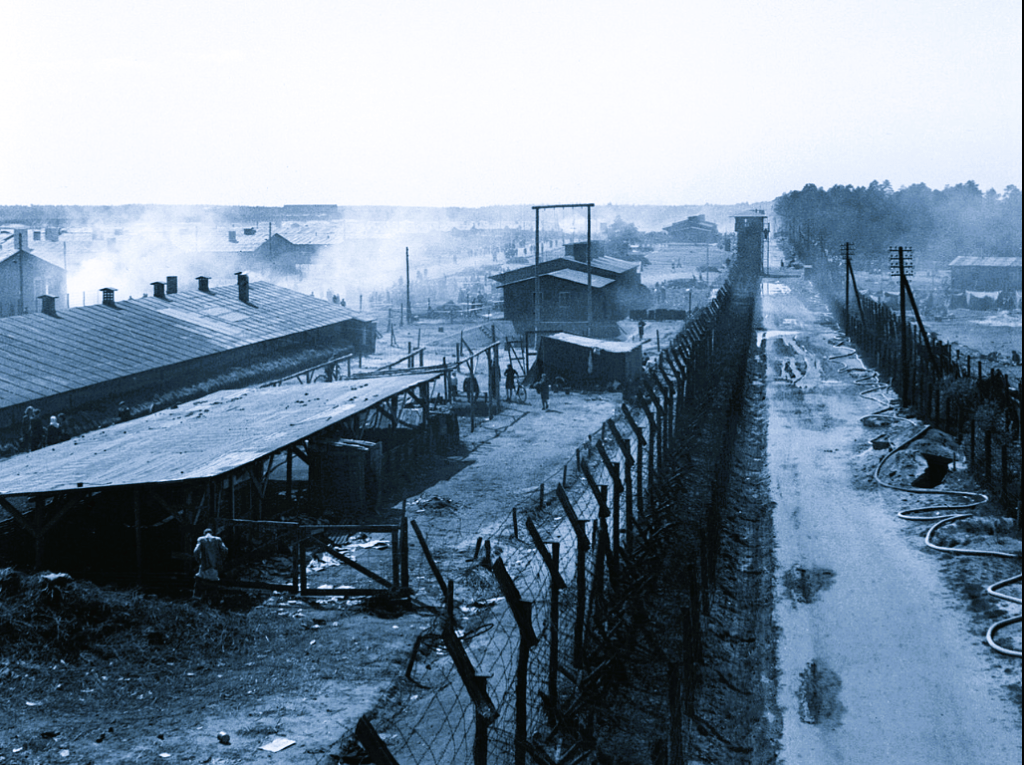
Eventually, we arrived at a camp called Bergen-Belsen.”
Liberation and Recovery
In April 1945, Lilly was one of 60,000 prisoners liberated from Bergen-Belsen by the British Army. Emaciated and weighing only 70 pounds, she was carried out on a stretcher and spent the first few weeks of freedom in a makeshift field hospital. After two months of recovery, the Red Cross transported her back to Belgium, where she began rebuilding her life.
One of the few surviving Nazi documents referencing the Death Marches is an SS report dated March 13, 1945. It details the arrival of 58 prisoners at the Leitmeritz (Litoměřice) camp in Bohemia. These prisoners had been evacuated from the Auschwitz sub-camp of Hubertushütte. The report also states that 144 other prisoners, mostly Jews, had “died” (verstorben) during the journey.
Massacres of prisoners occurred in several locations along the evacuation routes. One such atrocity took place at the Leszczyny/Rzędówka train station near Rybnik on the night of January 21–22, 1945. A train carrying approximately 2,500 prisoners from Gliwice stopped at the station. On the afternoon of January 22, the prisoners were ordered to disembark, but some were too weak and exhausted to comply. SS guards and local Nazi police responded by firing machine guns into the open doors of the train cars.
The remaining prisoners were then forced to continue marching westward. After they departed, more than 300 bodies of prisoners—those who had been shot, succumbed to exhaustion, or died from exposure—were collected from the station grounds and surrounding area.
Sources
https://www.auschwitz.org/en/history/evacuation/the-final-evacuation-and-liquidation-of-the-camp/
https://www.loc.gov/item/2010015234/
https://en.wikipedia.org/wiki/Lilly_Appelbaum_Malnik
Please donate so we can continue this important work
Donations
Your readership is what makes my site a success, and I am truly passionate about providing you with valuable content. I have been doing this at no cost and will continue to do so. Your voluntary donation of $2 or more, if you are able, would be a significant contribution to the continuation of my work. However, I fully understand if you’re not in a position to do so. Your support, in any form, is greatly appreciated. Thank you. To donate, click on the credit/debit card icon of the card you will use. If you want to donate more than $2, just add a higher number in the box left from the PayPal link. Your generosity is greatly appreciated. Many thanks.
$2.00
 History of Sorts
Leave a comment