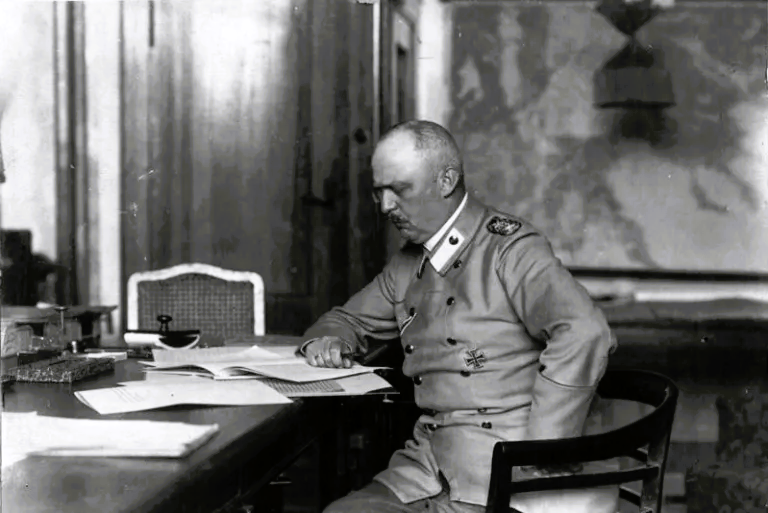
Erich Ludendorff was a prominent German general during World War I, a key strategist in Germany’s military operations, and an influential political figure in the turbulent years that followed. He played a central role in shaping the German war effort, particularly in the later years of the conflict, and was instrumental in the development of Germany’s total war strategy. However, despite his earlier prominence, Ludendorff is often remembered today for his dire warning regarding Adolf Hitler, whom he viewed as a catastrophic leader for Germany.
Ludendorff’s Military Career and Legacy
Born 9 April 1865, Ludendorff quickly rose through the ranks of the German military due to his sharp strategic mind and unwavering dedication. He was instrumental in Germany’s early successes during World War I, particularly in the Battle of Liège and the Eastern Front campaigns alongside Field Marshal Paul von Hindenburg.
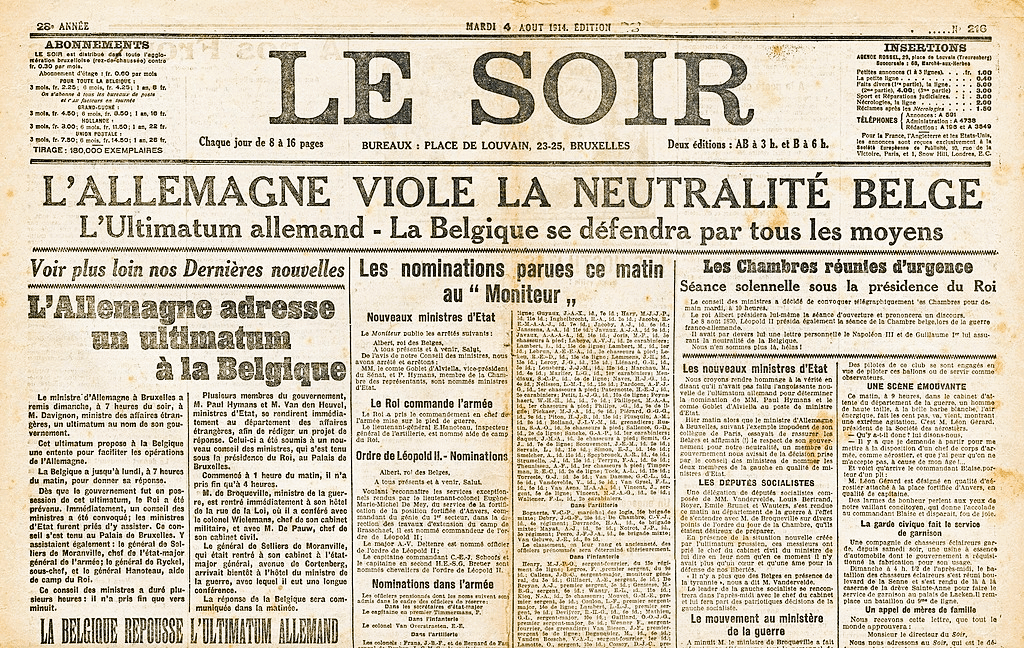
At the outbreak of war in the summer of 1914, Erich Ludendorff was appointed Deputy Chief of Staff to the German Second Army under General Karl von Bülow. His selection for this role was largely due to his prior work in assessing the defenses of Liège, Belgium.
At the start of the Battle of Liège, Ludendorff was observing the 14th Brigade, which had been tasked with infiltrating the city under cover of darkness and securing key bridges before they could be destroyed. When the brigade commander was killed on August 5, Ludendorff took command and led a successful assault, capturing both the city and its citadel.
In the days that followed, two of the forts guarding Liège were seized through determined frontal infantry attacks. The remaining fortifications were systematically destroyed by Germany’s massive Krupp 42-cm howitzers and Austro-Hungarian Škoda 30.5-cm guns. By August 16, all the forts had fallen, clearing the way for the German First Army’s advance.
Recognized as the “Victor of Liège,” Ludendorff was awarded Germany’s highest military honor for gallantry, the Pour le Mérite, which was personally presented to him by Kaiser Wilhelm II on August 22.
By 1916, he had effectively become Germany’s military dictator, directing the war effort with an iron hand. Ludendorff promoted the concept of “total war,” emphasizing the full mobilization of society for the war effort, a strategy that prolonged Germany’s resistance but ultimately could not prevent defeat.
Following Germany’s surrender in 1918, Ludendorff became one of the foremost proponents of the “stab-in-the-back” myth, which falsely claimed that Germany had not been defeated militarily but rather betrayed by internal enemies, particularly socialists and Jews. This narrative helped fuel the rise of nationalist and anti-Semitic movements in the Weimar Republic, contributing to the political instability of the era.
Political Involvement and the Rise of the Nazi Party
After the war, Ludendorff remained politically active, deeply resentful of the Treaty of Versailles and Germany’s democratic government. He aligned himself with various nationalist and right-wing movements, including the early Nazi Party. In 1923, he participated in the failed Beer Hall Putsch, an attempted coup led by Adolf Hitler to overthrow the Weimar Republic. Though arrested and briefly imprisoned, Ludendorff was acquitted, while Hitler used the trial to gain national prominence.
Despite their shared nationalist sentiments, Ludendorff soon distanced himself from Hitler, growing increasingly wary of his methods and ambitions. Unlike Hitler, Ludendorff adhered to an extreme form of militarism and rejected any form of civilian political leadership. As the Nazi movement gained traction, Ludendorff saw Hitler’s rise as a dire threat to Germany’s future.
Ludendorff’s Prophetic Warning
When Hitler was appointed Chancellor of Germany on January 30, 1933, Ludendorff issued a stark and chilling warning to German President Paul von Hindenburg. He declared:
“You have delivered up our holy German Fatherland to one of the greatest demagogues of all time. I solemnly prophesy that this accursed man will cast our Reich into the abyss and bring our nation to inconceivable misery. Future generations will damn you in your grave for what you have done.”
This statement, though largely ignored at the time, proved eerily accurate. Under Hitler’s rule, Germany descended into totalitarianism, embarked on a path of aggressive militarization, and initiated World War II, which resulted in the deaths of millions and the near-total destruction of the German nation. The Holocaust and other atrocities committed by the Nazi regime cemented Hitler’s place as one of history’s most reviled figures, fulfilling Ludendorff’s grim prophecy.
The Later Years and Death of Ludendorff
Following Hitler’s rise to power, Ludendorff became an outcast in the new regime. His warnings were disregarded, and he faded into political obscurity. In his later years, he became increasingly consumed by mysticism and conspiracy theories, writing extensively about his belief that Germany was under the control of dark forces, including Freemasons and Jesuits. He died in 1937, largely forgotten by the Nazi leadership, despite his earlier contributions to their cause.
Erich Ludendorff was a man of contradictions—a brilliant military strategist whose actions contributed to both Germany’s wartime successes and its ultimate defeat. While he played a key role in shaping nationalist politics in postwar Germany, he also foresaw the disaster that Adolf Hitler would bring upon the nation. His warning, though dismissed at the time, stands as one of the most prescient statements in German history. Ludendorff’s legacy is thus a complex one, defined by both his military prowess and his tragically accurate foresight into the horrors of the Nazi era.
On this day 92 years ago, Erich Ludendorff issued a warning—not just to Germany, but to the world—about the man the Germans had placed in power. Although, and perhaps precisely because, he had once been an ally of Hitler, his words were ignored.
Just because a warning is uncomfortable or comes from someone with a controversial past, it should never be dismissed. Yet, the same politics of disregard and denial remain widespread today.
sources
https://www.britannica.com/biography/Erich-Ludendorff
https://encyclopedia.ushmm.org/content/en/article/erich-ludendorff
https://www.bbc.co.uk/history/historic_figures/ludendorff_erich.shtml
https://en.wikipedia.org/wiki/Erich_Ludendorff
Please support us so we can continue our important work.
Donations
Your readership is what makes my site a success, and I am truly passionate about providing you with valuable content. I have been doing this at no cost and will continue to do so. Your voluntary donation of $2 or more, if you are able, would be a significant contribution to the continuation of my work. However, I fully understand if you’re not in a position to do so. Your support, in any form, is greatly appreciated. Thank you. To donate, click on the credit/debit card icon of the card you will use. If you want to donate more than $2, just add a higher number in the box left from the PayPal link. Your generosity is greatly appreciated. Many thanks.
$2.00
 History of Sorts
Leave a comment