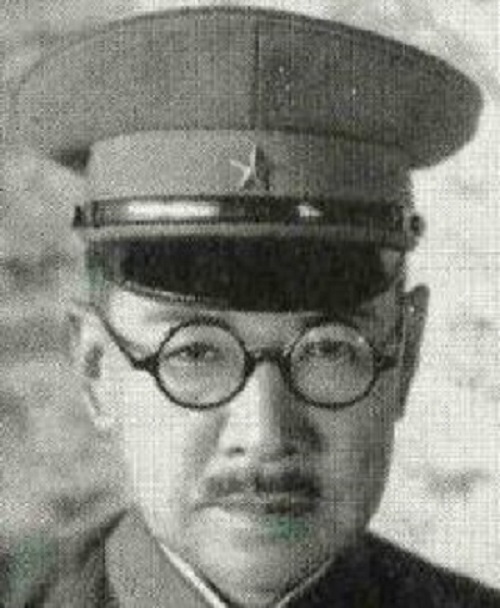
Tani was born 22 December 1882 in Okayama Prefecture. He graduated from the 15th class of the Imperial Japanese Army Academy in 1903 and from the 24th class of the Army War College, where he became an instructor in 1924. The College used his texts on strategy and tactics as required readings.
He saw service during the Russo-Japanese War and during the First World War, as official observer for the Japanese government in Great Britain.
From 1935 to 1937, Tani was commanding officer of the 6th Division (Imperial Japanese Army), which was assigned to the China Expeditionary Army in December 1937 under the overall command of General Matsui Iwane. The 6th Division fought in North China during the Peiking – Hankow Railway Operation. Shipped south with the Japanese 10th Army, it took part in the end of the Battle of Shanghai, and the Battle of Nanking.
His troops took Nanking on 13 December 1937. The Chinese army had evacuated the city just before it was taken. The ensuing occupation was therefore that of a defenceless city. The Japanese troops nevertheless carried out unspeakable atrocities: massacre, rape, pillaging and destruction were routinely committed.

During a six to seven week period, more than 100’000 civilians were killed and thousands of women raped. Against this backdrop, Matsui marched triumphantly into Nanking on 17 December 1937 and remained there for several days.
He then served as Commander in Chief of the Central Defence Army before retiring. For the Second World War, he was recalled from retirement to the command of the IJA 59th Army and Chugoku Army District.
After the end of War, Tani was extradited to the Chinese government to stand trial for war crimes at the Nanjing War Crimes Tribunal.
After the end of World War II, the Chinese government demanded that Tani be extradited to China to stand trial for war crimes at the Nanjing War Crimes Tribunal. Tani denied all charges, blaming Korean soldiers for the massacre.
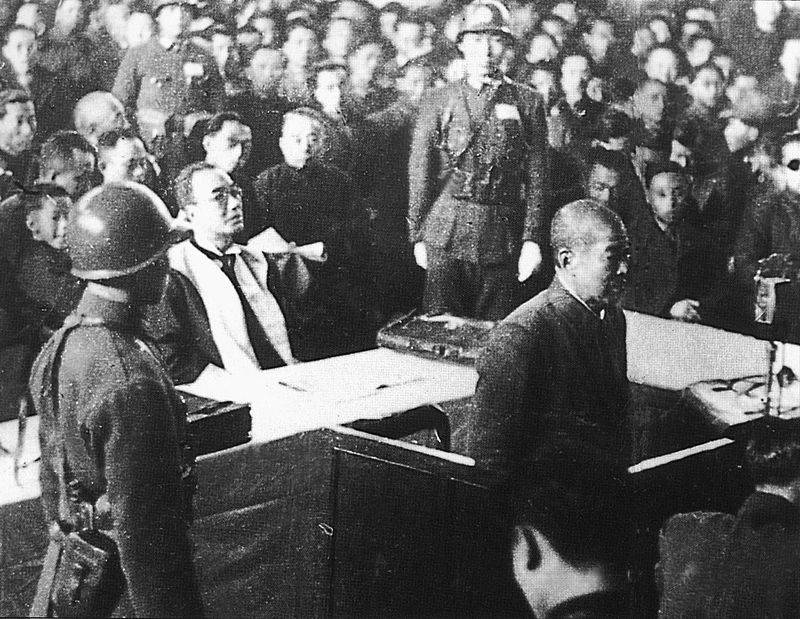
Hundreds of survivors as well as several foreigners who witnessed the atrocity from Nanking Safety Zone, including Miner Searle Bates from the University of Nanking, testified against Hani. He was found guilty of instigating, inspiring and encouraging the men under his command to stage general massacres of prisoners of war and non-combatants and to perpetrate such crimes as rape, plunder and wanton destruction of property, during the Battle of Shanghai, the Battle of Nanking and early in its occupation, the Rape of Nanking, and he was consequently executed on 26 April 1947.


Donation
Your readership is what makes my site a success, and I am truly passionate about providing you with valuable content. I have been doing this at no cost and will continue to do so. Your voluntary donation of $2 or more, if you are able, would be a significant contribution to the continuation of my work. However, I fully understand if you’re not in a position to do so. Your support, in any form, is greatly appreciated. Thank you. To donate, click on the credit/debit card icon of the card you will use. If you want to donate more than $2, just add a higher number in the box left from the PayPal link. Your generosity is greatly appreciated. Many thanks.
$2.00
.

 History of Sorts
Leave a comment