
Usually, when I write a blog which contains the word teenager, it refers to a murdered someone during the Holocaust. Meyer Abramczyk wasn’t one of those and sadly passed away when he was aged 87.
Metaphorically speaking, the teenager Meyer—was killed during the Holocaust. He was born on July 24, 1926 in Belchatow, Poland. His parents were Herschel and Toba Abramczyk. At that time, he had six brothers and sisters: Zelda, Hinda, Moshe, Jankiel, Channah, and Paula.
Meyer was 13 years old when the Nazis invaded Poland. During the first week of the war, Belchatow was designated a Jewish town. The Abramczyk family tried to flee but soon discovered this was virtually impossible. The SS harassed and stopped them when they were on the way. Meyer in 1940, was taken to a work camp in Poznan. He was still only 13 at the time.
Age 13—Meyer’s first year as a teenager. The teenage years are some of the most important years of a young man’s life. They are the years that transform you from a child into a man. In any normal circumstance, a teenager will have his parents and maybe even older siblings around him for support. It is this support that is needed to cope with all the physical, mental and hormonal changes that happen in those years and the anxiety that goes with that.
The support system that Meyer knew was taken from him. He was left to cope on his own under the most brutal circumstances one could imagine. It later emerged that his support was killed—as well as his teenage years. At a time when he should have been playing, exploring, discovering and enjoying life as much as he could—it was all taken away from him. He never got to be that teenager. His aim was on survival, and he may not even have known it at the time that would become his goal, but he did survive and left a legacy and testimony.
Meyer spent all his teenage years fearing for his life, not knowing what happened to his family.
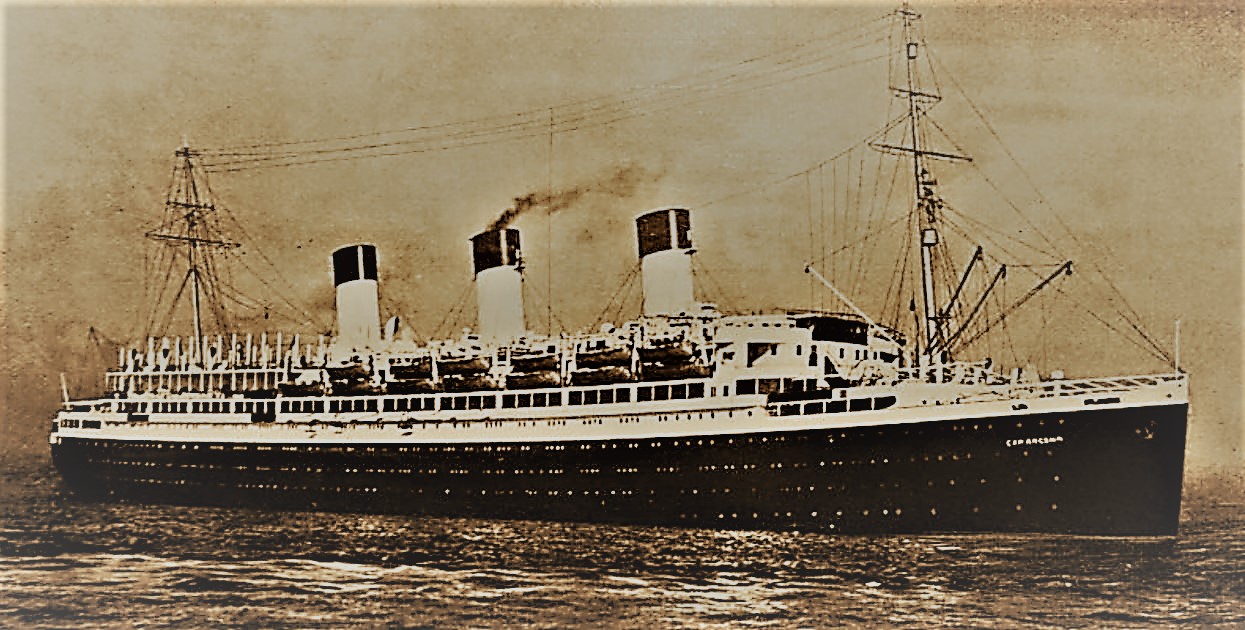
Meyer’s story as a teenager is remarkable in more than one way. He survived several concentration camps, the last one being Auschwitz Birkenau. He survived the Auschwitz death march. He also survived the sinking of the Cap Arcona, a ship bombed by the Allies. Of the estimated 5,000 (some sources put that number higher) concentration camp inmates on board, only 250 survived, of which one of them was the then-still 18-year-old Meyer.
For years after the war, he searched for his family. He eventually found out they were all murdered.
There is a quote by George Herbert, “Living well is the best revenge.” Meyer certainly did that. He moved to Canada in 1956, settled in Toronto, married and had three children and six grandchildren. He worked as a butcher for 60 years and retired—when he was 80. One of his children, Toba (who I consider a friend), once wrote a piece about her father—Meyer Abramczyk—Our Hero for the KehilaLinks Home Page (Belchatow). I do agree Meyer (aka Majer) was a hero and an example for many future generations.
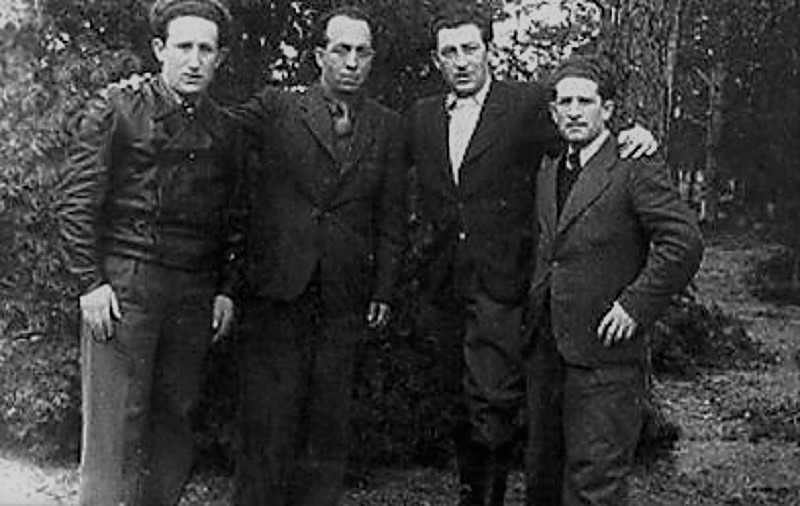
To finish this blog, here is a photo of Meyer and three Belchatow survivors at Föhrenwald Displaced Persons Camp, Germany, 1946.
Thank you, Toba Abramczyk, for allowing me to write about your dad.
Sources
http://liebowitzes.com/belchatow/fohrenwald.htm
https://www.cambridgescholars.com/the-literary-representation-of-world-war-ii-childhood

 History of Sorts
Leave a comment