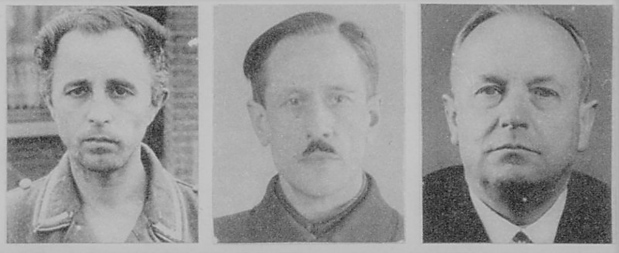
The title is The 4 from Breda, but there are only 3 men pictured. There is a reason for that which I shall explain a bit later. After the Second World War, 241 Germans were tried in the Netherlands for war crimes. Among them, the quartet Willi Lages, Ferdinand aus der Fünten, Franz Fischer and Joseph Kotälla, also known as “The Four of Breda”—a nickname they get from their imprisonment in the Koepelgevangenis(Dome prison) in Breda, a city in the south of the Netherlands.
After the end of the German occupation of the Netherlands, they were initially sentenced to death. That sentence was commuted by pardon to life imprisonment. The cabinet was against the conversion of the death penalty, partly because Queen Juliana had conscientious objections to the execution of the death penalty, but it still granted a pardon. Minister of Justice Teun Struycken assumed this would lead to release after twenty years.
As I mentioned earlier. I would explain why there are only three men in the picture above.
Under the responsibility of Minister of Justice Ivo Samkalden, Lages was given a suspended sentence in 1966 because Dutch doctors believed he was terminally ill, which later turned out to be untrue. He never returned to the Netherlands. The German constitution prohibits the extradition of its own nationals. After an intestinal operation in West Germany, he lived in freedom for almost five years. He died on 2 April 1971.
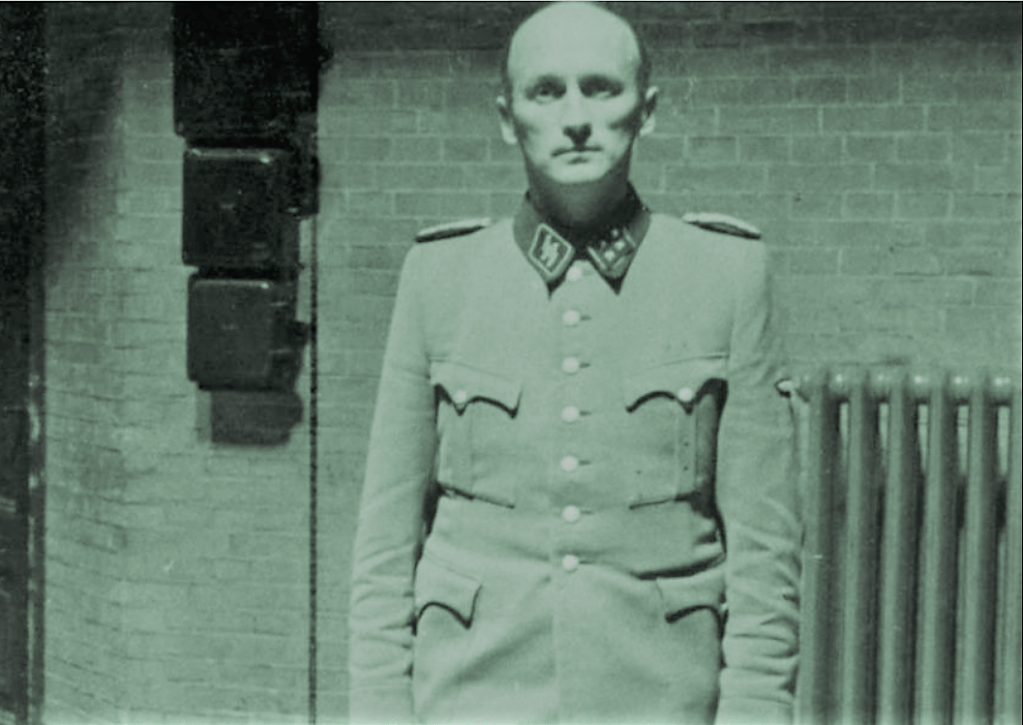
After 1971, the four became three and were referred to as, The 3 of Breda.
Willi Lages functioned as an SS man for the SD in Amsterdam and was responsible for the registration of Jews. That role was crucial for who would or would not be deported to a concentration camp. It was proven that he was responsible for the execution of several members of the resistance, including Hannie Schaft.
Joseph Kotalla (pictured in the top photograph on the left) was the administrative head and deputy camp commander of Kamp Amersfoort and was known to be psychologically unbalanced. He was nicknamed the Executioner of Amersfoort because he pulled the trigger several times.
Ferdinand aus der Fünten (top photograph, middle person) was also an SS man involved in the deportations because he was partly responsible for the logistics. This pure-blooded SS man lived for persecuting Jews, his only passion, reportedly, which earned him the nickname, Judenfischer. He was initially stationed in Utrecht but later moved to The Hague, where he was involved in deportations.
Aus der Fünten had been in charge of the day-to-day management of the organization of the deportations of Jews to Westerbork in Amsterdam, and Fischer did the same work in The Hague. Lages was one step higher in the ranking and was the de facto boss of Aus der Fünten. As a passionate police officer who had started his career with the Secret State Police in Germany, he was also head of the Netherlands Security Police—involved in the fight against the resistance. Kotalla was not personally involved with the arrest and persecution of Jews and Resistance Fighters. His conviction was for his brutal behaviour as a guard in the Amersfoort Concentration Camp.
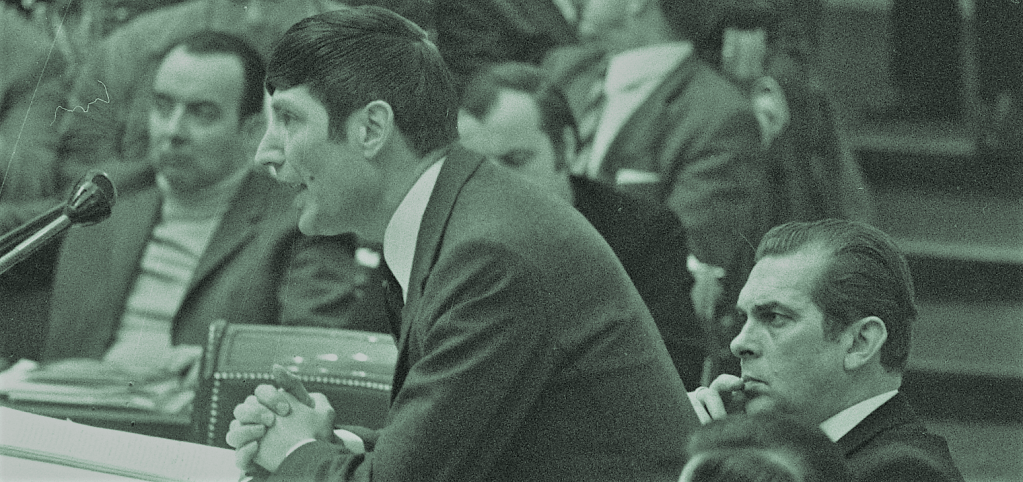
In the late 1960s, the then Minister of Justice, Carel Polak, wanted to release the three remaining prisoners. After the discussion and advice from the Supreme Court, he decided against it.
In 1972, emotional debates arose again. Minister of Justice Dries van Agt had hinted that he wanted to respond positively to a request for clemency for the Three from Breda, partly because the Supreme Court and the Special Criminal Chamber of the District Court of Amsterdam had now unanimously advised to grant clemency. The release was called off after a hearing advocated by Anneke Goudsmit (D’66-Democrats 66) and a fierce parliamentary debate on 29 February 1972 took place, partly under the influence of strong, emotional resistance from society, in particular from associations of war victims. Ultimately, the request for clemency was rejected after a motion passed by the Guardian in the House of Representatives.
That this goes down the wrong way with people can be seen from the threatening letters that Van Agt receives. The division in the country about clemency is also clearly visible in the 13-hour debate in the House of Representatives on the issue.
Van Agt had to deal with the strong emotions in society, especially those affected by war.
As a result, the Dutch citizens come to see Fischer, Aus der Fünten and Kotälla even more as a symbol of the evil done to them. Therefore, in their eyes, the remaining three should never be released.
Kotälla has been mentally ill throughout his imprisonment. In the summer of 1979, his health deteriorated considerably. He died on 31 July 1979 in the Breda Prison. He is the only one of The Four who never submitted a request for clemency, but always tried to be released through lawsuits.
Throughout his imprisonment, he feels that he has not been judged fairly by the Dutch constitutional state. He continues to fight for a review of his verdict, which never comes, until his death. “The Three” became “The Two of Breda.”
On July 5, 1988, on the initiative of banker and former resistance member Bib van Lanschot, nineteen prominent Dutch citizens pleaded in a letter to Prime Minister Ruud Lubbers and Minister of Justice Frits Korthals Altes for the immediate release of the remaining two. They were old and didn’t have long to live. The letter was handed over personally without publicity. In addition to Van Lanschot, the signatories included former resistance member Hans Teengs Gerritsen, former Prime Minister Piet de Jong, former Minister of Justice Samkalden (now Minister of State) and other previous opponents of early release.
On 27 January 1989, the remaining two were released at the instigation of Korthals Altes. He received permission for this from the House of Representatives through a PvdA motion that was rejected by 88 to 55 votes calling for it to be waived. Korthals Altes referred to the letter from the “group of nineteen” at the start of the parliamentary debates on the proposed release. The same day the motion was rejected, the two war criminals were put across the border as unwanted aliens near Venlo. Teengs Gerritsen would express regret about co-signing the letter shortly after the release.
The writer and survivor of the prisoner of war and concentration camp Bergen-Belsen Abel Herzberg also publicly pleaded for release. Herzberg was a criminal law expert and took a position completely opposite to that of many Dutch Jews at the time. He called the attitude of Jewish opponents for the release—full of “hate and retaliation,” stressing that revenge in such a way was pointless. Incidentally, Herzberg would later indicate that, after the last two of Breda were released, he also doubted his own position.
Aus der Fünten and Fischer both died shortly after their release.
To an extent, I can understand why they were released; releasing them on 27 January, I find it disgusting. I hope this was because of an oversight.
Sources
 History of Sorts
Leave a comment