
The photographs in this post are categorized as artefacts. I don‘t really like that description because the definition of an artefact is—an object made by a human being, typically one of cultural or historical interest. These objects may have been made by a human being, but more than that—they were personal belongings.
The narrative of the Holocaust is so much more than the murder of millions—all of the victims had possessions taken from them or had to part with them before they were transported personal belongings, which were held in their hands or worn by them. DNA residue would have been transferred on these belongings—at least on a few.
The photo above is of an accordion that Shabetai Shemi from Bitola (Monastir), Macedonia received as a gift for his Bar Mitzvah. The accordion was given to a friend for safekeeping when Shabetai was deported to the camps and—murdered.
Even before World War II, the writer and activist Anton de Kom fought with all his heart for equality between blacks and whites in the Dutch colony of Suriname. His book, Wij Slaven van Suriname (We Slaves of Suriname), became a symbol of resistance against colonialism.
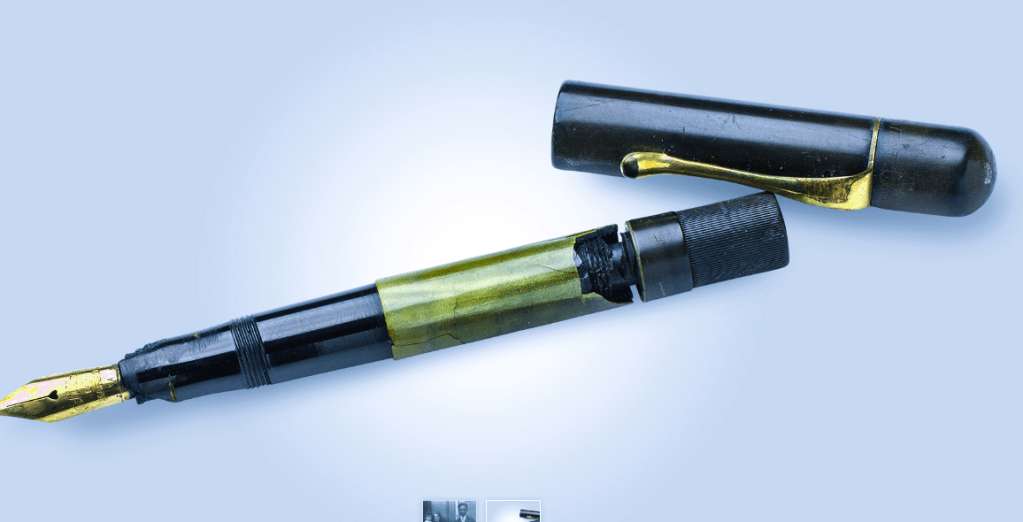
The Dutch Colonial Government considered him dangerous and shipped him to the Netherlands in 1933. In 1940, Anton de Kom joined the Dutch Resistance in The Hague. He wrote anonymous articles for the left-wing illegal newspaper De Vonk (Lit. The Spark). His son Ad de Kom shared some memories of his father, “He usually wrote on Sundays. Then he settled back into an armchair in the sitting room with a stack of books and paper.” When Anton de Kom was arrested on 7 August 1944, he left this Pelikan fountain pen behind. After imprisonment in several camps, Anton de Kom ended up at the notorious Sandbostel POW Camp in Germany. He died there in 1945 under the most horrendous conditions.

Some Jewish children gave away their toys when they had to report for transport or went into hiding. Marbles were a child’s prized possession. The night before they were transported, a few children in the South of Amsterdam were known to have said, “Let’s just toss them!” They threw their marbles out the window, hoping other children in the neighbourhood would gather them up.
Shortly before going into hiding on 6 July 1942, with her parents and sister Margot in the Secret Annex on Amsterdam’s Prinsengracht, Anne Frank also left a few prized possessions behind. She gave her tea set, the book Nederlandsche Sagen en Legenden (Tales and Legends of the Netherlands) that she received on 12 June as a birthday gift, and this metal tin of marbles (shown above) to her neighbourhood friend, Toosje Kupers. The Frank family were eventually arrested in hiding. Otto Frank was the only one in the family to survive the concentration camps. After the war, Toosje Kupers saw Anne’s father several times. When Anne Frank’s diary was published in 1947, Otto Frank personally presented Toosje with a copy.

The everyday life of the Jewish Gold family, who lived in the village of Jutphaas near Utrecht, abruptly ended in April 1943. Father, Mother and their son Lothar were picked up from their home and eventually deported. They always had close contact with the neighbours across the street, the Steenaart family.
Father Julius Gold was a shoemaker. The night before leaving, he promised to make baby Willy Steenaart a pair of shoes. Along with that promise, Julius gave the Steenaart family his shoemaker’s box, filled with tools for safekeeping. The farewell words to the Gold family were those of a neighbourhood kid shouting, “Where are you going, Lothar?” to his friend as the family was driven away by a truck. The Steenaarts never received another sign of life from Julius Gold or his family. Later, Willy Steenaart took good care of the box and did not use a single tool. Lothar was murdered in the Sobibor Extermination Camp on 11 June 1943 along with his mother, Gerda. Julius died on 21 March 1945 in Melk, a slave labour sub-camp of Mauthausen.
Sources

 History of Sorts
Leave a reply to Elizabeth Cancel reply