
The above photograph is of a plaque that hangs over a house in The Hague. It was the residence of Mies Wahlbeehm, where she hid a great number of Jews. The one thing that captured my attention was the words at the top of the plaque, “De herrinering aan de doden is voor hen een tweede leven,” which translates as ‘The remembrance of the dead, is for them a second life,” is so true.
Mies Walbeehm was born March 13, 1903, in Batang near Pekalongan, Dutch East Indies (currently Indonesia). She was the daughter of an Indonesian mother and a strict Dutch colonial official. Mies was a masseuse and found it difficult to say ‘no’ when Jewish clients asked her for help. In two years, she gave shelter to between 75 and 150 Jewish people in hiding in her house. Sometimes, she hid up to thirty people at a time in her two-room flat on the first floor above one of the many shops.
One of the families who took shelter with Mies was the Koppel family. The Koppel couple and their son Martijn were arrested after betrayal on the night of March 22 to 23, 1943, at their hiding place on Reinkensstraat in The Hague. Because it was so overcrowded, the family had been moved to another hiding place shortly before the raid, in a hotel in Ugchelen, but they found it very boring in the woods and asked the courier who provided them with ration cards to take them back. bring to The Hague. The courier warned them that it was only a matter of time before a raid would follow on Reinkensstraat because the address was simply too full. But they persisted and later traveled back to The Hague on their own, shortly before the raid. They were eventually all murdered in Sobibor on April 9, 1943.
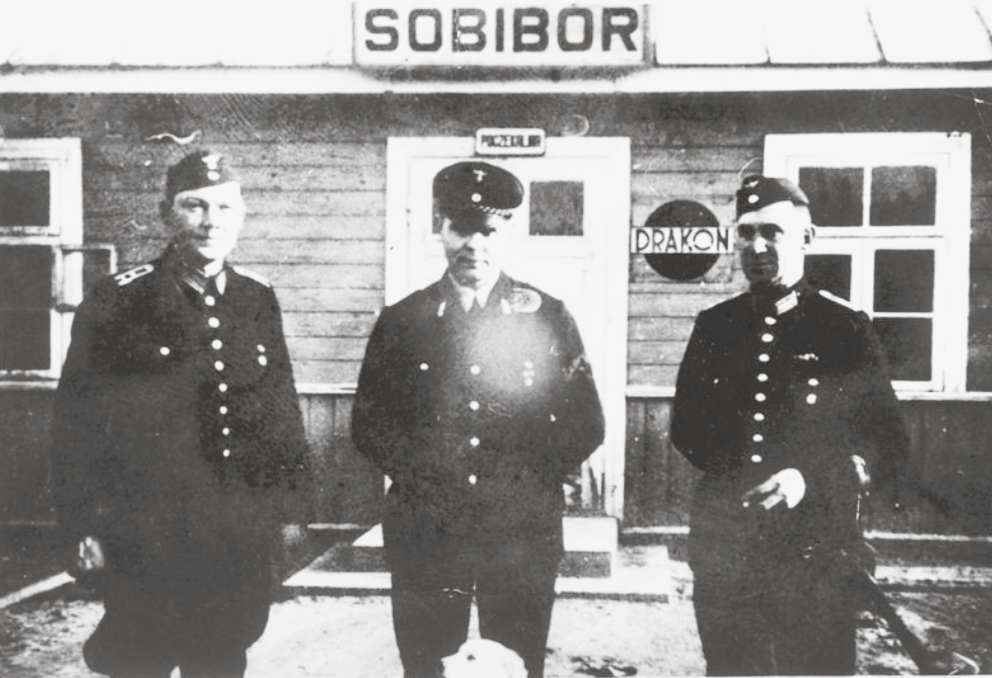
On the night of March 22 to 23, 1943. 24 Jewish people in hiding were found in the flat at number 19. They were all transported to the Sobibor.
The names of the 24 victims are: Johanna Arbouw, Joseph Isidore Cohen, Abraham van Dam, Izak Fransman, Rachel-Fransman-van Lochem, Jacoba van Gelder, Clara Juliard Logher, Louis Koppel, Betsij Hendrina Koppel-Meijers, Martijn Koppel, Clara van Leeuwen-Rosenberg, Mietje Mogendorff- Meijer, Alex Podchlebnik, Mietje Pool-Cappel, Samuel Salzedo, Rebecca (Riekje) Sophia Salzedo, Abigael Salzedo-Querido, Jacob Verliebter, Rosa Verliebter-Schleyen, Aron de Vries, Victorine Esther de Vries-Jacobs, Israël Wijnberg, Fanny Wijnberg- Podchlebnik and Meijer Izak Wijnberg.
As far as reconstruction after the war, the flat on Reinkenstraat was betrayed by Friedrich Weinreb, but by number. He might have been aware of the hiding place because he heard about it from Alex Podchlebnick, one of the people in hiding who sometimes was allowed to go outside. The Security Police, led by Fritz Koch and Antonie Bolland, first tried another part of the building and then raided Mies’s apartment around 8 p.m.
Most people caught in hiding were sent to their deaths at Sobibor in early April 1943. Mies Walbeehm was interrogated and tortured in the Scheveningen prison, nicknamed Oranje Hotel.
Later, Mies said, she had been interrogated by Schmidt at the Oranjehotel. The main reason for the interrogations is to track down more people in hiding or helpers. The interrogations themselves were often in Villa Windekind. There is a post-war anecdote, related by Marietje Koelman, being arrested on April 7 for hiding her Jewish mother-in-law.
“In Windekind I was locked up in a large basement cupboard with a nurse. There was water running through a gutter, water that was completely red. I thought it was clear: they were going to shoot us dead. My husband was already dead, what could it be? I don’t care. But we discovered later, there was a rusty grate in the water. The rust turned the water so red. That nurse was a fierce one. She had hidden twenty Jews in her apartment. Don’t let it get to you, she said. You have to They like being rude to those Germans. No, I can handle them, I said.”

In 1995, the then-only witness of the raid, Adriana der Harst-Groen, spoke up.
“Mies’ house, Reinkenstraat 19, was used as a transition house. The resistance kept coming with new requests to accommodate people, and Mies never said no. It happened that more than 30 people were in hiding for a long time. It is easy to understand that this was not easy. Space was very limited, there was a hallway, a bathroom with a bathtub (which was also used for sleeping), and an ensuite room of approximately nine by four.
Mies, herself, slept in the hallway under the monastery table. The situation was often untenable, and the chance of discovery was high. When two people were picked up by the Resistance, in the morning, five more people in hiding were added in the evening. That’s how Mies was—she couldn’t say no.
Of course, there were many tensions; some thought there were too many people in the house. There was disagreement about the rules—about the distribution of food and about the compensation of 30 guilders per month to be paid. But if you had no money you didn’t have to pay.
For Mies, it was purely human work; you can hardly imagine what those people are like in that small space. Mies tried to prevent fatal mistakes from being made by making firm agreements. In order not to allow the use of gas and electricity to increase too much and make it noticeable, they determined that two people had to use the bathroom. Flushing the toilet should not be done too often.”

On July 10, 1943, Mies was deported to Vught concentration camp and released more than a year later, on August 5, 1944. Her experiences did not stop her from taking in more people in hiding.
Mrs. Walbeehm died in 1981. The drama of the Reinkenstraat—was quickly forgotten after the war. That changed in 1976 when the NIOD Weinreb report was published. An article published in Goudse Courant by journalist Aad Wagenaar under the headline, The Hague Secret Annex using passages from the Weinreb report.
Thank you, Otto van Solkema, for pointing out to me—this story.
Sources
https://www.oorlogsbronnen.nl/mensen?theme=https%3A%2F%2Fdata.niod.nl%2FWO2_Thesaurus%2F20575
https://www.oorlogsbronnen.nl/thema/Inval%20op%20Reinkenstraat%2019%2C%20Den%20Haag
https://www.4en5mei.nl/oorlogsmonumenten/zoeken/280/den-haag-monument-in-de-reinkenstraat

Donation
Your readership is what makes my site a success, and I am truly passionate about providing you with valuable content. I have been doing this at no cost and will continue to do so. Your voluntary donation of $2 or more, if you are able, would be a significant contribution to the continuation of my work. However, I fully understand if you’re not in a position to do so. Your support, in any form, is greatly appreciated. Thank you. To donate, click on the credit/debit card icon of the card you will use. If you want to donate more than $2, just add a higher number in the box left from the PayPal link. Your generosity is greatly appreciated. Many thanks.
$2.00
 History of Sorts
Leave a comment