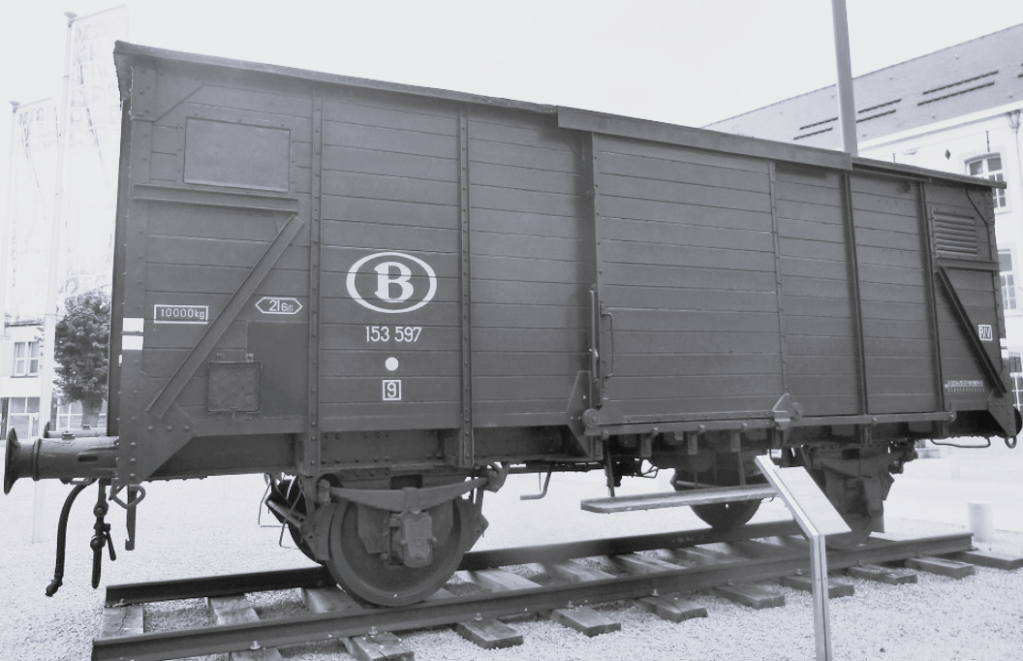
The Mechelen Transit Camp, located in a former army barracks known as Kazerne Dossin, was established by the Nazis in 1942. Its primary function was to serve as a holding and sorting facility for Jews and Roma before their deportation to extermination camps, primarily Auschwitz-Birkenau. Over the course of two years, Mechelen became a site of immense suffering and despair as they tore families apart and subjected individuals to inhumane conditions.
From August 4, 1942, to July 31, 1944, a total of 28 trains departed from Mechelen, carrying over 25,000 Jews and Roma to their deaths. The systematic nature of these deportations was indicative of the Nazi regime’s meticulous planning and execution of the “Final Solution.”
The last deportation train, known as Convoy XXVI, departed Mechelen on July 31, 1944. This final transport included approximately 563 individuals, marking the end of a horrific chapter in Belgium’s history. By this time, the Allied forces had made significant advances in Western Europe following the D-Day landings in June 1944, which contributed to the halting of further deportations.
Convoy XXVI was not just another train; it symbolized the desperate final efforts of the Nazis to continue their genocidal campaign even as their hold on occupied territories was rapidly diminishing. The individuals on this last train, like those on the previous 25 convoys, faced almost certain death upon arrival at Auschwitz.
The human cost of the deportations from Mechelen is almost incomprehensible. The victims were ordinary men, women, and children, whose lives were brutally cut short by the Nazis’ genocidal policies. Families were ripped apart; communities were decimated as the Nazis tried to target an entire culture for annihilation.
Allied forces liberated the Mechelen Transit Camp in September 1944, just a few months after the departure of the last train. The end of the war brought with it a profound reckoning with the horrors of the Holocaust. The Kazerne Dossin site, after the war, was transformed into a museum and memorial dedicated to preserving the memory of the victims and educating future generations about the atrocities committed during the Holocaust.
Today, Kazerne Dossin stands as a poignant reminder of the past. The museum’s exhibits, which include personal testimonies, photographs, and artifacts, provide a powerful narrative of the suffering endured by those who passed through the camp. It serves as both a place of mourning and a beacon of education, ensuring that the lessons of the Holocaust are never to be forgotten.
The story of Mechelen and its final transport serves as a stark reminder of the dangers of hatred, intolerance, and indifference, urging us to remain vigilant in the defense of human rights and dignity for all.
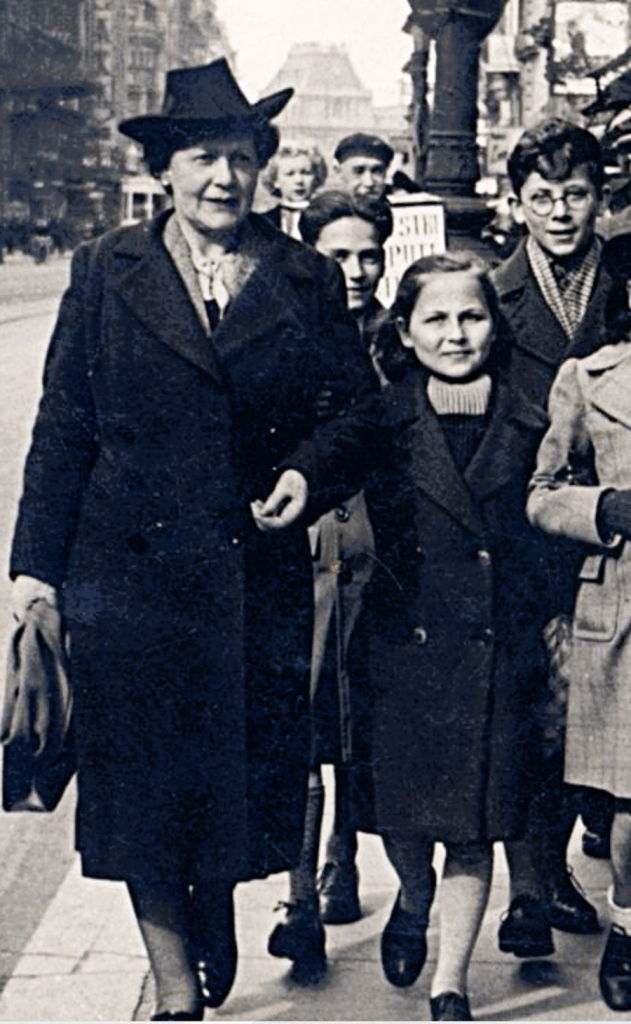
Miryam and Maxime Seyffers, accompanied by their Aunt Berthe Krellstein, were photographed in Brussels in 1942. Berthe Krellstein, born in Bochum, Germany, in 1894, emigrated to Belgium with her parents when she was only three. By 1942, she was living in Saint Gilles, Brussels. Later, she was accommodated in the Jewish home on Rue de la Glacière, and she escaped deportation. Her family was not so lucky.
Maxime and Miryam Seyffers were both born in Brussels in 1929 and 1931, respectively. Their parents had also been born in the capital: the father, Léon Seyffers, in Anderlecht in 1895, and his wife, Sara Krellstein, in 1899, and all held Belgian nationality. They lived on Rue de la Régence, in a district known for its art dealers. Léon Seyffers earned a living as an antiques dealer specializing in paintings, while Sara Krellstein kept the house and looked after their two children. Maxime Seyffers attended the Athénée Robert Catteau until the Germans banned Jews from attending non-Jewish schools.
Following their arrest in June 1944, the Nazis on June 21 took the family to the Dossin Barracks. Immediately, the Nazis assigned them to Transport 26—the last transport from Belgium. Deported on July 31, Léon Seyffers, 58, Sara Krellstein, 44, their son, Maxime, 14, and their daughter, Miryam, 13, vanished from records as they disembarked from the train at Birkenau. We can only guess at the circumstances of their deaths.
Sources
https://kazernedossin.eu/en/onderzoeksproject/transporten/
https://www.tracesofwar.com/sights/132713/Memorial-Kazerne-Dossin.htm
https://www.liberationroute.com/pois/378/kazerne-dossin
https://www.ushmm.org/online/hsv/source_view.php?SourceId=46490
Donation
I am passionate about my site and I know you all like reading my blogs. I have been doing this at no cost and will continue to do so. All I ask is for a voluntary donation of $2, however if you are not in a position to do so I can fully understand, maybe next time then. Thank you. To donate click on the credit/debit card icon of the card you will use. If you want to donate more then $2 just add a higher number in the box left from the PayPal link. Many thanks.
$2.00
 History of Sorts
Leave a comment