
The Flag
Flags often evoke strong emotions and can symbolize a variety of sentiments and ideals. Here are some common emotions and concepts connected to flags:
- Patriotism: National flags often inspire a deep sense of pride and loyalty towards one’s country. They symbolize national identity and unity.
- Sacrifice: Many flags are associated with the sacrifices made by individuals for their country, especially in times of war. The American flag, for example, often evokes memories of soldiers who have fought and died for freedom.
- Hope and Aspiration: Flags can represent the hopes and aspirations of a people. For example, the flag of South Africa is a symbol of hope and a new beginning after the end of apartheid.
- Freedom and Independence: Flags like that of the United States or India symbolize the struggle for and achievement of independence and freedom from colonial rule.
- Mourning and Respect: Flags are often used in ceremonies to honor the deceased, especially those who have served in the military. A flag draped over a coffin is a sign of respect and mourning.
- Solidarity and Unity: Flags can bring people together under a common cause or identity.
- Joy and Celebration: Flags are often displayed during national holidays, parades, and other celebrations, evoking feelings of joy and festivity
In 1943, the Jewish family Gans was on their way to the train station because Father Josef, Mother Martha, and their four children Abraham, Louise, Emma, and baby Harry had received a call-up notice. After earlier deferments, they were ordered, like many other Jews, to report for internment in the Vught Concentration Camp.
The evening before their departure, the Gans family said their goodbyes to neighbors they were quite fond of. Josef Gans gave the family’s Dutch flag to Henny, the girl next door, with the words: “I’m giving you this flag for safekeeping, until better times. Hang it outside when we return.” The next day, Henny accompanied them to the station. The steam train with its passenger compartments was already ready and waiting. The guards slammed the doors shut. Henny threw one last kiss and waved goodbye to her beloved neighbors.
Years later, after learning that the Nazis murdered the entire Gans family at a concentration camp in Poland, Henny donated the flag to the Synagogue in the town of Winterswijk.
It’s uncertain whether any relatives of the Gans family are still living.
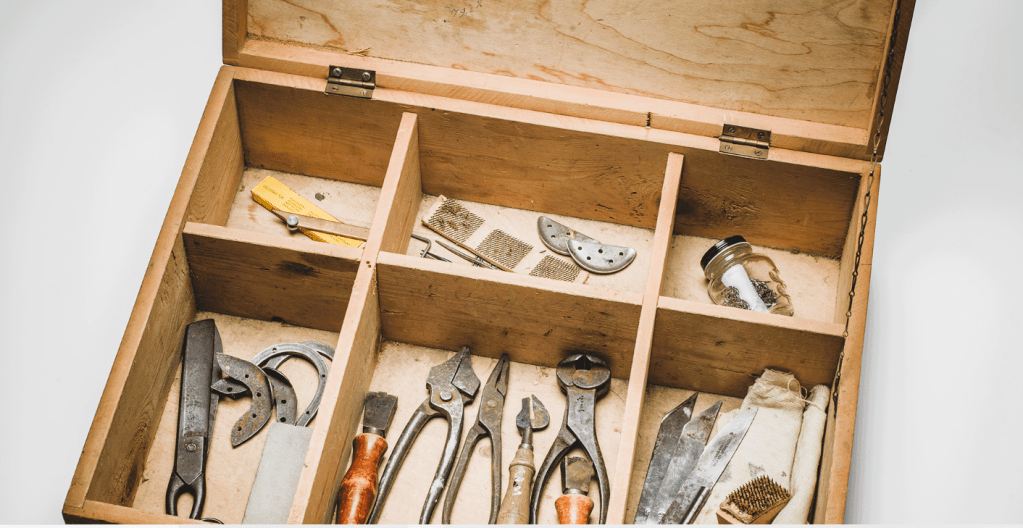
The Shoemaker’s Toolbox
Certainly! Here is the corrected version of the text:
The Gold family’s everyday life, which was Jewish and lived in the village of Jutphaas near Utrecht, came to an abrupt end in April 1943. The father, mother, and son, Lothar, were taken from their home and eventually deported. They had always maintained close contact with the neighbors across the street, the Steenaart family. Father Julius Gold was a shoemaker, and the night before leaving, he promised that when he returned, he would make baby Willy Steenaart a pair of shoes.
Along with this promise, Julius gave the Steenaart family his shoemaker’s box, filled with tools, for safekeeping. The farewell words to the Gold family were those of a neighborhood kid shouting, “Where are you going, Lothar?” Julius called out and waved to his friend—as the family was taken away by a truck. The Steenaarts never received another sign of life from Julius Gold and his family. Later, Willy Steenaart took good care of the box: not a single tool was ever used. Lothar was murdered in the Sobibor Extermination Camp on June 11, 1943, along with his mother, Gerda. Julius died on March 21, 1945, in Melk, a slave labor sub-camp of Mauthausen Concentration Camp in Austria. It is not known whether any relatives of the Gold family are still alive.
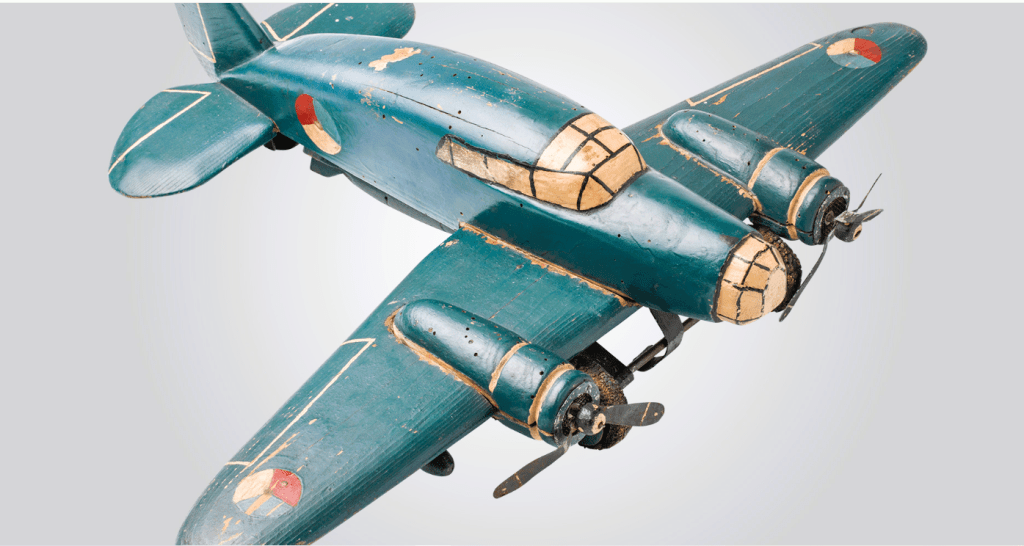
The Toy Plane
On September 27, 1942, the Jewish child Joop Levy went into hiding with his parents. The Ebbers family took them in at their farm in the village of Lintelo in the Achterhoek, a region in the eastern part of the Netherlands. With no friends to play with, Joop was allowed to help feed the cows and pigs when there was no immediate danger. However, the risk gradually increased.
When a platoon of seventy German soldiers suddenly arrived at the farm, Joop had to spend more than two consecutive weeks hidden in a cubbyhole under the hay. On his eighth birthday, a courier from the Resistance delivered a splendid gift to Joop. His cousin Jonny and a Russian pilot, who was hiding nearby at the Geurink family’s farm in Lichtenvoorde, had made a bomber for him from a wooden toilet seat. On the first anniversary of the liberation, a parade took place in the nearby village of Varsseveld. Joop participated in the procession dressed as a pilot, proudly carrying his plane under his arm.
Source
 History of Sorts
Leave a comment