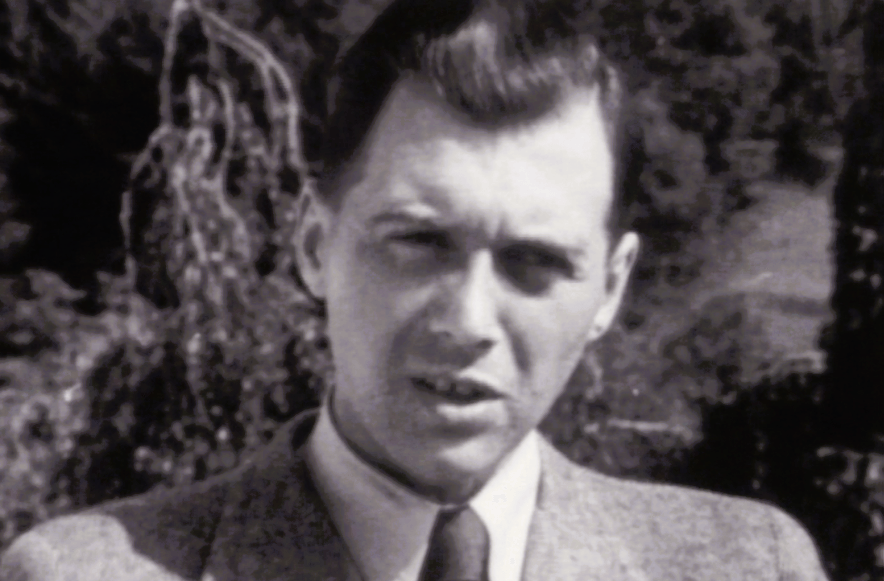
I had planned to write a blog on Menegele’s experiments on children, especially on twins, but as before, I couldn’t. I had to stop; the children’s eyes haunted me.
Joseph Mengele, often referred to as the “Angel of Death,” is one of the most infamous figures associated with the Holocaust due to his brutal medical experiments on prisoners at Auschwitz. His volatility, both in the sense of his unpredictability and his moral extremism, made him a particularly terrifying figure. The volatility of Mengele is reflected in his ability to embody both the banality of evil and the capacity for extreme cruelty, his erratic nature in conducting experiments, and his transformation from a seemingly unremarkable medical professional to a symbol of Nazi inhumanity.
One of the most striking aspects of Mengele’s volatility is his embodiment of the banality of evil, a concept popularized by philosopher Hannah Arendt. Mengele was not born a monster; he was a well-educated, cultured man holding a doctorate in anthropology and medicine. His intellectual background and seemingly normal upbringing make his later actions all the more disturbing. This paradox of a cultured man committing unspeakable atrocities reflects the volatile nature of his character. His capacity to oscillate between the facade of a dedicated scientist and the reality of a sadistic killer underscores the duality within him.
Mengele’s actions in Auschwitz illustrate this dichotomy. On one hand, he could present himself as a compassionate doctor, engaging in polite conversation and showing interest in the well-being of his subjects. On the other hand, he displayed a chilling ruthlessness, selecting victims for his experiments with a wave of the hand, sending thousands to their deaths without a second thought. This unpredictability, where he could shift from a seemingly benign demeanor to one of extreme cruelty, defines his volatile nature.
A disturbing combination of erratic behavior and obsessive curiosity marked Mengele’s scientific endeavors at Auschwitz. His experiments, particularly those on twins, were conducted with a reckless disregard for human life. Mengele’s scientific methods were not only unethical but often lacked any logical consistency or rigor. He would begin one line of inquiry, such as trying to change eye color by injecting chemicals into the eyes of living subjects. Then, he would shift to another, like sewing twins together to create conjoined siblings.
This erratic approach to experimentation manifested Mengele’s cruelty and volatile personality. He was driven by a perverse desire to achieve scientific breakthroughs at any cost, yet his methods were more akin to a sadistic game than genuine research. The lack of coherent scientific methodology and the random nature of his experiments highlight his instability and the chaotic mindset that governed his actions.
Mengele’s volatility is further illustrated by his transformation from a seemingly conventional medical professional to a symbol of Nazi inhumanity. Before joining the SS and being stationed at Auschwitz, Mengele was a promising young scientist with a bright future. However, once he became immersed in the ideology of the Nazi regime, he rapidly descended into a moral abyss.
This transformation was not gradual but marked by a sharp and dramatic shift in his behavior and beliefs. Mengele’s adoption of Nazi racial theories and his participation in the regime’s genocidal policies demonstrate a radical change in his character. He embraced the opportunity to conduct inhumane experiments under the guise of scientific research, fully aligning himself with the regime’s perverse goals. This rapid shift from a medical professional to a war criminal exemplifies the volatile nature of his personality.
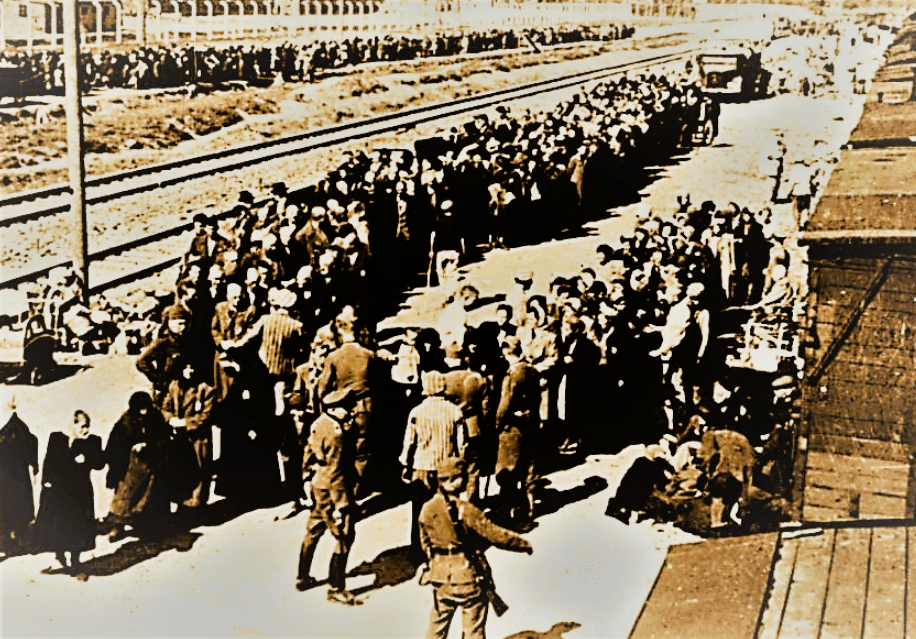
His experiments at Auschwitz are among the most notorious examples of the perversion of science for the sake of cruelty. His primary drive was by Nazi racial ideology and a distorted sense of scientific curiosity. Here are some of the most notorious examples of his experiments:
1. Twin Experiments
Mengele had a particular obsession with twins, believing that studying them could unlock the secrets of genetic inheritance. He would select twins from new arrivals at Auschwitz and subject them to a range of horrific experiments, often without anesthesia.
- Blood Transfusions and Injections: Mengele would inject one twin with various substances, including chemicals and diseases, to observe the effects on both twins. He also performed transfusions between twins to see if one twin’s blood would have an impact on the other.
- Surgical Procedures: Twins were subjected to unnecessary surgeries, such as organ removal or limb amputation. In some cases, Mengele attempted to create conjoined twins by sewing them together, often resulting in death from infection or blood poisoning.
- Death for Comparative Study: If one twin died as a result of an experiment, Mengele would often kill the other twin to conduct comparative post-mortem examinations, dissecting the bodies to analyze any differences caused by the experiments.
2. Eye Color Experiments
Mengele was also interested in heterochromia (having two different eye colors) and in changing eye color to fit the Aryan ideal of blue eyes.
- Chemical Injections: Mengele injected chemicals directly into the eyes of prisoners, particularly children, in an attempt to change their eye color. These experiments caused extreme pain and severe infections and often resulted in permanent blindness.
3. Experiments on Dwarfs and People with Physical Anomalies
Mengele targeted people with physical abnormalities, particularly those suffering from dwarfism or gigantism, for his cruel experiments.
- Blood and Tissue Samples: These prisoners were often subjected to repeated blood draws and tissue sampling, usually under inhumane conditions and without anesthesia.
- Bone and Muscle Studies: Mengele conducted brutal physical experiments, such as removing organs, limbs, or body parts to study them, often leading to the death of the subject.
4. Sterilization and Reproductive Experiments
In line with Nazi eugenic policies, Mengele conducted experiments related to sterilization and reproduction.
- Forced Sterilization: Mengele performed sterilization procedures on men and women without their consent, often using methods that were extremely painful and left the victims mutilated.
- Injections to the Uterus: Women were injected with caustic substances or irradiated to study the effects on reproduction, usually resulting in severe pain, infection, or death.
5. Exposure to Disease
Mengele also conducted experiments that involved exposing prisoners to various diseases to study their effects and the potential for finding vaccines.
- Deliberate Infection: Prisoners were deliberately infected with diseases like typhus, tuberculosis, and malaria. Mengele then observed the progression of these diseases without providing any treatment, leading to the death of many subjects.
- Comparative Studies: In some cases, Mengele treated one group of infected prisoners while withholding treatment from another, simply to observe the difference in outcomes.
6. Survival Experiments
Mengele also conducted brutal experiments to test the limits of human survival.
- Extreme Conditions: Prisoners were subjected to freezing temperatures or immersed in ice water to study hypothermia and how long the human body could survive under such conditions. These experiments were often fatal.
- Pressure Chamber Tests: Some prisoners were subjected to high-altitude or decompression experiments, which often resulted in severe injury or death.
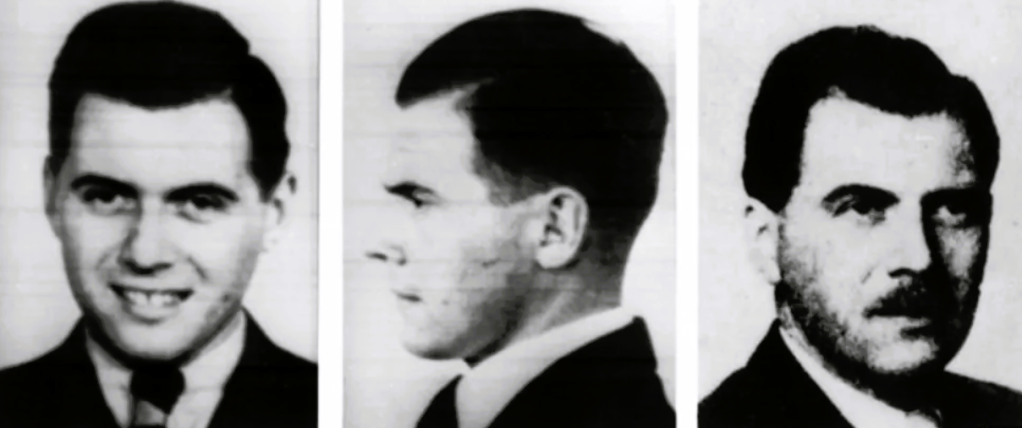
After the collapse of Nazi Germany in 1945, Mengele was captured by Allied forces but managed to conceal his identity, avoiding detection as one of the most wanted war criminals. Using false papers, he worked as a farmhand in Germany for a few years before fleeing to South America in 1949. With the help of a network of Nazi sympathizers, he traveled to Argentina, a country that had become a refuge for many Nazis due to its government’s sympathetic stance toward them.
In Argentina, Mengele initially lived under his real name and even started a business. However, as the hunt for Nazi war criminals intensified in the 1950s and 1960s, especially after the capture of Adolf Eichmann in 1960, Mengele became more cautious. He moved between countries, living in Paraguay and then Brazil, often using aliases and relying on the assistance of a small group of supporters.
Mengele’s death occurred on February 7, 1979, in the coastal town of Bertioga, near São Paulo, Brazil. He drowned while swimming in the ocean, reportedly after suffering a stroke. At the time of his death, Mengele was living under the name “Wolfgang Gerhard,” a false identity he had adopted to avoid detection. His death was not immediately recognized as significant because he had successfully hidden his true identity for so long.
It was only in 1985, when West German authorities, along with Simon Wiesenthal, a famous Nazi hunter, intensified their search for Mengele, that his remains were exhumed from a cemetery in Embu das Artes, Brazil. Forensic analysis, including dental records, confirmed that the body was indeed that of Joseph Mengele. This discovery finally brought an end to the search for the infamous war criminal, but it also marked a bitter conclusion for many who had hoped to see him stand trial for his crimes.
Sources
https://www.bbc.com/news/magazine-30933718
https://encyclopedia.ushmm.org/content/en/article/josef-mengele
https://www.theguardian.com/world/2013/mar/23/the-dwarves-of-auschwitz
Science and Suffering: Victims and Perpetrators of Nazi Human Experimentation
https://www.yadvashem.org/gathering-fragments/stories/malek.html
Donation
I am passionate about my site and I know you all like reading my blogs. I have been doing this at no cost and will continue to do so. All I ask is for a voluntary donation of $2, however if you are not in a position to do so I can fully understand, maybe next time then. Thank you. To donate click on the credit/debit card icon of the card you will use. If you want to donate more then $2 just add a higher number in the box left from the PayPal link. Many thanks.
$2.00


Leave a Reply