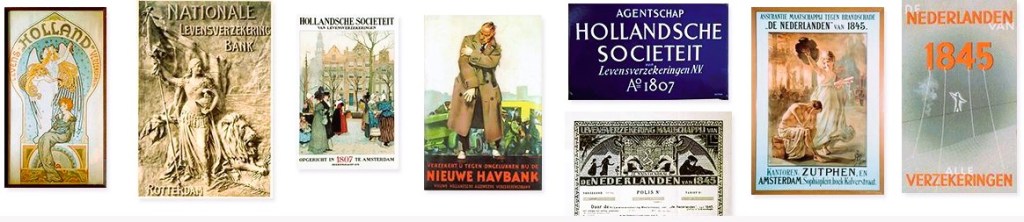
There are thousands of unclaimed insurance policies for Holocaust victims and survivors. I will be focusing on the Dutch situation, but I am sure this will apply elsewhere, as well.
In 1997, the Supervisory Committee on the Investigation of WW II Assets, or the “Scholten Commission” for short, named after its chairman, W. Scholten, was given the general assignment of ”carrying out an investigation into the actual systematics regarding the legal redress in respect of the financial assets of Second World War victims with banks and insurance companies in the Netherlands.” The Commission focused on the question of which assets, entitlements to policies, and other asset titles of victims or persons duped by the measures from the occupation might still wrongfully rest with banks, insurance companies, or the State.
Below is a summary of the Insurance part of the “Scholten Report,” in which the robbery and legal redress of Jewish life insurance, annuities, pensions, and funeral insurance in the Netherlands are described. The conclusions and recommendations of the Scholten Commission have also been included, which, among other things, have led to the founding of the Sjoa Foundation (SIVS).
It’s a lengthy read, but it’s worthwhile to gain an understanding of how recent the impact of the Holocaust still is.
Summary of the Insurance Section of the “Scholten Report”
This document summarizes the insurance section of the “Scholten Report,” which details the robbery and legal redress of Jewish life insurance, annuities, pensions, and funeral insurance in the Netherlands during and after World War II. The conclusions and recommendations of the Scholten Commission, which led to the founding of the Sjoa Foundation (SIVS), are also included.
Robbery of Jewish Insured Assets via Liro
During World War II, the occupying forces took control of the insured assets of Jewish policyholders through a series of regulations that had the force of law. Initially, in the “First Liro Regulation” 148/1941 of August 8, 1941, insurance policies were not the primary focus, as this regulation targeted bank assets, cash, and securities. However, as a consequence, some Jews attempted to protect their capital by purchasing so-called “escape policies,” where a single premium payment was made to conclude the insurance policy.
These policies were intended to safeguard assets that could be returned at a better time after deducting expenses. Some policies were split into contracts that could not be surrendered individually, and others involved annuity policies funded by company capital. These annuity policies were designed to provide disguised financial support for Jewish employees facing forced dismissal, a commendable effort by the companies during such challenging times. Insurance companies were known to cooperate with these practices, although officially, the corporate life insurance groups and companies remained reticent.
Surrender of Policies
On May 21, 1942, the “Second Liro Regulation” (VO 58/1942) came into effect, requiring Jews to report their life insurance policies, annuities, pensions, and non-life insurance policies to the robbery bank Lippmann Rosenthal & Co. Sarphatistraat (Liro). They also had to surrender these policies. Insurance companies were obligated to report Jewish clients’ policies and to pay maturing policies and ongoing annuities to Liro instead of to the policyholders. Additionally, no legal action (such as surrender, pawning, or changing the beneficiary) involving a Jewish insurance policy was allowed without Liro’s consent. Insurance companies had to present a form to their policyholders requiring them to declare whether they were Jewish according to the occupier’s definition (Article 4 of Regulation 189/1940).

Jewish policyholders reported their policies on a large scale. By October 1942, Liro estimated that the expected surrender value of these policies would be approximately 25 million guilders (including annuities).
When Regulation 54/1943 was enforced in June 1943, it had significant financial implications. According to this new regulation, life insurance policies that fell under the Second Liro Regulation had to be terminated by June 30, 1943. If the policy allowed a surrender, the insurer had to pay the surrender amount to Liro by that date. If the insurance contract did not allow surrender (e.g., annuities and pensions), the insurer was required to pay three-quarters of the mathematically defined premium reserve.
Insurers Under Pressure
Documents reveal that the occupiers were dissatisfied with how insurers implemented the questionnaire to establish their clients’ Jewish identity. Insurers often delay the execution of regulations by handling contracts individually and adhering strictly to policy conditions.
In early 1944, when it became apparent that the surrender process was not progressing quickly enough, insurers were put under pressure. Liro threatened to appoint “Verwalters” (administrators appointed by the occupier) to oversee company administration and report any faults to the State Commissioner’s office. Additionally, Generalkommissar Fischböck threatened to withdraw the provisional exemption from surrendering small insurances (life insurance policies with a low insured value of up to 500 guilders) if the surrender of other insurances did not proceed more satisfactorily. Under this pressure, millions in surrender values were handed over to Liro in the final months of the surrender operation (March to July 1944). The exemption for small insurance policies became final in September 1944. By then, Liro had robbed over 26 million guilders from Jewish insurance assets, with about 23.5 million originating from forced surrenders and 2.5 million from benefits owed to Jewish policyholders during the period between the reporting regulation (58/1942) and the surrender regulation (54/1943).
The Surrender Operation
During the surrender operation from March to July 1944, three categories of policies were not surrendered:
- Exempt Categories: This included insurance policies from mixed marriages where the children were not considered Jewish, policies with non-Jewish beneficiaries, policies of “de-starred” Jews, and policies that had not yet accrued value.
- Small Insurance Policies: This exemption, initially provisional and later made permanent as of September 1944, had a significant impact on the historical narrative. However, documents indicate that many of these policies had been surrendered because the duty to report small insurances by Jewish policyholders had yet to be abolished.
- Unreported Policies: These were insurance policies that were neither reported to Liro by the policyholder nor by the insurer.
Legal Redress
During the occupation, the Dutch government in London began preparing principles for post-war legal redress. The “Decree on Occupational Measures” (E 93) of September 17, 1944, deemed that anti-Jewish possession regulations had never been in effect concerning insurance. The “Decree on Legal Redress” (E 100) of the same date further established the basis for legal redress, granting the independent Council for Legal Redress the authority to annul or modify legal relations established or changed during the occupation. The Council could also revive legal ties that had been partially or entirely canceled (such as life insurance policy surrenders) during the occupation. However, no separate arrangement was made for policy restoration, leaving the question of how to restore policies to be decided by rulings in legal procedures initiated by aggrieved individuals against insurers.
After the liberation, most Jewish policyholders were no longer alive, meaning benefits were due for these policies. However, insurers had surrendered these policies based on German regulations. They assumed they had made liberating payments during the war, thereby believing they no longer had any obligations. After the liberation, insurers still had to make payments based on E93 for insurance contracts whose surrender values had been paid to Liro. Essentially, insurers had to pay twice for the same policy: first to Liro during the occupation and then to the rightful claimants after the liberation. A complicating factor was that Liro’s estate, including the amounts paid by insurers (totaling 26 million guilders), was considered practically lost during the initial years after the liberation.

No Government Support
Insurers argued that they could not absorb this loss without government support. The insurance industry considered this loss part of the total financial consequences of the occupation (which also included war risk damage, “Indian damage,” and losses from lowered interest rates). Insurers attempted to negotiate a legal arrangement for policy restoration to ensure that the damage was not borne solely by the companies. Negotiations with the Ministry of Finance continued until 1948. Still the government consistently refused to guarantee the amount insurers needed to reclaim from Liro. The negotiations ultimately failed, and both the insurance industry and the Ministry of Finance considered reducing the payments for policy restoration by limiting the inheritance rights of Jewish deceased persons to direct relatives (parents, children, siblings). While the Minister of Finance supported this arrangement, the Minister of Justice viewed it as unconstitutional, causing the proposal to fail. The Minister of Justice also objected to a draft arrangement where individual companies facing financial difficulties due to large restoration amounts would still receive support. Consequently, no legal arrangement was made.
Jurisprudence
Meanwhile, insurers were reluctant to fully restore policies. They opposed the legal procedures initiated by the Justice Department of the Council for Legal Redress starting in 1946. However, they ultimately had to accept jurisprudence that favored policyholders. The Council’s most significant rulings occurred between 1946 and 1949. By 1946, a fixed jurisprudence was established, with most rulings favoring Jewish claimants. The outcome was generally that “on the condition of payment of overdue premiums with interest, the insurance contracts are restored unless the company can prove that restoration is unfair.” This meant that a life insurance policy was restored if the policyholder was alive. If the annuity beneficiary was alive, payment resumed. If a life insurance policyholder had died, the beneficiary or heirs received the insurance benefit. Annuities were no longer paid out if the beneficiary had died. The rightful heirs received a claim on Liro’s estate (renamed LVVS—Liquidation of Verwaltung Sarphatistraat) for benefits paid to Liro between May 1942 and June 1943. Overdue annuity benefits, which should have been paid after the surrender date, were subsequently paid by insurers.
Council for Legal Redress
The Council for Legal Redress has determined that insurers must pay interest on benefits if they have been given notice of default. However, this is only applicable from the moment when the necessary documents for the benefit are provided. Regarding the restoration of policies that lapsed due to the suspension of premium payments during the occupation, the Council for Legal Redress distinguishes between economic impotence and true force majeure. If true force majeure is established, such as in cases of deportation or going into hiding, the policy is restored. Insurers are awarded a claim on LVVS by the Council for Legal Redress equal to the surrender amount paid to Liro. However, it was only between 1948 and 1950 that it became clear a claim on LVVS could be partially paid out. Ultimately, insurers received only ninety percent of the acknowledged claims from LVVS. The resulting jurisprudence formed the basis for amicable policy restoration agreements between insurers and individual rights holders, settled out of court. Additionally, between 1948 and 1954, two agreements were made regarding unclaimed insurance policies between insurers, administrators, and the government, based on the principles of jurisprudence developed by the Council for Legal Redress.
BAON Foundation
The policies of rights holders who are still alive and have presented themselves were restored in this manner. To restore policies for which no owners, beneficiaries, or heirs had come forward, the Nederlands Beheersinstituut (NBI, Netherlands Administration Institute) appointed the Stichting Bewindvoering Afwezigen en Onbeheerde Nalatenschappen (BAON, Foundation for the Administration of Absent People and Unattended Inheritances) at the end of 1947 as the administrator for all absent people listed in the LVVS administration. On June 10, 1948, an “Agreement” was made between BAON and the insurers. This “agreement of conditional legal redress” required the companies to cooperate in the provisional restoration of unclaimed policies according to the principles of the developed jurisprudence. Deeds were drawn up, and if someone could still identify themselves as the rightful owner of the insured benefit, the provisional restoration would become final. In such cases, the insurance company would pay the benefit to BAON, which was responsible for payment to the rights holder. The company would then be safeguarded by BAON against claims from others who might later assert a right to the benefit.
Veegens Agreement
In the years following the realization of the Agreement (1948 to 1954), it became apparent that no rightsholders had come forward for some unattended policies. According to the Civil Code, goods to which no one lays claim (an unattended inheritance) are forfeited to the State. In other words, the State is the heir of these inheritances, and therefore, in September 1954, the life insurers reached an Agreement to Amicable Legal Redress (the so-called “Veegens agreement,” named after State Attorney Mr. Veegens). The State renounced its collection of the insured amounts to which it was entitled and accepted the surrender values of these unattended policies. The difference between the insured value and the surrender value was left to the companies, allowing them to receive some compensation for the substantial damage caused by the war. The insurance companies paid the surrender values of unclaimed policies (which had been provisionally restored and could no longer be finally restored as there were no more rights holders) to the State, where the funds were transferred to the State Property Department. The Agreement included a clause stating that the State would pay the surrender amount to the concerned insurer if rights holders presented themselves after submission of an inheritance certificate and a death certificate. The insurer would then arrange payment to the right sholder.
In 1956-1957, the State collected NLG 697,155.07 in connection with the Veegens agreement. After restitution of the surrender amounts to insurers in connection with subsequent restorations, the final amount of surrender values of unclaimed insurance policies was NLG 429,907.96. This entire process, a testament to the effective collaboration between the policy restoration department of NBI and Mr. Veegens, was managed with utmost precision and care.
Role of Auditors
The activities of BAON for provisional legal redress and the payment of surrender amounts to the State were audited by Nieuwenhuis & Bos, as ordered by the Central Auditors Service of the Ministry of Finance. The auditors’ reports indicated that all policies in the LVVS administration were checked and that, from that point on, the State was an interested party. The companies were required to account for policies that still needed to be restored. Another conclusion from the reports was that, in some cases, interested parties needed to be made aware of their policy restoration. Additionally, proxies signed by heirs were only sometimes requested from the notary. Finally, in some cases, after the final restoration, payments were made to intermediaries (guardians, estate notaries, curators) instead of to the rightsholders.
The auditors’ final conclusion stated that the restoration of policies met reasonable requirements. The documentation found with several insurance companies during the Scholten Commission’s investigation not only confirmed but reinforced this conclusion.
Insurance Assets Robbed Through Other Routes
Burial insurances covered by burial associations were not included in the reporting and surrender obligations of the Liro regulations. These contracts were often based on membership in entirely or partially ideological, cultural, or religious associations or foundations. As far as the Scholten Commission’s investigation could ascertain, there was robbery, with one exception, only when it concerned Jewish associations or foundations. These were liquidated, and the association’s assets were entirely confiscated by the occupier, in this case, the CNCV (Commissariaat voor niet Commerciële Vereenigingen en Stichtingen, Commissariat for Non-Commercial Associations and Foundations). In the case of non-Jewish associations or foundations, the applicable regulations varied depending on the occupier’s assessment of the specific association. In practice, this meant that Jewish members were banned from associations, resulting in the cancellation of their burial arrangements, or that their arrangements or insurance contracts were canceled because their membership fees or premiums were no longer paid after they went into hiding or were deported.
The legal redress of such agreements was not subjected to a systematic approach or specific guidelines. It was primarily up to the association or foundation to decide how to restore the memberships of survivors and compensate for undelivered services. This was particularly relevant to burial associations offering in-kind services, which could not be provided if the deceased could not be buried by the association. Case studies indicate that efforts were made to find solutions, although burial associations were sometimes constrained by industry rules. Not everyone likely found restoration or compensation equally satisfactory.
The Scholten Commission’s investigation into the legal redress of Jewish burial associations was hindered by a significant obstacle—a lack of relevant archival materials. This limitation prevented a thorough investigation. However, it is clear that over 71 percent of the CNCV estate became available for restitution after the war. The process of repayment to individual rightsholders remains unclear. It is likely that there was a ‘restoration within restoration,’ meaning that after the associations were restored, including restitution of part of the robbed assets, individual members or their rightsholders must have received restoration of or compensation for their rights.
Conclusions About Policy Restoration
The Jewish policies robbed by Liro through anti-Jewish possession regulations and subsequently included in the post-war LVVS administration were mainly restored through a well-organized but complicated system. Due to concerns about financial losses during the occupation, insurers initially resisted the complete restoration of policies. The government provided no financial support to the insurance industry nor established a special legal arrangement for policy restoration. The restoration was eventually carried out carefully, thanks to two factors. First, the Justice Department rulings of the Council for Legal Redress defended the interests of Jewish stakeholders. Second, the implementation and execution of two agreements regarding the restoration of unattended policies under the auspices of NBI by BAON, LVVS, and the insurers ensured the bureaucratic and administrative handling of policy restoration. The State’s interests as heir were incorporated into the legal redress system and played an essential role in motivating the companies to control the policy restoration process.
Possible Shortcomings in Legal Redress
An investigation into the system of robbery and legal redress revealed potential shortcomings in the legal redress of Jewish policies in specific categories:
- Insurance policies that were not reported to Liro (and therefore not surrendered) were terminated due to the circumstances of Jewish policyholders. Insurers may have retained the value of these unclaimed policies after the war, including those exempt from premium payments. The exemption from surrendering small insurance policies (which were, however, often included in the Liro administration because Jewish policyholders were required to report them) presents a higher risk of gaps in this category.
- Individual policies occasionally slipped through the net due to the complicated situation of Jewish policyholders, difficulties in proving death, or the complex legal redress system.
- Burial insurances contracted with burial associations that were not robbed by Liro but were terminated in other ways during the occupation and were not satisfactorily restored or compensated.
Conclusions
The conclusions of the Scholten Commission’s final report on “legal redress in a general sense” broadly apply to the insurance industry as well. The Commission, for instance, concluded that it took a long time for legal redress to be realized and that there needed to be more consideration for the interests of the dispossessed when interpreting the rules. The Commission concluded that legal redress of insurance contracts “systematically actually took place.” However, it noted that “some possible shortcomings in the system” of legal redress were identified. These shortcomings relate to life insurance policies, particularly small insurances, which were excluded from reporting and surrender during the occupation. Legal redress for burial insurance may also have been incomplete.
Finally, the Scholten Commission concluded that the surrender values of policies for which no rightsholders had presented themselves were paid to the State in 1956-1957. This was in full compliance with an arrangement set out in the Civil Code. According to the legislation, the State was the heir of unattended inheritances. If rightsholders presented themselves to the State after payment had been made, the policies were paid out. The difference between the surrender value and the insured value of uninherited policies remained with the insurers.
The Scholten Commission’s investigation was thorough and comprehensive, leading to an important final conclusion. It was found that no monetary values of Jewish policies systematically remained with the companies. The State allowed insurers to keep part of the insured values of uninherited policies (1.3 million guilders). Conversely, insurers received ninety percent (almost 19 million guilders) of the acknowledged claim on LVVS, while they had paid 23.5 million guilders in surrender amounts. The released reserves of annuities and the payments of insured amounts on term life insurance policies were excluded from these calculations.
Recommendations
The Scholten Commission’s final report made two primary recommendations regarding the legal redress of insurance policies. Both the insurers and the State were advised to make “a financial gesture” and consult the Jewish community, which represented the dispossessed. Additionally, insurers were notified to investigate their records for policies that had yet to be paid out to reduce uncertainty about the restoration of individual policies as much as possible. An auditors’ firm, under the supervision of the Insurance Chamber, should not only check these data but also publish them.
Agreement Between the Association of Insurers and the Central Jewish Board (CJO)
The Association of Insurers and the CJO supported the Scholten Commission’s recommendations. They reached an agreement in November 1999 regarding the restitution of insurance assets. The primary goal of the agreement was to provide clarity for victims of Jewish persecution and their surviving dependents about unclaimed insurance assets. The agreement was intended as a final settlement. The insurance industry made a total of fifty million guilders available: twenty million was earmarked for individual benefit payments, twenty-five million for goals determined by the Jewish community, and five million for a research and internet project, the Monument Jewish Community (www.joodsmonument.nl).

The Elte Family
The Elte Family was one of the families whose insurance policy was still open. On the night of November 30/December 1, 1943, the family was arrested while in hiding in Friesland after a betrayal.
Jacob Elte was married to Elisabeth Rosetta van Tijn. He worked at Houbigant (perfumes) in Amsterdam. It is said that the little boy, Daan Jaap, was smuggled out of the Westerbork camp by his mother but was returned to the camp by the population because nobody understood him. In the meantime he had learned Frisian as his mother tongue.
Vit Jacob Elte was born in Antwerp on October 13, 1902, and died in Auschwitz on June 12, 1945, months after liberation. Reached the age of 42 years.
Rosalie Elisabeth Elte-van Tijn was born in Zwolle on January 16, 1909. She was murdered at Auschwitz on February 11, 1944. She had reached the age of 35.
Daan Jaap Elte was born in Amsterdam on August 14, 1939. He was murdered at Auschwitz on February 11, 1944. He was four years old.
Sources
 History of Sorts
Leave a comment