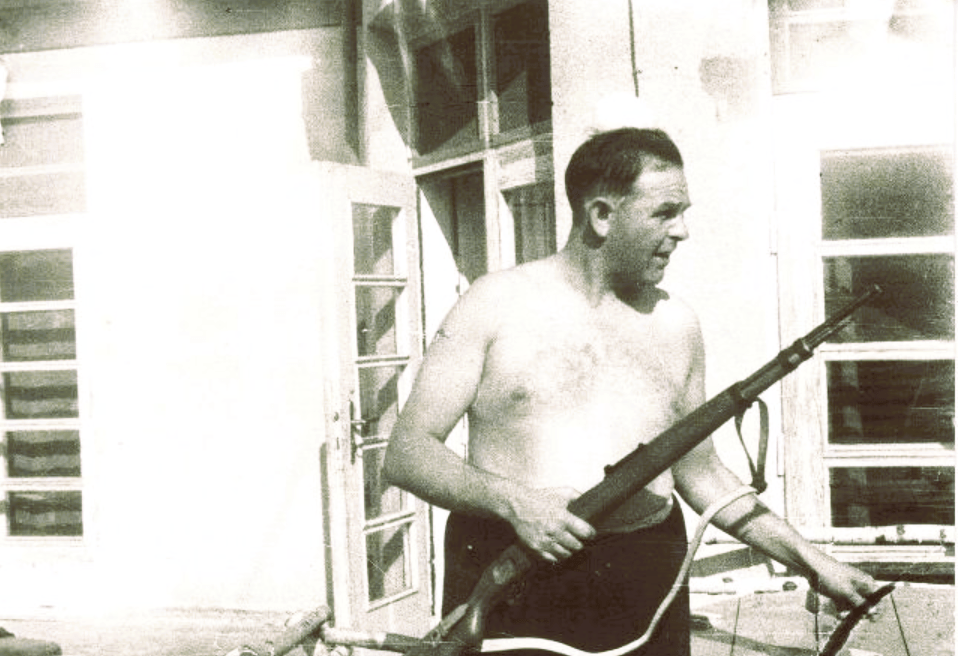
The Nazis didn’t mind Amon Göth’s murder, but they took issue with his thievery. He was caught stealing from the state. However, whatever way your turn it, the possessions Amon Göth stole from the Jews he tormented and killed still were illegally begotten by the Nazis either way.
Amon Göth’s actions, including personally murdering prisoners and overseeing the systemic brutality within the Kraków-Płaszów concentration camp, marked him as one of the most vicious figures of the Holocaust. However, Göth’s removal from his position by the SS in 1944 was not due to his horrific treatment of the prisoners under his command, which was in line with Nazi policies, but rather because of his involvement in corruption. Göth’s case exemplifies the selective nature of Nazi disciplinary actions. It highlights the intersection between violence, theft, and internal power dynamics within the Third Reich.
Göth’s Role at Kraków-Płaszów
Amon Göth was appointed commandant of the Kraków-Płaszów concentration camp in February 1943. Located in occupied Poland, the camp originally functioned as a forced labor facility for Jews and later became a site for the mass execution of Jews and other marginalized groups. Göth quickly established a reputation for extraordinary cruelty, often arbitrarily killing prisoners and enforcing a regime of terror throughout the camp. He personally participated in executions, sometimes shooting inmates from his villa balcony for sport. His sadistic behavior became synonymous with the brutal nature of Nazi camps, a fact that was later immortalized in popular culture, particularly in Steven Spielberg’s film Schindler’s List.
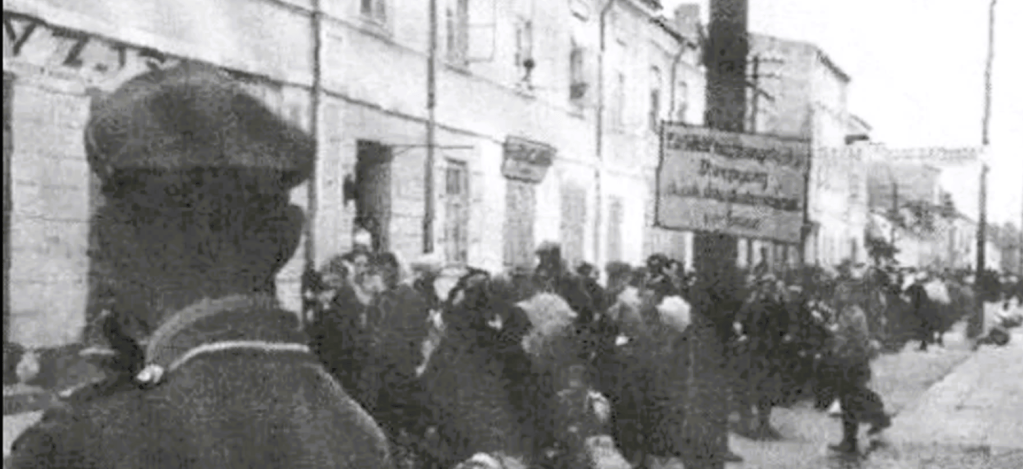
Under Göth’s leadership, the Kraków-Płaszów camp became notorious for its high death toll and extreme inhumanity. Yet, within the Nazi regime, these actions were not considered criminal; they were seen as part of the larger genocidal project aimed at annihilating Europe’s Jewish population. Göth’s ruthless behavior was not exceptional in the broader context of the Holocaust, where systematic violence and murder were essential components of Nazi policy. However, while Göth’s brutality was tolerated and even encouraged by his superiors, his financial misconduct led to his eventual downfall.
Corruption and the Nazi State: Göth’s Misappropriation of Property
The Nazi regime functioned on the principle of state control over the resources of conquered peoples, including the confiscated wealth of Jews and other prisoners. When the SS deported Jews to camps like Kraków-Płaszów, they stripped them of their belongings, valuables, and assets, all of which were considered the property of the state. Commandants like Göth were responsible for ensuring that these stolen goods were properly turned over to Nazi authorities, who then redistributed them to support the war effort or the German economy.
However, Göth engaged in widespread theft of these resources for personal gain. He appropriated valuable items, such as money, jewelry, and luxury goods, which were meant to be sent to the SS or other Nazi state organizations. Göth lived lavishly, indulging in fine clothes, expensive foods, and a luxurious lifestyle far beyond the means of his official position. His ostentatious behavior raised suspicions within the Nazi hierarchy, leading to an investigation by the SS.
The Nazi regime took corruption seriously, particularly when it came to the appropriation of state resources. While it condoned and encouraged violence, it was intolerant of officers who attempted to enrich themselves at the expense of the state. Göth’s actions violated this fundamental principle, leading to accusations of embezzlement and theft. In 1944, after an internal SS investigation, Göth was arrested for his misuse of state property. His removal from power marked a turning point, as it demonstrated the regime’s willingness to punish officers for financial crimes, even while overlooking their roles in the Holocaust’s mass murder apparatus.
Göth’s Removal and the Nazi Approach to Discipline
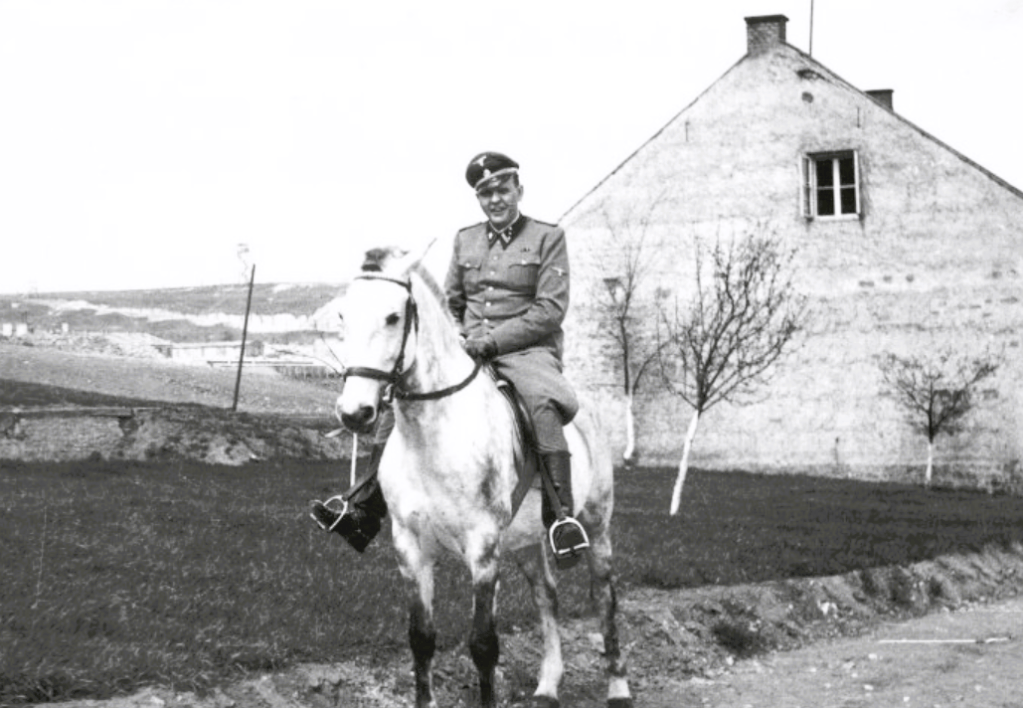
The circumstances of Göth’s removal reveal the selective enforcement of discipline within the Nazi regime. While the systematic slaughter of prisoners was encouraged, financial impropriety was a crime that the Nazis could not ignore. Göth’s arrest by the SS on September 13, 1944, illustrates the regime’s priorities. As the war turned against Germany and resources became scarcer, the efficient management of stolen wealth from occupied territories was essential to the Nazi war effort. Göth’s personal greed endangered this critical economic system, which is why the SS acted decisively against him.
However, Göth’s brutal conduct in the Kraków-Płaszów camp was not a factor in his removal. His violent actions were in line with the genocidal policies of the SS, and had he not been involved in corruption, he might have remained in his position. The Nazi regime was willing to overlook even the most extreme violence so long as it served the regime’s broader goals of racial extermination and economic exploitation. It was Göth’s violation of the economic trust placed in him by the state, not his cruelty that led to his arrest and dismissal.
Post-War Justice: Göth’s Trial and Execution
After the SS removed Göth from his post, he was held in custody, but as the war came to an end, Göth was not formally tried by the Nazi regime. Instead, he was captured by American forces after Germany’s defeat in 1945. Göth was then extradited to Poland, where he was tried by the post-war Polish government for his war crimes. In 1946, he was convicted of crimes against humanity, including the murder of thousands of Jews and other prisoners at Kraków-Płaszów. He was sentenced to death and executed by hanging on September 13, 1946. Two years to the data, after he had been removed by the SS from Kraków-Płaszów
While Göth’s embezzlement led to his downfall within the Nazi regime, it was his violent actions as commandant that sealed his fate after the war. His trial and execution were part of the broader post-war efforts to bring Nazi war criminals to justice, although many others who engaged in similar brutality never faced trial.
Amon Göth’s removal as the head of the Kraków-Płaszów concentration camp underscores the contradictory nature of Nazi rule. Göth, a man responsible for countless murders and atrocities, was tolerated and even encouraged in his acts of violence by a regime that prioritized racial extermination. Yet, when he violated the regime’s economic interests by stealing state property, he was arrested and removed from power. Göth’s case illustrates that in the Nazi system, violence against prisoners was not only acceptable but encouraged, while financial corruption that undermined the state was a punishable offense. Ultimately, Göth’s fall from power demonstrates how the Nazi regime’s internal mechanisms of control and discipline were primarily concerned with maintaining its own interests rather than curbing the extreme brutality that characterized its genocidal policies.
Sources
https://www.britannica.com/biography/Amon-Goth
https://www.holocausthistoricalsociety.org.uk/contents/aktionreinhardt/amongoth.html
https://allthatsinteresting.com/amon-goeth
https://www.tracesofwar.com/articles/3816/Amon-G%C3%B6th.htm
Donation
Your readership is what makes my site a success, and I am truly passionate about providing you with valuable content. I have been doing this at no cost and will continue to do so. Your voluntary donation of $2 or more, if you are able, would be a significant contribution to the continuation of my work. However, I fully understand if you’re not in a position to do so. Your support, in any form, is greatly appreciated. Thank you. To donate, click on the credit/debit card icon of the card you will use. If you want to donate more than $2, just add a higher number in the box left from the PayPal link. Your generosity is greatly appreciated. Many thanks.
$2.00
 History of Sorts
Leave a comment