
I watched “Zone of Interest” last night, and I have to admit I wasn’t that impressed with it. They didn’t put the movie in an appropriate context, unfortunately we live in an era where history has a low priority in schools, and especially some younger generations may not realize the brutality of the camps. The makers of the movie should have shown at least some of the horrors. I also think they could have focused a bit more on Hedwig Höss.
Hedwig Höss, the wife of Rudolf Hössfadictions. Born on August 3, 1908, in Ludwigsburg, Germany, she became a central figure in one of the darkest chapters of human history, though she remains an enigmatic and somewhat elusive character. While her husband orchestrated the genocide of over a million people, Hedwig lived in relative comfort within sight of the gas chambers and crematoria. Her life at Auschwitz raises profound questions about moral responsibility, passive complicity, and the human capacity to live alongside unimaginable cruelty. Through her story, we explore the disturbing juxtaposition of domestic life and mass murder and the complicity of those who lived in the shadow of the Holocaust.
Early Life and Marriage to Rudolf Höss
Hedwig Hensel grew up in a conservative Catholic family in Germany, and like many women of her generation, her life was shaped by the social expectations of domesticity and submission. In 1929, she married Rudolf Höss, a committed Nazi who would rise to prominence within the SS. By the time they were married, Rudolf had already established his radical nationalist credentials, having been involved with the Freikorps, a paramilitary group that targeted leftists and Jews during the tumultuous years following World War I. Hedwig quickly adapted to the role of a Nazi officer’s wife, embracing the ideals of loyalty, racial purity, and family as espoused by the Nazi regime.
The couple had five children: Klaus, Heidetraud, Hans-Rudolf, Annegret, and Ingebrigitt. Hedwig, like many women in the Third Reich, was expected to uphold the values of the “Aryan” family, focusing on raising children while her husband pursued a career in the Nazi regime. Despite the extreme nature of Rudolf’s work, Hedwig supported his ambitions and embraced the privileges that came with being part of the Nazi elite.
Life at Auschwitz: Privilege in the Face of Atrocity
In 1940, Rudolf Höss was appointed as the commandant of Auschwitz, a role that would make him one of the chief architects of the Holocaust. Auschwitz, initially a concentration camp for Polish political prisoners, soon became the largest and deadliest of the Nazi extermination camps. Under Rudolf’s leadership, Auschwitz evolved into a center of industrialized mass murder, where over a million Jews, Roma and other victims of the Nazi regime were systematically exterminated.

The Höss family moved into a luxurious villa located just outside the camp, a mere stone’s throw from where atrocities on an unprecedented scale were occurring. For Hedwig, this move represented a continuation of the comfortable and privileged life she had grown accustomed to as a Nazi officer’s wife. The villa, equipped with luxuries that were rare during wartime, including servants and goods looted from prisoners, provided a stark contrast to the suffering endured by those imprisoned and murdered nearby. The manicured garden and scenic views from the Höss household were reminders of the gulf that separated the lives of the Nazi elite from the human tragedy unfolding around them.
Hedwig’s Complicity and the Question of Knowledge
One of the most enduring questions surrounding Hedwig Höss is the extent to which she was aware of the atrocities being committed under her husband’s command. It is almost inconceivable that she could have been ignorant of the mass murders occurring so close to her home. Survivor testimonies describe the pervasive stench of burning bodies emanating from the crematoria, a smell that lingered in the air and was impossible to ignore. Despite this, Hedwig later claimed that she had been unaware of the full extent of the genocide taking place at Auschwitz, insisting that she did not know about the systematic extermination of Jews.
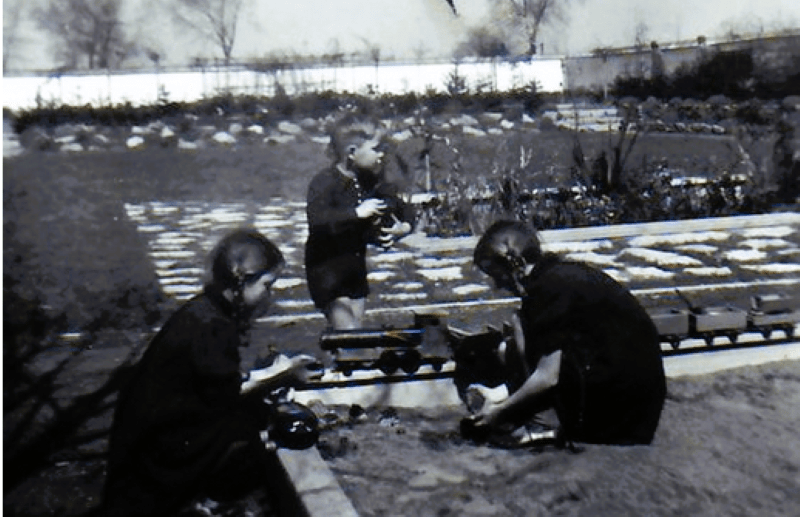
However, many historians and survivors have dismissed this claim as implausible. Eyewitness accounts from prisoners who worked in the Höss household depict Hedwig as indifferent to the plight of the camp’s inmates. She was reportedly more concerned with the maintenance of her household and the well-being of her children than with the suffering happening within view of her villa. In some accounts, she is described as benefitting from goods taken from Jewish prisoners, a grim reminder of how the spoils of war and genocide enriched the lives of those complicit in the Nazi system.
Although Hedwig did not actively participate in the atrocities, her passive complicity and acceptance of her husband’s role in the genocide raise significant ethical questions. By maintaining her privileged lifestyle and turning a blind eye to the suffering around her, Hedwig embodied the moral indifference that characterized much of German society during the Holocaust. Her silence, her comfort, and her distance from the realities of the camp did not absolve her from the broader guilt of living within a system built on murder and exploitation.
Post-War Life and Legacy
As the war drew to a close and the Third Reich collapsed, the Höss family fled Auschwitz in January 1945 as Soviet forces approached. After hiding for a period under false identities, Rudolf Höss was eventually captured, tried for war crimes, and executed in 1947. During his trial, he admitted to the full scope of his role in the Holocaust, but Hedwig remained largely silent, retreating into obscurity after the war.
After her husband’s execution, Hedwig Höss changed her name and sought to live a quiet life in post-war Germany. While she was briefly questioned during the de-Nazification process, she faced no significant legal consequences. Her post-war existence was marked by a desire to escape the notoriety attached to her family name, and she managed to evade the same level of public scrutiny that other figures associated with Auschwitz received.
Hedwig Höss died in 1989, having lived for decades in the shadow of her husband’s infamous legacy. Her children, too, struggled with the burden of their father’s actions, with some changing their names and distancing themselves from their family’s past. Others have spoken out in later years about the psychological impact of being related to one of history’s greatest criminals.
Conclusion: The Burden of Silence
Hedwig Höss’s life is a stark reminder of the complex and often uncomfortable truths about the Holocaust: that mass murder was not only perpetrated by fanatical individuals like Rudolf Höss but that it was enabled by a system in which ordinary people played passive roles. Hedwig’s story is not one of direct cruelty or sadism, like that of other Nazi wives, but rather of silent complicity. Her ability to live in comfort and security while death and suffering unfolded just outside her door is a powerful indictment of the moral failures that allowed the Holocaust to occur.
In the end, Hedwig Höss’s legacy is one of indifference—of a woman who lived a life of privilege while the world around her burned. Her story forces us to confront uncomfortable questions about complicity, guilt, and the human capacity to ignore suffering when it benefits our own lives. It is a reminder that history’s greatest atrocities often unfold not only through the actions of the perpetrators but also through the silence of those who stand by and do nothing.
Sources
https://www.thesun.ie/news/11969415/kids-play-nazi-father-gasses-1m-people-auschwitz/
https://www.thomasharding.com/kommandants-wife-sunday-times
Please donate so we can continue this important work
Donations
Your readership is what makes my site a success, and I am truly passionate about providing you with valuable content. I have been doing this at no cost and will continue to do so. Your voluntary donation of $2 or more, if you are able, would be a significant contribution to the continuation of my work. However, I fully understand if you’re not in a position to do so. Your support, in any form, is greatly appreciated. Thank you. To donate, click on the credit/debit card icon of the card you will use. If you want to donate more than $2, just add a higher number in the box left from the PayPal link. Your generosity is greatly appreciated. Many thanks.
$2.00

 History of Sorts
Leave a reply to tzipporah batami Cancel reply