
Ella Lingens’ life serves as a powerful testimony to the resilience of the human spirit and the capacity for moral courage in the face of unimaginable evil. Born in Vienna in 1908, Lingens was a physician, a resistance fighter, and a Holocaust survivor who risked her life to save Jews during the Nazi regime. Her experiences, particularly as a prisoner in Auschwitz, reveal the stark contrasts between those who perpetrated atrocities and those who sought to mitigate the suffering around them. Her actions earned her recognition as one of the “Righteous Among the Nations” by Yad Vashem, a distinction given to non-Jews who risked their lives to save Jews during the Holocaust. Lingens’ legacy is one of defiance against tyranny, compassion for the oppressed, and an enduring commitment to justice.
Early Life and Education
Ella Lingens was born Ella Reiner on November 18, 1908, in Vienna, Austria. Her early life was shaped by a strong intellectual and moral foundation. She came of age in a time of political and social upheaval in Europe, which shaped her political views and ethical commitments. Ella was a brilliant student, and her academic journey began with a focus on law and later transitioned to medicine at the University of Vienna. She graduated with a medical degree in 1938, a critical moment in European history, as Adolf Hitler had just annexed Austria into Nazi Germany in what became known as the Anschluss. This political climate, characterized by virulent antisemitism and authoritarian control, profoundly affected her worldview.
During this period, Lingens met her future husband, Kurt Lingens, who shared her anti-fascist beliefs. The couple became involved with various resistance movements dedicated to opposing the Nazi regime. Their education in medicine and law, coupled with their moral convictions, inspired them to take a stand against the increasing oppression they witnessed, particularly toward the Jewish community.
The Resistance and Aid to Jews
As the Nazi regime’s persecution of Jews intensified, Ella and Kurt Lingens became active members of the anti-Nazi underground. Along with a small group of like-minded individuals, they provided safe houses, forged documents, and arranged for the escape of Jews from Nazi-controlled areas. The Lingens family took great personal risks, hiding Jewish families in their apartment and facilitating their escape to safety, knowing that discovery would mean imprisonment or death.
Their acts of resistance were not isolated incidents but part of a broader network of Austrians and Germans who worked in secret to undermine the Nazi machinery of genocide. The risks involved were immense. Helping Jews during the Holocaust was punishable by death, and those who aided them faced not only their own demise but the possibility of their families being arrested or executed.
In October 1942, their activities were discovered by the Gestapo, and both Ella and Kurt were arrested. While Kurt was sent to Dachau concentration camp, Ella was deported to Auschwitz, where her life would take a harrowing turn.
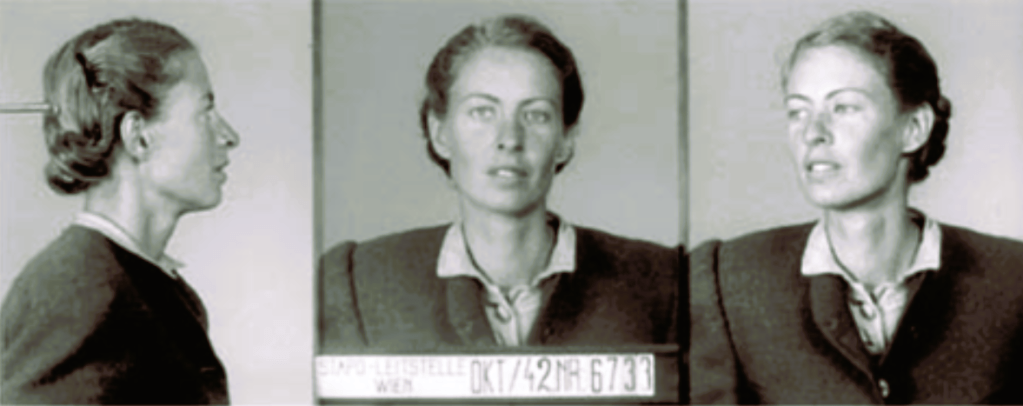
Auschwitz: A Doctor Amidst Horror
Upon her arrival at Auschwitz in October 1943, Ella Lingens was assigned to work as a doctor in the camp’s hospital, despite the appalling lack of medical supplies, sanitation, and basic necessities.
As a prisoner doctor, Lingens was thrust into the horrifying reality of the camp. In her memoir “Prisoners of Fear”, she recounts the profound moral dilemmas she faced on a daily basis. Her medical training compelled her to treat the sick and injured, but the lack of resources rendered her efforts almost futile. Worse still, her role brought her face to face with the Nazi doctors, particularly Josef Mengele, who used their medical authority not to heal but to maim and murder. Mengele, notorious for his “selections” at the arrival ramps, decided the fate of newly arrived prisoners, sending some to forced labor and others to the gas chambers. He also conducted grotesque medical experiments, especially on twins and those with physical deformities.
Despite the grim conditions, Lingens did everything she could to provide care for her fellow prisoners. Her efforts to treat inmates, often in the face of certain death, demonstrated her profound humanity. She was particularly horrified by the moral degradation of the SS doctors, many of whom had sworn to the Hippocratic Oath but instead used their medical knowledge to further the Nazi ideology of racial purity. These doctors, including Mengele, performed medical experiments on prisoners without anesthesia, leading to excruciating pain and death.
Moral Courage and Resistance within Auschwitz
Ella Lingens’ presence in Auschwitz was not only defined by her role as a doctor but also by her quiet defiance against the inhumanity around her. In her memoirs, she described the constant psychological battle between maintaining one’s sense of humanity and the pressures to survive in a world where death was omnipresent. While some prisoners were coerced into collaborating with the SS in order to improve their chances of survival, Lingens remained steadfast in her moral opposition to the regime.
Her testimony about life in Auschwitz offers unique insight into the psyche of the prisoners and their struggles to preserve their dignity. She described how the camp’s conditions could break even the strongest spirits but also highlighted the small acts of solidarity and kindness that helped people survive, at least emotionally. Lingens herself was one of these sources of strength for others, offering care and compassion even when hope seemed lost.
Post-War Testimonies and Legacy
After Auschwitz was liberated in January 1945, Ella Lingens continued her fight for justice by providing crucial testimonies during post-war trials. Her role as a witness during the Nuremberg Trials, particularly in the prosecution of Nazi doctors, was instrumental in holding war criminals accountable for their actions. She provided specific testimony about Josef Mengele, although he famously evaded capture and was never brought to justice.
Her experiences and insights were not only critical to the prosecution of war criminals but also contributed to the broader understanding of the Holocaust. Lingens wrote extensively about her time in Auschwitz, publishing “Prisoners of Fear,” in which she recounted her experiences and the moral dilemmas she faced. Her writings remain important documents of Holocaust history, offering an unflinching look at the realities of the camp, the moral failings of the perpetrators, and the incredible resilience of the human spirit.
In recognition of her bravery and efforts to save Jews during the war, Yad Vashem honored Ella Lingens as one of the Righteous Among the Nations. This honor is reserved for non-Jews who risked their lives to save Jews during the Holocaust, and Lingens’ name stands among a small, courageous group of people who defied the Nazi regime at great personal risk.

Ella Lingens stands as a symbol of moral integrity, courage, and compassion in the face of unspeakable evil. While many doctors at Auschwitz betrayed their ethical obligations and became instruments of terror, Lingens remained committed to her duty as a physician and a human being. She risked her life to save Jews before her arrest, and once inside Auschwitz, she continued to provide care and resist the moral decay around her.
Her post-war testimony and writings ensured that the atrocities she witnessed would not be forgotten and that future generations could learn from the lessons of the Holocaust. Lingens’ legacy serves as a reminder that even in the darkest times, individuals can make a stand for justice, compassion, and human dignity.
Sources
https://www.auschwitz.at/ella-lingens-en
https://www.yadvashem.org/yv/de/exhibitions/righteous-auschwitz/lingens.asp
Donation
Your readership is what makes my site a success, and I am truly passionate about providing you with valuable content. I have been doing this at no cost and will continue to do so. Your voluntary donation of $2 or more, if you are able, would be a significant contribution to the continuation of my work. However, I fully understand if you’re not in a position to do so. Your support, in any form, is greatly appreciated. Thank you. To donate, click on the credit/debit card icon of the card you will use. If you want to donate more than $2, just add a higher number in the box left from the PayPal link. Your generosity is greatly appreciated. Many thanks.
$2.00

 History of Sorts
Leave a reply to tzipporah batami Cancel reply