
Johannes Berens, a young Dutch policeman from Rotterdam, stands out as an emblem of quiet resistance and sacrifice during World War II. Born on January 27, 1924, Johannes was raised in the Netherlands, soon to face brutal occupation by Nazi Germany. His life, like many of his countrymen’s, would be profoundly impacted by the events of the war, ultimately culminating in his courageous choice to defy oppressive forces at significant personal risk. His story, preserved through the #StolenMemory project, provides a deeply human perspective on the resistance within Nazi-occupied territories and serves as a testament to individual courage in the face of authoritarian oppression.
Early Life and Occupation
As the eldest of three siblings, Johannes grew up in a modest family in Rotterdam. He followed in his father’s footsteps by entering the police force, a common and stable career choice.

However, his work would quickly take a dangerous turn after Germany invaded the Netherlands in May 1940. The occupation imposed strict policies on the Dutch people, forcing many to cooperate with oppressive systems, particularly in aiding the Nazi regime’s persecution of Jews. Police officers like Johannes found themselves under pressure to betray their neighbors and uphold anti-Semitic policies, leaving individuals with an agonizing choice between self-preservation and complicity.
Acts of Resistance
From the beginning of the occupation, Johannes chose resistance over compliance. He refused to assist the Nazis in their efforts to identify and capture Jewish citizens in hiding, an act of defiance that could—and did—carry severe consequences. While thousands of Jews in the Netherlands went into hiding to escape deportation to concentration camps, it is estimated that nearly a third were betrayed or discovered. Officers like Johannes, who refused to aid these efforts, stood out as courageous dissenters within a regime that thrived on obedience and surveillance.
The decision not to comply with the Nazi mandates led to his arrest and deportation. In 1944, Johannes was sent to Neuengamme, a concentration camp near Hamburg, Germany. This camp was notorious for its harsh conditions and the forced labor it imposed on prisoners, many of whom were deployed in industries supporting the Nazi war effort. At Neuengamme, prisoners like Johannes were not only subjected to extreme physical demands but also faced overcrowding, insufficient food, and constant threats to their health and safety.
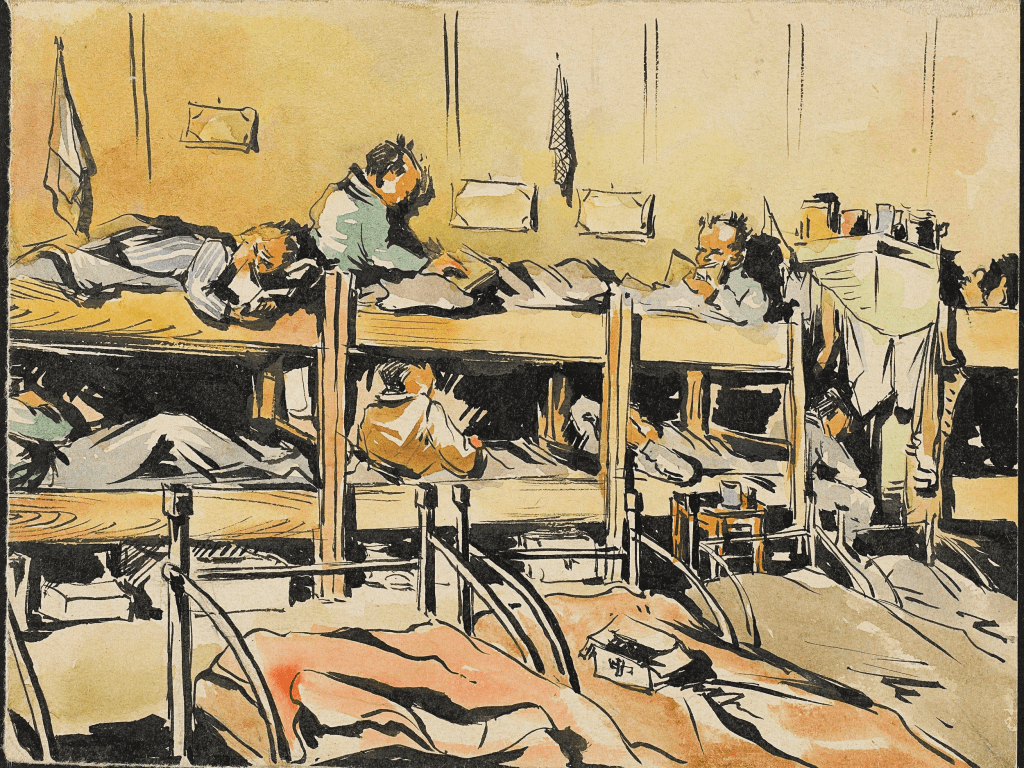
Suffering and Perseverance in Neuengamme
As a prisoner in Neuengamme, Johannes was identified by the number 56240, a stark reminder of the dehumanizing nature of the Nazi concentration camp system. His identity was reduced to a number, stripping him of his individuality and humanity. Nevertheless, Johannes endured this brutal environment, reflecting the strength and resilience of many who were imprisoned there. He was later transferred to a sub-camp in Meppen-Versen, where he and other prisoners were forced to dig anti-tank trenches, a physically exhausting task under treacherous conditions.
The final weeks of his life were marked by one of the darkest episodes in the camp’s history. As Allied forces closed in on Nazi territories, the SS began evacuating camps, leading prisoners on death marches intended to prevent their liberation. Johannes and others were moved to the Sandbostel camp, a “death camp” where food and medical care were scarce, leaving many to die of starvation or illness. On April 29, 1945, British forces liberated Sandbostel, but it was too late for Johannes, who succumbed to tuberculosis shortly afterward. He was only 21 years old, having endured years of hardship for his principles and his defiance.
Legacy and Remembrance
The story of Johannes Berens is preserved today thanks to the #StolenMemory project led by the Arolsen Archives. This initiative aims to return personal belongings taken from prisoners by the Nazis to their surviving families. Among the items recovered from Johannes were personal artifacts that later served as mementos for his family, helping them remember his courage and his tragic journey. The few belongings that remained with him in the camp were eventually given to his younger sister, who had never seen a photograph of Johannes as a child until she received his last possessions decades after the war’s end.
Johannes Berens’s life and death illustrate the immense sacrifices made by individuals who resisted the Nazis. His story underscores the moral dilemmas faced by those under occupation and the harsh punishments inflicted upon those who dared to refuse compliance. His memory, along with the many others remembered through projects like #StolenMemory, serves as a testament to the human spirit’s capacity for resistance, even in the face of unimaginable hardship.
Johannes Berens’s life was tragically short, yet his acts of defiance and his unwillingness to compromise his morals have left an enduring legacy. In choosing resistance over submission, Johannes made a brave choice that ultimately cost him his life, yet his story lives on as an example of ethical courage. Today, as we look back on his life, we remember not only the personal sacrifices he made but also the broader message of resilience and moral integrity that his life represents. Through Johannes’s memory, we gain insight into the incredible strength of ordinary individuals during one of history’s darkest periods, an inspiration for future generations to uphold justice and humanity even in the most oppressive circumstances.
Sources
https://www.oorlogsbronnen.nl/tijdlijn/e3d4cb85-4566-451c-a4ad-17ba18b170ba
https://www.stolenmemory.org/en/story/johannes-berens/
Donation
Your readership is what makes my site a success, and I am truly passionate about providing you with valuable content. I have been doing this at no cost and will continue to do so. Your voluntary donation of $2 or more, if you are able, would be a significant contribution to the continuation of my work. However, I fully understand if you’re not in a position to do so. Your support, in any form, is greatly appreciated. Thank you. To donate, click on the credit/debit card icon of the card you will use. If you want to donate more than $2, just add a higher number in the box left from the PayPal link. Your generosity is greatly appreciated. Many thanks.
$2.00


 History of Sorts
Leave a comment