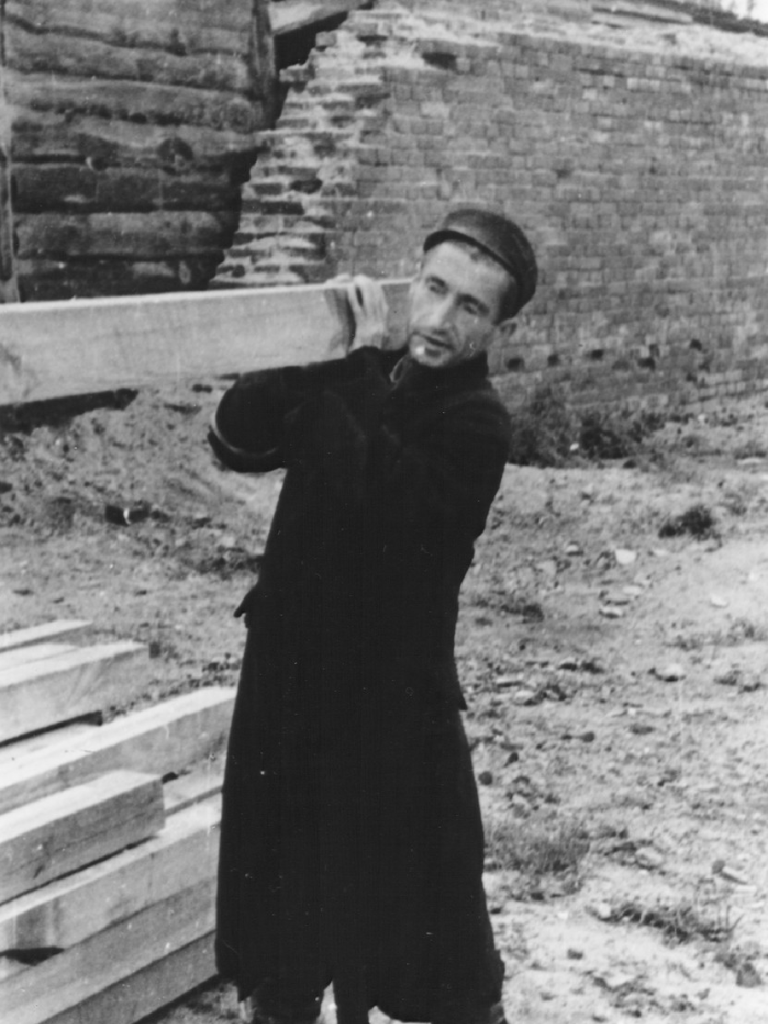
The Końskowola Ghetto, a small yet harrowing piece of the Holocaust’s vast history, stands as a stark reminder of the Nazi regime’s genocidal campaign against the Jewish people. Located in the Lublin District of Nazi-occupied Poland, this ghetto represents the systematic oppression, suffering, and extermination faced by Jewish communities during World War II. Although less widely known than larger ghettos like Warsaw or Łódź, the Końskowola Ghetto played a significant role in the machinery of the Holocaust, offering insight into the broader horrors of Nazi rule.
Historical Background
Końskowola, a small town with a pre-war population of a few thousand, had a thriving Jewish community before the Holocaust. Jews in the town were active in trade, crafts, and religious life, contributing significantly to the cultural and economic vibrancy of the area. The German invasion of Poland in 1939 brought devastation to this community, as Końskowola fell under Nazi occupation. The Nazis soon implemented anti-Jewish policies, including forced registration, confiscation of property, and restrictions on movement.
In 1941, the Nazis established the Końskowola Ghetto as part of their systematic plan to isolate and persecute Jewish populations. Jews from Końskowola and surrounding areas, including those forcibly relocated from other towns and regions, were confined within the ghetto’s cramped and squalid quarters.
Life in the Ghetto
The living conditions in the Końskowola Ghetto mirrored the horrific standards of other ghettos established by the Nazis:
- Overcrowding: The ghetto was grossly overcrowded, with multiple families often crammed into single rooms. Basic necessities such as bedding, clothing, and cooking utensils were scarce.
- Starvation and Disease: Food supplies were meager, consisting mostly of bread and watery soup. Starvation was rampant, and malnutrition left inhabitants vulnerable to disease. Epidemics of typhus and other illnesses swept through the ghetto.
- Forced Labor: Many ghetto residents were subjected to grueling forced labor, often in nearby agricultural fields or Nazi-controlled workshops. The work was physically exhausting, and laborers received little to no compensation or food in return.
For the Jews of Końskowola, daily life was a relentless struggle for survival in the face of dehumanizing conditions and the ever-present threat of violence.
Nazi Policies and the Ghetto’s Role in the Holocaust
The Końskowola Ghetto was part of the Nazis’ broader genocidal project, the “Final Solution,” which aimed to annihilate the Jewish population of Europe. In 1942, the Nazi regime escalated its campaign of mass murder through Operation Reinhard, a coordinated effort to exterminate the Jews of the General Government (a region encompassing much of occupied Poland). The Końskowola Ghetto became a waypoint in this horrific process.
- Deportations: Beginning in 1942, the Nazis began liquidating the ghetto. Many residents were rounded up and deported to extermination camps such as Sobibór and Bełżec, where they were murdered in gas chambers upon arrival. Deportations were typically brutal, with people packed into overcrowded trains under inhumane conditions.
- Massacres: Those deemed unfit for transport, including the elderly, sick, and children, were often executed on the spot. Mass shootings were carried out in and around the ghetto, with victims buried in hastily dug pits.
By the end of 1942, the Końskowola Ghetto had been effectively liquidated. In a brutal massacre carried out by German forces from Reserve Police Battalion 101, approximately 800 to 1,000 Jews, including women and children, were taken to a nearby forest and executed. The remaining inhabitants of the ghetto were subsequently deported to another camp.

Resistance and Survival
Despite the overwhelming oppression, there were instances of resistance within and around the Końskowola Ghetto. Some Jews attempted to escape the ghetto and join partisan groups operating in the nearby forests. While evidence of organized resistance in Końskowola is limited, individual acts of defiance, such as smuggling food or aiding escapees, demonstrated remarkable courage in the face of overwhelming odds.
The survival rate for ghetto inhabitants was tragically low. However, a handful of individuals managed to survive, either by escaping, hiding, or being liberated by Soviet forces in 1944. These survivors became vital witnesses to the atrocities committed in Końskowola and other ghettos.
Legacy and Remembrance
The history of the Końskowola Ghetto is a stark reminder of the devastating impact of the Holocaust on small Jewish communities across Europe. While larger ghettos like Warsaw and Kraków often dominate historical narratives, places like Końskowola reveal the widespread nature of Nazi atrocities and the personal stories of those who suffered and perished.
- Memorialization: Efforts to commemorate the victims of the Końskowola Ghetto have included local memorials and plaques. Survivor testimonies and historical research have also preserved the memory of the community and its destruction.
- Education: The story of Końskowola serves as an educational tool, emphasizing the importance of remembering all facets of the Holocaust, including the fates of smaller, lesser-known communities.
The Końskowola Ghetto, though small and often overshadowed in historical discourse, encapsulates the profound tragedy of the Holocaust. Its story is one of suffering, resilience, and the enduring need to bear witness to history. As we remember the victims of Końskowola and other ghettos, we honor their lives and reaffirm our commitment to combating hatred and preventing genocide in all its forms.

A Story of Rescue—The Wiejak Family
Helena and Aleksander Wiejak ran a farm in Końskowola, near Puławy, where they raised three daughters. During the Nazi occupation, they extended their help to four Jews: Fajga and Awigdor Mandelbaum, whom Aleksander had known before the war, and a couple from Kalisz, close friends of the Mandelbaums. As Nazi persecution of the Jews intensified, the Mandelbaums sent their children to Warsaw, hoping they would survive there. Tragically, all of them perished in the ghetto.
When the repression in Końskowola escalated, Fajga and Awigdor reached out to Aleksander for help. They were soon joined by the couple from Kalisz. The Wiejak family took them all in and hid them in one of the farm buildings. They dug a small hiding place beneath the horse trough in the stable, lining it with boards to keep it hidden. The group spent two and a half years in this cramped, concealed space. To ensure those in hiding knew it was him and not a stranger, Aleksander would speak softly to the horse whenever he entered the stable.
During their time in hiding, Helena took on the responsibility of bringing them food and caring for their needs. One additional challenge was Fajga’s health. Helena arranged for medicines from a local pharmacy to treat her. As time wore on, the constant fear took a toll on Awigdor, and he contemplated suicide. However, Aleksander offered him support and encouragement during these dark moments.
“My father was also involved in the underground movement,” recalls Zofia, the Wiejak’s daughter. “He was a member of the partisans, and as a result, he had to go into hiding as well. The Germans raided our house multiple times, searching for my father. Despite this, the Jews we were hiding were never discovered.”
In May 1944, Aleksander was caught by the Germans and killed. Under Helena’s care, the four Jews in hiding survived until liberation in August 1944.
I was amazed to discover that I had never heard of the Końskowola ghetto until one of my blog followers brought it to my attention. It really goes to show how much there is still to learn about the Holocaust.
Sources
https://www.facinghistory.org/resource-library/reserve-police-battalion-101
https://collections.ushmm.org/search/catalog/pa1064939
https://collections.ushmm.org/search/catalog/pa1064936
https://teatrnn.pl/ar/konskowola-akcja-reinhardt/
https://sprawiedliwi.org.pl/en/stories-of-rescue/story-rescue-wiejak-family
https://create.cliomuseapp.com/tourExperience/item/702/2/11318/on-the-trail-of-the-jews-konskowola
https://www.encyclopedia.com/religion/encyclopedias-almanacs-transcripts-and-maps/konskowola
Donations
Your readership is what makes my site a success, and I am truly passionate about providing you with valuable content. I have been doing this at no cost and will continue to do so. Your voluntary donation of $2 or more, if you are able, would be a significant contribution to the continuation of my work. However, I fully understand if you’re not in a position to do so. Your support, in any form, is greatly appreciated. Thank you. To donate, click on the credit/debit card icon of the card you will use. If you want to donate more than $2, just add a higher number in the box left from the PayPal link. Your generosity is greatly appreciated. Many thanks.
$2.00

 History of Sorts
Leave a comment