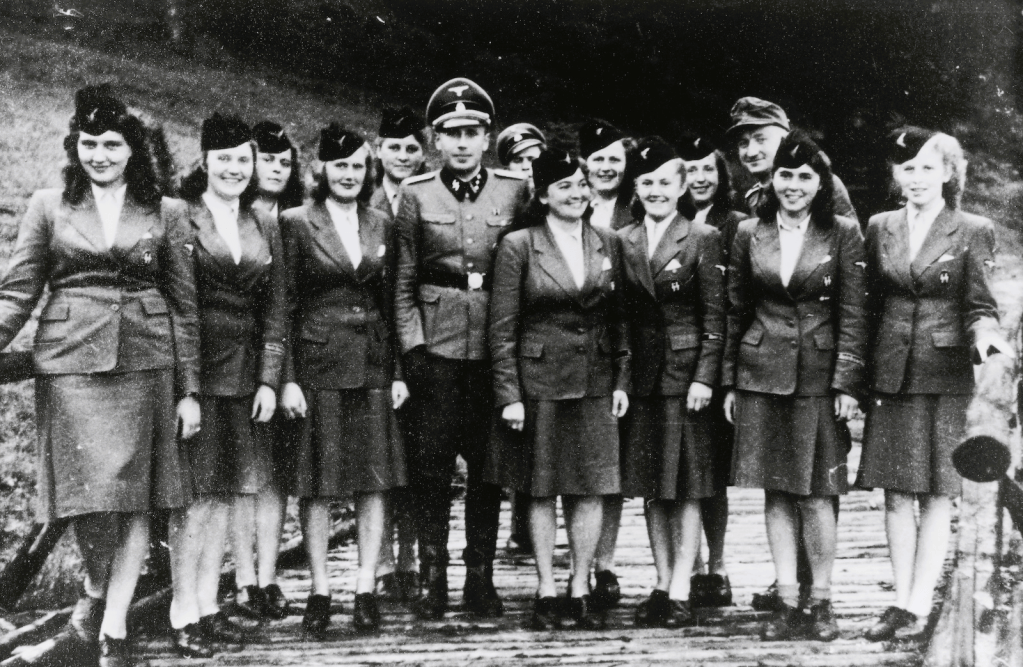
Female Nazi Guards: The Forgotten Perpetrators of the Holocaust
When discussing the Holocaust and the atrocities of Nazi Germany, the image that often comes to mind is of male SS officers enforcing brutal policies. However, women also played significant roles in the Nazi regime’s machinery of oppression and genocide. Among these women were the female guards, or Aufseherinnen, who served in concentration and extermination camps, contributing to the atrocities committed during the Holocaust. Their involvement highlights an unsettling and often overlooked facet of history: the capacity for cruelty transcends gender.
Who Were the Female Guards?
The Nazi regime recruited approximately 3,500 women to serve as guards in concentration camps, beginning in 1942. These women came from diverse backgrounds, typically middle or lower-class, with limited professional prospects. Many were drawn to the role by promises of stable employment, housing, and a semblance of authority in a patriarchal society that restricted women to traditional roles.
The majority of female guards worked in camps such as Ravensbrück, a facility explicitly designed for women prisoners, though many were later transferred to notorious extermination camps like Auschwitz-Birkenau and Majdanek.
Training and Roles
Female guards underwent rigorous training to desensitize them to violence and instill loyalty to the Nazi cause. Training programs emphasized ideological indoctrination, physical discipline, and a hierarchy that placed male SS officers in charge, while female guards were subordinate yet empowered to exercise brutal control over prisoners.
Their responsibilities ranged from overseeing forced labor to administering punishments. They were directly complicit in the atrocities of camp life, often displaying sadistic tendencies. Some guards were infamous for their particular cruelty, earning nicknames that reflected their violent reputations.
Notorious Female Guards
Irma Grese
Known as the “Hyena of Auschwitz,” Irma Grese was one of the most infamous female guards. She was notorious for her brutality, often beating prisoners to death and orchestrating the selection process for gas chambers. At just 22 years old, she was convicted of war crimes during the Belsen Trial and executed in 1945.

Herta Bothe
Dubbed the “Sadist of Stutthof,” Herta Bothe gained infamy for her ruthlessness. She was one of the few female guards to express regret during post-war trials, yet her actions left an indelible scar on the victims of the camps.

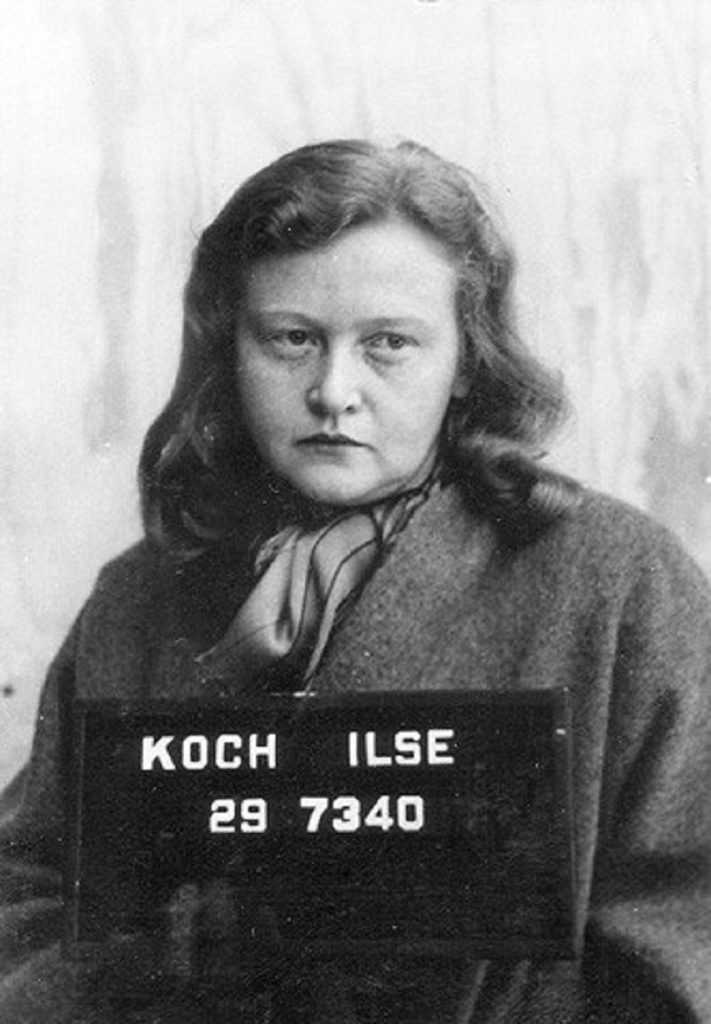
Ilse Koch
Ilse Koch, the wife of concentration camp commandant, Karl-Otto Koch, epitomized sadistic complicity. She was infamous for her alleged collection of human-skin artifacts and extreme cruelty toward prisoners. She has been nicknamed “The Beast of Buchenwald”,[the “Queen of Buchenwald”, the “Red Witch of Buchenwald”, “Butcher Widow”, and “The Bitch of Buchenwald”.
Herta Oberheuser
Oberheuser was posted to Ravensbrück in 1942 in order to conduct experiments on its prisoners, with an emphasis on finding better methods of treating infection.The experiments were performed by a group of doctors known as the ‘Hohenlychen group’.The group conducted gruesome medical experiments, without anaesthetic, such as infecting wounds with rusty nails, broken shards of glass, dirt or sawdust; treating purposely infected wounds with sulphonamide;[6] and removing or amputating bone, muscle, and nerve tissue to study regeneration.
The following is a testimony from Vladislava Karolewska, a Polish political prisoner who endured the horrors of medical experimentations’
“In the hospital we were put to bed and the hospital room in which we stayed was locked. We were not told what we were to do in the hospital and when one of my comrades put the question she got no answer but she was answered by an ironical smile. Then a German nurse arrived and gave me an injection in my leg. After this injection I vomited and I was put on a hospital cot and they brought me to the operating room… I regained my consciousness in the morning and then I noticed that my leg was in a cast from the ankle up to the knee and I felt a very strong pain in this leg and the high temperature. I noticed also that my leg was swollen from the toes up to the groin. The pain was increasing and the temperature, too, and the next day I noticed that some liquid was flowing from my leg… I saw Dr. Fischer again. He had an operating gown and rubber gloves on his hands. A blanket was put over my eyes and I did not know what was done with my leg but I felt great pain and I had the impression that something must have been cut out of my leg. Those present were: Schildauski, Rosenthal, and Oberhauser… Two weeks later we were all taken again to the operating room and put on the operating tables. The bandage was removed, and that was the first time I saw my leg. The incision went so deep that I could see the bone… On the eighth of September I was sent back to the block. I could not walk. The pus was draining from my leg; the leg was swollen up and I could not walk. In the block, I stayed in bed for one week; then I was called to the hospital again. I could not walk and I was carried by my comrades. In the hospital I met some of my comrades who were there for the operation. This time I was sure I was going to be executed because I saw an ambulance standing before the office which was used by the Germans to transport people intended for execution… When I was in my room I made the remark to fellow prisoners that we were operated on in very bad conditions and left here in this room and that we were not given even the possibility to recover. This remark must have been heard by a German nurse who was sitting in the corridor because the door of our room leading to the corridor was opened. The German nurse entered the room and told us to get up and dress. We answered that we could not follow her order because we had great pains in our legs and we couldn’t walk. Then the German nurse came with Dr. Oberhauser into our room. Dr. Oberhauser told us to dress and come to the dressing room. We put on our dresses; and, being unable to walk, we had to hop on one leg going into the operating room. After one hop, we had to rest. Dr. Oberhauser did not allow anybody to help us. When we arrived at the operating room, quite exhausted, Dr. Oberhauser appeared and told us to go back because the change of dressing would not take place that day.
I could not walk, but somebody, a prisoner whose name I don’t remember, helped me to come back to the room… At the end of February 1943, Dr. Oberhauser called us and said, “Those girls are new guinea-pigs”; and we were very well known under this name in the camp. Then we understood that we were persons intended for experiments and we decided to protest against the performance of those operations on healthy people… Dr. Trommel took me by the left wrist and pulled my arm back. With his other hand he tried to gag me, putting a piece of rag into my mouth, because I shouted. The second SS man took my right hand and stretched it. Two other SS men held me by my feet. Immobilized, I felt that somebody was giving me an injection. I defended myself for a long time, but then I grew weaker. The injection had its effect; I felt sleepy. I heard Trommel saying, “Das ist fertig”, that is all. I regained consciousness again, but I don’t know when. Then I noticed that a German nurse was taking off my dress, I then lost consciousness again; I regained it in the morning. Then I noticed that both my legs were in iron splints and were bandaged from the toes to groin. I felt a strong pain in my feet, and a temperature… Two weeks later a second operation was performed on my left leg although pus was draining from my former wound, and a piece of shin bone was removed.“

The Psychological Dynamics
One of the most troubling aspects of the female guards’ roles was how ordinary women became agents of extraordinary evil. Many guards were not fervent ideologues but rather individuals seeking social mobility or economic stability. However, once placed in a system designed to dehumanize, they adapted to their roles with alarming ease.
The transformation of these women into perpetrators raises profound questions about the human capacity for cruelty and the social conditions that enable it. The Nazi ideology and the hierarchical structure of the camps provided a framework where dehumanization became normalized, making violence an accepted—and often rewarded—part of daily life.
Post-War Trials and Legacy
After World War II, some female guards faced justice, but many escaped accountability due to the focus on higher-ranking male officials. Trials like the Belsen Trial and the Ravensbrück Trials exposed their crimes, leading to convictions and, in some cases, executions.
Despite these efforts, public narratives often relegated female perpetrators to the background, framing them as coerced participants rather than autonomous agents of evil. This gendered lens diluted their culpability, reinforcing stereotypes that women were inherently less capable of violence—a misconception starkly contradicted by the historical record.
Why Their Stories Matter
Acknowledging the role of female Nazi guards is crucial for several reasons:
- Challenging Gendered Narratives
Their stories disrupt the perception of women as passive victims of war, revealing their potential as active participants in systemic violence. - Understanding Complicity
Examining their actions provides insights into how ordinary individuals, regardless of gender, can become complicit in atrocities when placed within dehumanizing systems. - Honoring Victims
Highlighting the cruelty inflicted by female guards ensures that the experiences of their victims are not forgotten or overlooked.
The role of female Nazi guards in the Holocaust is a sobering reminder of the pervasive nature of human cruelty. While often overshadowed by their male counterparts, their participation in the Nazi regime’s machinery of genocide underscores the importance of holding all perpetrators accountable, regardless of gender. In remembering their actions, we reaffirm our commitment to understanding and preventing such horrors in the future.
The stories of these women challenge us to confront uncomfortable truths about complicity, power, and the depths of human behavior.
sources
https://www.historytoday.com/archive/history-matters/irma-grese-and-female-concentration-camp-guards
https://www.historytoday.com/archive/history-matters/irma-grese-and-female-concentration-camp-guards
https://famous-trials.com/nuremberg/1910-doctortranscript#Karolewska
https://encyclopedia.ushmm.org/content/en/photo/wladislava-karolewska-testifies-at-the-doctors-trial
https://news.ku.edu/news/article/2015/06/12/holocaust-researcher-details-lives-female-nazi-guards
https://en.wikipedia.org/wiki/Female_guards_in_Nazi_concentration_camps
Donations
Your readership is what makes my site a success, and I am truly passionate about providing you with valuable content. I have been doing this at no cost and will continue to do so. Your voluntary donation of $2 or more, if you are able, would be a significant contribution to the continuation of my work. However, I fully understand if you’re not in a position to do so. Your support, in any form, is greatly appreciated. Thank you. To donate, click on the credit/debit card icon of the card you will use. If you want to donate more than $2, just add a higher number in the box left from the PayPal link. Your generosity is greatly appreciated. Many thanks.
$2.00

 History of Sorts
Leave a reply to tzipporahbatami Cancel reply