This Isn’t About a Western Film: It’s About a Remarkable WWII Story
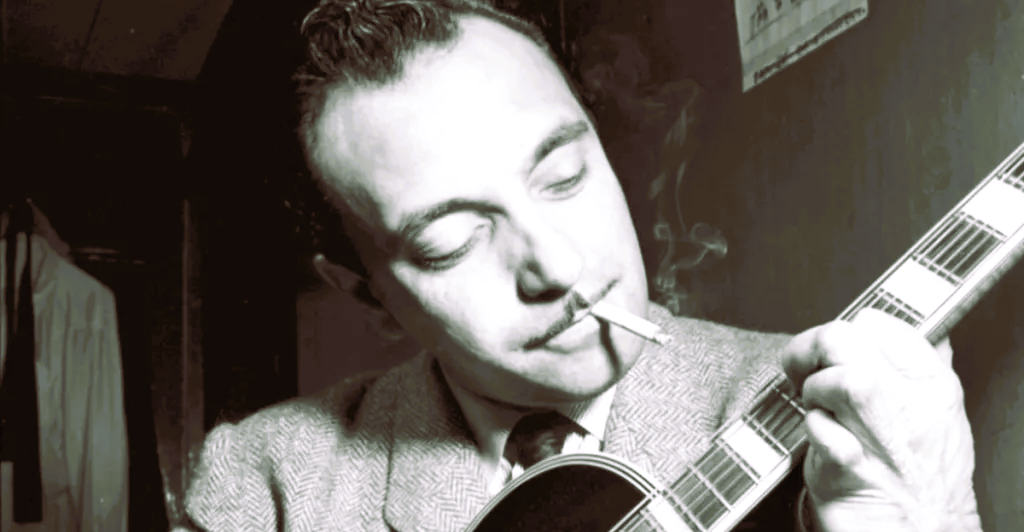
When I first picked up a guitar, it was because of two towering inspirations: Django Reinhardt and Jim Croce. Django, with his captivating melodies and revolutionary style, made the strings sing in ways I could only dream of.
Born in 1910 in Belgium into a Romani family, Reinhardt grew up in an environment steeped in the tradition of Gypsy music. By his twenties, he had revolutionized jazz guitar with his innovative techniques and co-founded the Quintette du Hot Club de France, a trailblazing ensemble that defined Gypsy jazz
Yet, despite my admiration for his music, I knew little about the man behind the guitar—especially his life during World War II. I assumed he had escaped the turmoil of Europe unscathed.
How wrong I was.
My perspective changed after watching the BBC 4 documentary Tunes for Tyrants, presented by Suzy Klein. Not only did Django survive the war, but he thrived in the heart of Nazi-occupied France. And that’s where the extraordinary unfolds.
The Improbable Survival of a Roma Jazz Guitarist
Django Reinhardt wasn’t just any jazz guitarist. He was Belgian-born, Roma-French, and a pioneer of his craft. Those three descriptors—Roma, Jazz, Guitarist—would have made his survival improbable under the Nazi regime.
The Nazis viewed the Roma people with a virulent hatred, labeling them as undesirable and systematically persecuting them. Approximately half a million Roma were exterminated during the Holocaust, many in concentration camps or through forced labor. Compounding this danger was Django’s art form: jazz. In the Third Reich, jazz was deemed “degenerate music,” a cultural threat to Aryan purity.

Yet in Paris, jazz persisted. Hitler’s indifference to the “spiritual well-being” of the French meant Django could still perform, even though his freedom hung by a thread.
A Fortuitous Escape
Django had lived in the UK before the war but returned to Paris in 1939, leaving behind his first wife. By 1943, he married Sophie Ziegler in Salbris, and they welcomed a son, Babik. As a Roma, he was acutely aware of the peril his family faced and attempted to flee Nazi-occupied France.
On his first attempt, Django and his family were captured. But fate intervened in the form of Dietrich Schulz-Köhn, a Luftwaffe officer and ardent jazz enthusiast. Familiar with Django’s music, Schulz-Köhn allowed the Reinhardt family to return to Paris instead of certain death in a concentration camp.

This act of mercy, however, didn’t erase Django’s fear. He knew arrest and deportation were constant threats, and a subsequent attempt to escape to Switzerland also failed.
Music in the Shadow of Danger
Django remained in Paris, performing for both Parisians and Nazi officers who frequented the city’s jazz clubs. His music provided solace to a city under occupation, and his composition “Nuages” became an unofficial anthem of hope for liberation.
To navigate the precarious cultural landscape, Django shifted his focus slightly. While continuing to play jazz, he explored grander compositions, including a Mass for the Gypsies and a symphony. These projects showcased his versatility as a musician and reflected the resilience of his spirit.
A Legacy of Survival and Song
Django Reinhardt’s story is a testament to the power of art in the face of adversity. His genius transcended the oppressive forces that sought to silence it, leaving a legacy that continues to inspire musicians and listeners alike.
For a deeper dive into the fascinating intersection of music and history during WWII, I highly recommend Tunes for Tyrants on BBC 4. This three-part series provides a riveting exploration of the era’s musical landscape and its profound cultural implications.
To close, here’s Django’s hauntingly beautiful “Nuages,” a song that carried the whispers of hope through the dark days of occupation.
sources
https://www.jazzzeitung.de/jazz/2002/11/dossier-koehn.shtml
https://www.wearethemighty.com/music/django-reindhardt-wwii-gypsy-jazz/
https://en.wikipedia.org/wiki/Django_Reinhardt
https://kdhx.org/articles/film-reviews/940-django-finds-guitar-virtuoso-django-reinhardt-in-wwii
https://www.bbc.co.uk/programmes/p05h9lhy
https://www.bbc.co.uk/programmes/b097f5vs
Donations
Your readership is what makes my site a success, and I am truly passionate about providing you with valuable content. I have been doing this at no cost and will continue to do so. Your voluntary donation of $2 or more, if you are able, would be a significant contribution to the continuation of my work. However, I fully understand if you’re not in a position to do so. Your support, in any form, is greatly appreciated. Thank you. To donate, click on the credit/debit card icon of the card you will use. If you want to donate more than $2, just add a higher number in the box left from the PayPal link. Your generosity is greatly appreciated. Many thanks.
$2.00


 History of Sorts
Leave a comment