
Over the past few days, I’ve been watching the second season of Squid Game. For those unfamiliar with the series, Squid Game is a South Korean thriller where financially desperate individuals are invited to compete in deadly childhood games for a massive cash prize. As the games progress, contestants face moral dilemmas, form alliances, and confront their darkest fears in a brutal fight for survival. The show masterfully explores themes like inequality, greed, survival, and the darker aspects of human nature, blending suspense with sharp social commentary.
This blog isn’t a review of the show, though—it just sparked a thought. I heard someone on the radio dismiss the series as far-fetched, but I disagree. In fact, to some extent, the horrifying “games” depicted in the show echo real-life atrocities, particularly during World War II and the Holocaust.
For example, in 1937, during the Second Sino-Japanese War, two Japanese officers—Toshiaki Mukai and Tsuyoshi Noda—reportedly engaged in a gruesome contest to see who could kill 100 people with a samurai sword the fastest.
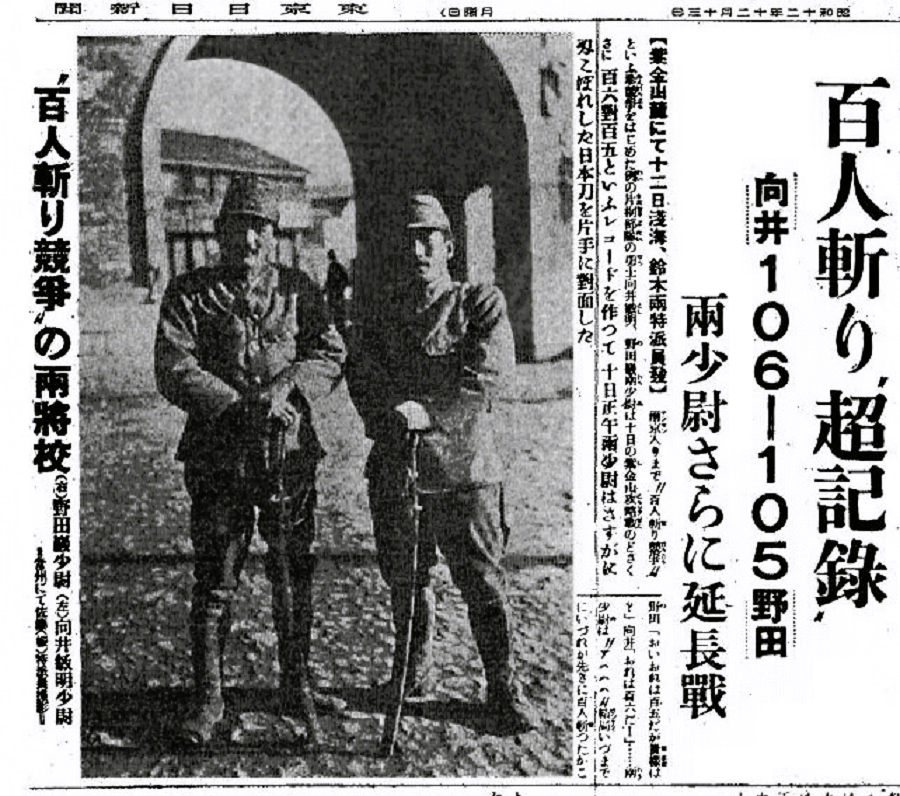
These two officers clearly misunderstood the essence of what it meant to be a samurai. True samurai lived by the Bushido code, or “the way of the warrior,” a moral and ethical framework that guided their attitudes, behaviors, and lifestyle. This code emphasized virtues such as honor, loyalty, courage, and respect, and it was formalized during the Edo period (1603–1868).
The actions of Toshiaki Mukai and Tsuyoshi Noda during their barbaric contest not only betrayed these principles but also distorted the samurai’s legacy into something cruel and senseless. Rather than embodying the noble ideals of Bushido, they engaged in acts of brutality that stood in stark contrast to the moral integrity the code espoused.
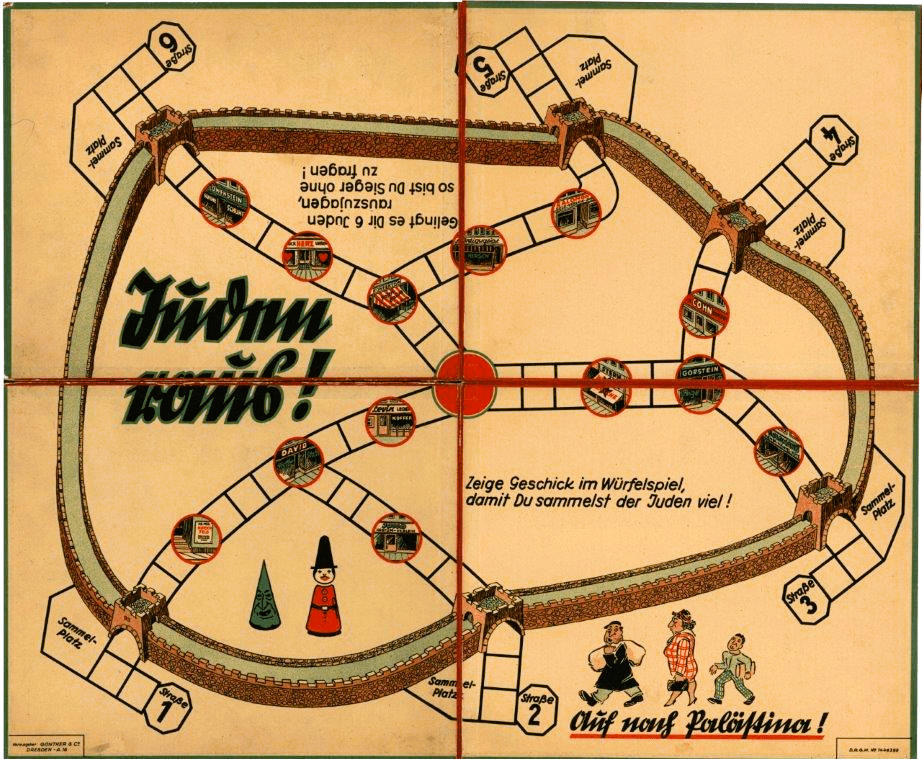
Juden Raus! (lit. “Jews Out!”) was a cross and circle-style game published in Germany by Günther & Co. in 1936. The game’s manufacturer advertised it as “entertaining, instructive, and solidly constructed.” The game’s equipment includes a pair of dice, a game board, and several game-piece figurines with large pointed hats meant to represent Jews.
Players would take turns rolling the dice and moving their “Jews” across the map toward “collection points” outside the city walls for deportation to Mandatory Palestine. Written on the game board was, “If you manage to send off six Jews, you’ve won a clear victory.”
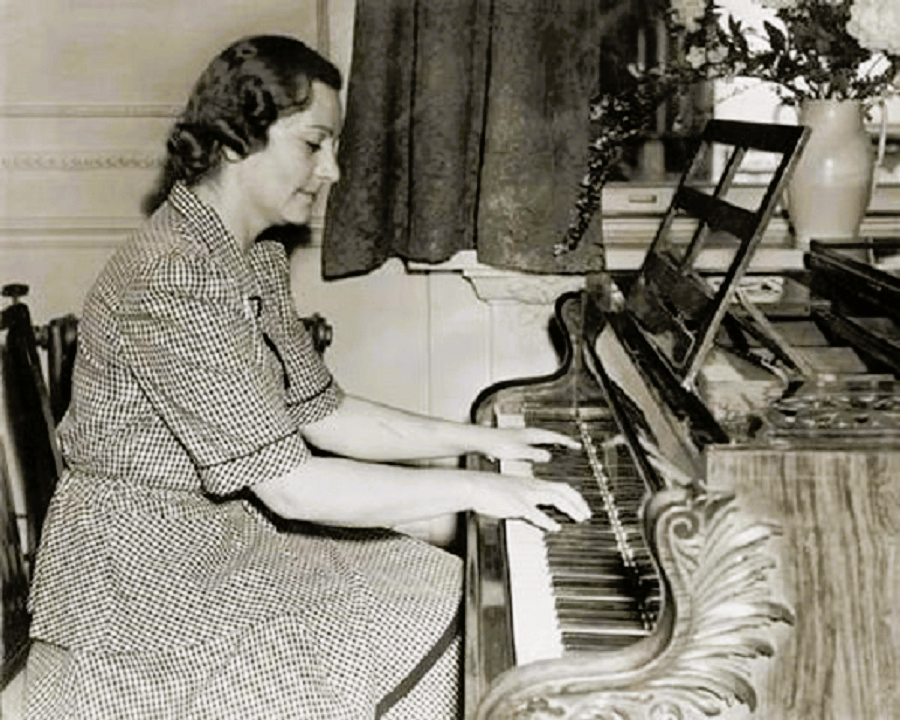
On September 3, 1943, Amon Göth, in addition to his duties as commandant of the Płaszów concentration camp, oversaw the liquidation of the Tarnów ghetto. Before World War II, Tarnów had been home to approximately 25,000 Jews, accounting for about 45% of the city’s population. By the time the Nazis dismantled the ghetto, only 8,000 Jews remained. These individuals were rounded up and crammed into trains bound for Auschwitz concentration camp. Fewer than half survived the journey, and most of the survivors, deemed unfit for forced labor, were executed upon arrival.
Eyewitness accounts, as documented in Göth’s 1946 war crimes indictment, describe his direct involvement in the atrocity. During the ghetto’s liquidation, he reportedly shot between 30 and 90 women and children.
On Göth’s birthday in 1943, Natalia Karp, a newly arrived prisoner at Płaszów, was ordered to play the piano for him. She performed Chopin’s Nocturne in C-sharp minor with such skill that Göth spared her and her sister’s lives.
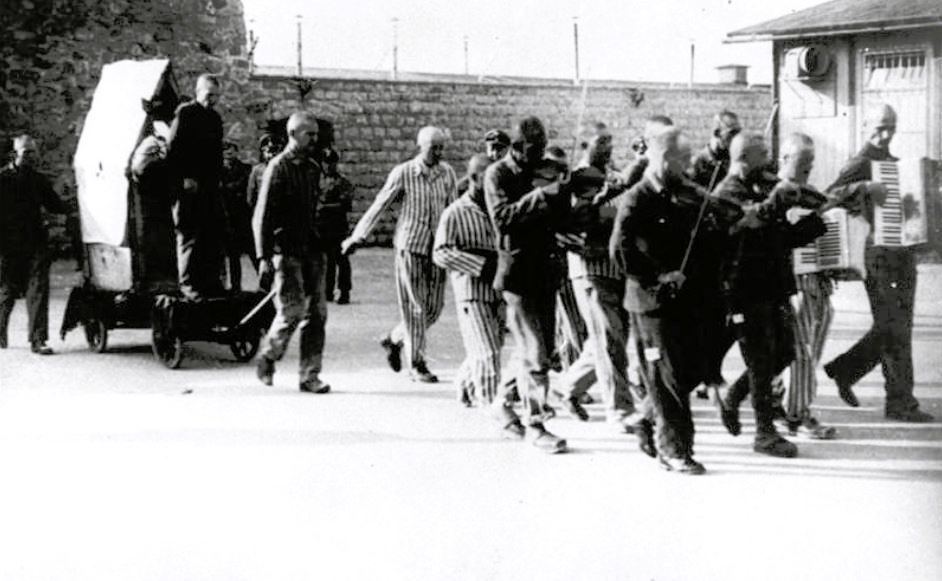
In July 1942, Hans Bonarewitz, a prisoner at the Mauthausen concentration camp, attempted to escape by hiding inside a box. His plan failed, and he was captured on July 30, 1942. A photograph taken after his capture shows Bonarewitz forced to pose beside the very box he had intended to use for his escape.
Rather than executing him immediately, the camp authorities turned his punishment into a grotesque spectacle. The Nazis paraded Bonarewitz through the camp like a macabre sideshow attraction. Fellow inmates were forced to pull him to the gallows on a makeshift cart while the camp orchestra played the song “J’attendrai ton Retour” (“I Shall Wait for Your Return”) continuously.
Sources
https://collections.ushmm.org/search/catalog/pa1144948
https://ww2db.com/image.php?image_id=10954
https://www.theguardian.com/news/2007/jul/11/guardianobituaries.secondworldwar
https://www.imdb.com/title/tt10919420/?ref_=tt_mv_close
https://en.wikipedia.org/wiki/Hundred_man_killing_contest
Donations
Your readership is what makes my site a success, and I am truly passionate about providing you with valuable content. I have been doing this at no cost and will continue to do so. Your voluntary donation of $2 or more, if you are able, would be a significant contribution to the continuation of my work. However, I fully understand if you’re not in a position to do so. Your support, in any form, is greatly appreciated. Thank you. To donate, click on the credit/debit card icon of the card you will use. If you want to donate more than $2, just add a higher number in the box left from the PayPal link. Your generosity is greatly appreciated. Many thanks.
$2.00
 History of Sorts
Leave a comment