
The Germans have long been known for honoring their heroes, including artists who achieved success within the country, often ensuring their longevity and recognition. However, under the Nazi regime, this tradition was only applied selectively. The Nazis only honored heroes who aligned with their anti-Semitic agenda, excluding or persecuting and murdering those who did not fit their ideology.
Berthold Guthmann (13 April 1893 – 29 September 1944) was a German lawyer, decorated World War I veteran, and a prominent figure in the Jewish community of Wiesbaden during the Nazi era. His life reflects the tragic trajectory of many German Jews who, despite their service and integration into German society, fell victim to the Holocaust.
Early Life and Education
Born in Eich, Germany, Guthmann pursued legal studies at the universities of Freiburg and Gießen. With the outbreak of World War I, he and his two brothers volunteered for military service. Serving in the Imperial German Air Service (Luftstreitkräfte) as an observer and gunner, Guthmann attained the rank of Lieutenant and was awarded the Iron Cross Second Class for bravery. Tragically, his brother Sally was killed at Verdun, while his other brother, Eduard, survived and later emigrated to the United States.
Legal Career and Community Leadership
After the war, Guthmann established himself as an attorney in Wiesbaden, a city with a Jewish population of approximately 2,700 when the Nazis rose to power in 1933. He became the secular head of the Jewish community in Wiesbaden from 1938 to 1942. During this period, he also served as the deputy leader of the Frankfurt Jewish congregation shortly before its forced dissolution.
Persecution and Deportation
The rise of the Nazi regime brought increasing persecution. Following Kristallnacht in November 1938, Guthmann was arrested and briefly interned at Buchenwald concentration camp. After his release, he and his son Paul were assaulted and severely injured in November 1939. In 1940, leveraging his wartime connections, Guthmann successfully appealed to Hermann Göring on behalf of fellow Jewish flying ace Fritz Beckhardt, facilitating Beckhardt’s escape from Nazi Germany.
In September 1942, the Jewish community of Wiesbaden faced deportation to Theresienstadt. Initially, Guthmann and his family were among three Jewish families spared. However, by late 1942, they were arrested and deported to Theresienstadt. On 29 September 1944, the Nazis transported Guthmann to Auschwitz, where he was murdered shortly after arrival. The Nazis murdered his son Paul in the Mauthausen Concentration Camp in March 1945. His wife, Klara, and daughter, Charlotte, survived the Holocaust. Charlotte later emigrated to the United States and authored two books detailing her experiences during this dark period.
Berthold Guthmann’s life exemplifies the profound contributions and ultimate sacrifices of German Jews during a tumultuous era. Despite his service to Germany and leadership within his community, he became a victim of the very nation he once served. His story serves as a poignant reminder of the atrocities of the Holocaust and the resilience of those who endured its horrors.
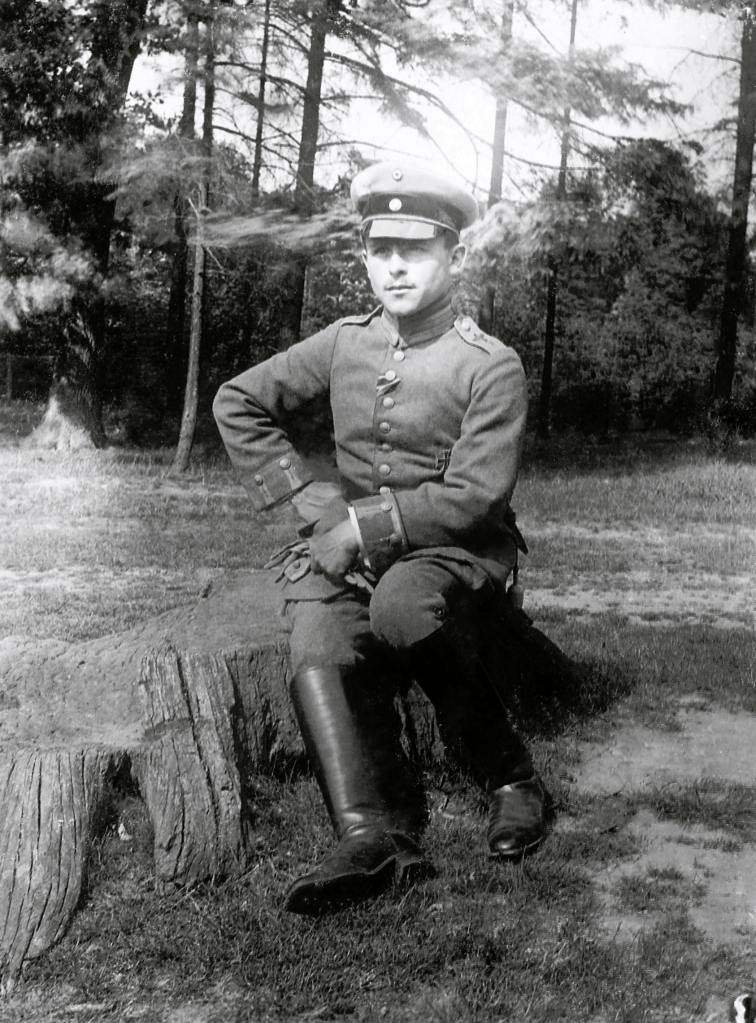
Remembering Fritz Beckhardt: A Hero of the Skies and a Survivor of History
Fritz Beckhardt, a name that may not resonate widely today, holds a remarkable place in the history of aviation and the tumultuous era of 20th-century Europe. Born on March 27, 1889, in Wallertheim, Germany, Beckhardt was a pioneering figure in aviation and a symbol of resilience in the face of unimaginable adversity.
A Distinguished Aviator
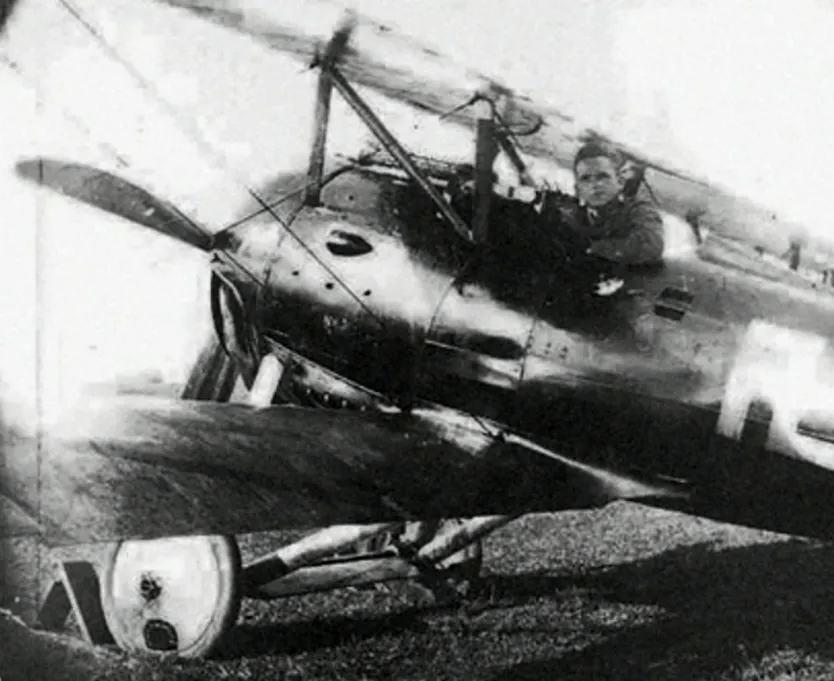
Beckhardt’s journey into the skies began during World War I when he served as a pilot for the German Empire. Despite being a Jewish German at a time when antisemitism simmered beneath the surface of society, Beckhardt earned distinction for his bravery and skill. He achieved the status of an “ace,” with 17 confirmed aerial victories—a remarkable accomplishment in an era when aviation was still in its infancy and fraught with danger.
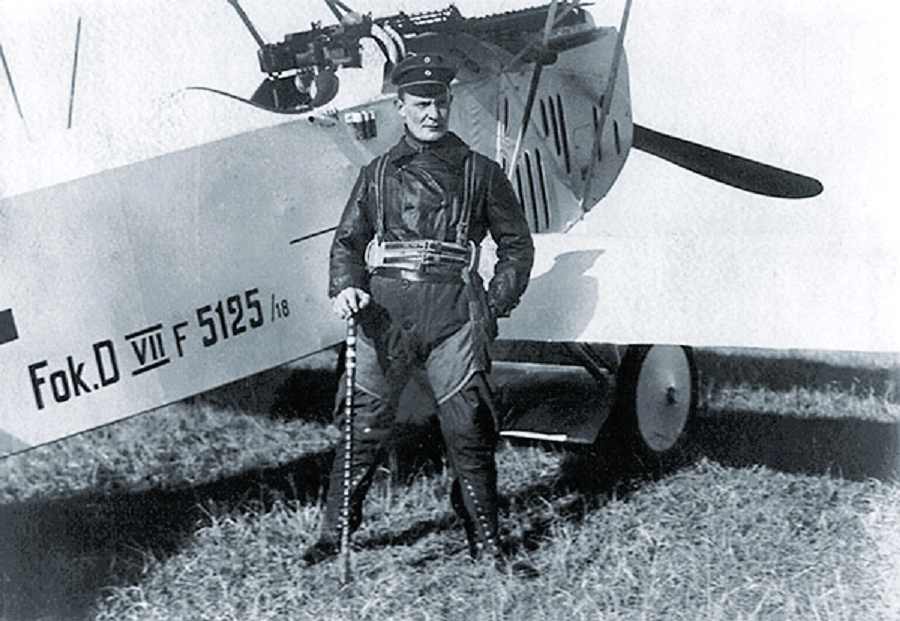
Flying with the German Air Force’s Jagdstaffel 26, Beckhardt piloted Fokker D.VII and Albatros fighters, becoming a celebrated war hero. His achievements earned him the Iron Cross, both first and second class, and the Knight’s Cross of the House Order of Hohenzollern—some of the highest honors awarded to soldiers of the German Empire.
Beckhardt’s nickname, “Eiserner Jude” (“Iron Jew”), reflects the contradictions of his time. He was simultaneously celebrated for his valor and subjected to prejudice. His story is a poignant reminder of how personal excellence can sometimes transcend but not erase societal bigotry.
Ironically, Fritz Beckhardt painted a swastika on his plane during World War I, long before the Nazi Party even existed. At the time, soldiers often adorned their aircraft with various symbols, such as circles, triangles, and, in some cases, even the Star of David, regardless of religious affiliation. The swastika, far from its later association with the Nazis, was then a widely recognized symbol of good luck and prosperity, commonly used by early aviators. It was also the emblem of the Carlsberg brewery, a popular brand during that era.
Betrayal and Persecution
After the war, Beckhardt continued to live in Germany and remained an active member of his community. However, the rise of the Nazi regime in the 1930s marked a dark turning point in his life. Despite his service and sacrifices for Germany, Beckhardt’s Jewish heritage made him a target under Hitler’s antisemitic policies.
In 1926, Beckhardt married Rosa Emma Neumann in Wiesbaden, Germany. Following their marriage, he managed his father-in-law’s grocery store until 1934. When the Nazis initiated their boycott of Jewish businesses on April 1, 1933, Beckhardt relocated from the suburb of Sonnenberg, where he had been operating, to the center of Wiesbaden. There, he established a business specializing in edible oils and fats.
In 1936, Beckhardt assisted two Jewish brothers, the Frohweins, by driving them to the Belgian border to help them escape the Gestapo. The brothers later settled in Golders Green, London, where they opened a kosher butcher shop.
In 1937, Beckhardt faced accusations of having sexual relations with a non-Jewish “Aryan” woman. On December 14, 1937, he was convicted and sentenced to one year and nine months in prison. After serving his sentence, he was placed in “protective custody” and transferred to a penal unit in Buchenwald concentration camp, where he was registered as prisoner number 8135. Upon his release in March 1940, SS records noted his achievements as a World War I fighter pilot, crediting him with 17 aerial victories.
Beckhardt’s release in March 1940 was reportedly facilitated by Hermann Göring, who interceded on his behalf due to a sense of camaraderie from their time serving together during World War I. Beckhardt’s lawyer, Berthold Guthmann, had also served with both Göring and Beckhardt during the war.
Survival and Legacy
Fritz and Rosa Emma Beckhardt fled to neutral Lisbon, Portugal, before eventually making their way to England. After a brief period of internment on the Isle of Man, the Beckhardts moved in with one of the Frohwein brothers, whom Fritz had earlier helped escape Germany. In London, they were reunited with their two children, Kurt and Sue Hilde, who had been brought to England through the efforts of the “Kindertransport” organizations. The Refugee Children’s Movement (RCM), which facilitated their rescue, was based at Bloomsbury House in London and comprised numerous Jewish and Christian organizations dedicated to saving children from Nazi persecution.
In his later years, Beckhardt advocated for recognition of Jewish soldiers who served in the German military during World War I. His efforts were part of a broader struggle to reclaim Jewish contributions to German history, which the Nazis had systematically erased.
Fritz Beckhardt may not be a household name, but his legacy deserves to be celebrated and remembered. His story is not just a chapter of aviation history or a footnote in the narrative of World War I; it is a testament to the indomitable spirit of those who rise above prejudice to leave a lasting impact on the world.
Sources
https://www.holocaust.cz/en/database-of-victims/victim/13499-berthold-guthmann/
https://en.wikipedia.org/wiki/Berthold_Guthmann
https://www.bbc.com/news/stories-50398227
https://en.wikipedia.org/wiki/German_Jewish_military_personnel_of_World_War_I
https://www.thejc.com/news/the-jewish-pilot-who-flew-with-a-swastika-on-his-plane-rj7lqvm5
https://en.wikipedia.org/wiki/Fritz_Beckhardt
https://www.theaerodrome.com/forum/showthread.php?t=72051
Please donate so we can continue this important work
Donations
Your readership is what makes my site a success, and I am truly passionate about providing you with valuable content. I have been doing this at no cost and will continue to do so. Your voluntary donation of $2 or more, if you are able, would be a significant contribution to the continuation of my work. However, I fully understand if you’re not in a position to do so. Your support, in any form, is greatly appreciated. Thank you. To donate, click on the credit/debit card icon of the card you will use. If you want to donate more than $2, just add a higher number in the box left from the PayPal link. Your generosity is greatly appreciated. Many thanks.
$2.00
 History of Sorts
Leave a comment