
The painting titled “Boats on Rough Seas Near a Rocky Coast” was created in the mid-17th century and seized in June 1944 from Minna Bargeboer-Kirchheimer, who was a victim of Nazi persecution. Minna was born on October 7, 1867, in Nieheim, Germany.
In 1893, Minna married Abraham Bargeboer, a Dutch Jewish cattle dealer from Winschoten, the Netherlands. The couple likely lived in Germany for some time before emigrating to France. By 1939, they had settled in Nice. Their safety was tragically short-lived, as they were discovered and arrested by the German Wehrmacht at the end of 1943.
The Germans transported Minna from Nice to the French transit camp in Drancy, and then they deported her on July 31, 1944, to Auschwitz, where the Nazis murdered her on August 5, 1944.
Abraham Bargeboer was born on August 9, 1868, in Winschoten, the Netherlands. Following his arrest, the Nazis confined him at the Excelsior Hotel in Nice, which the Nazis had requisitioned in September 1943 to imprison Jews. Despite its name, the Excelsior Hotel was far from a place of comfort or leisure—it became a site of unimaginable suffering.
Survivors’ accounts paint a grim picture of life at the Excelsior. Author Philippe Erlanger described the mental anguish of an escapee who was “half-crazed after listening all night to the moans of tortured prisoners.” Similarly, Dr. Drucker, who served as a physician at the Excelsior for three months, recalled the horrific injuries he treated: “Gunshot wounds to the thighs, legs, and buttocks; lacerations to the scalp; an ear torn off by the butt of a revolver; multiple hematomas and bruises; broken teeth, split lips, facial abrasions, broken ribs, and sprains.”
The torture inflicted by the Nazis served a sinister purpose: to extract confessions, annihilate individuality, and strip away human dignity. Faced with unrelenting cruelty, some prisoners chose to end their lives. Abraham Bargeboer was among them. On January 23, 1944, unable to endure further atrocities, he hung himself in his cell.
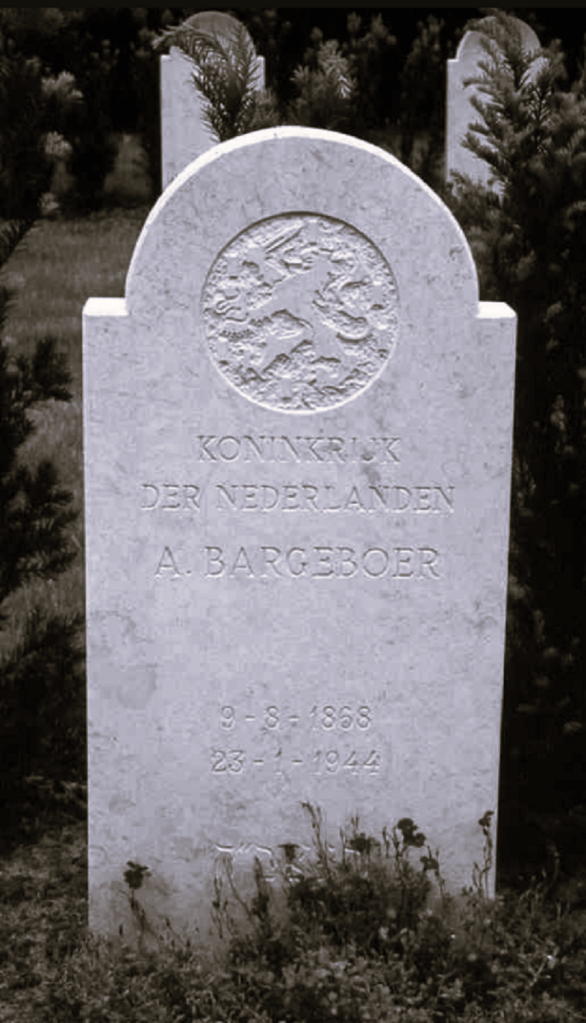
It was not uncommon for those arrested to meet dramatic and tragic ends, either through suicide or murder. Many prisoners died in custody, often under torture. The Gestapo frequently concealed these suspicious deaths from the civil registry. For instance, Juliette Cottena’s death on December 15, 1943, was not reported to the civil registry, even though her body was delivered to the morgue five days later, on December 20.
Autopsies were seldom, leaving uncertainty about the actual causes of death. Many alleged suicides were likely murders disguised by the Gestapo. For others, suicide became a desperate escape from ongoing torture or the imminent threat of deportation.
Sources:
https://pop.culture.gouv.fr/notice/mnr/MNR00645
https://ressources.memorialdelashoah.org/notice.php?q=identifiant_origine:(FRMEMSH0408707145628)
https://www.joodsmonument.nl/en/page/688449/abraham-bargeboer
https://www.oorlogsbronnen.nl/tijdlijn/Abraham-Bargeboer/02/6641
https://oorlogsgravenstichting.nl/personen/6641/abraham-bargeboer
http://niceoccupation.free.fr/arrestations.html#NpVlKXNL
https://www.geni.com/people/Abraham-Bargeboer/6000000038996113389
Please donate so we can continue this important work
Donations
Your readership is what makes my site a success, and I am truly passionate about providing you with valuable content. I have been doing this at no cost and will continue to do so. Your voluntary donation of $2 or more, if you are able, would be a significant contribution to the continuation of my work. However, I fully understand if you’re not in a position to do so. Your support, in any form, is greatly appreciated. Thank you. To donate, click on the credit/debit card icon of the card you will use. If you want to donate more than $2, just add a higher number in the box left from the PayPal link. Your generosity is greatly appreciated. Many thanks.
$2.00
 History of Sorts
Leave a comment