Introduction
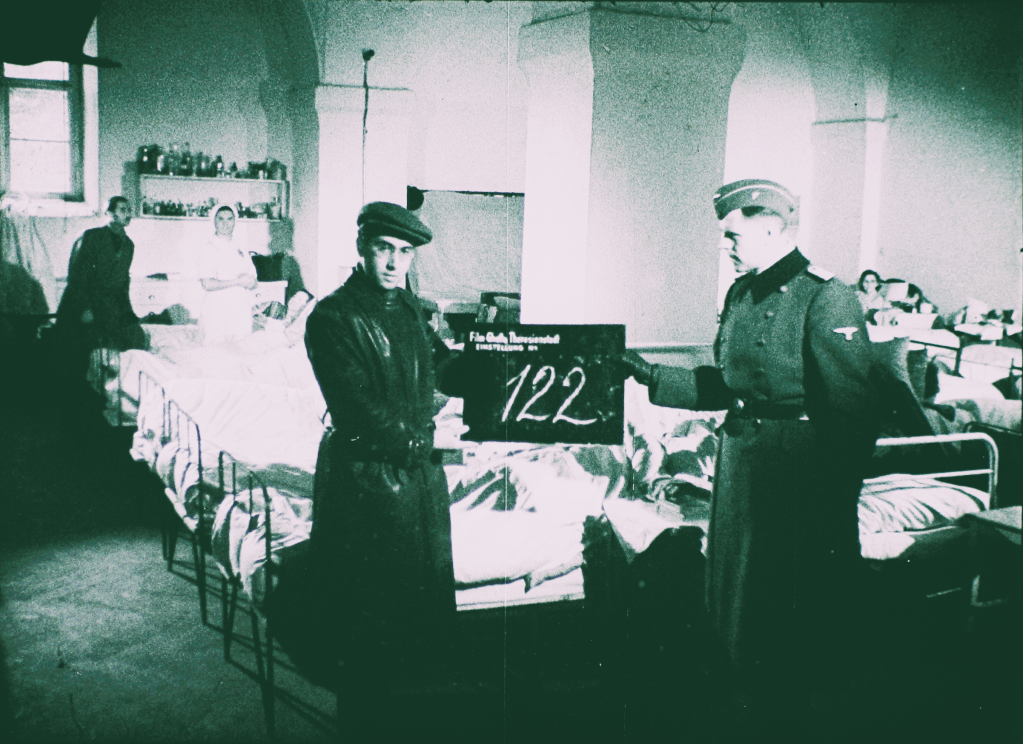
Theresienstadt, a Nazi concentration camp and ghetto established in 1941, was unique among the camps in that it played a dual role: both as a site of suffering and as a tool of deception. One of the most sinister aspects of this deception was a propaganda film produced by the Nazis in 1944, often referred to as Theresienstadt: A Documentary Film from the Jewish Settlement Area or The Führer Gives a City to the Jews. The film was created to mislead international observers about the conditions in Nazi camps and to disguise the true horrors of the Holocaust. Despite its apparent purpose of showcasing a thriving Jewish community, the film was a carefully staged illusion, masking the suffering, starvation, and mass murder of prisoners.
Background: The Purpose of the Film
By 1944, growing international pressure and reports of Nazi atrocities had reached neutral and Allied nations. In response, the Nazi regime sought to counter these allegations by fabricating a more humane image of their treatment of Jewish prisoners. Theresienstadt, located in Czechoslovakia, was selected for this purpose because it already had a deceptive façade: it was presented as a “model ghetto” where elderly, prominent, and artistic Jews were sent. In reality, it was a transit camp where prisoners were eventually deported to extermination camps like Auschwitz.
The film was commissioned by the SS, with Jewish prisoner and filmmaker Kurt Gerron forced to direct it under duress. Its goal was to convince the International Red Cross and other foreign entities that Theresienstadt was a self-sufficient, well-functioning Jewish settlement rather than a concentration camp.
The Content of the Film
The film portrayed an entirely fictional version of life in Theresienstadt. It showed Jewish prisoners engaging in sports, playing music, and attending cultural events. Gardens were planted, buildings repainted, and prisoners were given better clothing and food during filming to create the illusion of a normal, even pleasant, living environment. Jewish artists, musicians, and intellectuals—many of whom had once been prominent figures in European culture—were forced to participate in these staged scenes.
One particularly chilling aspect of the film is its use of children, who were filmed smiling and playing, giving the false impression that they were being well cared for. In reality, most of the children who appeared in the film were later deported to Auschwitz and murdered.
The Aftermath
Once filming was completed, the majority of those who had participated—including Kurt Gerron himself—were deported to Auschwitz and killed, ensuring they could not reveal the truth. The film was rarely shown publicly and had little impact on altering the course of the war or international policy. However, its existence remains a haunting example of the Nazi regime’s ability to manipulate reality and use propaganda as a weapon.
The Theresienstadt film stands as one of the most grotesque examples of Nazi deception. It represents not only an attempt to mislead the world about the Holocaust but also the cruel exploitation of its victims in a final act of psychological and physical abuse. Today, historians and scholars study the film as a powerful reminder of the dangers of propaganda and the importance of uncovering the truth behind oppressive regimes. Through survivor testimonies and historical analysis, the world continues to expose the horrific reality behind the Nazi facade.
Transcript in English
“A little barracks city is the work center.
Men and women in groups of 100 perform work of all kinds for the common good. The groups, as needed, are assigned and retrained for the various tasks. Everyone who is able to work can immediately fit into the work process quickly and smoothly. The workshops of the bag makers, tailors, dressmakers, seamstresses, shoemakers, and other craftsmen operate here at full speed, under the management of skilled personnel.
When the workday is over and the evening begins, the workers stream from the various outlying sites and work barracks, headed back to the city. Use of free time is left to the individual.
Often, the stream of returning workers moves in only one direction: toward Theresienstadt’s greatest sports event, the soccer match. To accommodate the crowd of spectators, the match always takes place in the courtyard of former military barracks. Because of the limited space for play, each team has only seven players. Nonetheless, they deliver a hard-fought game to the enthusiastic fans, from start to finish.
A central bath serves the population.
In addition to general literature, the richly equipped central library offers extensive scholarly and scientific holdings and can meet a wide range of demands.
Evening lectures on science and art attract a learned group of regular attendees.”
Kurt Gerron

Kurt Gerron, born Kurt Gerson in 1897 in Berlin, was the only child of Max and Toni (née Riese). His father managed a successful clothing business, while his mother oversaw his education. During World War I, Gerron enlisted in the German Army, suffered severe injuries twice, and was discharged from front-line service. He then began studying medicine but re-enlisted as a doctor after two years. Though he completed his medical studies after the war, he soon decided to pursue acting. His career began in Berlin’s cabaret scene, first performing in “Kuka” and later joining the Wilden Bühne (“Wild Stage”) troupe in 1921. He married Olga “Olly” Meyer in 1924.
Gerron became a prominent theater and film actor, performing in Max Reinhardt’s productions and seamlessly transitioning from silent films to talkies. In 1928, he originated the role of “Tiger” Brown in the premiere of Bertolt Brecht and Kurt Weill’s “The Threepenny Opera,” where his rendition of “Mack the Knife” became a hit. He also starred alongside Marlene Dietrich in the 1930 film “The Blue Angel.” By 1933, he had acted in numerous films and directed many more, making him one of Germany’s most successful artists.

With the Nazi rise to power in January 1933, Jewish artists, including Gerron, were systematically excluded from Germany’s entertainment industry. At the time, he was directing “Kind, Ich Freu Mich Auf Dein Kommen” at UFA Studios in Berlin. On April 1, the day of the nationwide boycott of Jewish businesses, he and his Jewish colleagues were expelled from the studio. Actress Magda Schneider later recalled witnessing the deeply humiliating moment. That same month, Gerron fled Germany with his wife and parents, first to Paris, then Vienna in 1935, and later Amsterdam in 1937 as anti-Semitism intensified. Despite being banned in Germany, he continued directing films.
In May 1940, the German occupation of the Netherlands placed Gerron under Nazi rule once again. He continued working in entertainment until his arrest in September 1943, when he and his wife were deported to the Westerbork transit camp. His parents had been deported earlier and perished in Sobibor on May 4, 1943. In February 1944, Gerron and his wife were transported to the Theresienstadt (Terezin) ghetto, where he organized performances, including the revue “Karussell,” featuring the “Ghetto Swingers.”
The Red Cross Delegation’s Visit to Terezin
In June 1944, an International Red Cross delegation visited Terezin. To prepare, the Nazis forcibly deported thousands of Jews to Auschwitz to ease overcrowding and staged a facade of humane living conditions. Streets were cleaned, a kindergarten was temporarily established, and well-connected inmates were presented as spokespeople. The deception was successful, with a Red Cross representative describing Terezin as “a city like any other,” unaware of the thousands who had passed through it en route to their deaths.
On October 28, 1944, Gerron and his wife were among the final group sent to Auschwitz. Survivor testimonies describe the harrowing conditions of the transport, with deportees crammed into sealed cattle cars for days without air, water, or sanitation. Upon arrival on October 30, selections were made; many were immediately sent to the gas chambers, including Gerron and his wife.
The Fate of the Propaganda Film
The film, titled “Theresienstadt – A Documentary Film of the Jewish Settlement,” was completed in March 1945. The SS recorded additional audio for the soundtrack, but it was never widely shown. After the war, the full film disappeared, with only fragments resurfacing. Survivors ironically recalled it as “The Führer Gives the Jews a City.” Excerpts of the film are displayed in various Holocaust exhibitions today, serving as a chilling reminder of Nazi deception and the tragic fate of those forced to participate in its creation.
Sources
https://perspectives.ushmm.org/item/theresienstadt-a-documentary-film-1944
https://encyclopedia.ushmm.org/content/en/film/theresienstadt
https://www.tandfonline.com/doi/pdf/10.1080/01439689200260091
https://en.wikipedia.org/wiki/Theresienstadt_(1944_film)
https://www.imdb.com/name/nm0314777/?ref_=tt_ov_st_3
https://www.yadvashem.org/exhibitions/last-deportees/terezin-auschwitz.html
https://www.holocausthistoricalsociety.org.uk/contents/jewishbiographies/kurtgerron.html
Please support us so we can continue our important work.
Donations
Your readership is what makes my site a success, and I am truly passionate about providing you with valuable content. I have been doing this at no cost and will continue to do so. Your voluntary donation of $2 or more, if you are able, would be a significant contribution to the continuation of my work. However, I fully understand if you’re not in a position to do so. Your support, in any form, is greatly appreciated. Thank you. To donate, click on the credit/debit card icon of the card you will use. If you want to donate more than $2, just add a higher number in the box left from the PayPal link. Your generosity is greatly appreciated. Many thanks.
$2.00
 History of Sorts
Leave a comment