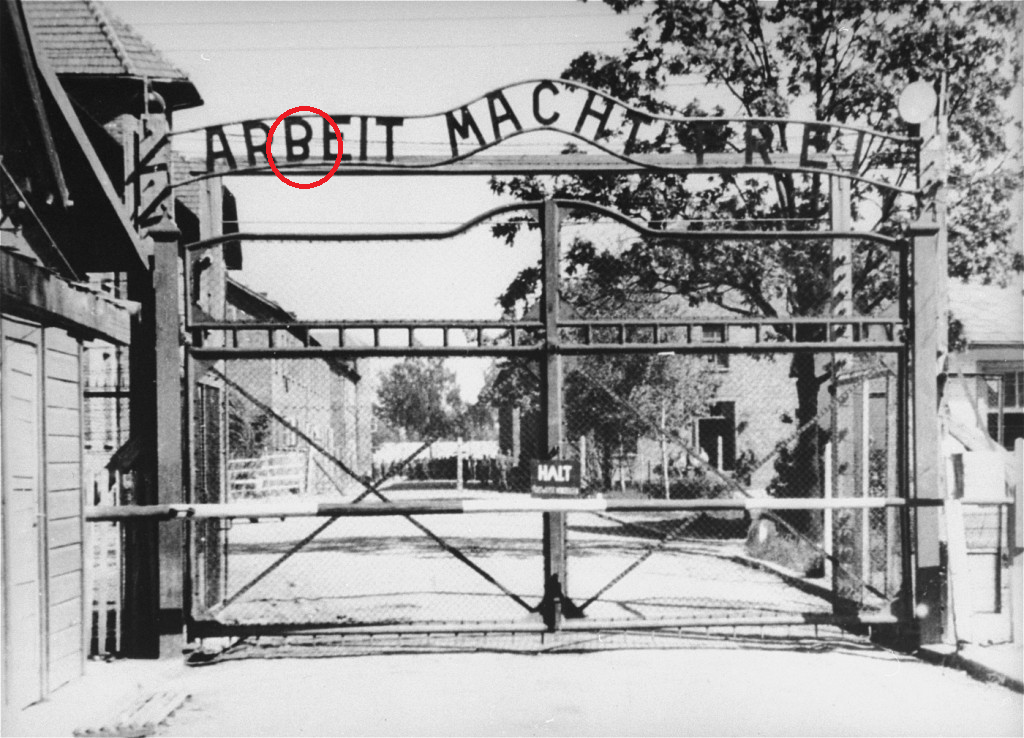
The phrase Arbeit macht frei (German for “Work sets you free”) is one of the most infamous symbols of Nazi oppression. Displayed at the entrances of several concentration camps, including Auschwitz, this deceptive slogan falsely suggested that forced labor would lead to eventual freedom. However, one unique and subtle act of resistance can be found in the sign above the Auschwitz I entrance: the letter “B” in Arbeit is turned upside down. This small yet significant detail is widely believed to be an act of defiance by the prisoners forced to craft the sign.
Historical Context
Auschwitz, the largest and deadliest Nazi concentration and extermination camp, was established in occupied Poland in 1940. It became a primary site of the Holocaust, where over a million people—mostly Jews—were murdered. The Nazis used propaganda to deceive both the prisoners and the outside world, and the Arbeit macht frei sign was part of this effort.
Prisoners arriving at Auschwitz were met with this message, which falsely implied that diligent labor could lead to release. In reality, most prisoners faced brutal conditions, starvation, forced labor, medical experiments, and execution. The Nazis used this misleading phrase at several camps, including Dachau and Sachsenhausen, but the Auschwitz sign became the most well-known.
The Upside-Down “B”: A Symbol of Resistance
The slogan above the entrance to Auschwitz I was installed under the orders of commandant Rudolf Höss and crafted by prisoners.
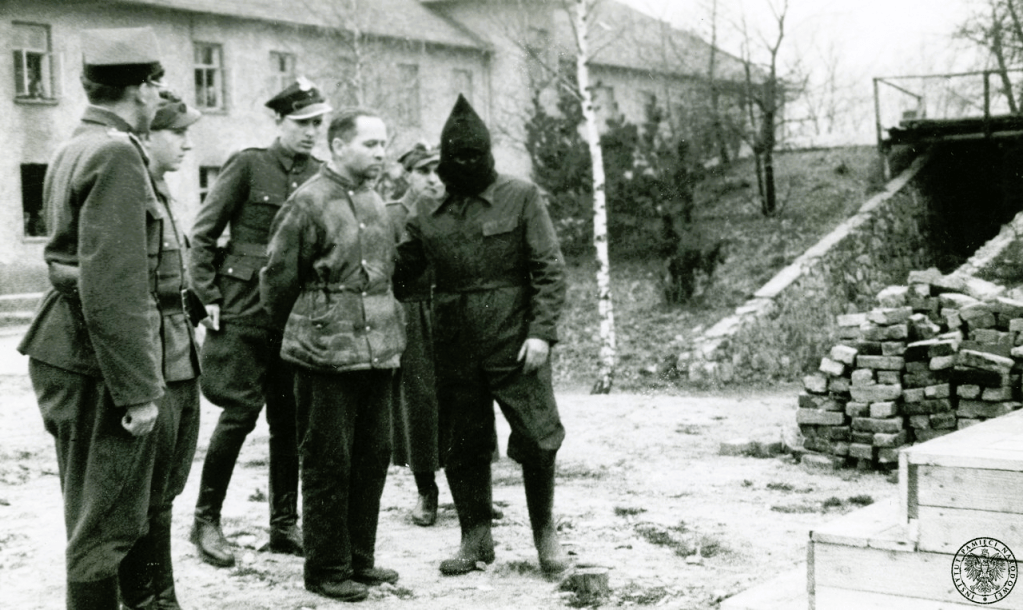
Within this group, an individual or multiple prisoners subtly sabotaged the sign by welding the letter “B” in an inverted position. The precise identity of the person responsible remains unknown, but the act is widely regarded as an intentional protest against Nazi oppression.
The meaning behind this upside-down “B” is debated, but historians and survivors suggest it was a small but powerful act of defiance. By subtly altering the sign, the prisoners risked severe punishment or execution, yet they expressed their resistance to the Nazi regime in the only way they could—through an almost imperceptible mark on a symbol of Nazi cruelty.
The Legacy of the Upside-Down “B”
Though a minor alteration, the upside-down “B” has come to represent the resilience of Auschwitz prisoners. In a place where open rebellion often resulted in immediate death, such small acts of defiance were among the few ways prisoners could assert their humanity.
Today, the Auschwitz Arbeit macht frei sign stands as a reminder of the Holocaust’s horrors, but the upside-down “B” also serves as a testament to the courage and resistance of those who suffered under Nazi rule. This subtle yet significant act of defiance reminds us that even in the darkest times, the human spirit can find ways to resist oppression.
sources
https://auschwitz.info/en/b-the-sculpture.html
https://en.wikipedia.org/wiki/Arbeit_macht_frei
http://news.bbc.co.uk/2/hi/europe/8420681.stm
https://blogs.timesofisrael.com/the-upside-down-b/
Donation
Your readership is what makes my site a success, and I am truly passionate about providing you with valuable content. I have been doing this at no cost and will continue to do so. Your voluntary donation of $2 or more, if you are able, would be a significant contribution to the continuation of my work. However, I fully understand if you’re not in a position to do so. Your support, in any form, is greatly appreciated. Thank you. To donate, click on the credit/debit card icon of the card you will use. If you want to donate more than $2, just add a higher number in the box left from the PayPal link. Your generosity is greatly appreciated. Many thanks.
$2.00


 History of Sorts
Leave a comment