
Willem Arondeus, a name that resonates with courage, defiance, and an unyielding stand against oppression, was a Dutch artist and writer who became a key figure in the resistance against Nazi occupation in the Netherlands during World War II. His heroism, coupled with his unspoken advocacy for LGBT rights in an era of rampant discrimination, marks him as one of the most remarkable figures in 20th-century history.
Early Life and Artistic Pursuits
Born on August 22, 1894, in Naarden, Netherlands, Willem Arondeus grew up in a conservative family. From an early age, he demonstrated a profound interest in the arts, particularly painting and literature. By the age of 17, he had enrolled in art school, pursuing his passion despite familial opposition. His artistic talents led him to create murals, book illustrations, and even poetry. However, he struggled to gain widespread recognition for his works.
Arondeus was also openly gay, an identity that conflicted with the social norms of the time. His defiance of societal expectations was evident not only in his personal life but also in his unwavering commitment to justice, themes that later became central to his resistance activities.
The Nazi Occupation and the Dutch Resistance
When Nazi Germany invaded the Netherlands in May 1940, life for Dutch citizens changed drastically. The German occupation brought repression, persecution, and systematic discrimination, mainly targeting the Jewish population. Arondeus, deeply disturbed by the atrocities being committed, chose to take action rather than remain a bystander.
He joined the Dutch resistance, a clandestine network of individuals working to subvert Nazi control. As a member of the resistance, Arondeus utilized his artistic and literary skills to create underground publications that denounced the Nazi regime and encouraged defiance. His work as a writer was instrumental in countering Nazi propaganda and providing hope to those living under occupation.
The Attack on the Amsterdam Public Records Office
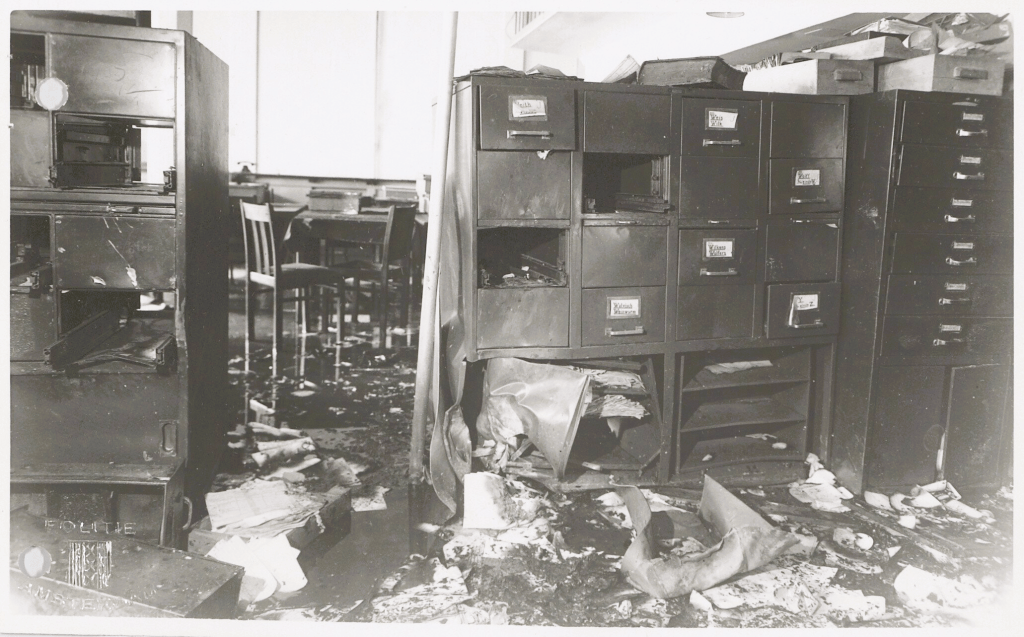
One of Arondeus’s most significant contributions to the resistance was his role in the attack on the Amsterdam Public Records Office in March 1943. The Nazis were using municipal records to identify and track Jewish citizens, making deportation and extermination easier. In response, Arondeus and a group of fellow resistance members devised a daring plan to destroy these records, thereby obstructing the Nazi efforts.
On the night of March 27, 1943, Arondeus and his team, dressed as Dutch police officers, infiltrated the building. They planted explosives, successfully destroying thousands of records and delaying Nazi identification processes. The attack was a remarkable success, providing a reprieve temporarily for many Jewish individuals who might have otherwise been arrested and deported.
Capture and Execution
Despite the initial success of the operation, the Nazis quickly launched an investigation, and Arondeus, along with his fellow resistance fighters, was arrested within weeks. Under brutal interrogation, he refused to betray his comrades. On July 1, 1943, Willem Arondeus was executed by firing squad in the dunes of Overveen. His last words were reported to be: “Let it be known that homosexuals are not cowards.”
Legacy and Recognition
For many years after his death, Arondeus remained a relatively obscure figure in mainstream history. However, his bravery and sacrifice have since been recognized as vital contributions to the fight against fascism. In 1984, the Dutch government posthumously awarded him the Resistance Memorial Cross.
Additionally, Arondeus is increasingly acknowledged for his role as an LGBT hero. His defiant final words challenged the stereotypes surrounding homosexuals at a time when being openly gay was met with immense prejudice. Today, he stands as an icon not only for resistance against tyranny but also for LGBT rights and visibility.
Willem Arondeus exemplifies the power of individual resistance against oppression. His willingness to fight injustice, even at the cost of his life, serves as a testament to the impact one person can have in the face of tyranny. His story, once hidden in the shadows of history, is now celebrated as a beacon of courage, selflessness, and unwavering commitment to human dignity.
Arondeus’s legacy reminds us that we all share the responsibility of standing up against injustice, even when the odds are insurmountable. His heroism continues to inspire future generations to fight for justice, equality, and the right to live freely, regardless of identity or background.
In 1945, following the liberation of the Netherlands, the Dutch government posthumously honored Arondeus with a medal and reburied him at Erebegraafplaats Bloemendaal. Later, in 1984, he was awarded the Resistance Memorial Cross. Additionally, on June 19, 1986, Yad Vashem recognized him as Righteous Among the Nations.
Willem Arondeus-The Artist
Arondeus initially trained as a painter and illustrator. His artistic career was influenced by the Art Nouveau and Symbolist movements, with a strong emphasis on decorative elements, flowing lines, and intricate designs. His early works often depicted romanticized and fantastical subjects, showing a deep appreciation for nature and mythology.

Arondeus also created murals and book illustrations, demonstrating his versatility in different artistic mediums. His illustrations were particularly notable for their detailed and expressive quality, often carrying an underlying narrative. Beyond painting and drawing, he also explored poetry and writing, blending his visual artistry with literary expression.
Despite his talent, Arondeus struggled to gain widespread recognition in the Dutch art scene. His openly gay identity in a conservative society, combined with financial difficulties, made it challenging for him to secure stable patronage. Nevertheless, he remained dedicated to his craft, producing works that expressed his individuality and artistic vision.
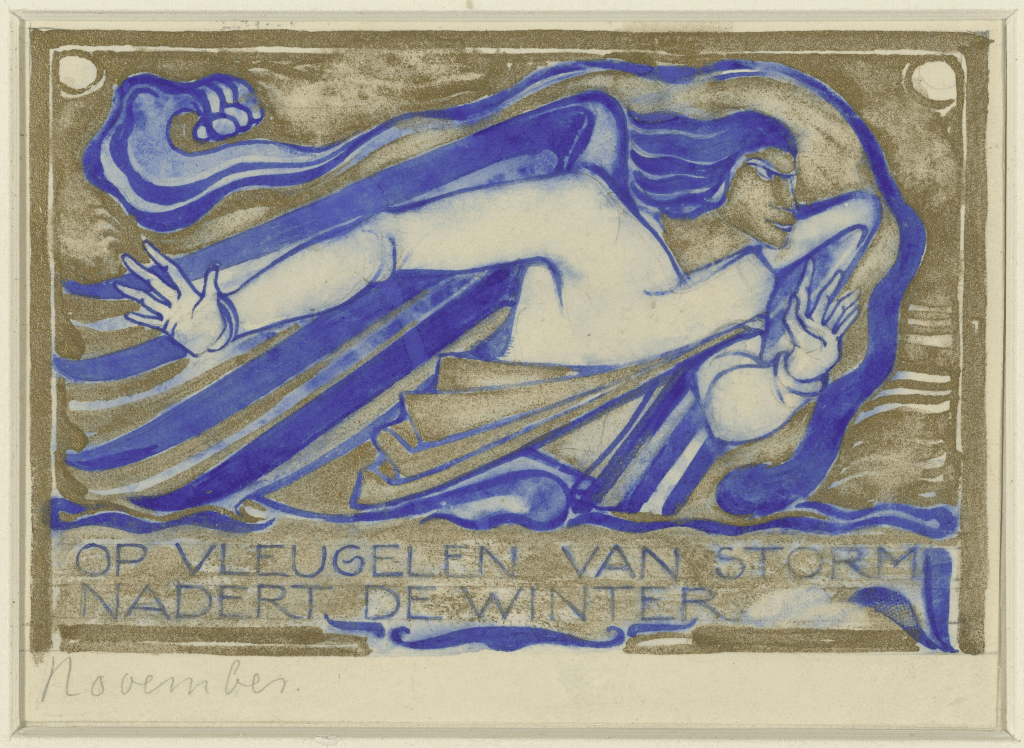
His resistance efforts ultimately overshadowed his artistic career. In 1943, he played a key role in the bombing of the Amsterdam Public Records Office to prevent the Nazis from identifying Jewish citizens. The Germans captured him and executed him later that year. There is a celebration of his bravery, and his art serves as a testament to his creative spirit, reflecting a life devoted to beauty, expression, and resistance in its many forms.
Sources
https://en.wikipedia.org/wiki/Willem_Arondeus
https://en-cenlib.tau.ac.il/Righteous_Among_the_Nations_Willem_Arondeus_en
https://www.europeana.eu/en/stories/willem-arondeus
https://en-cenlib.tau.ac.il/Righteous_Among_the_Nations_Willem_Arondeus_en
Please support us so we can continue our important work.
Donation
Your readership is what makes my site a success, and I am truly passionate about providing you with valuable content. I have been doing this at no cost and will continue to do so. Your voluntary donation of $2 or more, if you are able, would be a significant contribution to the continuation of my work. However, I fully understand if you’re not in a position to do so. Your support, in any form, is greatly appreciated. Thank you. To donate, click on the credit/debit card icon of the card you will use. If you want to donate more than $2, just add a higher number in the box left from the PayPal link. Your generosity is greatly appreciated. Many thanks.
$2.00

 History of Sorts
Leave a comment