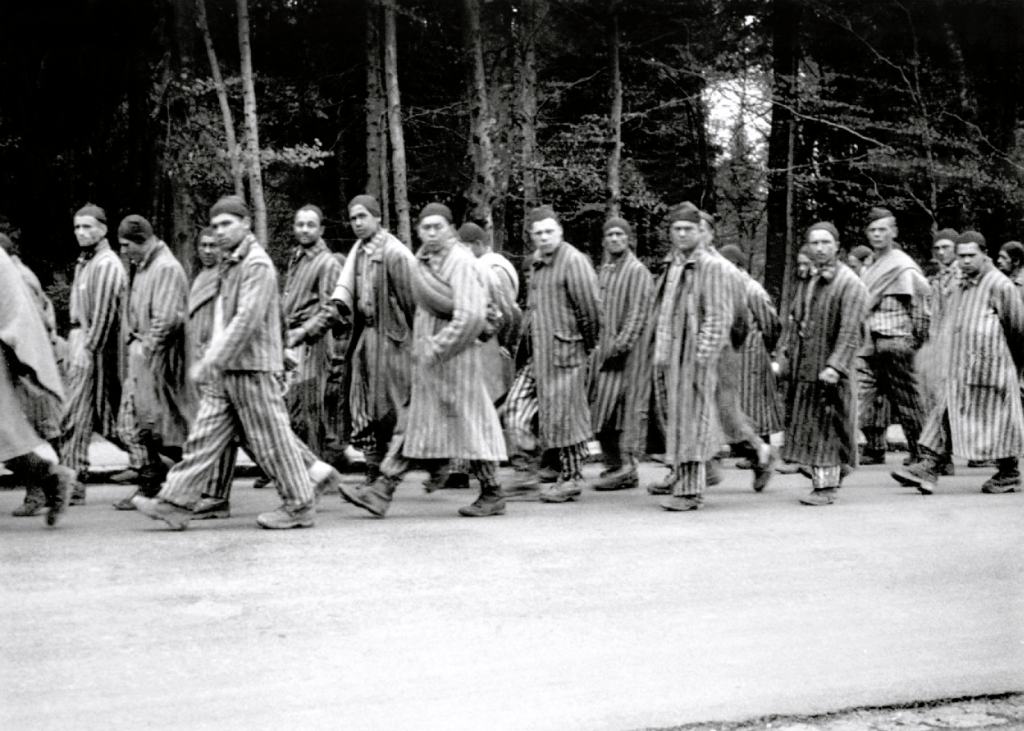
One thing I could never understand is the death marches. Most of them took place near the end of the war, when they served little strategic purpose. Even from a military standpoint, they made no sense. Then again, many of the Nazis’ actions defied logic. So many of their policies and strategies were driven purely by hate.
What Were the Death Marches?
The term “death march” refers to the forced relocation of prisoners from Nazi concentration camps, labor camps, and extermination camps as Allied and Soviet forces closed in on German-occupied territories. With the collapse of the Third Reich imminent, the Nazis sought to evacuate prisoners to camps deeper inside Germany to prevent them from falling into enemy hands, fearing they might testify to Nazi crimes. These marches, conducted under inhumane conditions, often resulted in the deaths of thousands due to starvation, exposure, disease, and brutal treatment by their guards.
Causes and Motivations
Several factors contributed to the decision to conduct these forced marches:
Destruction of Evidence: The Nazis wanted to prevent the Allies from discovering the full extent of their crimes. Many concentration camps contained mass graves and living witnesses who could testify to the atrocities.
Continuing the Exploitation of Slave Labor: The Nazis still needed forced labor for the war effort, particularly in armaments factories.
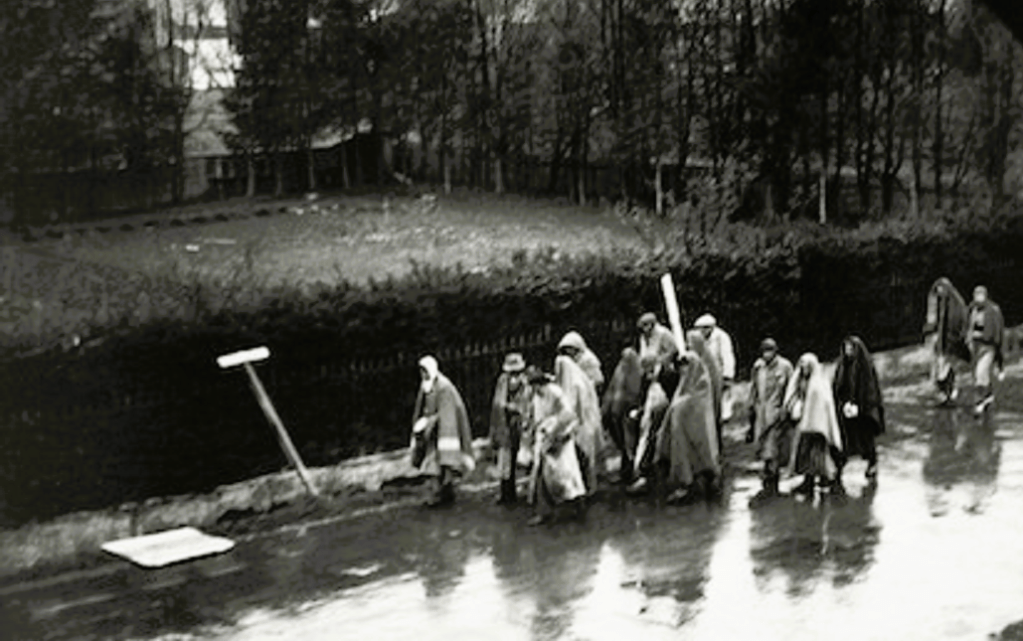
Ideological Fanaticism: Even as Germany faced imminent defeat, many Nazi leaders refused to abandon their policies of persecution and extermination.
Avoiding Liberation: Prisoners were often viewed as security threats who might seek revenge or destabilize Nazi-occupied regions.
The Brutality of the Marches
The marches typically took place in freezing winter conditions, with prisoners given little to no food, water, or proper clothing. Many were already emaciated and weak from years of malnutrition and forced labor. Those unable to keep pace were either shot on the spot or left to die. The distances varied, but some prisoners were forced to walk for hundreds of miles over weeks or months.
Survivor testimonies describe the sheer horror of the marches—corpses lining the roads, guards committing arbitrary executions, and desperate prisoners scavenging for food in frozen fields. A common method of execution was forcing prisoners to dig their own graves before being shot. Others were killed by exhaustion, disease, or exposure.
Major Death Marches
While death marches occurred throughout Nazi-occupied Europe, some of the most infamous include:
Auschwitz-Birkenau Death March (January 1945):
By January 1945, the Third Reich was on the brink of military defeat. Most of German East Prussia was already under Soviet occupation. Soviet forces besieged Warsaw, Poland, and Budapest, Hungary, preparing to push German forces further into the collapsing Reich.
By that time, the Soviet Army had already exposed the atrocities committed by the Nazis at Majdanek, which had been liberated in July 1944.
Fearing the advancing Soviet troops, SS authorities ordered the evacuation of Auschwitz between January 17 and 21. Before doing so, they attempted to destroy documentation and dismantle much of the camp’s infrastructure to erase evidence of their crimes.
In the brutal winter conditions, the Nazis forced nearly 60,000 Auschwitz prisoners—already weakened by starvation and abuse—to march over 60 kilometers to railway junctions. The prisoners had little to no clothing and received no food, enduring freezing temperatures. From these junctions, they were transported to various concentration camps within Germany.
The marches were not just evacuations but death marches. Of the nearly 60,000 prisoners forced to leave Auschwitz, approximately 15,000 died along the way due to exposure, starvation, and exhaustion. The SS guards, under strict orders, shot and killed those who could no longer keep up. Many more perished upon arrival at the camps.
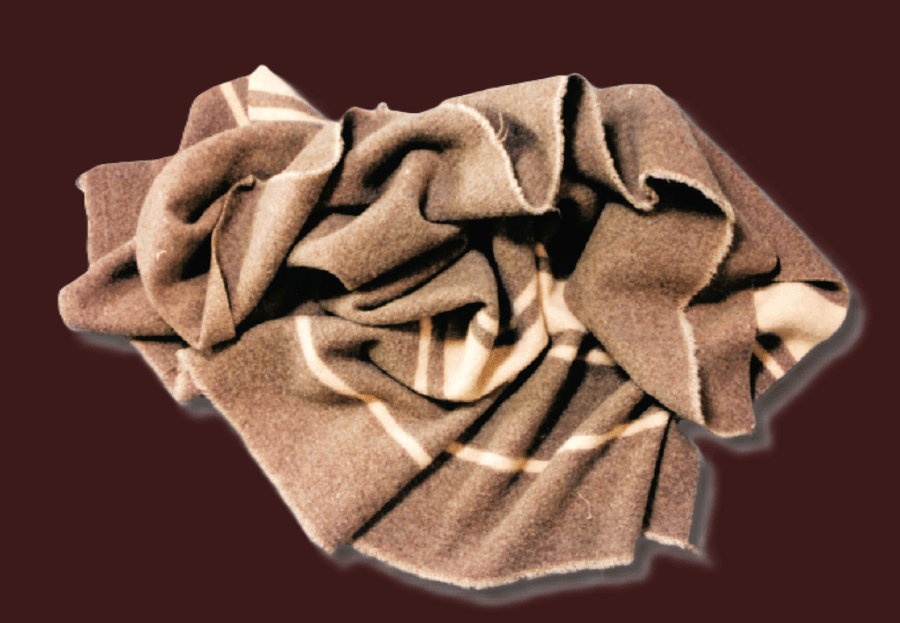
One survivor of this horrific journey was Siegfried Fedrid, an Austrian tailor who was born deaf to deaf parents. Before leaving Auschwitz for the last time, he grabbed a blanket—perhaps his only means of warmth against the bitter cold. But instead of keeping it for himself, Siegfried chose to share it with fellow prisoners, helping them survive the freezing days and nights of the march.
After the war, with no family left in his native Vienna, Siegfried emigrated to New York. There, he met and married Doris Rosentrauch, another Holocaust survivor who was also deaf.
Siegfried’s blanket is now displayed at the Auschwitz Exhibition at the Museum of Jewish Heritage — A Living Memorial to the Holocaust in New York, a testament to both survival and the enduring power of human kindness in the face of unimaginable cruelty.
Dachau Death March (April 1945):
As American troops neared, thousands of prisoners were forced to march southward.The order to evacuate the Dachau concentration camp and its subcamps was issued just days before the arrival of American troops. The evacuation of the Kaufering subcamps began on April 23, 1945. Three days later, the first columns of prisoners were forced to march southward from the main Dachau camp. In total, the SS forcibly evacuated at least 25,000 prisoners from the Dachau camp system, either by transport or on foot in grueling forced marches.
These so-called “death marches” claimed the lives of at least 1,000 prisoners. Many perished from disease, starvation, and sheer exhaustion. Those who collapsed or could no longer continue were mercilessly beaten or shot by SS guards.
The marches passed through numerous villages and small towns, where local residents bore witness to the brutal suffering of the prisoners.

Witness account of a death march; Solly Ganor, prisoner in the Dachau concentration camp 1944–1945
“We could see the furtive parting of curtains as German civilians peered out at us. To our surprise a few of them came out and tried to offer us some bread, but the result was disastrous. Hundreds of starving inmates would descend on the benefactor, often knocking him or her down. The bread was immediately torn to pieces, and the guards set upon the mob. Each time this happened several more bodies were left by the side of the road.”
Buchenwald Death March:
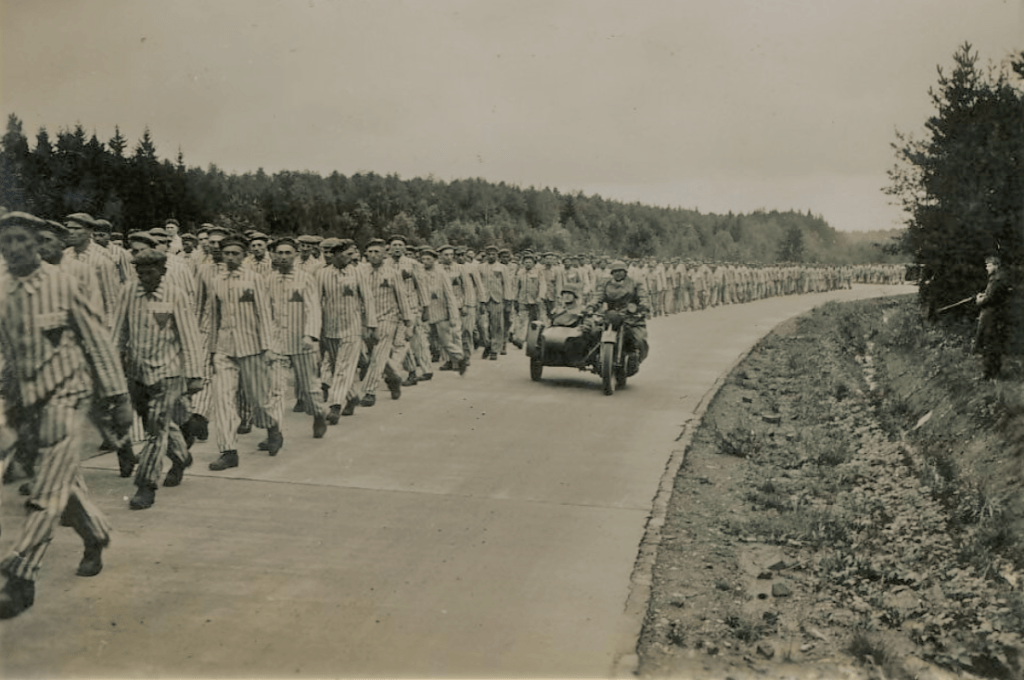
The Buchenwald Death March took place between April 7 and 10, 1945. Around 28,500 to 30,000 inmates were forced to march approximately 300 kilometers to three other concentration camps—Dachau, Flossenbürg, and Theresienstadt—following a route through Jena, Eisenberg, Bad Köstritz, and Gera.
Of those forced on this brutal journey, approximately 9,000 perished. Many were too weak to continue due to the inhumane conditions they had endured at Buchenwald. Those who collapsed were either shot or left to die where they fell.
It’s impossible to fully grasp the terror and despair they must have felt. Imagine the sheer exhaustion, the overwhelming fear, and the unbearable suffering of being marched to death—step by step—knowing there was no escape.
On April 11, 1945, the 21,000 inmates who remained in Buchenwald were finally liberated.

Liberation and Aftermath
Allied troops often discovered death march survivors—barely alive, skeletal figures who had endured unspeakable horrors. Many were too weak to even celebrate their freedom. Mass graves filled with bodies were a grim testament to the suffering endured.
After the war, the death marches were presented as evidence during the Nuremberg Trials, reinforcing the scale of Nazi crimes. While some perpetrators were brought to justice, many remained unpunished.
Legacy and Memory
Today, the death marches are commemorated in Holocaust education programs and memorial sites across Europe. Survivors’ testimonies serve as a reminder of the capacity for cruelty when hatred goes unchecked. These forced evacuations were not merely a byproduct of war but a continuation of the Nazi commitment to genocide until the very last days of the Third Reich.
The death marches encapsulate the brutal determination of the Nazi regime to continue its genocidal policies even in the face of certain defeat. They serve as a stark reminder of the depths of human cruelty and the importance of remembering history to prevent such atrocities from occurring again.
By learning about these horrific events, we honor the victims and ensure that future generations remain vigilant against the dangers of totalitarianism, hatred, and genocide.
sources
https://www.monash.edu/buchenwald-boys/holocaust/death-marches
https://www.buchenwald.de/en/geschichte/chronologie/konzentrationslager/todesmaersche
https://encyclopedia.ushmm.org/content/en/article/death-marches-1
https://en.wikipedia.org/wiki/Death_marches_during_the_Holocaust
Please support us so we can continue our important work.
Donation
Your readership is what makes my site a success, and I am truly passionate about providing you with valuable content. I have been doing this at no cost and will continue to do so. Your voluntary donation of $2 or more, if you are able, would be a significant contribution to the continuation of my work. However, I fully understand if you’re not in a position to do so. Your support, in any form, is greatly appreciated. Thank you. To donate, click on the credit/debit card icon of the card you will use. If you want to donate more than $2, just add a higher number in the box left from the PayPal link. Your generosity is greatly appreciated. Many thanks.
$2.00
 History of Sorts
Leave a comment