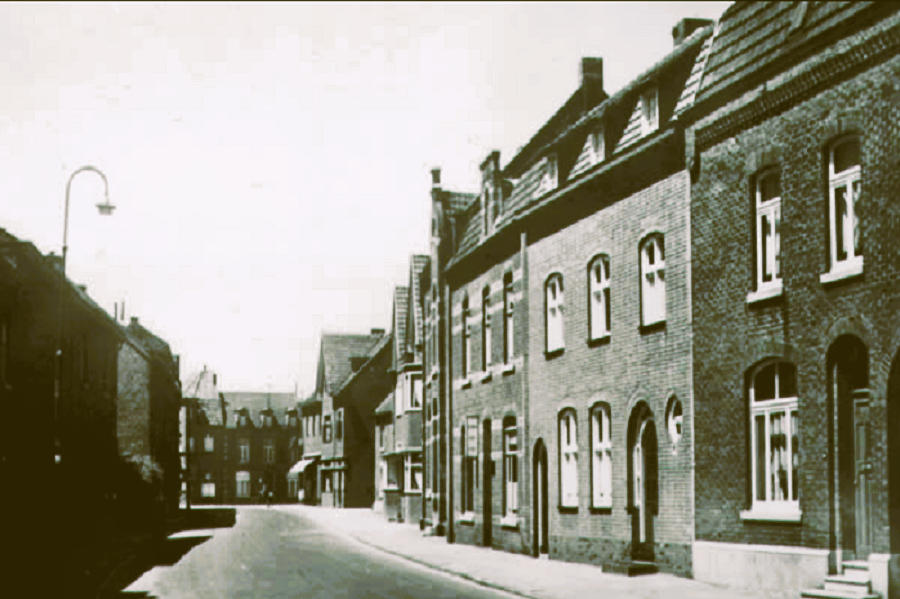
I could call this history on my doorstep. The Peschstraat in Geleen, the Netherlands, is a street that is well known to me. Although it is on the other side of town, I often went there to visit friends who lived on that street or nearby. Yet, despite my familiarity with the area, I knew little about one particular family who once lived there—a family whose story was tragically cut short by the Holocaust. Through the Simon Wiesenthal Genealogy Geolocation Initiative, I came across the heartbreaking history of the Freimark family.
Link to Source: Simon Wiesenthal Genealogy Geolocation Initiative
The Origins of the Freimark Family

The story of the Freimarks begins in 1817 when three families bearing this name lived in Homburg am Main, a small town situated between Frankfurt and Würzburg. One descendant, Salomon Freimark, was just 14 years old when he moved with his parents to Marktheidenfeld in 1887. There, he established a blacksmith shop in 1901. Around 1898, he married Hermine Adler, a tailor from the nearby village of Urspringen. Together, they had four sons, including Friedrich, who was born in 1902.
Tragedy struck early when Salomon passed away in 1911. Left to support her family alone, Hermine earned a living by running a small store selling textiles and wool goods. Despite the difficulties, she managed to provide for her children, and Friedrich grew up to start his own family.
A New Life in the Netherlands
In August 1935, Friedrich married Gertruda May from Niedermendig, a town near Koblenz. Gertruda came from a small but close-knit family; her father had passed away in 1933, but her mother was still alive. A year after their wedding, their first son, Ernst Freimark, was born in Frankfurt. However, as the political climate in Nazi Germany worsened, the couple decided to leave the country in search of safety.
By May 1936, Friedrich’s Aunt Irma and Uncle Gustav Winter-May had already settled in Geleen, where Gustav ran a launderette and hot iron company.
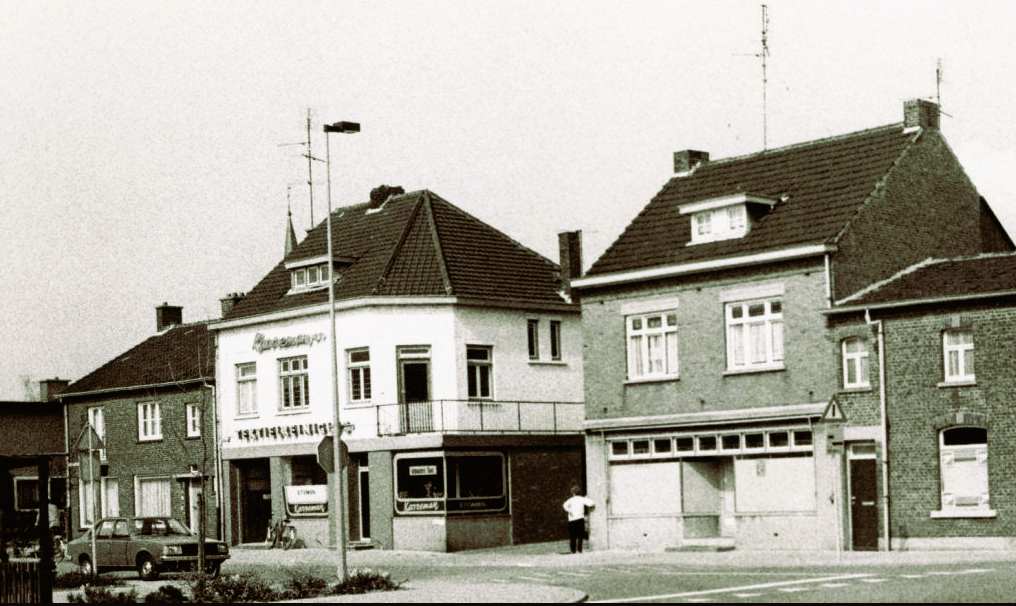
The childless couple welcomed Gertruda’s mother into their home later that year, and by the spring of 1937, Friedrich, Gertruda, and young Ernst joined them in Geleen. Friedrich became a partner in his uncle’s laundry business, providing a stable livelihood for his growing family. In April 1938, Friedrich’s mother, Hermine, also relocated to Geleen to be with her loved ones.
Their happiness, however, was short-lived. In December 1939, their second son, Kurt, was born in Heerlen, bringing the number of family members at Peschstraat 28 to eight. But just six months later, in May 1940, the Nazis invaded the Netherlands, setting in motion a series of events that would lead to the family’s destruction.
Persecution and Deportation
The Freimark family, like all Jewish residents of the Netherlands, was gradually subjected to an increasing number of oppressive laws. In February 1941, they were forced to register as Jews. By June of that year, they were barred from public places, and by September, young Ernst was no longer allowed to attend school. In November 1941, all eight members of the household were stripped of their German nationality, rendering them stateless.
On 25 August 1942, six of the eight family members were ordered to report for forced labor in Germany. Only the two grandmothers—ages 65 and 71—were left behind at their residence. Desperate to delay the inevitable, Gustav Winter and Friedrich attempted to secure an extension by arguing that 300 kilograms of laundry still needed to be processed. Their plea was denied.
Along with many others, the family was transferred via Maastricht to Westerbork, a transit camp, and then deported to Auschwitz on 28 August 1942. During the journey, the men between the ages of 18 and 55—including Friedrich and Gustav—were separated from their families at the Kosel Labor Camp, about an hour before reaching Auschwitz. The women and children, including Gertruda, her sister Irma, six-year-old Ernst, and two-year-old Kurt, were sent directly to the gas chambers upon arrival on 30 or 31 August 1942.
The exact fate of Friedrich and Gustav remains unclear. The Red Cross later set their official date of death as 30 April 1943, somewhere in Central Europe, but no records survive to confirm their final moments.
The Fate of the Grandmothers
Back in Geleen, the two grandmothers who had been left behind managed to survive for a few more months. However, in early April 1943, they were arrested along with the last remaining Jews in Limburg. They were transported to the Vught concentration camp and later deported via Westerbork to Sobibor, where they were murdered in the gas chambers on 14 May 1943.
The Aftermath
With the Freimark and Winter-May families annihilated, their home and business at Peschstraat 28 were taken over. By June 1943, the building housed “De Limburgsche Stoomwasscherij,” a steam laundry company, which remained there even after the war. The former business of Gustav Winter and Friedrich Freimark, the Maurits Clothing Laundry, was officially closed on 27 October 1947. None of the family members ever returned.
Remembering the Freimarks
The story of the Freimark family is one of thousands that illustrate the personal devastation caused by the Holocaust. What makes their tragedy even more poignant is that it unfolded in a place so familiar to me—a street I have walked down many times, unaware of the ghosts that linger in its history.
Through initiatives like the Simon Wiesenthal Genealogy Geolocation Initiative, we can uncover these lost stories, ensuring that the lives of families like the Freimarks are never forgotten. Their names, their struggles, and their fates deserve to be remembered—not just as a part of history, but as a solemn reminder of the past and a call to vigilance in the present.
sources
https://www.stolpersteinesittardgeleen.nl/Slachtoffers/Kurt-Freimark
https://www.joodsmonument.nl/en/page/137519/friedrich-freimark
https://www.boekhandelkrings.nl/krings/boek/9789491118043
Please support us so we can continue our important work.
Donation
Your readership is what makes my site a success, and I am truly passionate about providing you with valuable content. I have been doing this at no cost and will continue to do so. Your voluntary donation of $2 or more, if you are able, would be a significant contribution to the continuation of my work. However, I fully understand if you’re not in a position to do so. Your support, in any form, is greatly appreciated. Thank you. To donate, click on the credit/debit card icon of the card you will use. If you want to donate more than $2, just add a higher number in the box left from the PayPal link. Your generosity is greatly appreciated. Many thanks.
$2.00

 History of Sorts
Leave a comment