
Witold Pilecki stands as one of the most courageous and selfless figures of the 20th century. A Polish cavalry officer, intelligence agent, and resistance leader, Pilecki did what few could even imagine: he voluntarily infiltrated the Auschwitz concentration camp to gather intelligence and organize resistance from within. His mission was unparalleled in both bravery and importance, offering the world some of the first eyewitness accounts of Nazi atrocities. Pilecki’s subsequent escape from Auschwitz was as remarkable as his decision to enter it, driven by a burning desire to save lives and expose the full horror of Nazi crimes.
Early Life and the Path to Resistance
Witold Pilecki was born on May 13, 1901, in Karelia, in the Russian Empire (now part of Russia). His family had patriotic Polish roots and a strong tradition of resistance against foreign domination. As a young man, Pilecki fought in the Polish-Soviet War (1919–1921) and later became an officer in the Polish Army. When World War II erupted in 1939 with the joint German and Soviet invasion of Poland, Pilecki joined the Secret Polish Army—one of the first underground resistance organizations formed in occupied Poland.
As reports of Nazi atrocities grew, Polish resistance leaders recognized the need for first-hand intelligence from inside Germany’s newly established concentration camps. Pilecki volunteered for a mission that few others would dare even consider: he proposed to deliberately get arrested and sent to Auschwitz to organize resistance, gather evidence, and smuggle out information.
Volunteering for Auschwitz

In September 1940, Pilecki allowed himself to be captured during a Nazi street roundup in Warsaw. He used a fake identity—Tomasz Serafiński—and was subsequently deported to Auschwitz, which was then primarily a camp for Polish political prisoners (though Jews, Roma, and others were also increasingly being imprisoned and murdered).
Once inside Auschwitz (known then as Auschwitz I, the original camp before it expanded into a larger killing complex), Pilecki immediately set about forming a secret resistance organization called the Union of Military Organization (ZOW). His goals were audacious: to boost inmate morale, distribute extra food and clothing when possible, sabotage Nazi operations inside the camp, and eventually prepare for a potential armed uprising. Crucially, he also focused on sending reports to the Polish resistance outside the camp, which in turn reached the Allied governments.
Using clandestine couriers and smuggled messages, Pilecki’s reports were among the first credible accounts of the mass exterminations occurring at Auschwitz. However, the full scale of the Holocaust would not be widely understood for years.
Life in Auschwitz
Life inside Auschwitz was brutal beyond measure. Pilecki endured forced labor, starvation rations, beatings, disease, and the ever-present threat of death. Prisoners were routinely selected for executions, and random acts of violence by SS guards were a daily occurrence.
Despite these horrific conditions, Pilecki managed to establish a complex network of collaborators inside the camp. His ZOW group built an internal communication system, stockpiled weapons where possible, and created contingency plans for revolt. However, over time, it became evident that an external assault on the camp was unlikely. Furthermore, the Nazi plans for mass exterminations were accelerating beyond anything the underground could counter from within.
By 1943, after almost three years in the camp and recognizing that his continued presence was more dangerous than useful, Pilecki decided he needed to escape. Only by escaping could he personally convey the scale of atrocities at Auschwitz and push for a major rescue operation.
The Escape from Auschwitz
Pilecki’s plan to escape was as bold as his initial infiltration.
On the night of April 26–27, 1943, Pilecki, along with two comrades—Jan Redzej and Edward Ciesielski—put their plan into action. They worked in a bakery outside the camp’s main fence, giving them a rare opportunity to be beyond the electrified perimeter.
Here’s how the escape unfolded:
Timing and Preparation: Pilecki’s team knew the camp’s shift patterns and the guards’ behavior. They waited until nightfall when oversight was slackest.
Overpowering Guards: They managed to disable a guard by exploiting the confusion of a minor work-related commotion, allowing them a window of opportunity.
Breaking Out: Slipping out of the bakery, they moved stealthily away from the camp under cover of darkness. However, once their absence was noticed, sirens blared, and a frantic manhunt began.
Avoiding Capture: Pilecki and his companions had anticipated this. They crossed rivers, traversed forests, and utilized local knowledge to stay ahead of their pursuers. Despite intense searching by German patrols, they managed to evade capture.
Reaching Freedom: After an arduous journey of several days—often without food, traveling mostly at night—the group finally reached the relative safety of Polish resistance contacts outside of Auschwitz’s immediate zone of control.
Pilecki immediately reported to the Polish Home Army headquarters, where he compiled detailed reports about conditions in Auschwitz. These reports were smuggled to the Polish government-in-exile in London and then on to the Allies. Despite his urgent pleas, neither the Polish resistance nor the Allies mounted a direct attack on Auschwitz—a decision that remains controversial among historians.
Aftermath and Legacy
Witold Pilecki did not rest after escaping Auschwitz. He continued to fight in the Polish underground, participating in the Warsaw Uprising of 1944. After the war, when Soviet-backed communists seized control of Poland, Pilecki remained active in the anti-communist resistance.
Tragically, in 1947, he was arrested by Poland’s communist secret police, tortured, subjected to a show trial, and executed in 1948. The communist authorities buried his body in an unknown location, and for decades, his story was suppressed.
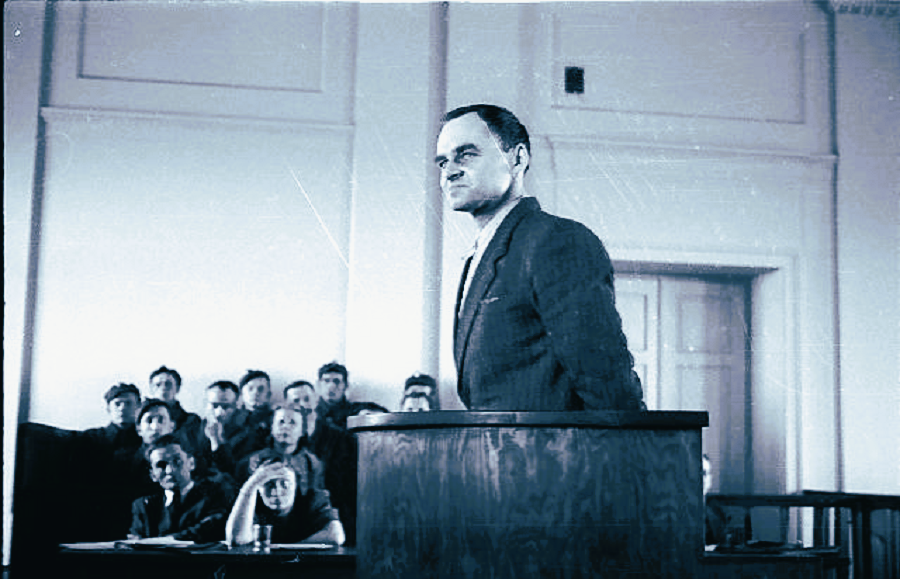
Today, however, Pilecki is remembered as one of Poland’s greatest national heroes. His reports from Auschwitz are recognized as some of the most critical early documentation of Nazi atrocities. His bravery, willingness to sacrifice for others, and profound commitment to truth and freedom stand as enduring symbols of human courage.
May 13, 1901 – Witold Pilecki is born in Karelia (then part of the Russian Empire).
1939 – Germany and the Soviet Union invade Poland; Pilecki joins the Polish underground resistance.
September 1940 – Pilecki volunteers to be arrested and sent to Auschwitz.
1940–1943 – Inside Auschwitz, he:
Organizes a secret resistance group (ZOW).
Sends out some of the first reports of Nazi crimes to the Allies.
April 26–27, 1943 – Pilecki and two others escape from Auschwitz:
Sneak out via the bakery.
Evade a massive manhunt.
Reach safety after several harrowing days.
1943–1944 – Pilecki continues fighting in the Polish underground.
1944 – Participates in the Warsaw Uprising against German occupation.
1947–1948 – Arrested by Poland’s new communist government, put on trial, and executed in May 1948. Allegedly his last words were “I’ve been trying to live my life so that in the hour of my death I would rather feel joy, than fear.”
Post-1989 – After the fall of communism, Pilecki’s heroism is officially recognized and honored.
sources
https://www.warhistoryonline.com/world-war-ii/witold-pilecki-auschwitz.html
https://en.wikipedia.org/wiki/Witold_Pilecki
Please support us so we can continue our important work.
Donation
Your readership is what makes my site a success, and I am truly passionate about providing you with valuable content. I have been doing this at no cost and will continue to do so. Your voluntary donation of $2 or more, if you are able, would be a significant contribution to the continuation of my work. However, I fully understand if you’re not in a position to do so. Your support, in any form, is greatly appreciated. Thank you. To donate, click on the credit/debit card icon of the card you will use. If you want to donate more than $2, just add a higher number in the box left from the PayPal link. Your generosity is greatly appreciated. Many thanks.
$2.00
 History of Sorts
Leave a comment