
Catharina Brücker was the eldest child of Romanian tailor Mozes Brücker (1892–1944) and the Dutch Rossetta Eijl (1896–1944). Her father made women’s clothing for major fashion houses in Rotterdam and owned several shops in the city. From age six until she was twenty, Catharina attended a dance school where she learned ballet, tap dance, and tango. As a flamenco dancer, she performed at venues including the Odeon Theater.
During the economic crisis of the 1930s, MantelMagazijn Brücker went bankrupt, but the family managed to restart the business with everyone’s help. Catharina married Alouis Herman Son (1906–1943) in 1939, though the marriage did not last long.
During the bombing of Rotterdam, the family lost both their home and business. They moved to Schiedam, where they started a textile shop on Hoogstraat. 1941, Catharina divorced Alouis and began working as a nursing assistant in the Jewish hospital. A few months later, she remarried to Jacques Frank (1912–1943).
During a visit to Jacques’ parents in 1942, the Germans raided the house and took the entire family. They were taken to Westerbork via the Hollandsche Schouwburg. Jacques’ parents were murdered in Auschwitz on October 22, 1942. Mozes Brücker managed to get his daughter and son-in-law released using forged documents regarding his origins. They went into hiding in Amsterdam but were betrayed and brought back to Westerbork in January 1943. Since Catharina was heavily pregnant, Jacques was allowed to stay until after the birth of their son, Clarence, on May 1, 1943. On May 25, 1943, he was deported to Sobibór, where he was murdered three days later.
Catharina worked as a nurse in the camp hospital and, to improve her chances of survival danced as a showgirl in the camp cabaret.
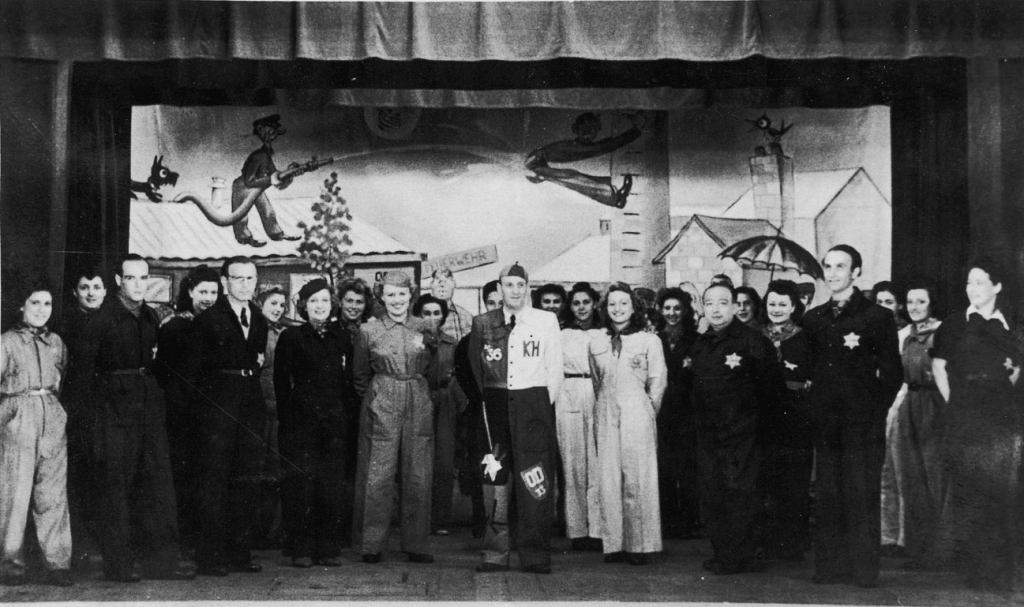
During one of her performances, Adolf Eichmann was in the audience. He was visiting Westerbork to coordinate the transports to Sobibór and Auschwitz. He remembered her performance and, during a selection, promised her that if she were deported, she and her son would be sent to Theresienstadt and allowed to remain there until the end of the war.
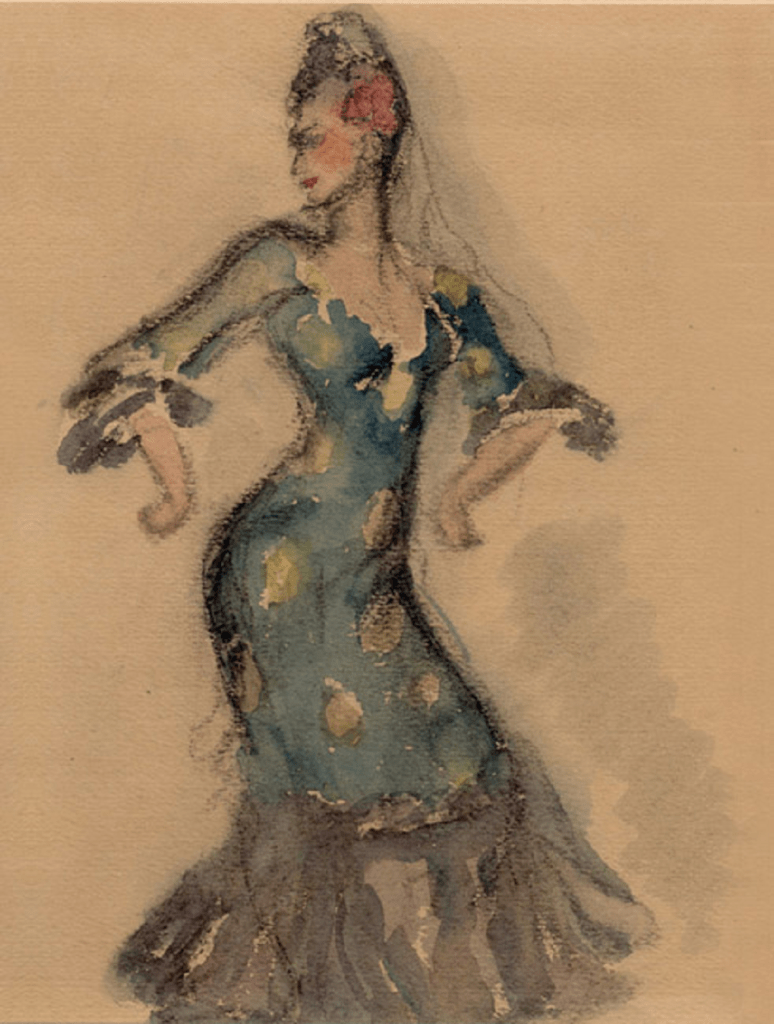
Eichmann kept his promise, and on February 26, 1944, Catharina and Clarence were transported to Theresienstadt. They slept in the cold, drafty attic of one of the barracks, causing Clarence to develop pneumonia three times. In preparation for a visit from the Red Cross, many prisoners were transferred to Auschwitz, and part of the ghetto was refurbished. The Czech painter Charlotta Burešová asked Catharina to pose for a painting to decorate the Nazi buildings.
The Red Army liberated Theresienstadt on May 8, 1945. Of the 140,000 Jews deported to Theresienstadt, 5,000 came from the Netherlands. Catharina and her son were two of an estimated 850 Dutch survivors.
Catharina later remarried, becoming Mrs. Van den Berg. She donated her documents to the Joods Monument and the Buresova painting to Yad Vashem. Catharina passed away in Spain in 2001.
Sources
https://www.joodsmonument.nl/en/page/604825/catharina-and-clarence-frank-westerbork-1943
https://nl.wikipedia.org/wiki/Catharina_Br%C3%BCcker
Please support us so we can continue our important work.
Donation
Your readership is what makes my site a success, and I am truly passionate about providing you with valuable content. I have been doing this at no cost and will continue to do so. Your voluntary donation of $2 or more, if you are able, would be a significant contribution to the continuation of my work. However, I fully understand if you’re not in a position to do so. Your support, in any form, is greatly appreciated. Thank you. To donate, click on the credit/debit card icon of the card you will use. If you want to donate more than $2, just add a higher number in the box left from the PayPal link. Your generosity is greatly appreciated. Many thanks.
$2.00


 History of Sorts
Leave a reply to dirkdeklein Cancel reply