
Action 14f13 (also known as Aktion 14f13) was a chilling extension of the Nazi regime’s broader program of systematic murder under the guise of euthanasia. It followed the infamous T4 program, which aimed to eliminate people with physical and mental disabilities. Action 14f13 took this ideology further by targeting concentration camp prisoners deemed unfit to work, effectively merging the machinery of genocide with bureaucratic rationalizations of utility and racial purity.
Origins and Context
The roots of Action 14f13 lie in the T4 Euthanasia Program, which began in 1939 and involved the systematic killing of disabled individuals across Germany and Austria. The Nazi regime, under the pretext of mercy and economic efficiency, sought to purify the Aryan race by eliminating those considered “life unworthy of life.” As the war escalated, the logistical and ideological machinery of T4 was expanded and repurposed for broader applications, particularly within the concentration camp system.
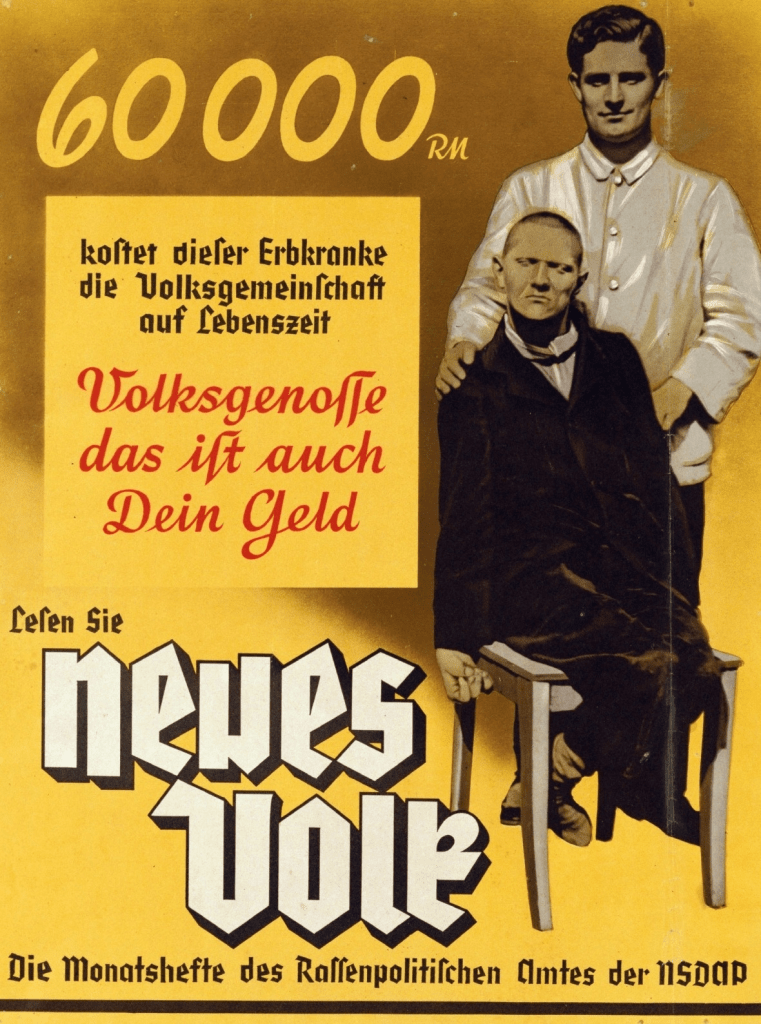
Action 14f13 began in 1941 and was named after the internal bureaucratic code used by the Reich Main Security Office. “14f13” referred to “Special treatment (Sonderbehandlung) of prisoners in concentration camps who were sick or no longer able to work.” The euphemism masked a policy of systematic murder targeting sick, elderly, or otherwise “unproductive” inmates.
Implementation
Under Action 14f13, physicians associated with the T4 program were dispatched to concentration camps to evaluate prisoners. These doctors were often not involved in genuine medical assessments but rather followed ideological guidelines. Selections were made based on health, perceived productivity, and political reliability. Prisoners who were chosen were typically transported to killing centers, such as Hartheim, Bernburg, or Sonnenstein, where they were gassed or given lethal injections.
The selection process bore a sinister resemblance to later “selections” on the ramps at Auschwitz, where SS doctors decided who would be sent to forced labor and who would be killed immediately. In this way, Action 14f13 bridged early euthanasia policies with the industrialized murder of the Holocaust.
Victims and Legacy
Estimates suggest that at least 15,000–20,000 prisoners were murdered under Action 14f13, though the actual number may be higher due to incomplete records. Victims included Jews, Roma, political prisoners, and others imprisoned in camps like Dachau, Sachsenhausen, Mauthausen, and Buchenwald.
The action reveals the bureaucratic efficiency with which the Nazi state institutionalized mass murder. It also underscores how the boundaries between policies aimed at “public health” and those of racial genocide were deliberately and fatally blurred. Action 14f13 was a direct precursor to the Final Solution, demonstrating how the Nazi regime’s exterminatory ambitions expanded step-by-step from domestic “cleansing” to full-scale genocide.

As the shortage of manpower became increasingly critical, the implementation of Aktion 14f13 underwent significant changes. On 28 March 1942, the Office of the Inspectorate of Concentration Camps issued a directive to all camp commandants:
“A report from a camp commandant has revealed that of 51 prisoners selected for ‘special treatment’ under 14f13, 42 were later deemed ‘fit for work’ after some time. This indicates that proper procedures were not followed during the initial selection. Only those categories of prisoners specified in the regulations should be presented to the medical commission—particularly those who are clearly no longer fit for labor.”
By April 1943, an order from Heinrich Himmler further restricted the scope of Aktion 14f13:
“…Only mentally ill prisoners are to be selected by the authorized medical commissions for operation 14f13. All other prisoners unfit for work are to be excluded from this operation. Bedridden patients are to be assigned tasks that can be carried out in bed.”
Despite this order, camp physicians often continued to kill prisoners deemed unfit for work on their own initiative. Instead of being transferred to external killing centers, many prisoners were now murdered within the camps themselves or sent to facilities equipped with gas chambers.
As a result of these policy changes, all T4 killing centers—except Hartheim—were closed. However, on 11 April 1944, the “euthanasia” program was officially reinstated. This time, selections were made not by T4 personnel, but by camp physicians.
At Mauthausen and its sub-camp Gusen, for instance, the camp physician would typically notify the block leader (Blockältester) the day before a transport that a group of prisoners was to be sent to a so-called “convalescent camp.” The number of prisoners to be transferred would be specified. During this final phase of Aktion 14f13, a total of 3,228 prisoners from Mauthausen and Gusen were murdered at Hartheim.
Action 14f13 is a stark reminder of how ideological extremism, when combined with administrative organization and pseudoscientific reasoning, can result in horrifying atrocities. It represents a critical link in the evolution of Nazi genocidal policies—an operation that began with the devaluation of life and ended in systematic annihilation. Remembering Action 14f13 is not only vital for understanding the Holocaust but also as a warning of how state power can be weaponized under the guise of efficiency, cleanliness, and social order.
Sources
https://en.wikipedia.org/wiki/Life_unworthy_of_life
https://encyclopedia.ushmm.org/content/en/article/euthanasia-program
https://www.gusen-memorial.org/en/History/Extermination/Aktion-14f13-Death-by-Gas-at-Hartheim-Castle
https://www.jewishgen.org/yizkor/LessThanHuman/les154.html
https://en.wikipedia.org/wiki/Action_14f13
Please support us so we can continue our important work.
Donation
Your readership is what makes my site a success, and I am truly passionate about providing you with valuable content. I have been doing this at no cost and will continue to do so. Your voluntary donation of $2 or more, if you are able, would be a significant contribution to the continuation of my work. However, I fully understand if you’re not in a position to do so. Your support, in any form, is greatly appreciated. Thank you. To donate, click on the credit/debit card icon of the card you will use. If you want to donate more than $2, just add a higher number in the box left from the PayPal link. Your generosity is greatly appreciated. Many thanks.
$2.00

 History of Sorts
Leave a comment