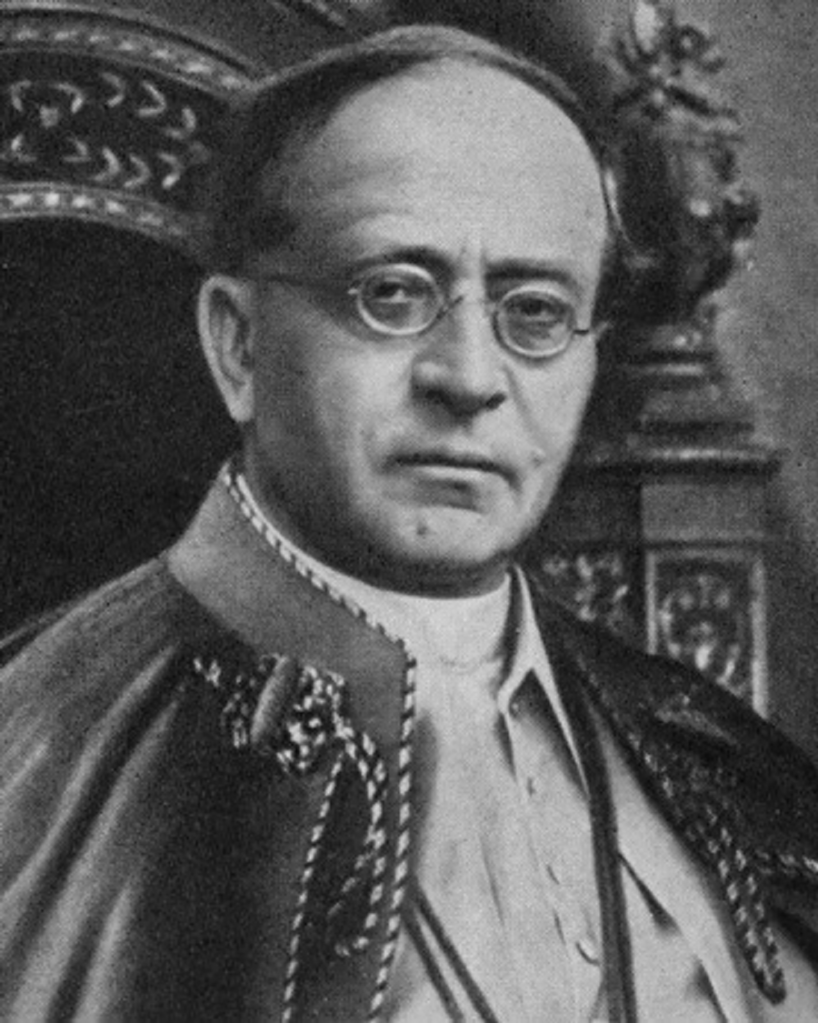
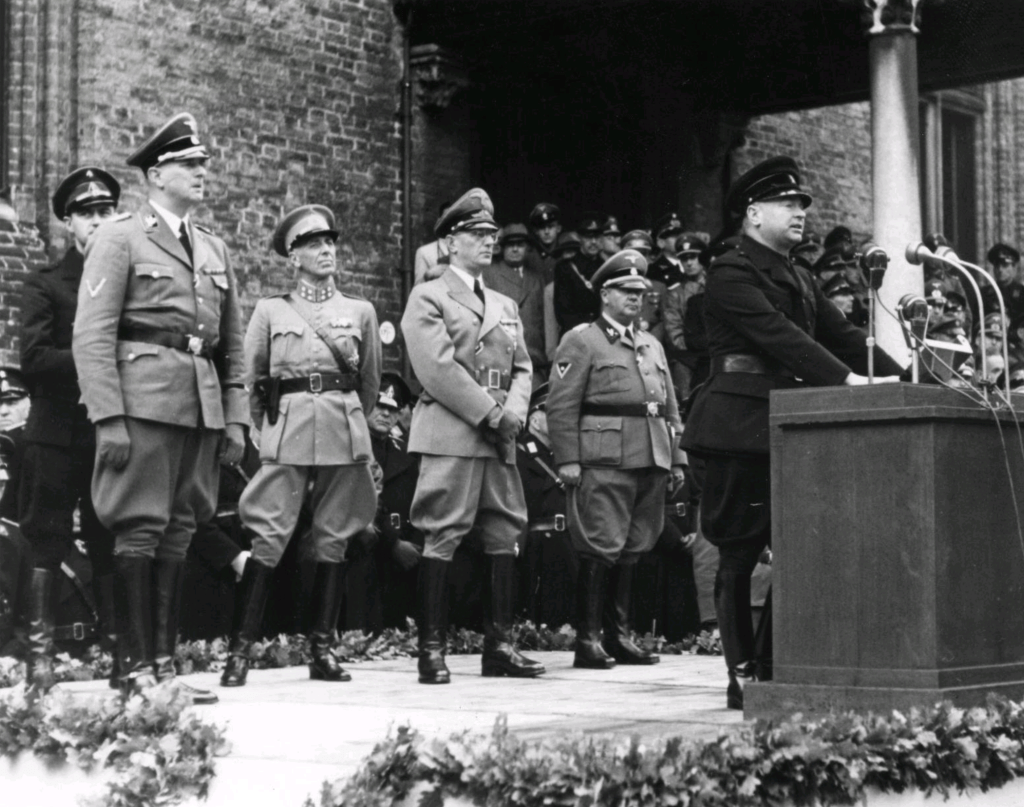
Pope Pius XII is often referred to as “Hitler’s Pope,” but the Catholic Church’s connections with fascist regimes began before his papacy. It was his predecessor, Pope Pius XI, who actively sought ties with fascist leaders. On June 16, 1936, he met with Anton Mussert, the leader of the Dutch Nazi party.
The 20th century was defined by turbulent political ideologies and a series of moral tests for institutions across Europe. Among these, the Catholic Church faced complex decisions as it navigated the rising tides of fascism, communism, and secular nationalism. One particularly controversial moment came when Pope Pius XI received Anton Mussert, the leader of the Dutch National Socialist Movement (NSB), a Dutch fascist and Nazi collaborator. This event, though often underemphasized in broader historical narratives, offers a revealing glimpse into the Vatican’s approach to political diplomacy in the interwar years and during the rise of totalitarian regimes.
The Context of the Meeting
To understand the implications of this audience, it is essential to situate it within its historical context. Pope Pius XI, who reigned from 1922 to 1939, was a pontiff deeply concerned with the preservation of the Church’s influence in an increasingly secular and hostile world. His papacy was marked by a cautious engagement with fascist governments, most notably seen in the Lateran Treaty of 1929 with Mussolini’s Italy, which restored the sovereignty of the Vatican. At the same time, Pius XI was no apologist for totalitarianism; he issued encyclicals criticizing both Nazism (e.g., Mit Brennender Sorge in 1937) and communism.
Anton Mussert, on the other hand, was a Dutch engineer turned political leader who co-founded the NSB in 1931. Initially modeled more on Italian fascism than German Nazism, the NSB gradually adopted more explicitly antisemitic and pro-German positions, especially after Hitler’s rise to power. Mussert admired authoritarian order and sought to reshape the Netherlands in the image of Nazi Germany. Despite his growing alignment with Hitler, Mussert maintained some distance from the more radical elements of the SS and Nazi racial theory, at least in the early stages.
The Audience: Diplomatic Norms or Moral Misstep?
When Pope Pius XI granted an audience to Mussert, the meeting was conducted within the framework of Vatican diplomatic protocol. The Holy See traditionally maintained open lines of communication with political leaders, even those with whom it fundamentally disagreed. The Vatican’s aim was often to safeguard the interests of Catholics, negotiate space for Catholic education and worship, and assert the Church’s moral authority in an era of ideological extremes.
However, this strategy was fraught with contradictions. Receiving Mussert—who by that time was known for his fascist ideology and collaborationist tendencies—risked lending him undue legitimacy. Even if the meeting was private and devoid of explicit endorsement, it symbolized a kind of recognition that could be exploited by fascist propagandists. In fact, Mussert and the NSB did use such encounters to claim a degree of moral legitimacy and respectability, particularly among Dutch Catholics.
Moral Ambiguity and Institutional Strategy
The event highlights the moral ambiguity the Church often had to navigate. Pius XI was not blind to the dangers of Nazism and fascism. In the years leading up to his death, he became increasingly critical of these ideologies, particularly their racist and neopagan tendencies. His encyclical Mit Brennender Sorge condemned Nazi racism and was smuggled into Germany to be read from Catholic pulpits—a rare and brave act of ecclesiastical resistance.
Yet, the meeting with Mussert suggests that Pius XI, like many in the Vatican hierarchy, believed that engagement could moderate extremist movements or at least protect Catholic communities from persecution. Whether this was naïve, strategic, or simply the best available option remains a subject of historical debate.
The audience between Pope Pius XI and Anton Mussert is emblematic of the tightrope the Catholic Church walked during the rise of fascism in Europe. While intended as a diplomatic engagement, it reveals the challenges the Vatican faced in defending its moral authority while remaining politically relevant. The episode is a reminder of the complexities of moral leadership during times of ideological extremism—and a cautionary tale about the unintended consequences of engaging with those whose goals ultimately undermine the very principles such leadership seeks to uphold.
Religion and politics should always be separated.
sources
https://journals.sagepub.com/doi/10.1177/0265691412468085
https://www.onthisday.com/date/1936/june
https://en.wikipedia.org/wiki/Fascism_in_Europe
Please support us so we can continue our important work.
Donation
Your readership is what makes my site a success, and I am truly passionate about providing you with valuable content. I have been doing this at no cost and will continue to do so. Your voluntary donation of $2 or more, if you are able, would be a significant contribution to the continuation of my work. However, I fully understand if you’re not in a position to do so. Your support, in any form, is greatly appreciated. Thank you. To donate, click on the credit/debit card icon of the card you will use. If you want to donate more than $2, just add a higher number in the box left from the PayPal link. Your generosity is greatly appreciated. Many thanks.
$2.00

 History of Sorts
Leave a comment